Two Easy Ways to Start Earning Rewards!
Become a member today! Members-only pricing and offers, personalized care notifications, Vital Care points back on every purchase and more!
 Become a credit card member today!
Earn 2X Pals Rewards points at Petco
when you use Petco Pay!APPLY NOWLearn More About Petco Pay Benefits
Rep-Cal Reptile Health & Wellness
Get It Today


Related Articles & Questions
- New Pet
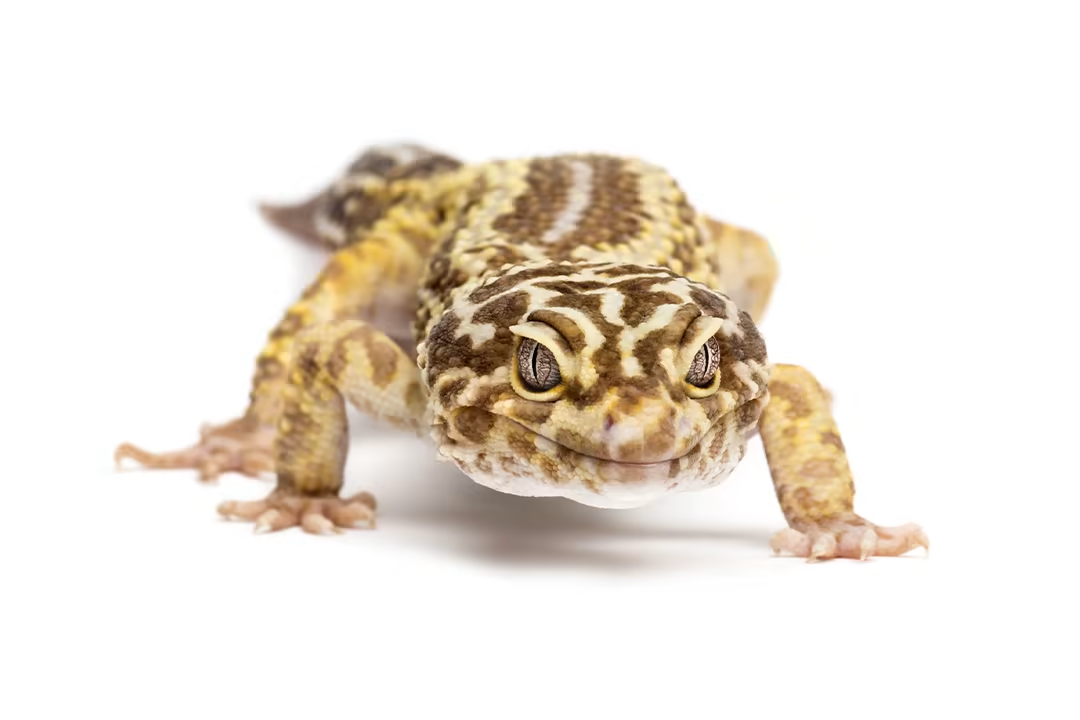
Leopard Gecko Care: The Ultimate Guide to Habitat, Food & Health
Learn how to care for a Leopard Gecko, recommended diet and habitat setup. Find the right food, supplies and equipment at your neighborhood Petco.
Updated on November 13th, 2025
- New Pet
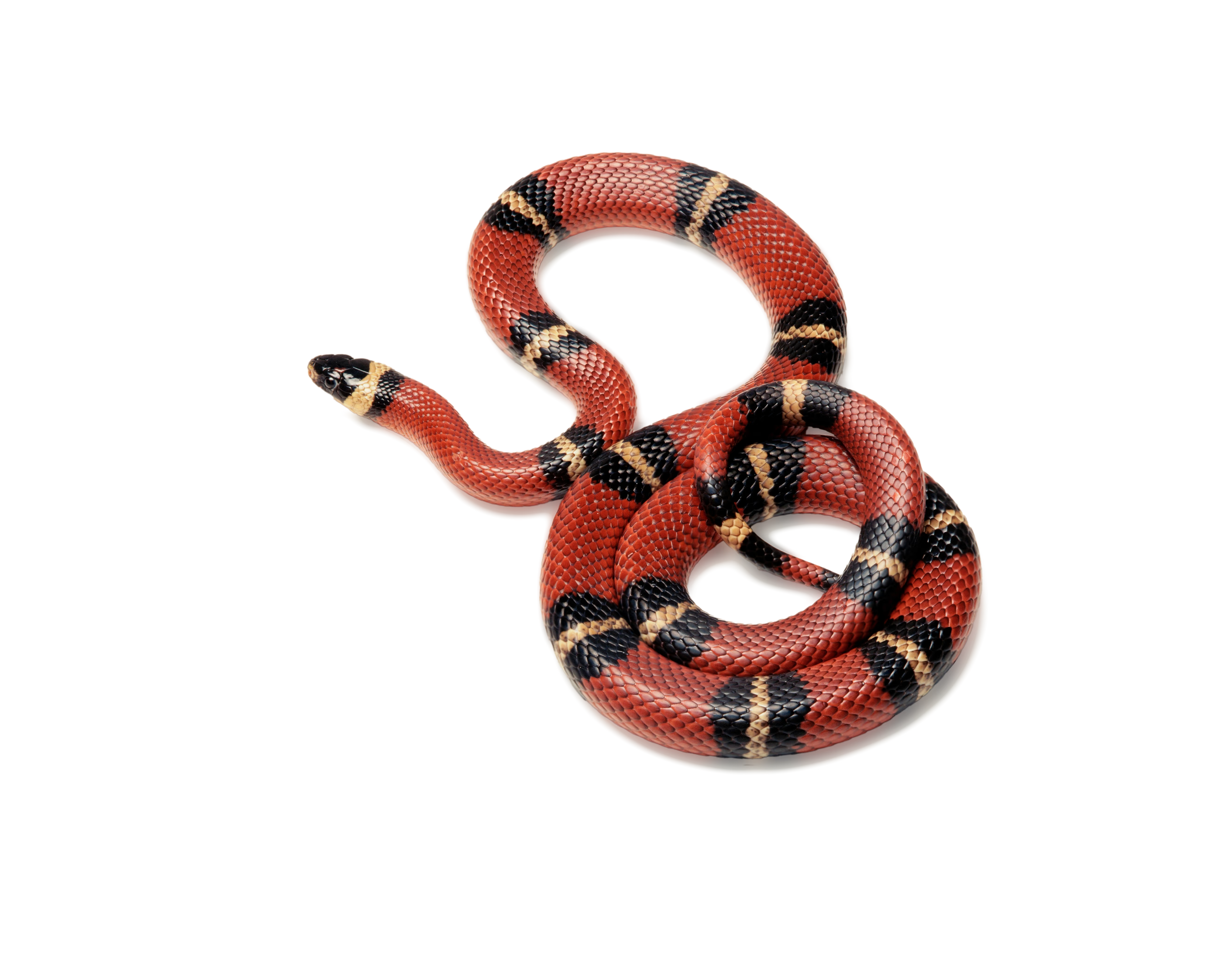
How to Care for Colubrid Snakes: Food, Habitat & Health Tips
Learn how to care for Colubrids recommended diet and habitat setup. Find the right food, supplies and equipment at your neighborhood Petco.
Updated on November 13th, 2025
- New Pet
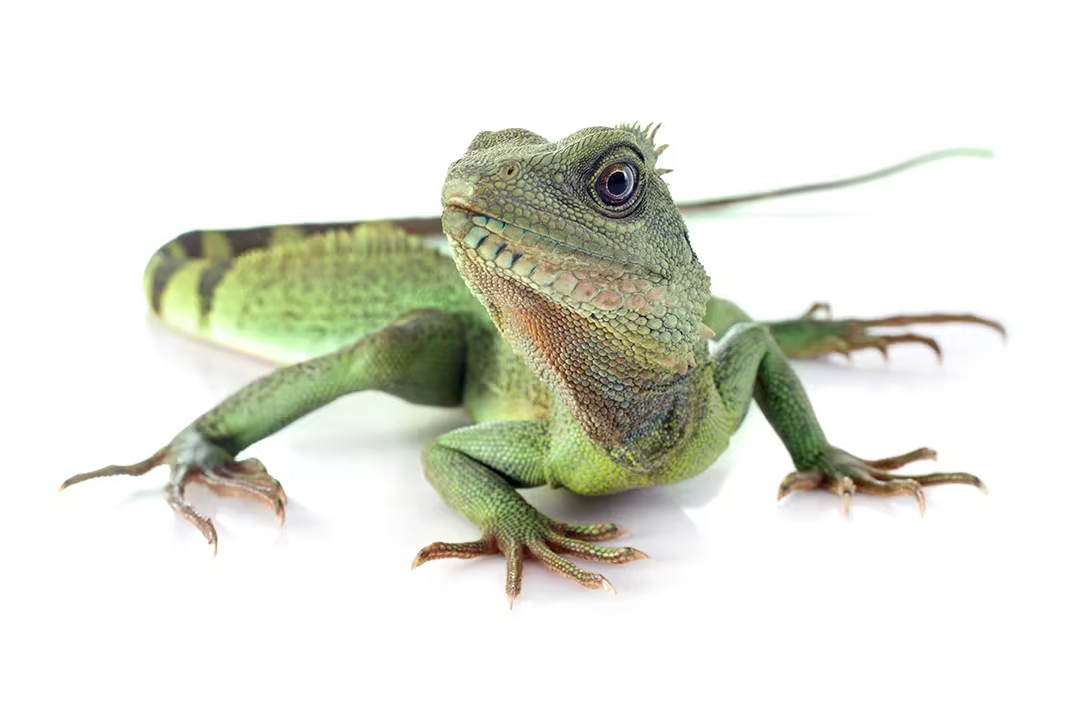
How to Care for a Water Dragon: Habitat, Food, Health & Setup
Learn how to take care of Water Dragons, recommended diet and habitat setup. Find the right food, supplies and equipment at your neighborhood Petco.
Updated on November 13th, 2025
- New Pet
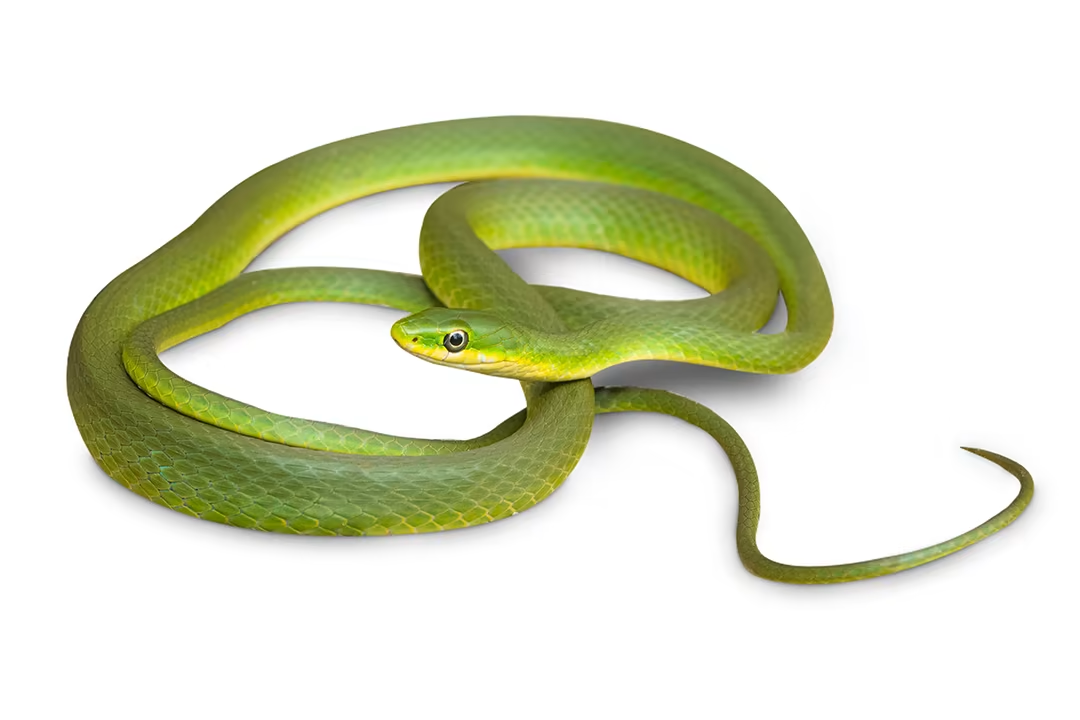
Rough Green Snake Care: Habitat, Diet, Health & Happy Pet Guide
Learn how to take care of Rough Green Snakes, recommended diet and habitat. Find the right food, supplies and equipment at your neighborhood Petco.
Updated on November 13th, 2025
 Product Guides
Leopard Gecko Substrate Guide: Best Bedding for a Healthy Pet
Picking the best leopard gecko substrate can be an overwhelming task; learn about some great options to help your leopard gecko live a happy & healthy life!
Updated on November 13th, 2025
- Health & Wellbeing
She is currently neglecting food and treats. Is this a problem?
Check the temperature an dlighting. Low temps can affect appetite and digestion in reptiles. Offer a biologically appropriate diet. This can include a commercial pelleted or stick diet, and being omnivorous, should also include insects, fresh fruit and vegetables. See your veterianrian or vet experienced in treating reptiles if she does not regain her appetite.
Updated on August 12th, 2025
- Food & Nutrition
hello i have a baby red iguana that is getting the bumps on his lower jaw. How can i prevent it from getting worse? What lighting do i need? What calcium supplements should they be getting? _ Elizabeth C
He should be examined by your veterinarian or a vet experienced in treating reptiles to diagnose infection, injury or metabolic bone disease. Provide unfiltered UVB lighting as well as a heat source. Calcium(D3) and multivitamin supplementation is essential as is a healthy diet of fresh greens, vegetables and fruits. You can also supplement the diet with a commercial iguana food. Review iguana care at the link below. Yes, it says "green iguana" however care is the same. http://www.reptilesmagazine.com/Care-Sheets/Lizards/Green-Iguana/
Updated on August 12th, 2025
- Health & Wellbeing
My Pet is a mid size lizard. Tegu began to tremble upper and lower toes. I could see his muscles spaz. He really cares for no food such as crickets and worms. He had a mouse 5 days ago. There was some soured watermelon in his cage I removed. I rea
Check the temperature in his enclosure. Low temps can affect appetite in reptiles. If he isn't eating or not exposed to high quality UVB lighting, he can become calcium deficient which could account for the tremors. If he is less than 30 inches long, confirm a basking temp of around 115 F. If he is bigger, bump basking temp to between 125 F and 135 F. Multiple lower wattage lights over a larger area are recommended over one high intensity light source. Try to get him to eat and offer a calcium supplement. If you can get a liquid supplement, that would be best right now. Zoo Med and Fluker's offer such a supplement.Soak him in a warm 50/50 solution of water and unflavored PediaLyte to treat or prevent minor dehydration. if he doesn't eat or if the tremors worsen, have him examined by your veterinarian or a vet experienced in treating reptiles as soon as possible.
Updated on August 12th, 2025
- Training & Behavior
1 year ago my leopard gecko escaped outside. 5 minutes ago we heard our dogs barking.When we found them we found our lizard Diana. She was and still is in terrible shape. She has a bloody eye and lost her tail. She is very pale but that may be becaus
Ideally, she should be physically examined by your veterinarian, at the nearest veterinary ER or by a vet experienced in treating reptiles. If this is not possible, get her under a heat lamp to start warming her up. You can also soak her in a warm 50/50 solution of water and unflavored PediaLyte for 15-20 minutes. Afterwards, clean the tail stump with a diluted Betadine or chlorhexidine (Hibiclens) solution. Dab a bit of triple antibiotic ointment on it after each cleaning. Clean it gently once daily and dry thoroughly afterwards. Keep her on paper towels and change it daily. Pick up some Fluker's Repta Boost and use that to feed her initially. When she is more active, you can introduce prey slowly. She may eventually regrow her tail. Even with care, she may not recover. It cannot be determined without a physical exam. https://www.petco.com/shop/en/petcostore/product/flukers-reptaboost-insectavore-and-carnivore-high-amp-boost
Updated on August 12th, 2025
- Health & Wellbeing
I just purchased a baby leopard gecko from petco. I noticed it was the smallest of all of them and occasionally it will shake its legs individually like thumper... what could this be ? It eats really good!
If it is only occasionally, continue to monitor him/her. A nutritional deficiency is always a concern, especially in juveniles, but as long as the appetite is good this is not a concern. Be sure to supplement with a calcium/D3 at each feeding and a multivitamin several times a week. Repashy, HerptiVite and Rep-Cal w/D3 are all options. If the shaking/thumping worsens or if you see lethargy, lameness or swollen limbs/joints, then have the little one examined by your veterinarian or an experienced herp vet.
Updated on August 12th, 2025