Two Easy Ways to Start Earning Rewards!
Earn 2X Pals Rewards points at Petco
when you use Petco Pay!
As a pioneer of aquatic innovation, Marineland has been manufacturing science-backed aquarium products that make fishkeeping fun, educational and easy for more than 40 years. From early inventions inspired by oceanarium technology to the revolutionary BIO-Wheel and beyond, Marineland aquarium products help hobbyists and beginners alike enjoy a successful and satisfying fishkeeping experience.
Discover the best Marineland has to offer when you shop Petco’s wide selection of state-of-the-art aquarium supplies. You’ll find everything you need to build the aquarium of your dreams.
Whatever your passion—freshwater or saltwater, big or small—count on Marineland to bring you the most reliable, the most technically advanced andthe highest quality aquariums and accessories on the market.
Learn how to care for large marine fish, recommended diet and habitat setup. Find the right food, supplies and equipment at your neighborhood Petco.
Updated on November 13th, 2025
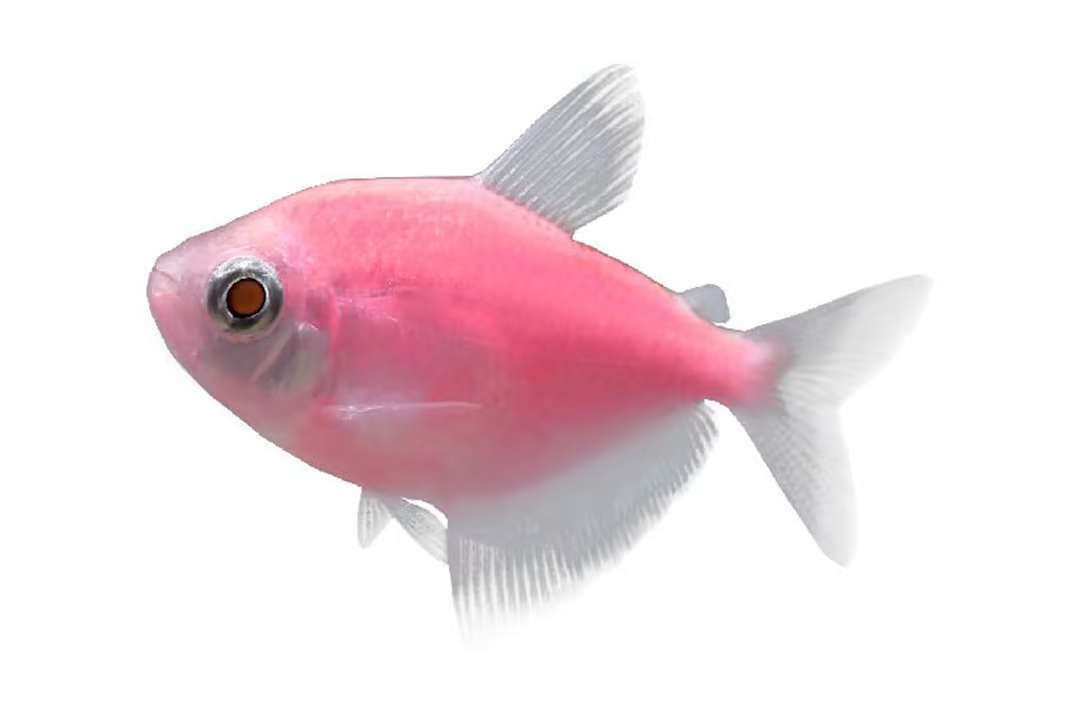
GloFish are brilliantly colored and beautiful fish. Learn how to care for GloFish, what to feed them, how long they live, their ideal tank size and more.
Updated on November 13th, 2025
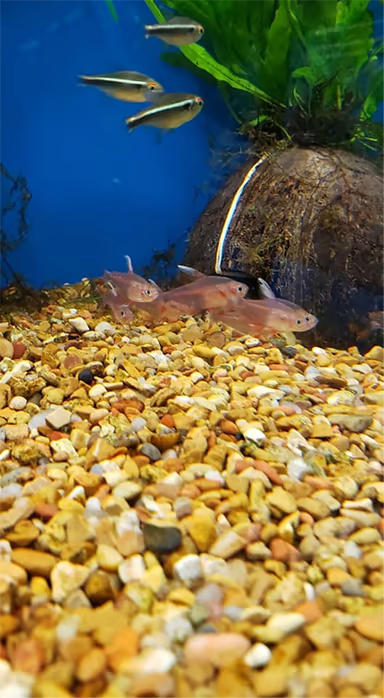
Choosing the right substrate for your aquarium is important and provides an area for beneficial bacteria to grow which keeps your aquatic environment safe.
Updated on November 13th, 2025
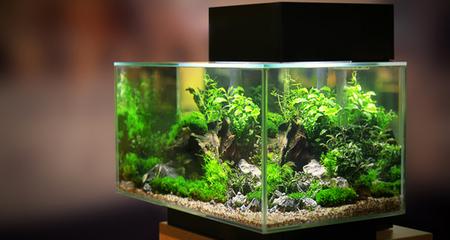
Before establishing an aquarium at home, learn more about the basics of fish care.
Updated on November 13th, 2025
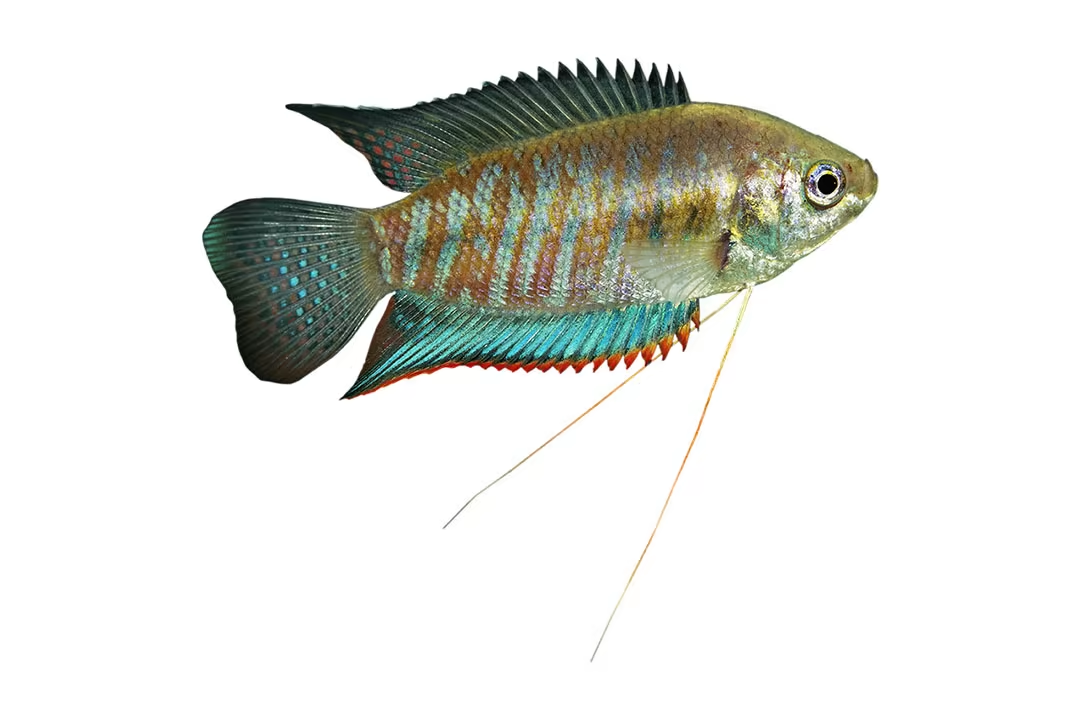
Learn how to care for Paradise fish, recommended diet and aquarium setup. Find the right food, supplies and equipment at your neighborhood Petco.
Updated on November 13th, 2025
At the very least, a 10 gallon tank with a filter, heater, hood and light. Ideally, the tank should be up and running (without fish) until it cycles properly. This means there needs to be sufficient time for beneficial bacteria to colonize the tank and filter to be able to break down wastes, namely ammonia and nitrites and to a lesser degree, nitrates. This can take several weeks to occur. You can cycle a tank with fish in it, but it will require daily testing of water chemistry to prevent a toxic build up of ammonia and/or nitrites. Either can kill your fish if not treated. Follow this link for a FAQ regarding Glo Fish: https://www.glofish.com/about/faq/ Follow this link for more about cycling a tank: http://www.firsttankguide.net/cycle.php
Updated on August 12th, 2025
Guppies or Neons are excellent "starter" fish. Care is simple and they are inexpensive. A standard 10 gallon tank is recommended to start. Most people don' t realize the amount of "work" needed to maintain a tank. Filter maintenance, monitoring water chemistry, water changes, monitoring fish health and providing a balanced diet are just a few items that need regular attention to keep a tank thriving. Even though fish aren't as cuddly as cats and dogs, they do have their own personalities and even respond to their owners, especially at feeding time! Studies have shown that simply watching fish in a tank can lead to a reduction in both heart rate and blood pressure. It is quite relaxing.
Updated on August 12th, 2025
A RES requires full spectrum lighting (UVA and UVB) and lighting that provides heat. The dry dock, or basking area, should be completely out of the water. Basking temps should range between 90F and 95F (32-35C). You should place the UVA/UVB bulb as close to the heat lamp as possible. It should be no more than 12" away from your RES and should not have a barrier between it and your turtle. Glass, acrylic and plastic block UVB while screens with grids under 1/2" can obstruct a good portion of UVB rays negating the health benefits. Lighting should be on for around 12 hours a day, depending on the time of year. Full UVA/UVB bulbs need replacing every 6 months. The simplest combination for adequate lighting is a UVA/UVB fluorescent bulb and an incandescent light bulb (for heat). Incandescent light bulbs are standard household lights easily purchased at stores such as Home Depot or Lowes. Make sure your RES cannot splash water on it or come into contact with it. You can also consider halog
Updated on August 12th, 2025
Those could be copepods. They are typically harmless and difficult to completely eradicate. On the good side, they are a sign of a healthy tank and are useful in eating decaying matter in the aquarium. The brown algae can be due to insufficient lighting or lighting periods. You can wipe down the glass and plants, perform a partial water change and increase lighting. It can take weeks to month to resolve. Use only aged or conditioned water that is temperature matched to prevent stress or shock. Confirm stable water chemistry and quality. Make sure the water temperature is correct as well. Too warm or too cold can cause stress. Look the Jack Dempsey over for signs of injury or infection. Ich, bacterial infection or fungal infection can cause the fish too twitch or shiver. Plain aquarium salt (NOT table salt or Epsom salt) dissolved at 1 tablespoon per 5 gallons of water is a great general tonic that can reduce stress, improve gill function, treat minor infection and aid in any recover
Updated on August 12th, 2025
Thanks for reaching out about Corn and including photos. This could be mineral deposits but is difficult to tell in the photos. Mold usually does not grow below the water level as needs oxygen. Clean the filter well. A sample of the material can be acquired and a veterinarian might be able to help by examining under the microscope. Good luck.
Updated on August 12th, 2025