Two Easy Ways to Start Earning Rewards!
Become a member today! Members-only pricing and offers, personalized care notifications, Vital Care points back on every purchase and more!
 Become a credit card member today!
Earn 2X Pals Rewards points at Petco
when you use Petco Pay!APPLY NOWLearn More About Petco Pay Benefits
Arcadia Reptile Reptile Habitat Heat Lamps & Basking Bulbs
Get It Today


Related Searches
Related Articles & Questions
- Home & Habitat
Reptile Lighting: Choose the Best Heat & UVB Lamp for Your Pet
When it comes to reptile habitats, one of the most essential elements to creating a happy home for your pet is including the appropriate type of lighting. Zoo Med helps outline which lights are right for your pet.
Updated on November 13th, 2025
- New Pet
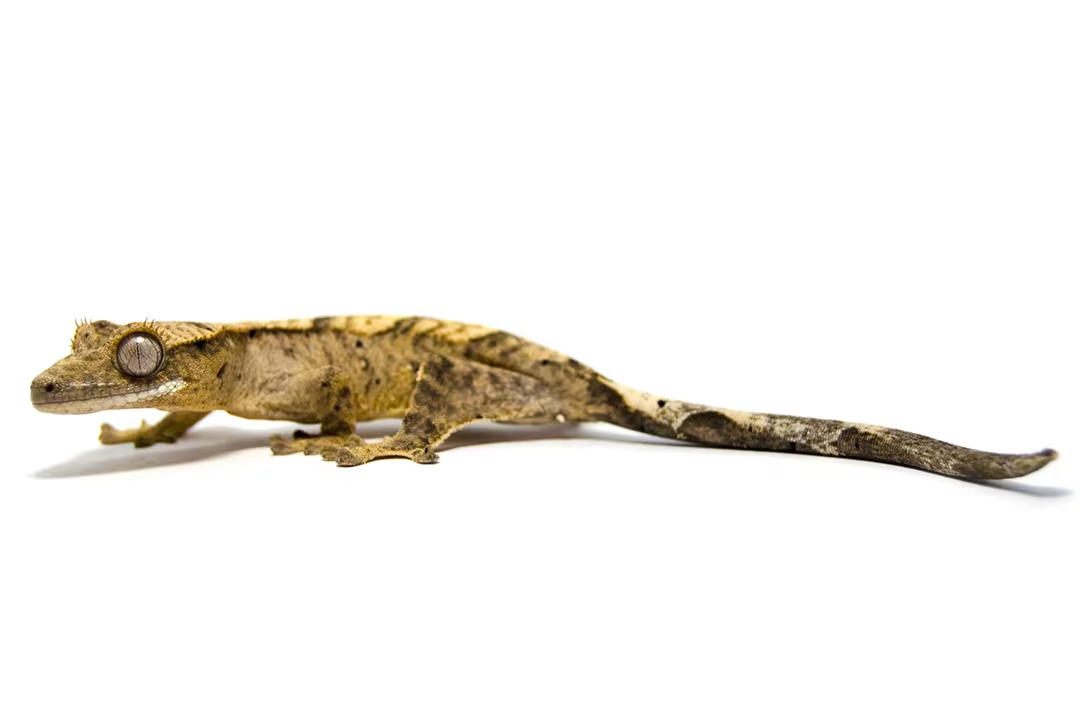
Crested Gecko Care: Habitat, Diet, Health, Supplies - Ultimate Guide
Learn how to take care of your Crested Gecko, tank size, diet & habitat setup. Find the right food, supplies and equipment at your neighborhood Petco.
Updated on November 13th, 2025
- Health & Wellbeing
Reptile Metabolic Bone Disease: Understand, Prevent & Treat MBD
Search Petco for information about metabolic bone disease, which is fairly common in many reptiles. Use our tips to help keep your reptile comfortable.
Updated on November 13th, 2025
 Product Guides
Leopard Gecko Substrate Guide: Best Bedding for a Healthy Pet
Picking the best leopard gecko substrate can be an overwhelming task; learn about some great options to help your leopard gecko live a happy & healthy life!
Updated on November 13th, 2025
- New Pet
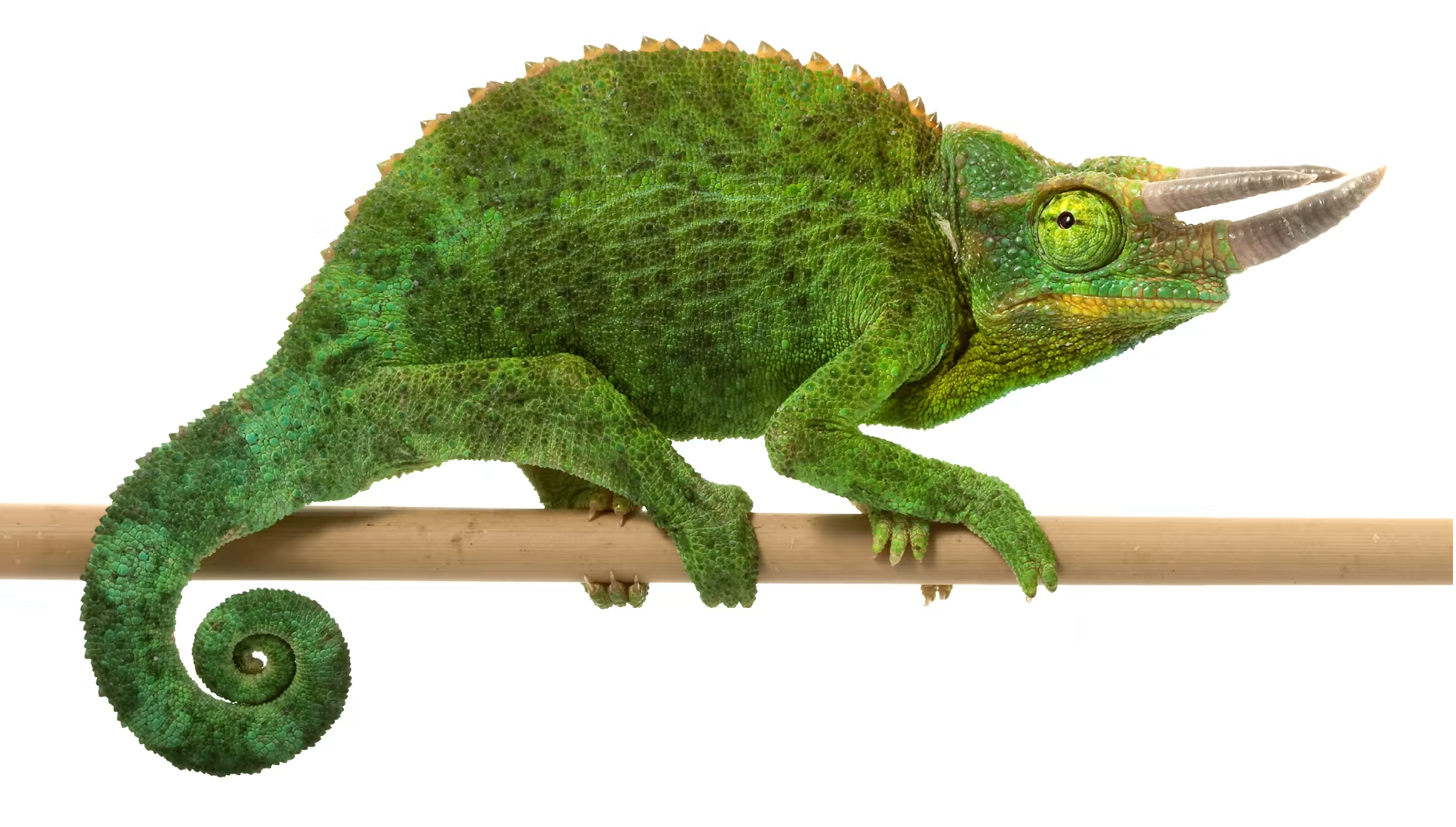
Jackson's Chameleon Care: Thrive Guide for Food, Habitat & Health
Learn how to care for Jackson's Chameleons, recommended diet & habitat setup. Find the right food, supplies & equipment at your neighborhood Petco.
Updated on November 13th, 2025
- Health & Wellbeing
What should I feed my red ear slider with shell pyramiding and how often?Also which heat lamp would you recommend?Picture 1 or 2?How many watts should I get for the heat lamp?
A proper diet for red-eared sliders includes a complete pellet, such as those made by ReptoMin, and dark leafy green vegetables. This can be fed once per day, and the amount should be based on how many pellets Cooper can eat in 5-7 minutes. This is just a guideline, and your veterinarian can help you to determine if this is appropriate based on Cooper's body condition score (i.e. whether she is overweight or not). For a heat lamp - photo 1 just looks like the dome, and there doesn't appear to be a bulb in it. The second lamp looks like it is a daytime only heat lamp - it is often beneficial to have a heat source that can be used during the day or at night, and if that is what you are looking for, I would recommend a ceramic heat bulb. If you are looking for only a daytime basking bulb, there are many brands that would be appropriate. The key words that you should look for are "daytime basking bulb." For watts - it depends on how far the bulb is away from your turtle - there are some b
Updated on August 12th, 2025
- Health & Wellbeing
What kind of lighting does a red eared slider need, I tried to look it up online but I get confused with all the types of lights... Please help!!!!!!!
A RES requires full spectrum lighting (UVA and UVB) and lighting that provides heat. The dry dock, or basking area, should be completely out of the water. Basking temps should range between 90F and 95F (32-35C). You should place the UVA/UVB bulb as close to the heat lamp as possible. It should be no more than 12" away from your RES and should not have a barrier between it and your turtle. Glass, acrylic and plastic block UVB while screens with grids under 1/2" can obstruct a good portion of UVB rays negating the health benefits. Lighting should be on for around 12 hours a day, depending on the time of year. Full UVA/UVB bulbs need replacing every 6 months. The simplest combination for adequate lighting is a UVA/UVB fluorescent bulb and an incandescent light bulb (for heat). Incandescent light bulbs are standard household lights easily purchased at stores such as Home Depot or Lowes. Make sure your RES cannot splash water on it or come into contact with it. You can also consider halog
Updated on August 12th, 2025
- Health & Wellbeing
Hi there. So I am looking into getting a heat dome for my crested gecko. I know they don’t have to have a heat lam but I want him to have a UVB bulb Because it’s good for them. But I am not quite sure that type to get. Any suggestions? I was looki
A heat lamp isn't necessary unless the room where the cage is located is cold. Cresties do just fine at room temperature. A UVB light source isn't necessary either as long as you feed a diet containing adequate levels of Vitamon D3. That said, either won't harm him and it is a matter of personal preference. Be sure to monitor cage temps to make sure they don't go too high. There was no image attached to this question. Age can be difficult to determine if you don't have a hatch date. The reason being that growth can be dramatically affected by diet and environment. Contact the PetSmart where he was purchased. They should have records from the source/breeder which should include a hatch date or age.
Updated on August 12th, 2025
- Health & Wellbeing
I have a few questions about an ackie monitor. I want to eventually get one to add to my babies. Right now I have my beardie Loki, he is my baby. Can I build a wire cage with wood bottom half to allow soil nd sand mix for digging? Can I keep his cage
I am very glad that you are looking into husbandry before purchasing an ackie! There is a good care sheet with information on ackies on the Reptiles Magazine website. Based on your location in TX, it may work well to have the ackie outside, but there are a few things to consider. Evaluating the temperature requirements for this species in comparison to the temperatures that you have in your area during the year will be important. We don't want the monitor to get too cold at any point. Thankfully, if needed, supplemental heat sources can also be used outdoors. If these are used, please ensure that they are properly positioned so the ackie cannot access them, and that they are weather-proofed to prevent any electric shock. Also ensure that humidity is high enough in the enclosure - depending on your area, it may need to be supplemented for this species. I would recommend the use of digital thermometers and hygrometers (measure humidity) to keep an eye on the temperature and humidity i
Updated on August 12th, 2025
- Health & Wellbeing
At night should the temperature be in the 60s or below or high 90s degree like the day time ? Should I just turn off all lights during the night.? I usually keep just the red infrared heat light (We're currently in the summer season) I have a beard
I think leaving the red light on at night is fine. I would try not to let it get below 60s at night. I am going to attach a great resource about husbandry and diet for your bearded dragon to help give you better guidelines on his temperature, lighting, and diet. I hope this helps. http://www.anapsid.org/bearded.html
Updated on August 12th, 2025