Two Easy Ways to Start Earning Rewards!
Become a member today! Members-only pricing and offers, personalized care notifications, Vital Care points back on every purchase and more!
 Become a credit card member today!
Earn 2X Pals Rewards points at Petco
when you use Petco Pay!APPLY NOWLearn More About Petco Pay Benefits
Seachem Aquarium Brushes, Nets, & Cleaners
Get It Today


Related Searches
Seachem Aquarium Water Conditioners
Owned and operated by fellow fish enthusiasts, Seachem has been providing hobbyists with education and support as well as trusted, scientifically proven saltwater and freshwater aquarium products for more than 40 years.
From Seachem Prime, the brand’s flagship water conditioner, to Seachem Stability, which helps prevent the number one cause of fish death, "new tank syndrome"—every product is backed by Seachem’s own staff of experienced chemists and biologists.
Petco proudly carries an extensive line of Seachem products, which are trusted by aquarists around the world to meet the needs of freshwater and saltwater aquariums, as well as reefs and ponds. Shop our wide selection of buffers, conditioners, filtration media, testing kits and more, many of which are completely unique and specific to Seachem:
For filtration systems
Seachem Matrix is a unique, high-porosity biomedia for wet or wet/dry filters that have proven to be more effective than plastic biomaterials and will not break down or need to be replaced.
Seachem Purigen is a macro-porous synthetic polymer for freshwater and saltwater with the highest organic removal capacity among competing brands. Purigen darkens as it exhausts and can be easily renewed by treating it with bleach.
For planted aquariums
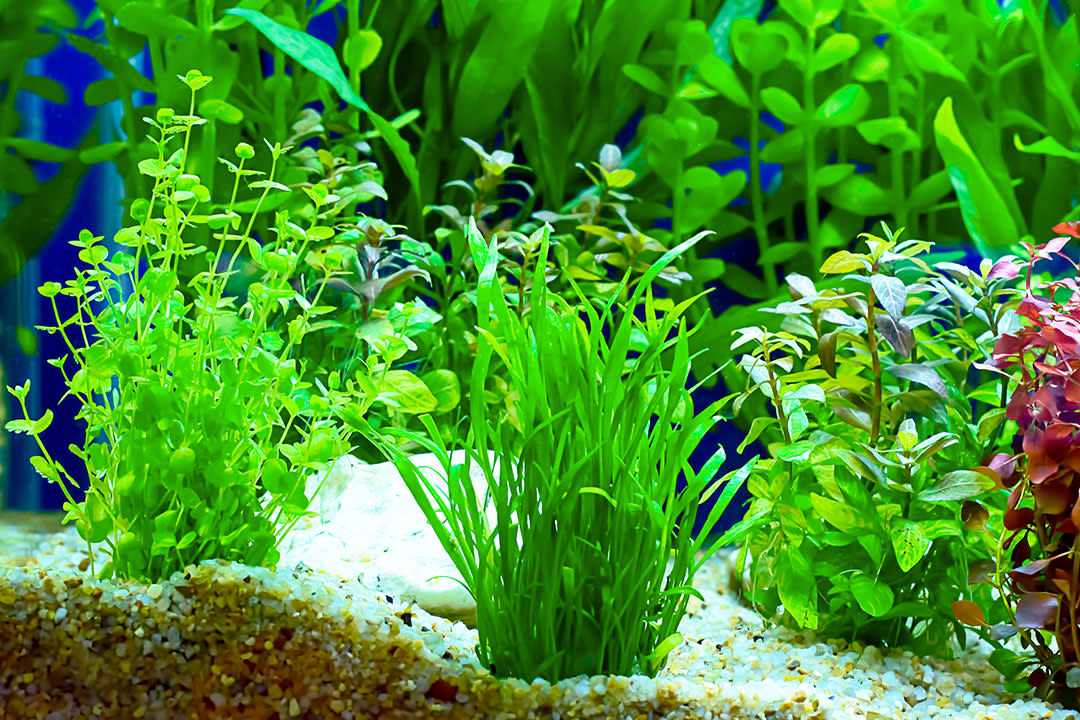
Developed for natural freshwater aquariums, Seachem Flourish contains a rich assortment of microelements, trace elements and other nutrients important to the health of aquatic plants.
Seachem products don’t just keep your aquarium healthy, they’re also designed to save you money through increased efficiency and concentration. Shop Petco’s Seachem solutions to find the best one for your aquarium today.
Related Articles & Questions
- Home & Habitat
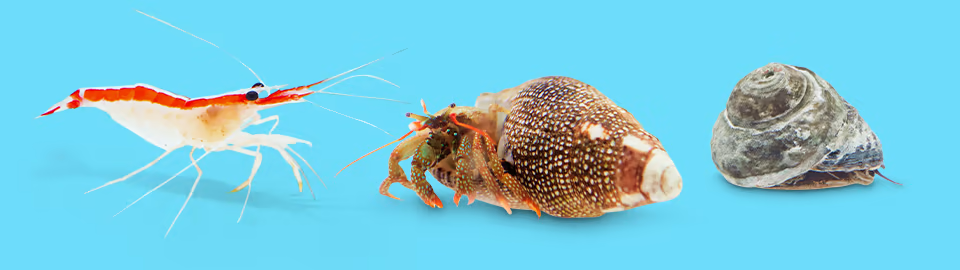
Saltwater Cleanup Crew: Banish Algae, Keep Your Tank Pristine
Visit Petco to learn about cleanup crews and how they can help your aquarium health.
Updated on October 29th, 2025
- New Pet
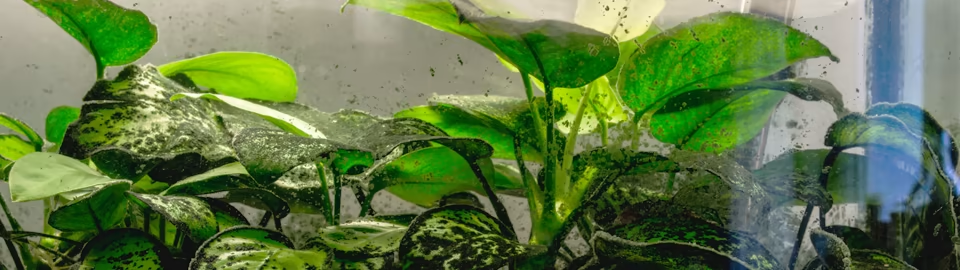
Aquatic Pet Safety: Keep Your Home Aquarium Pets Healthy & Safe
Learn how to safely handle your aquatic life to avoid toxin & bacterial exposure. Find aquatic life care supplies at your neighborhood Petco pet care center.
Updated on October 29th, 2025
- Home & Habitat
How to Clean a Dirty Fish Tank: Crystal Clear Water & Happy Fish
Find out what tools you’ll need and discover the best way to get your aquarium back on track without starting over and find out how to maintain a clean fish tank.
Updated on October 29th, 2025
- Product Guides
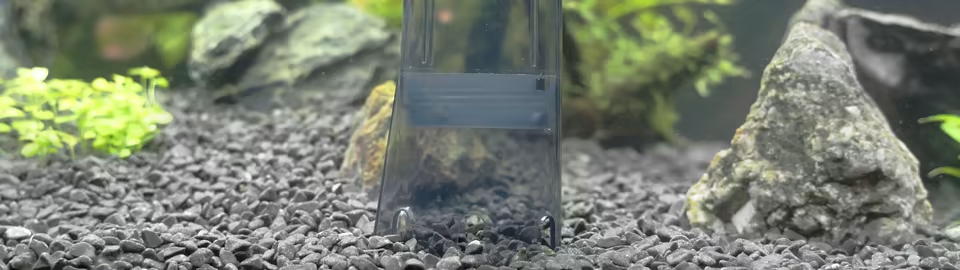
How to Gravel Vacuum: Clean Your Fish Tank for Thriving, Happy Fish
Gravel vacuuming helps remove solid waste from your substrate. Learn about the different types of gravel vacuums available & how to clean your fish tank.
Updated on October 29th, 2025
- New Pet
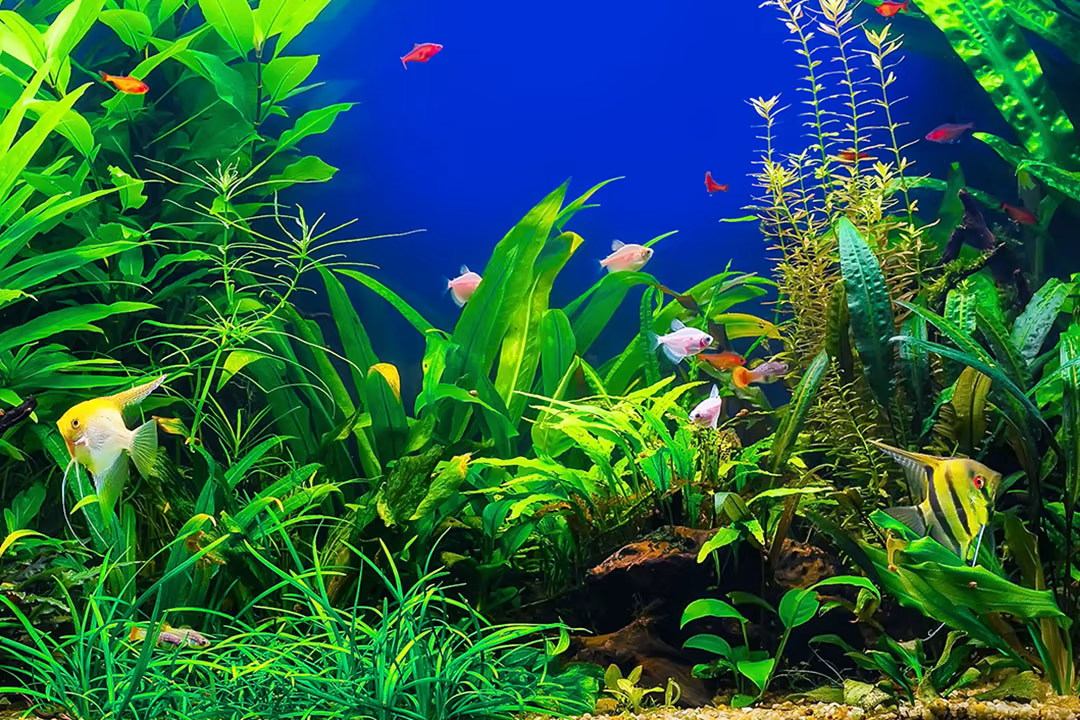
Master Aquatic Plant Care: Lush Aquarium Plants & Happy Fish
Tanks with live plants can be excellent additions to your home, bringing a touch of nature indoors. Learn how to take care of aquatic plants.
Updated on October 29th, 2025
- Health & Wellbeing
What is the best way to clean a fish tank? Am I allowed to remove the fish so i can clean it more properly?
Hello, and thank you for using Boop by Petco. The most common (and easiest) way to clean a fish tank is with a siphon-style cleaner. Fish tanks should be cleaned in stages, generally replacing 10-15% of the water at a time. There are times where a larger cleaning might be necessary, but removing the fish and changing too much of the water at once can be quite a shock and can be dangerous to the fish, so this should be saved for only extenuating circumstances. Here's a helpful video on using a siphon cleaner: http://video.petco.com/v/18852/how-to-clean-your-aquarium-with-the-aqueon-siphon-vacuum-/ And some more reading you may find interesting on general fish tank cleaning and maintenance: http://www.firsttankguide.net/waterchange.php Hope this helps!
Updated on August 12th, 2025
- Health & Wellbeing
My 55 gallon fish tank has hard water how do i clean it out that won't harm fish?
If you are getting hard water deposits, use a utility razor and gently scrape the deposit off the glass. When you're doing a water change, if the water level drops below the deposits, use a cloth dampened with plain vinegar and scrub. Be careful to not allow any vinegar into the water. Wipe it well with a clean cloth to remove any vinegar residue and refill. Ideally, the tank should be emptied, sprayed with vinegar, sit for 10-20 minutes then scrubbed or scraped.
Updated on August 12th, 2025
- Food & Nutrition
What types of fish should I buy because I'm a beginner in this . I have a 1 feet tank . One more thing I have heard that live-bearers could be best But I want your suggestion. And also what other Things I should buy and can you tell me a site that ca
Without anything to use for scale, it is hard for me to tell how big your tank is, but in general it seems very small. Also, the water that is in the tank appears very cloudy right now, so that would be the first place to start. Water quality is very important, and will make or break your ability to house and care for fish. I would recommend getting a good filter system (you can visit a local pet store to assist you with brands in your area, as I am not familiar with what you can get in India). Be sure to bring the measurements (height, length, width) of your tank, or the gallons or liters so they can tell you what capacity of filter you will need. Everything else will depend on what types of fish you get - if you plan on getting multiple fish, they will need to be small - a general rule of thumb is one square inch of fish per gallon of water. Depending on the species you get, you may need to also get a bubbler to ensure there is enough oxygen in the water for them, and you will also
Updated on August 12th, 2025
- Health & Wellbeing
I have two gold fish that live in a 55 gal tank. The water is clear, but brown starts to accumulate on the inside of the glass, and on the ornaments in the tank. I have been using a few different water treatments, the water is clear. I use a spong
The brown marks are likely diatom growth. You can rid the tank of them by confirming or providing adequate filtration, increasing water motion (use powerheads to create current), remove any tank furniture and scrub with a stiff brush or bleach it, perform a 30-50% water change before returning tank furniture, regulate light exposure (use a timer on tank lights), repeat this process every 2 weeks. You will see less diatom growth after each cleaning. If possible, consider moving the goldfish into a larger tank, at least 75 gallons if you have the space.
Updated on August 12th, 2025
- Health & Wellbeing
I'm about to buy some new fishes mostly Tetra Can you help me what fish should I buy because I am beginner in this things. Please tell me what sort of things I should bring I have a one foot tank now other than that What should I purchase from Aquar
Before you buy any fish, you will need to set up the tank. A basic set up includes: a tank, filter, hood/light, heater, gravel and some decor. The tank should run without fish for at least 4 to 6 weeks. This gives it time to cycle. The Nitrogen Cycle is critical to the health of the tank and any fish you will be keeping. During this time, beneficial bacterial will populate the filter and substrate (gravel). These bacteria will be responsible for breaking down fish wastes and other wastes (uneaten food, dead plants, etc.). You will need a home test kit to monitor water chemistry (ammonia, nitrites, nitrates, pH) or you will have to submit water samples for testing. Most pet stores will do this for free or for a small fee. At first, you will see high levels of ammonia and nitrites. Over time, as bacteria grow, these levels will drop. When ammonia and nitrites are at 0 ppm and nitrates are below 20 ppm, you can consider adding fish. Regular (every 1 or 2 weeks) partial water changes as we
Updated on August 12th, 2025