Two Easy Ways to Start Earning Rewards!
Become a member today! Members-only pricing and offers, personalized care notifications, Vital Care points back on every purchase and more!
 Become a credit card member today!
Earn 2X Pals Rewards points at Petco
when you use Petco Pay!APPLY NOWLearn More About Petco Pay Benefits
Python Aquarium Equipment


Related Articles & Questions
- New Pet
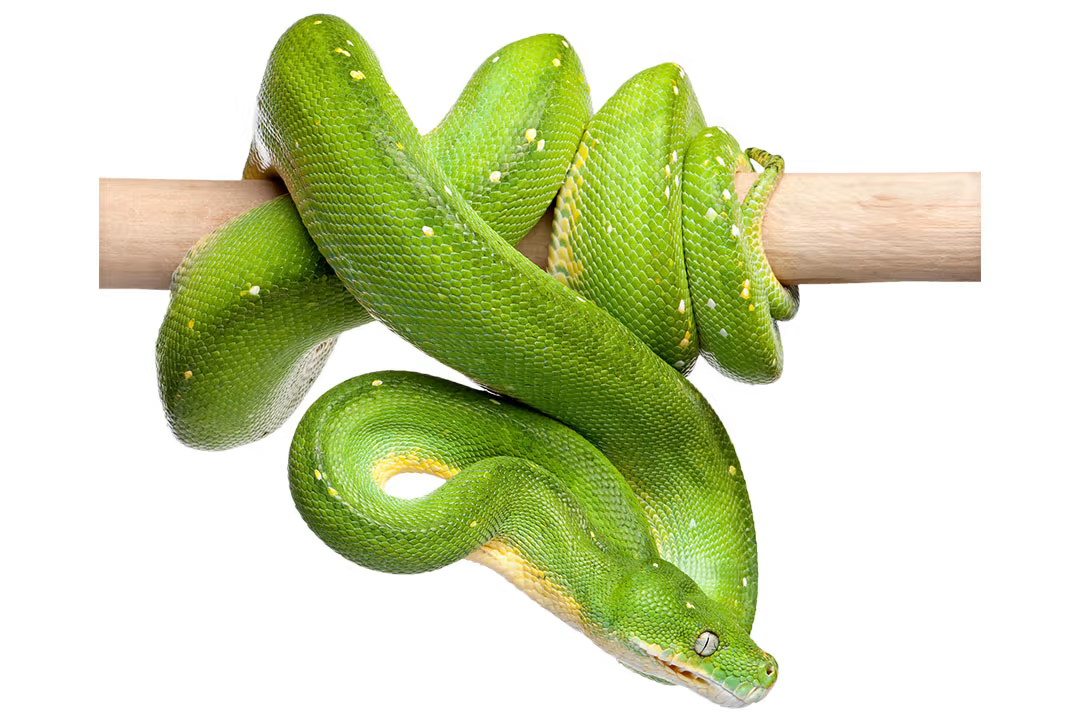
Raise a Healthy Python: Food, Habitat, Health & Handling Tips
Learn how to care for a Python, recommended diet & habitat setup. Find the right food, supplies & equipment at your neighborhood Petco.
Updated on November 13th, 2025
- Home & Habitat
Your Guide to Healthy Freshwater Aquarium Plants & Thriving Fish
Learn how to pick the right aquarium plants, substrate, lighting, and fertilizers to ensure that your aquarium plants thrive and stay healthy.
Updated on November 13th, 2025
- New Pet
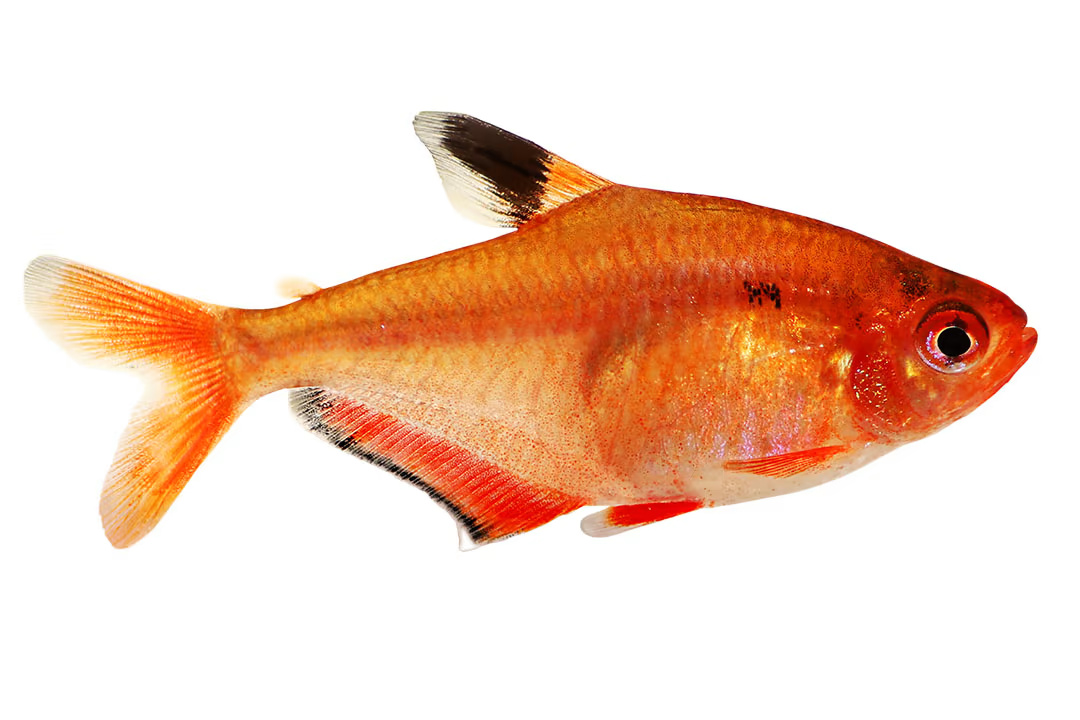
Freshwater Community Fish: Care, Setup & Compatibility Guide
Learn how to care for freshwater community fish, recommended diet & aquarium setup. Find the right food, supplies & equipment at your neighborhood Petco.
Updated on November 13th, 2025
- New Pet
Perfect New Fish Tank: Water Quality & Cycling for Healthy Fish
Before establishing an aquarium at home, learn more about the basics of fish care.
Updated on November 13th, 2025
- New Pet
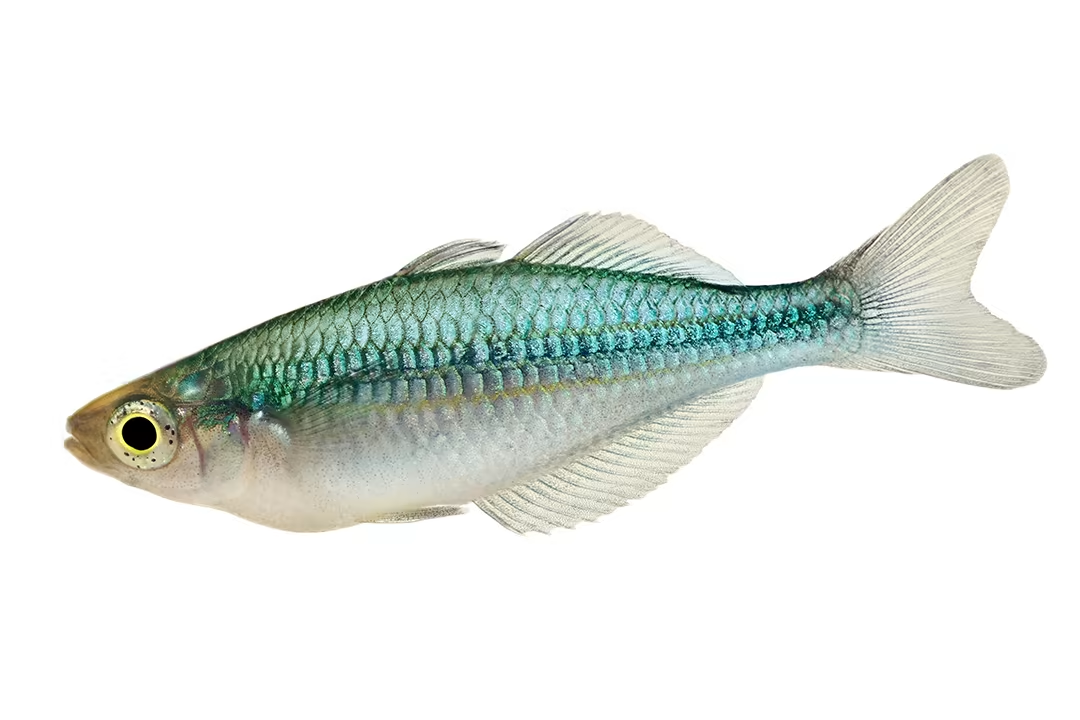
Rainbow Fish Care: Tank, Food, & Compatibility for Thriving Pets
Learn how to care for Rainbow fish, recommended diet and aquarium setup. Find the right food, supplies and equipment at your neighborhood Petco.
Updated on November 13th, 2025
- Health & Wellbeing
I got 3 zebra danios and 2 leopard danios at petco and in about a day of having them one died. the next day another dies with a strange white spot growing on it. it was not like cotton through which I hear is a disease. my tank is a 20 gallon and be
Anytime there is an unexpected loss of fish, water chemistry should be checked. Use a home test kit ( https://www.petco.com/shop/en/petcostore/product/api-freshwater-master-test-kit# ) or submit a water sample for testing. Most pet stores will do this for free or for a small fee. Confirm an absence ( 0 ppm ) of ammonia and nitrites with a nitrate level of 20 ppm. pH can range between 6.5 and 8, water temp should be 65 F to 75 F. If chemistry and water quality are within normal parameters, then illness or aggression would be other reasons for the loss. It is always recommended to quarantine fish in a separate tank for 2-4 weeks prior to adding them to the main tank. During this time, they can be treating for infection or parasites. I am sorry for the loss of your fish.
Updated on August 12th, 2025
- Health & Wellbeing
Hello! Things didn’t go so well with cichlids and I only have one remaining which I moved to a different tank. The 45 is now empty and the others besides one blue African cichlid has died. I did water tests and most came out fine except the Carbonate
Water conditioning can be complicated and I recommend to stop by your local aquarium store. They are most often familiar with the local water quality and can give recommendations specific to your location. Some areas need buffering solutions to help control things like the water pH. Here are a few links which may help answer some of your questions about water condition: https://www.aqueon.com/articles/freshwater-aquarium-water-quality https://www.petcoach.co/article/aquarium-water-management-alkalinity-vs-water-hardness/ Before moving your goldfish, make sure all the conditions are appropriate for goldfish: https://www.aqueon.com/information/care-sheets/goldfish https://www.petcoach.co/article/how-to-help-your-new-goldfish-thrive/ I hope this helps and please feel free to post any additional questions.
Updated on August 12th, 2025
- Health & Wellbeing
I have just brought a new rapheal spooted catfish what care should I take as it is with discuss arrowana and blue angel pls will u share me the link how to hold it
These catfish, and most fish, should not be handled frequently if at all. They have barbs, for self defense, that can injure you. If you must handle them, wear gloves and gently scoop them up from underneath. There may be some concerns keeping all these species together in one tank. Arowanas get very big and require large tanks. They can also be quite aggressive and may go after the Discus and Angels. The catfish, being a bottom dweller, may be safe. Another issue may be water hardness. Discus and Angels come from soft, acid water while Raphaels prefer hard water. Also, the Aro, Discus may do better in warmer water than the Angels and Raphael. These are all impressive fish and a joy to keep, but you consider the natural environment of each species before placing them all in the same tank.
Updated on August 12th, 2025
- Health & Wellbeing
Hello :). I have two fish one golden and one silver like, they are put in a fairly sized bowl, they seem to be happy for about 3 months now, i change the water daily, but something weird that never happened before happened which is seeing them on the
Begin by submitting a water sample for quality testing. Most pet stores will do this for free or a nominal fee. High ammonia levels, PH imbalances may be responsible for that. Oxygen concentration and quality of the filters should be determined as well. Lack of oxygenation could be the cause of it. If water quality is good and there are no major imbalances, Bubbles should examined to look for any sign of bacterial/fungal infection and eventually water should be treated. Please do not hesitate to contact us again on the forum or by requesting a consultation (where you can post pictures ) if you have any more questions or to discuss it any further.
Updated on August 12th, 2025
- Health & Wellbeing
I got a fish from the fair. Its orange, gender unknown. What do I feed it for the meantime, and how do I take care of it so it doesn't die. It's current habitat is a plastic bowl with a lid, probably the size of the ones people get at petsmart. Pleas
It sounds like you need to take a trip to your local pet store. The clerks there can help you pick out an appropriately size tank with proper filtration and heating that can help keep Sushi healthy. They can also let you know what water treatments you'll need for the water in your area, as well as test any water you bring it to see if it is OK for Sushi to live in. Pet stores will also carry commercial goldfish food which is a balanced diet that is given to them. It should have feeding instructions on it so you know how much is appropriate to give to Sushi.
Updated on August 12th, 2025