Two Easy Ways to Start Earning Rewards!
Become a member today! Members-only pricing and offers, personalized care notifications, Vital Care points back on every purchase and more!
 Become a credit card member today!
Earn 2X Pals Rewards points at Petco
when you use Petco Pay!APPLY NOWLearn More About Petco Pay Benefits
Nature's Ocean Saltwater Test Kits & Water Care


Related Searches
Related Articles & Questions
- New Pet
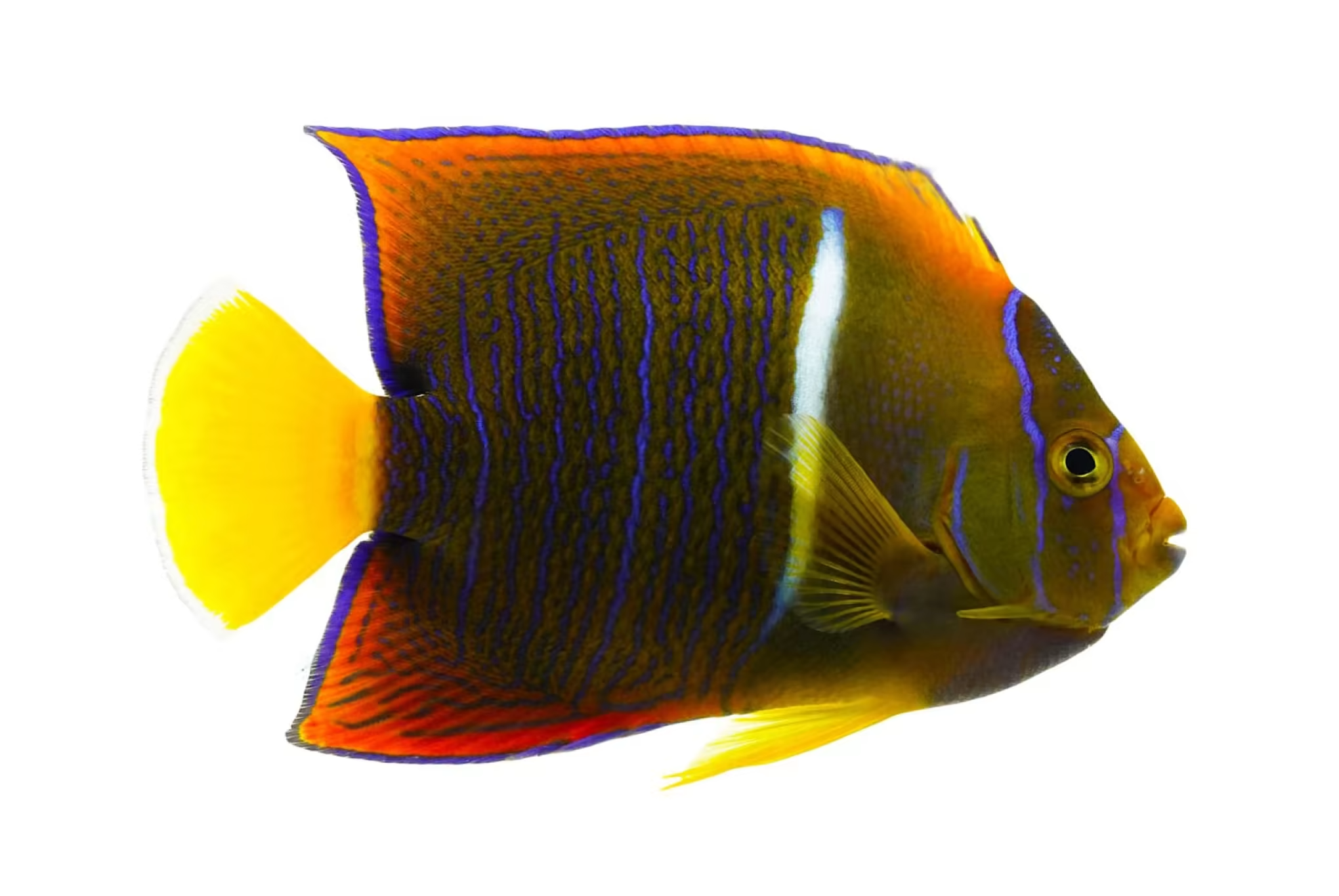
Essential Large Marine Fish Care Guide: Tank Setup, Diet, & Tank Mates
Learn how to care for large marine fish, recommended diet and habitat setup. Find the right food, supplies and equipment at your neighborhood Petco.
Updated on November 13th, 2025
- New Pet
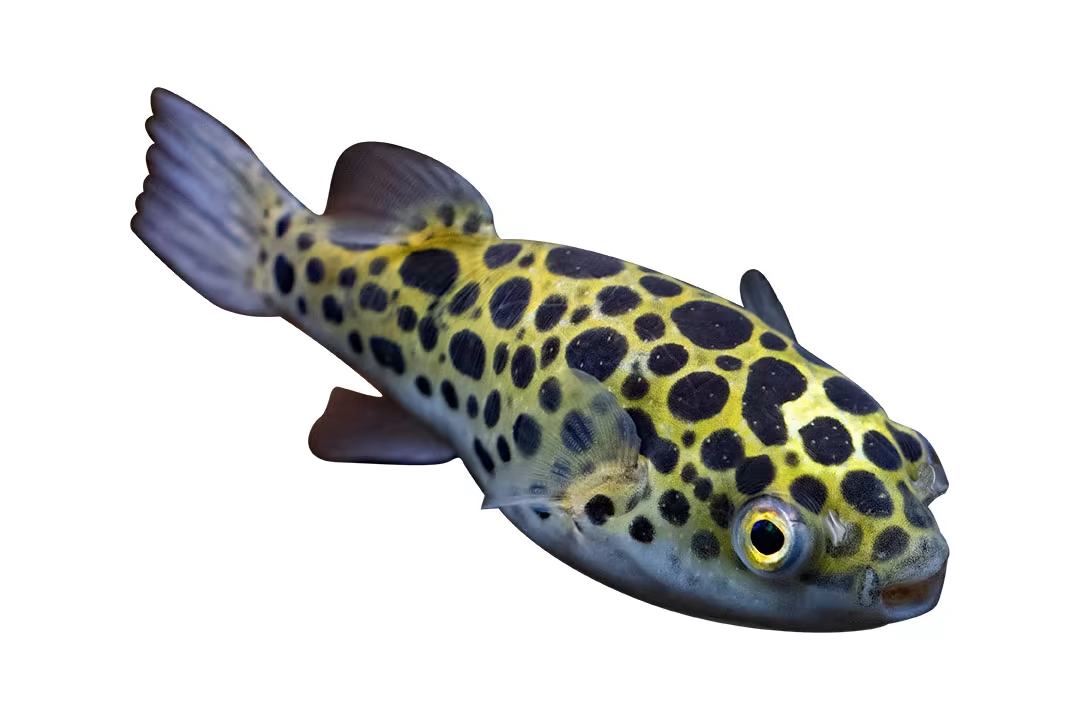
Brackish Water Fish Care: Your Complete Guide to Tank, Food & Species
Learn how to care for brackish water fish, recommended diet & aquarium setup. Find the right food, supplies & equipment at your neighborhood Petco.
Updated on November 13th, 2025
- New Pet
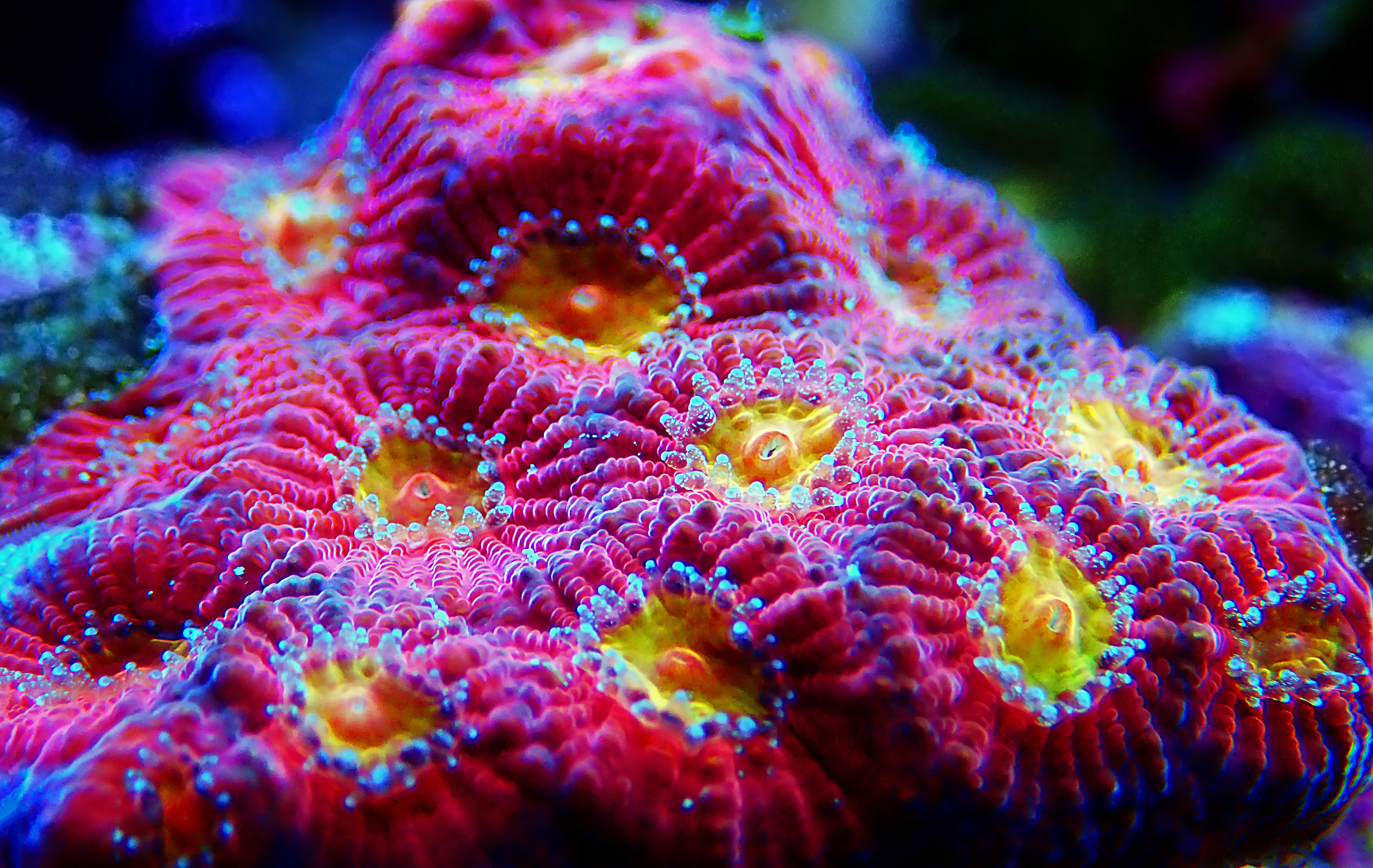
Hard Coral Care: Setup, Feeding, & Compatibility for Your Reef Tank
Learn how to care for hard coral, recommended diet and aquarium setup. Find the right food, supplies and equipment at your neighborhood Petco.
Updated on November 13th, 2025
- Home & Habitat
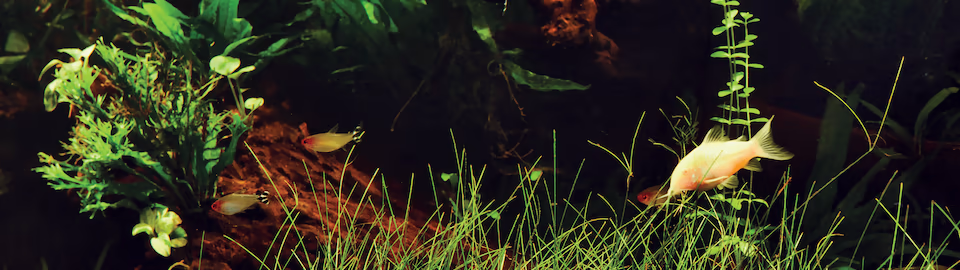
Your Guide to Healthy Freshwater Aquarium Plants & Thriving Fish
Learn how to pick the right aquarium plants, substrate, lighting, and fertilizers to ensure that your aquarium plants thrive and stay healthy.
Updated on November 13th, 2025
- New Pet
Nano Reef Tank Setup & Care: The Ultimate Marine Aquarium Guide
If you are looking to bring a slice of a coral reef into your home but are limited on space, a nano marine aquarium might be the right choice for you. Learn how to care for a Marine Nano Reef Aquarium.
Updated on November 13th, 2025
- Food & Nutrition
What types of fish should I buy because I'm a beginner in this . I have a 1 feet tank . One more thing I have heard that live-bearers could be best But I want your suggestion. And also what other Things I should buy and can you tell me a site that ca
Without anything to use for scale, it is hard for me to tell how big your tank is, but in general it seems very small. Also, the water that is in the tank appears very cloudy right now, so that would be the first place to start. Water quality is very important, and will make or break your ability to house and care for fish. I would recommend getting a good filter system (you can visit a local pet store to assist you with brands in your area, as I am not familiar with what you can get in India). Be sure to bring the measurements (height, length, width) of your tank, or the gallons or liters so they can tell you what capacity of filter you will need. Everything else will depend on what types of fish you get - if you plan on getting multiple fish, they will need to be small - a general rule of thumb is one square inch of fish per gallon of water. Depending on the species you get, you may need to also get a bubbler to ensure there is enough oxygen in the water for them, and you will also
Updated on August 12th, 2025
- Health & Wellbeing
Hi I’m new in having fish, I got from a friend 9gold fish and 2 koi, a week ago I got 3 koi’s, they where totally fine but the las 2 days the 3 seemed away from the rest higher and looking towards a corner, one died today. And I’m asking for some adv
Check the water chemistry first. Use a home test kit or submit a water sample for testing. The local pet store or fish store may do this for free or for a small fee. Aim for an absence (0 ppm) of ammonia and nitrites with a nitrate level of 20 ppm or less. Perform partial water changes as needed to stabilize chemistry and/or to improve water quality. Use only conditioned water that is temperature matched to prevent stress or shock. These fish produce a larger than average bio-load (wastes), so strong filtration is a necessity. The filter should be rated for at least twice the volume of the tank. The size of the tank may also be an issue. When keeping koi, tanks or ponds in the hundreds (or even thousands) of gallons are common. The number of fish in the current tank is too high. Consider getting multiple tanks or a significantly larger tank. 9 goldfish would need at least a 100 gallon tank. The additional koi increases this number.
Updated on August 12th, 2025
- Health & Wellbeing
Is it suitable to make a 1 feet marine tank. What fish should i keep in it?
It is very difficult to get a good biotope in a just 1 foot long tank unless it is a few feet high. You will not be able to keep fish in it, only invertebrates, maybe a few shrimp or sea anemones. It is much harder to keep the water healthy in a small tank,and the appliances needed for running a salt water aquarium cost pretty much the same (if available) as appliances for a larger tank. I suggest you join a club of salt water aquarists who will be able to start you off perfectly. Your local fish/pet shop should be able to point you to a club.
Updated on August 12th, 2025
- Health & Wellbeing
Hi. My fish is coming on the surface to breathe very frequently and looks restless. Recently it's partner died. They have been together for 3 years. What mught be issue with her.
Thanks for reaching out about Nemo. Have you tested water quality for pH, ammonia, nitrites and nitrates? Having difficulty breathing is a common cause for raising to the surface to breath. Gills can be damaged by poor water quality, disease (parasites, bacteria, viruses), toxins and more, so determining a diagnosis will help with a treatment plan. A veterinary visit is recommended to assess and provide a diagnostic/treatment plan. Correct water quality, provide more oxygen via an airstone. Good luck.
Updated on August 12th, 2025
- Training & Behavior
My fishes are being soo Inactive. I've checked every, the temperature and all. Air flow too, but they are still inactive. They only get active when I feed them
Hi, and thanks for your question. Begin by submitting a water sample for quality testing. Most pet stores will do this for free or a nominal fee. Clinical examination should always include a water quality check, even if you have done so already. Water testing should be performed with a quality test kit, measuring NH4, NO2 and NO3. High ammonia levels, PH imbalances may be responsible for these signs. Oxygen concentration and quality of the filters should be determined as well. If water quality is good and there are no major imbalances, your fish should get examined to look for any sign of bacterial/fungal infection and eventually water should be treated. Hope this answer was helpful, but please do not hesitate to contact us again on the forum or by requesting a consultation if you have any more questions or to discuss it any further. If this answer was helpful please let us know, this will be used to improve our service!
Updated on August 12th, 2025