Two Easy Ways to Start Earning Rewards!
Become a member today! Members-only pricing and offers, personalized care notifications, Vital Care points back on every purchase and more!
 Become a credit card member today!
Earn 2X Pals Rewards points at Petco
when you use Petco Pay!APPLY NOWLearn More About Petco Pay Benefits
Nature Zone Reptile Food
Get It Today


Related Articles & Questions
- New Pet
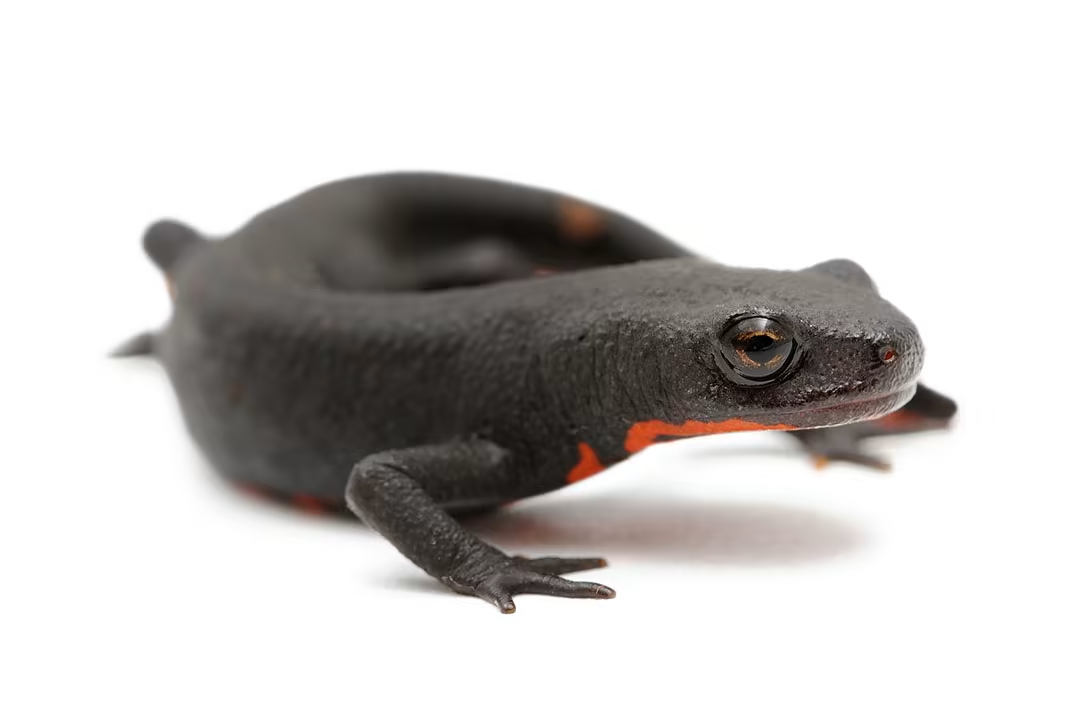
Mastering Pet Salamander & Newt Care: Food, Habitat, Health Guide
Learn How to Care for a Salamander & Newts, recommended diet and habitat setup. Find the right food, supplies and equipment at your neighborhood Petco.
Updated on November 13th, 2025
- Home & Habitat
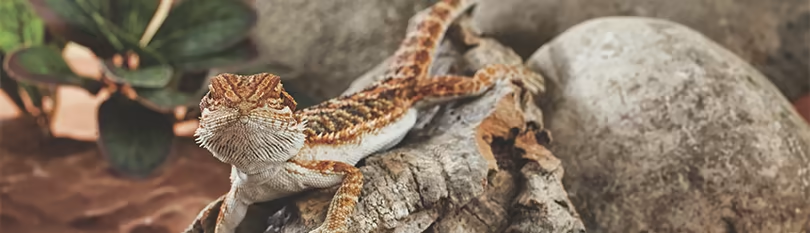
Reptile Lighting: Choose the Best Heat & UVB Lamp for Your Pet
When it comes to reptile habitats, one of the most essential elements to creating a happy home for your pet is including the appropriate type of lighting. Zoo Med helps outline which lights are right for your pet.
Updated on November 13th, 2025
- New Pet
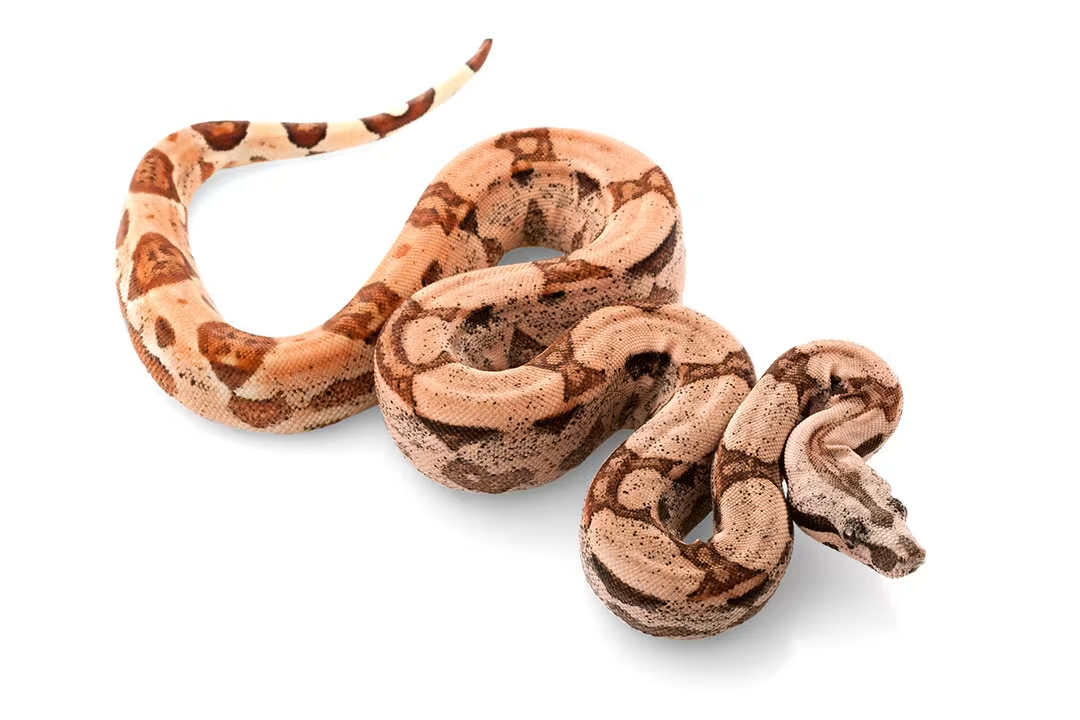
Boa Constrictor Care: The Ultimate Food, Habitat & Health Guide
Learn how to care for Boas, recommended diet & habitat setup. Find the right food, supplies & equipment at your neighborhood Petco.
Updated on November 13th, 2025
- Food & Nutrition
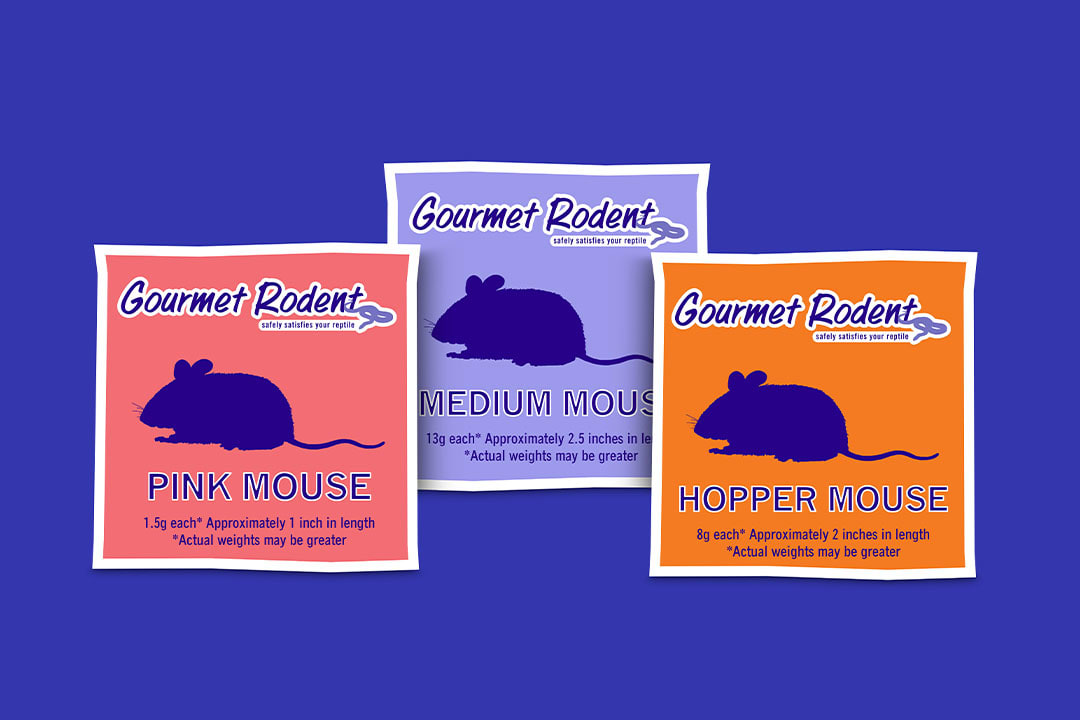
Boost Health: Frozen/Thawed Diet for Your Reptile & Amphibian
Learn how to thaw frozen mice for feeding time. Find out how to safely prepare and clean up after frozen meals at Petco.
Updated on November 13th, 2025
- New Pet
How to Prevent Reptile Illness: Safe Handling & Habitat Cleaning
Read these guidelines about handling reptiles to provide a safe and fun environment for your pet, friends and family.
Updated on November 13th, 2025
- Health & Wellbeing
Since full spectrum growl lights for plants are supposed to mimic natural sunlight (is that correct?) then can I use that for my green anole lizard glass cage and save all that cost for a uvb light? I also have a heating pad for my back I could put u
Hello. For the best health & living conditions for your anole, please only use products designed for them. Heating pads are dangerous & reptiles are not plants & require a very specific spectrum of light to grow in a healthy manner. In the long run, you will have less problems & metabolic health issues if you prepare a proper environment for your pet. Thanks for using Boop by Petco.
Updated on August 12th, 2025
- Health & Wellbeing
I am not sure of my turtles age. I have had her for 3 yrs. Dosen't seem to be growing and I'm concerned about the underneath shell. Looks like it is splitting. She is in a 10 gal tank always by the window for sun. Is the tank to small? She eats
That hinge on her plastron (bottom shell) is normal. It is supposed to appear "split". That allows her to close up securely when she retracts her head. These turtles do not get as big as other species, but a 10 gallon tank is too small. She also needs a UVB light source. Windows will block most of the sun's beneficial rays. You can find a UVB light source in most pet stores. A popular brand is the ZooMed ReptiSun light. They are good eaters, eating a wide variety of animal protein, plant matter and commercial diets. The link below leads to a care sheet providing additional information. http://www.reptilesmagazine.com/Three-toed-Box-Turtle-Care-and-Information/
Updated on August 12th, 2025
- Health & Wellbeing
How much greens should I feed my red eared slider with pyramiding and soft shell at a time.Should I feed both pellets and greens together in a day?Which heat lamp brand do you recommend and how many watts should I buy if the lamp is 21 cm away from t
Plant matter should make up 50% of the diet with the other half divided between commercial pellets and animal protein/prey. Juveniles should be fed daily. These little guys are eating machines, so you can offer greens in the morning and pellets later or you can alternate days. Any basic lamp/reflector can be used. Start with a 100 watt bulb. If the temps are too high, use a lower wattage bulb or move the lamp farther away. This is where using thermometers can help you regulate heat.
Updated on August 12th, 2025
- Health & Wellbeing
Also I don’t know if the boy is bullying her I don’t think he is but they sleep together and seem fine he just pulled off some skin when she was shedding and chased her once but didn’t try to hurt her
I am very sorry but you have not provided enough information for us to help you. What types of animal are you referring to? It just states reptile: are you talking about geckos, snakes, bearded dragons, turtles.........??? Do you have some photos of the skin that was pulled off? Please post again with more information and photos. Thank you.
Updated on August 12th, 2025
- Health & Wellbeing
I have 3 red slider turtles. I been having them for over 6 months now and they are starting to become picky eaters. 2 of them are wild and 1 is from the per store. I tried three different brands and kinds of food and they only eat the dried shrimp. I
Shrimp should not be the sole source of nutrition. This may lead to deficiencies. Sliders are omnivorous and should be fed a combination of greens and proteins. Offer live prey such as crickets, minnows, nightcrawlers and superworms. Dark, leafy greens can be chopped finely and offered. A commercial pellet or stick formula should also be fed. To stimulate the appetite, you can soak pellets in some water used to rehydrate dried shrimp or krill. Fasting the turtles for a day or two will also get them hungry enough to eat pellets or prey. Be sure to provide adequate space, heat and lighting. Allow 10 gallons per inch of she'll as a guideline for tank size. Three sliders, when fully grown will need a large tank. UVB lighting will aid in calcium metabolism and heat is necessary for proper digestion and health in reptiles. Water temperature should range between 75F and 85F. A basking area should be 90F to 95F. Care should be taken when housing wild caught turtles with captive bred turtl
Updated on August 12th, 2025