Two Easy Ways to Start Earning Rewards!
Become a member today! Members-only pricing and offers, personalized care notifications, Vital Care points back on every purchase and more!
 Become a credit card member today!
Earn 2X Pals Rewards points at Petco
when you use Petco Pay!APPLY NOWLearn More About Petco Pay Benefits
Lixit Lovebird Shop


Related Articles & Questions
- New Pet
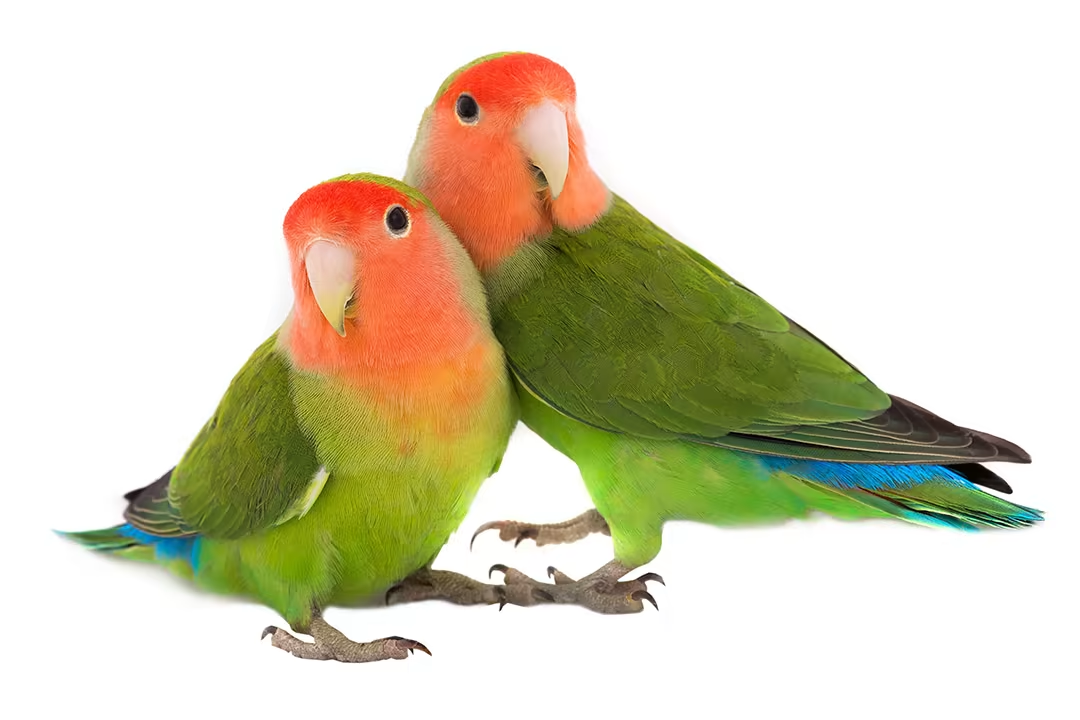
Lovebird Care: Your Complete Guide to Food, Habitat & Health
Learn how to take care of your Lovebirds, recommended cage size, diet and housing setup. Find the right food, supplies and equipment at your local Petco.
Updated on November 13th, 2025
- New Pet
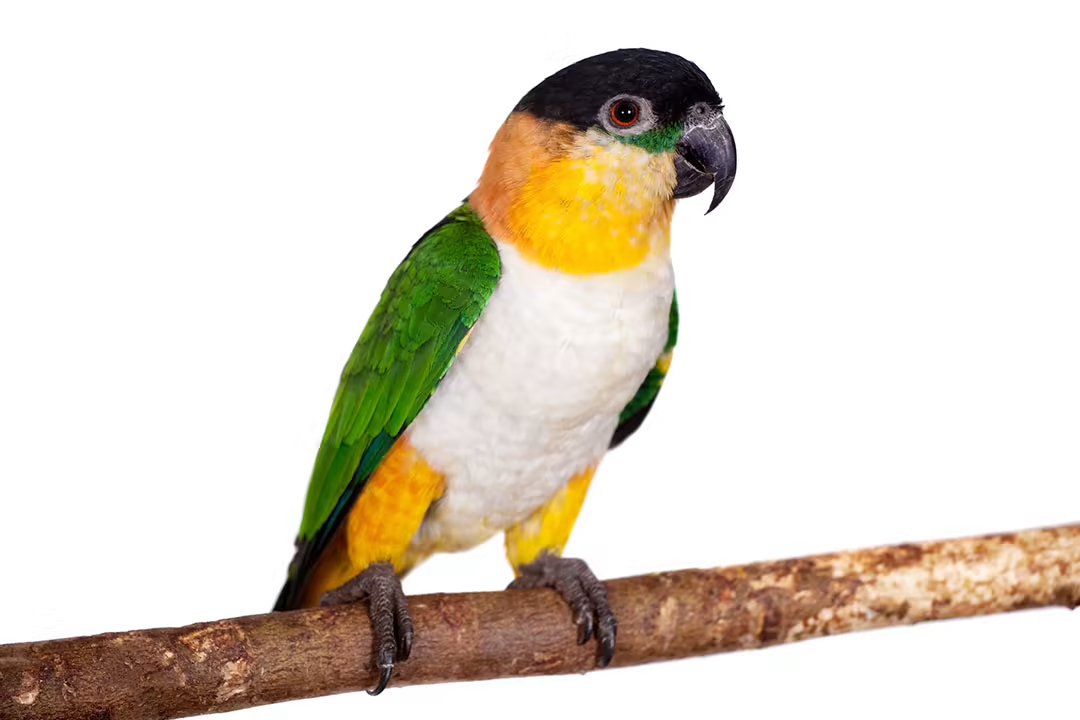
Small Hookbill Parrot Care: Food, Habitat, Health & Behavior Tips
Learn how to care for small hookbill parrots, recommended diet & bird cage setup. Find the right food, supplies & equipment at your neighborhood Petco.
Updated on November 13th, 2025
- New Pet
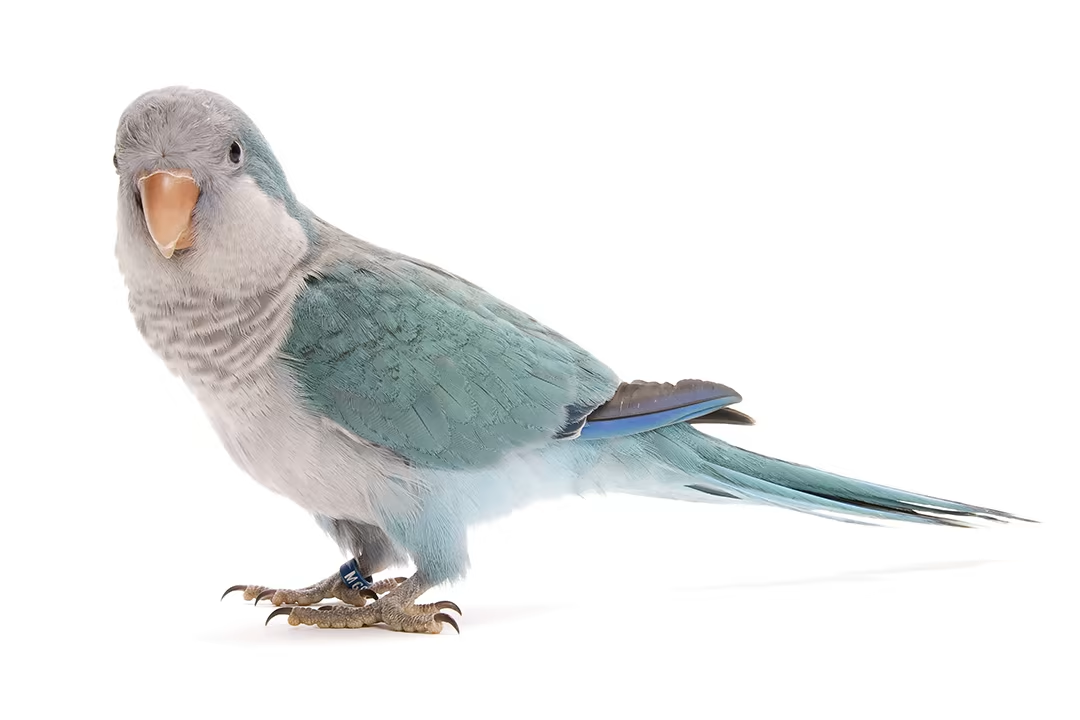
Master Medium Parakeet Care: Essential Guide for a Long, Happy Life
Learn how to care for a medium-sized parakeets, recommended diet & bird cage setup. Find the right food, supplies & equipment at your neighborhood Petco.
Updated on November 13th, 2025
- New Pet
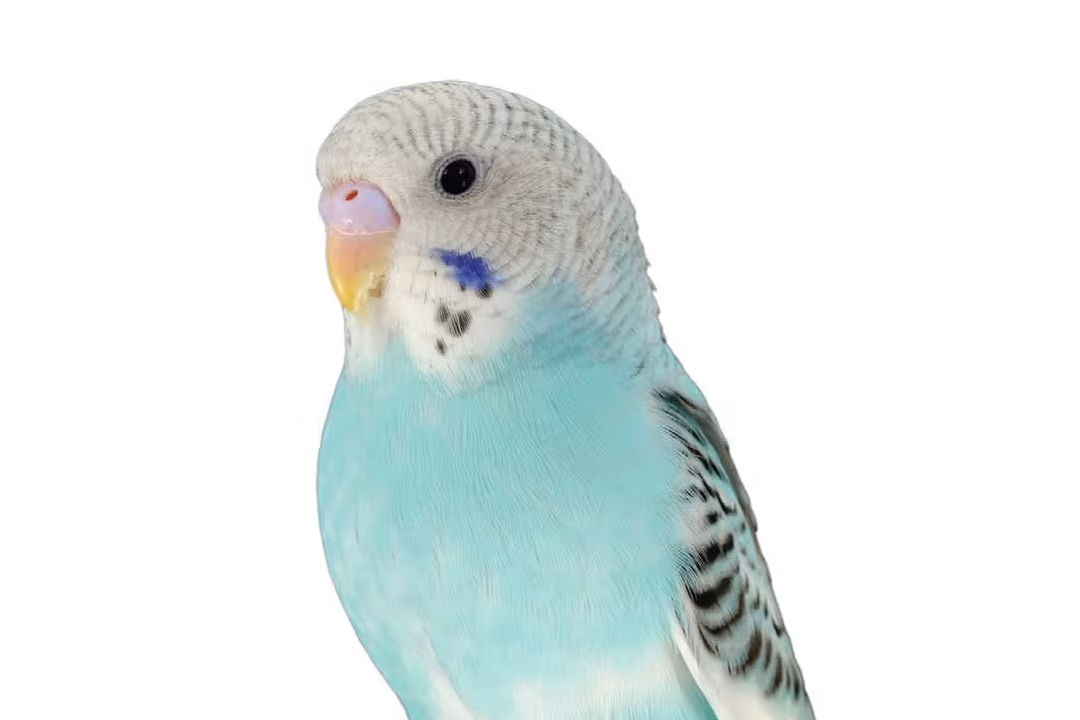
Parakeet Care: Your Complete Guide to Budgie Food, Habitat & Health
Learn how to care for parakeets (budgies), recommended diet and habitat setup. Find the right food, supplies and equipment at your neighborhood Petco.
Updated on November 13th, 2025
- New Pet
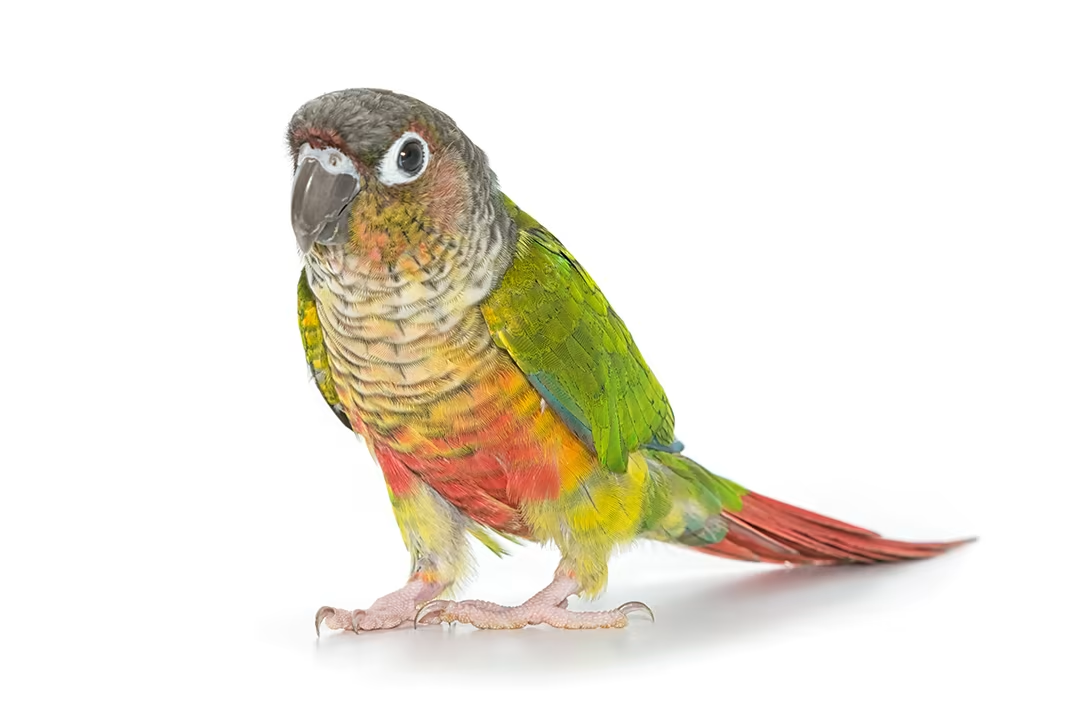
Green-Cheek Conure Care: Essential Food, Habitat & Health Guide
Green-cheek conures are highly inquisitive, bold, and engaging birds. Learn how to care for Green-cheek conures, what to feed them, habitat setup, and more.
Updated on November 13th, 2025
- New Pet
I've got a few questions. First my two birds are having a hard time bonding with me how do I fix that? Second I think my hamster needs a bigger cage, picture below, 3rd my leopard gecko has a heating Rock does that mean I can leave his light off dur
Thanks for reaching out. Sound like you have a full house. 1. Birds will often bond together but continue to work with them in a quiet environ, offering treats to win and re-enforce trust. Toys, the radio or tv, can all assist with boredom. Setting up foraging toys so birds need to spend time looking for food. 2. There is no such thing as too big a cage. 3. Heating rocks are rarely approved for use, as they will eventually become faulty and get too hot, potentially damaging the animal. A heat lamp is recommended. 4. The bunny's litter box should be spot cleaned daily and full clean weekly. If you can smell it you waited too long. Good luck.
Updated on August 12th, 2025
- Health & Wellbeing
I got Pico, a lutino lovebird in July 2018, I have another lovebird who is tame and I hand tamed her. I got her in July 2017. It took about 3 months for her to be completely tame. It’s been about 4 months with the same taming technique and Pico is ma
Thanks for reaching out about Pico and including pictures. Individual birds with respond differently to training techniques. Being the provider of treats and playful activities can gain trust. Letting Pico see you play with the other lovebird, and then want that same experience, might help also. This is a difficult one, because not all birds are tamable. Good luck. Be persistent.
Updated on August 12th, 2025
- Food & Nutrition
My peached faces bird flips her food bowel. This wastes all the food in the bowel and I don’t know why she does this or how I can stop this behavior. Also, sometimes I find her sitting on the floor of the cage and I’m not sure why.
You can secure the food dish to the cage so she can't tip it over. Shouldn't be hard to do. Sometimes they will sit at the bottom of the cage and that would be normal. If it becomes excessive she could be sick, in which case, she needs to see a vet. I suggest you put more toys and things in the cage for her to do and play with. She sounds bored. Also, an all seed diet is not recommended for any bird. I suggest you try to switch her over to Lafeber's Nutriberries or AviCakes. There is a lot of good information on their website. ( https://lafeber.com/pet-birds/species/lovebird/ )
Updated on August 12th, 2025
- Health & Wellbeing
How can I cure this dry feet on my bird? If She has mites, do I spray it on her feet? Her nail is also very wobbly. Is there something wrong? Btw I feel like She needs to get her beak trimmed because every time she bites, it feels like a bee sting. H
Follow directions for application on the container. Some sprays can be used directly on the bird (avoiding the eyes, nose and mouth), others cannot. Clean and sanitize her cage, bowls, perches and toys. Discard anything that cannot be sanitized. Change the cage paper or substrate daily. Provide a mineral block, pumice stone or cuttlebone to maintain beak length. Your avian veterinarian can trim the beak if necessary. Concrete or textured perches can also be used as they promote healthy feet as well as provide natural beak trimming opportunity.
Updated on August 12th, 2025
- Health & Wellbeing
Our lovebird keeps on yelling even when he's not alone in the room. He has food and water but still yells and it's quite irritating. Is he alright?
Kiki may be bored, stressed or ill. Provide more interaction and attention if possible. Birds are flock animals and although some are fine alone, others may need "company". This extra attention could be from human or avian companionship. Rearrange the cage to provide enrichment. Switch out old toys for new toys, provide different sized perches and offer a variety of foods for him to forage. Monitor for lethargy, loss of appetite, loose droppings or sitting quietly with eyes closed and feathers puffed out. These can be signs of illness requiring an exam with an experienced avian veterinarian.
Updated on August 12th, 2025