Two Easy Ways to Start Earning Rewards!
Become a member today! Members-only pricing and offers, personalized care notifications, Vital Care points back on every purchase and more!
 Become a credit card member today!
Earn 2X Pals Rewards points at Petco
when you use Petco Pay!APPLY NOWLearn More About Petco Pay Benefits
Instant Ocean Saltwater Test Kits & Water Care
Get It Today


Related Searches
Related Articles & Questions
- Home & Habitat
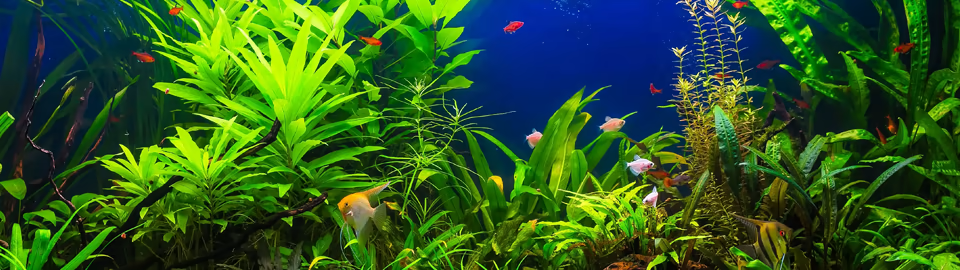
Freshwater Aquarium Salt: Benefits & Safe Use for Thriving Fish
Learn how to use aquarium salt in freshwater aquariums to promote healthy gill functions, reduce stress, and treat infections in fish.
Updated on November 13th, 2025
- New Pet
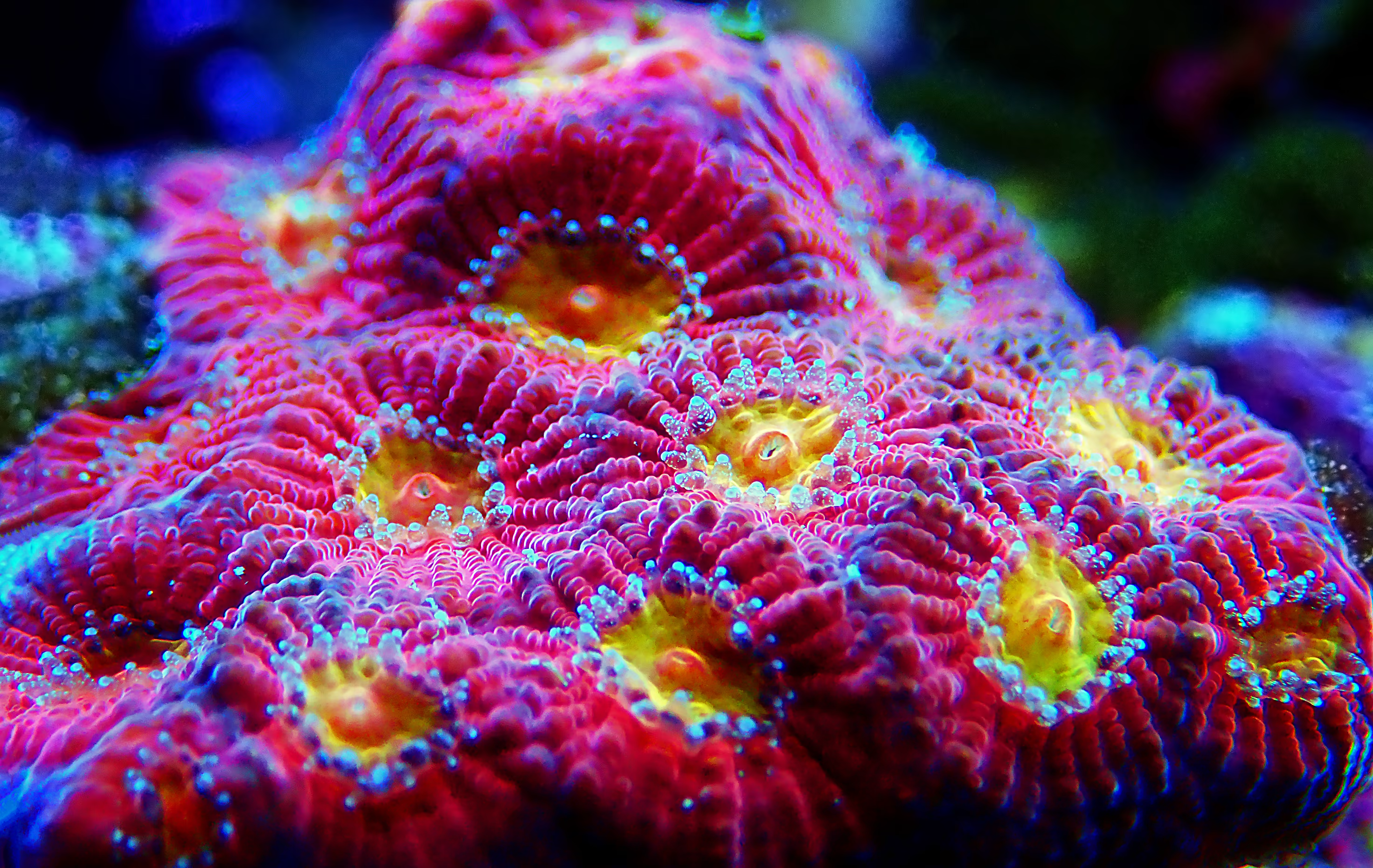
Hard Coral Care: Setup, Feeding, & Compatibility for Your Reef Tank
Learn how to care for hard coral, recommended diet and aquarium setup. Find the right food, supplies and equipment at your neighborhood Petco.
Updated on November 13th, 2025
- New Pet
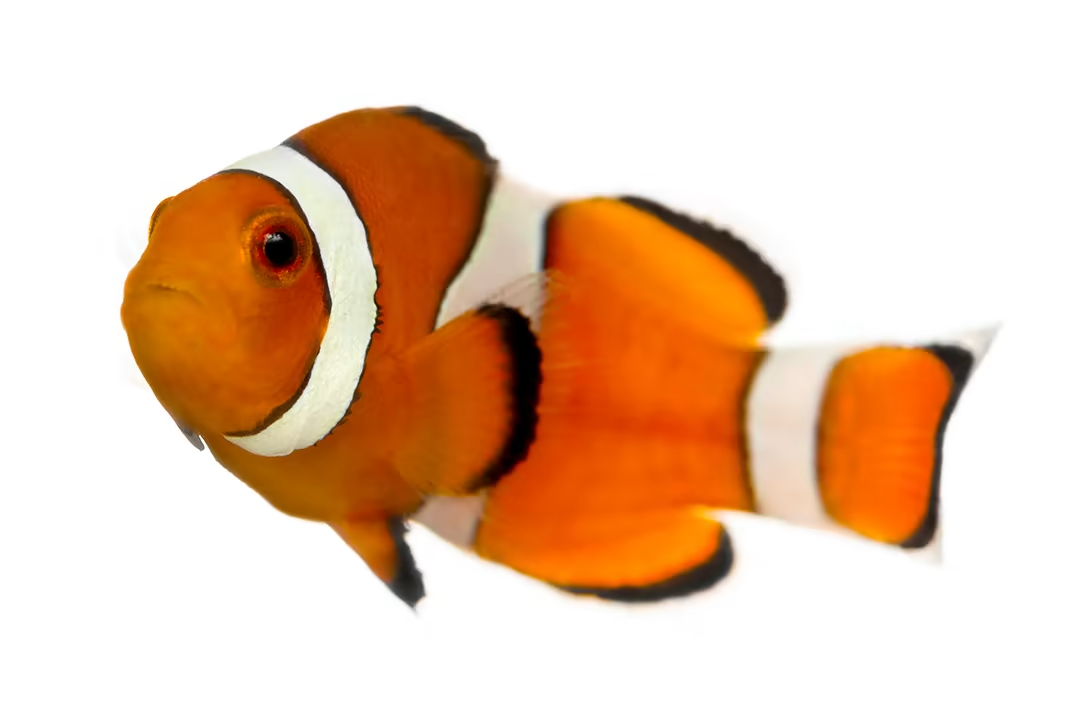
Clownfish Care: Your Easy Guide to Tank Setup, Food & Compatibility
Learn how to care for a Clownfish, recommended diet and aquarium setup. Find Clownfish for sale, supplies and equipment at your neighborhood Petco.
Updated on November 13th, 2025
- New Pet
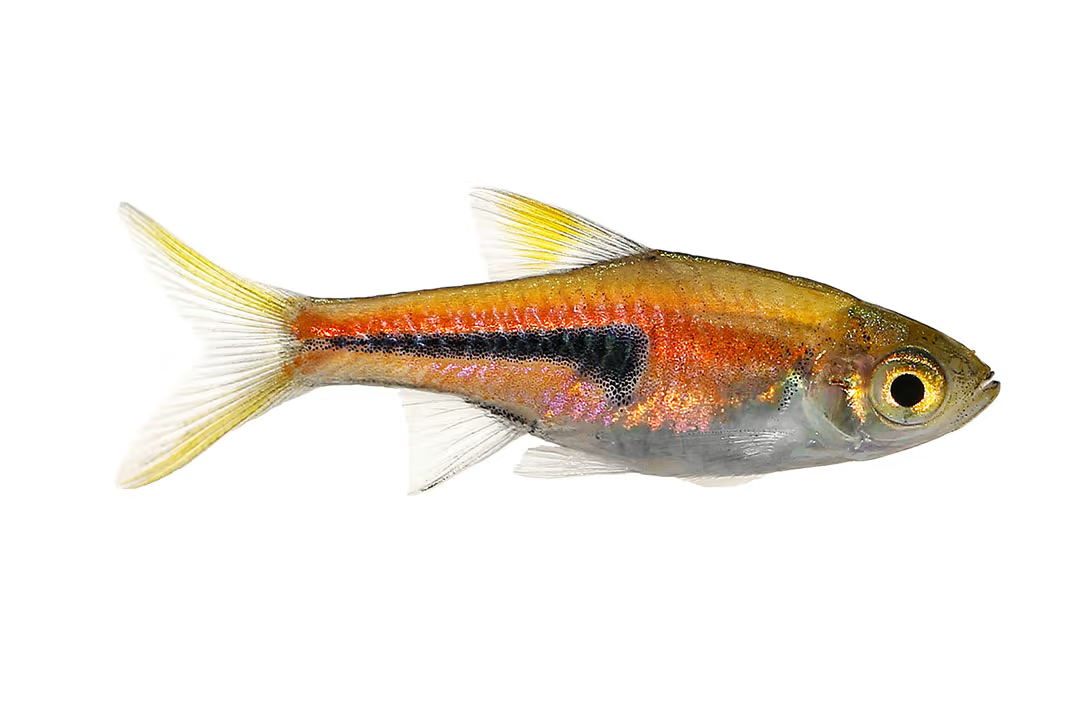
Freshwater Semi-Aggressive Fish: Top Secrets for a Thriving Tank
Learn how to care for semi-aggressive fish, recommended diet & aquarium setup. Find the right food, supplies & equipment at your neighborhood Petco.
Updated on November 13th, 2025
- Home & Habitat
Your First Fish Tank: Easy Setup Guide for a Thriving Aquarium
Everything you need to know about how to start a fish tank. Learn about setting up an aquarium, choosing the right type, and acclimating new fish to your tank.
Updated on November 13th, 2025
- Health & Wellbeing
I'm about to buy some new fishes mostly Tetra Can you help me what fish should I buy because I am beginner in this things. Please tell me what sort of things I should bring I have a one foot tank now other than that What should I purchase from Aquar
Before you buy any fish, you will need to set up the tank. A basic set up includes: a tank, filter, hood/light, heater, gravel and some decor. The tank should run without fish for at least 4 to 6 weeks. This gives it time to cycle. The Nitrogen Cycle is critical to the health of the tank and any fish you will be keeping. During this time, beneficial bacterial will populate the filter and substrate (gravel). These bacteria will be responsible for breaking down fish wastes and other wastes (uneaten food, dead plants, etc.). You will need a home test kit to monitor water chemistry (ammonia, nitrites, nitrates, pH) or you will have to submit water samples for testing. Most pet stores will do this for free or for a small fee. At first, you will see high levels of ammonia and nitrites. Over time, as bacteria grow, these levels will drop. When ammonia and nitrites are at 0 ppm and nitrates are below 20 ppm, you can consider adding fish. Regular (every 1 or 2 weeks) partial water changes as we
Updated on August 12th, 2025
- Health & Wellbeing
We are new to having aquariums, we really didn't realize so many things played a factor with the water. We currently have a 10 gallon tank but want to increase to a 29 gallon tank. We currently buy gallons of water but with the 29 gallon tank we real
Water softeners leave very little salt residue in the treated water. Most, not all, fish *should* do fine in softened water. Make sure you get species that does better in soft water. Use a hardness kit and monitor KH. This parameter is what can affect pH. You can set aside a gallon or two and test it after it has aged for 24-48 hours to confirm it is safe to use. Check the softener unit for a bypass valve. Some units will have one or you can get one installed. Taps/faucets outside may not be in line with the softener, so you can use water from there if necessary.
Updated on August 12th, 2025
- Health & Wellbeing
Are these steps good for this fish's wound and finrot? Part of the fish fin fell off but it is okay now. We're planning to quarantine him and use aquarium salt. Is there any last minutes subs for the salt? Tomorrow is Christmas so the stores will be
Generally speaking you can follow these guidelines: - set up quarantine tank: make sure the tank is well oxygenation and has some plants for hiding; - add 1 teaspoon of aquarium salt per gallon; unfortunately it is very difficult to replicate the composition of aquarium salt back home so I would strongly suggest to buy a specific product. - add this product https://www.liveaquaria.com/product/4410/?pcatid=4410 as indicated; - leave your fish there and feed him regularly for 3-4 days until you don't see any improvement - If no results at all are seen after 4 days a check up would be needed as more specific tests may be needed to establish a specific diagnosis. Hope this answer was helpful, but please do not hesitate to contact us again on the forum or by requesting a consultation if you have any more questions or to discuss it any further. Please find the time to give us a feedback about the consultation as that will be used to improve our service.
Updated on August 12th, 2025
- Health & Wellbeing
Is it suitable to make a 1 feet marine tank. What fish should i keep in it?
It is very difficult to get a good biotope in a just 1 foot long tank unless it is a few feet high. You will not be able to keep fish in it, only invertebrates, maybe a few shrimp or sea anemones. It is much harder to keep the water healthy in a small tank,and the appliances needed for running a salt water aquarium cost pretty much the same (if available) as appliances for a larger tank. I suggest you join a club of salt water aquarists who will be able to start you off perfectly. Your local fish/pet shop should be able to point you to a club.
Updated on August 12th, 2025
- Health & Wellbeing
My fish floated to the bottom of the tank and won’t eat
Check the water quality and water chemistry. You can use a home test kit or submit a sample for testing. Most pet stores will do this for free or for a small fee. Aim for an absence (0 ppm) of ammonia and nitrites with a nitrate level of 20 ppm or less. Partial water changes can be done to stabilize chemistry or improve water quality. Use only conditioned water that is temperature matched to prevent further stress or shock. Goldfish are cold water fish and do best between 65 F and 72 F. Consider a much larger tank since goldfish produce a larger than average bio load (wastes). This can lead to poor water quality very quickly. Ideally, one goldfish should be kept in at least 20 gallon tank with 10 additional gallons added per extra fish. The filter should be rated for at least twice the water volume. Aquarium salt (NOT table or Epsom salt) can be used as a general tonic to reduce stress, increase gill function, treat minor infection and aid in recovery. Dissolve 1 tablespoon of salt per
Updated on August 12th, 2025