Two Easy Ways to Start Earning Rewards!
Become a member today! Members-only pricing and offers, personalized care notifications, Vital Care points back on every purchase and more!
 Become a credit card member today!
Earn 2X Pals Rewards points at Petco
when you use Petco Pay!APPLY NOWLearn More About Petco Pay Benefits
All-Glass
Get It Today


Related Articles & Questions
- New Pet
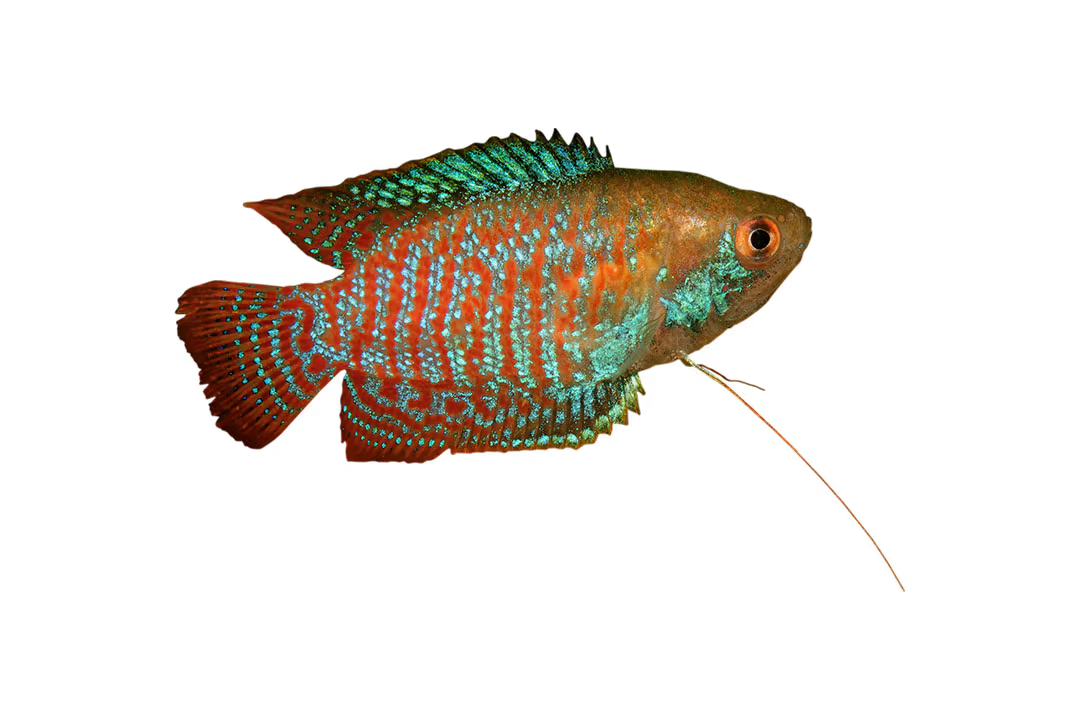
Mastering Gourami Care: Tank Setup, Food, & Habitat for Beginners
Learn how to care for Gourami, recommended diet and aquarium setup. Find the right food, supplies and equipment at your neighborhood Petco.
Updated on November 13th, 2025
- New Pet
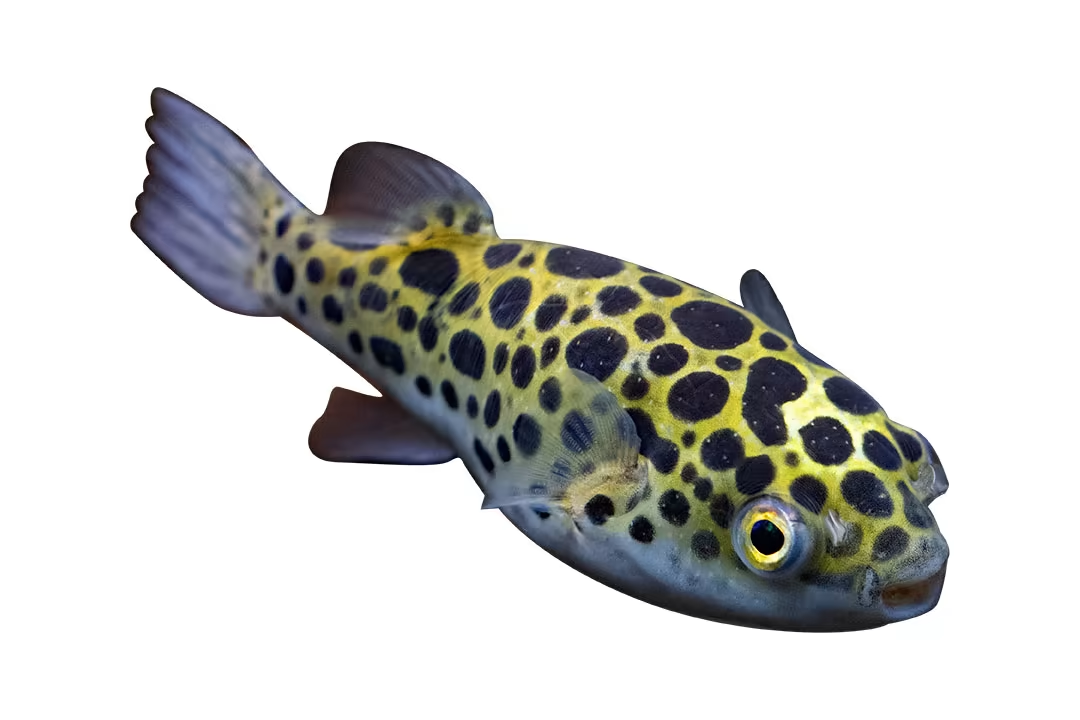
Brackish Water Fish Care: Your Complete Guide to Tank, Food & Species
Learn how to care for brackish water fish, recommended diet & aquarium setup. Find the right food, supplies & equipment at your neighborhood Petco.
Updated on November 13th, 2025
- New Pet
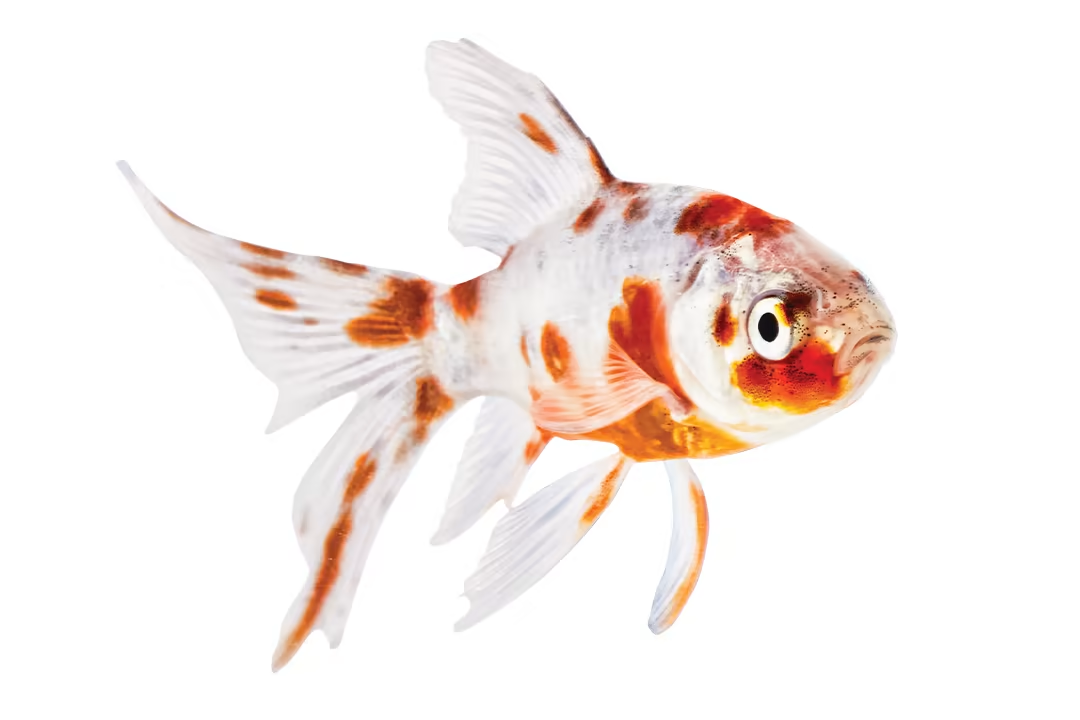
Goldfish Care Guide: Tank Size, Food, Water Quality for Thriving Fish
Learn how to care for Goldfish, recommended diet and aquarium setup. Find the right food, supplies and equipment at your neighborhood Petco.
Updated on November 13th, 2025
- Home & Habitat
How to Clean a Dirty Fish Tank: Crystal Clear Water & Happy Fish
Find out what tools you’ll need and discover the best way to get your aquarium back on track without starting over and find out how to maintain a clean fish tank.
Updated on November 13th, 2025
- Training & Behavior
Freshwater Aquarium Costs: Smart Spending for a Healthy Tank
The cost of purchasing and operating an aquarium can often be more than people expect.
Updated on November 13th, 2025
- Health & Wellbeing
I'm about to buy some new fishes mostly Tetra Can you help me what fish should I buy because I am beginner in this things. Please tell me what sort of things I should bring I have a one foot tank now other than that What should I purchase from Aquar
Before you buy any fish, you will need to set up the tank. A basic set up includes: a tank, filter, hood/light, heater, gravel and some decor. The tank should run without fish for at least 4 to 6 weeks. This gives it time to cycle. The Nitrogen Cycle is critical to the health of the tank and any fish you will be keeping. During this time, beneficial bacterial will populate the filter and substrate (gravel). These bacteria will be responsible for breaking down fish wastes and other wastes (uneaten food, dead plants, etc.). You will need a home test kit to monitor water chemistry (ammonia, nitrites, nitrates, pH) or you will have to submit water samples for testing. Most pet stores will do this for free or for a small fee. At first, you will see high levels of ammonia and nitrites. Over time, as bacteria grow, these levels will drop. When ammonia and nitrites are at 0 ppm and nitrates are below 20 ppm, you can consider adding fish. Regular (every 1 or 2 weeks) partial water changes as we
Updated on August 12th, 2025
- Health & Wellbeing
setting up my first ever freshwater fish tank, need to know how many fish should I put in my 55 gallon fish tank,
For small bodied fish (tetras, minnows, guppies, etc) the general "one inch of fish per gallon" rule will likely be fine. For larger bodied fish (goldfish, plecos, Oscars, etc), it should be closer to one inch of fish per 3 gallons of water. Always use the full grown adult size when deciding how many fish to keep. Take into account schooling fish as well which should be kept on groups of at least 5-6 fish.
Updated on August 12th, 2025
- Health & Wellbeing
Hello :). I have two fish one golden and one silver like, they are put in a fairly sized bowl, they seem to be happy for about 3 months now, i change the water daily, but something weird that never happened before happened which is seeing them on the
Begin by submitting a water sample for quality testing. Most pet stores will do this for free or a nominal fee. High ammonia levels, PH imbalances may be responsible for that. Oxygen concentration and quality of the filters should be determined as well. Lack of oxygenation could be the cause of it. If water quality is good and there are no major imbalances, Bubbles should examined to look for any sign of bacterial/fungal infection and eventually water should be treated. Please do not hesitate to contact us again on the forum or by requesting a consultation (where you can post pictures ) if you have any more questions or to discuss it any further.
Updated on August 12th, 2025
- Health & Wellbeing
I just got home from PetSmart to have my water tested and they said it was safe to transfer my fish into my new 29g with better filtration. But when I put them in there, I noticed they have red/lilac gills, signs of ammonia poisoning, and I'm thinkin
Hi, You will need to test for ammonia, nitrite and nitrates now that there are fish in the new tank. If the biofilter is not well established in the new tank, then the abrupt presence of fish will cause an ammonia spike. You should do a partial water change, ensure proper aeration of the water. There are products you can get to boost the biofilter if this is in fact the issue. You should also consider the number of fish for the just meet of gallons in the tank as overcrowding may be a contributing factor. If you need further guidance, please don’t hesitate to request a consult. Good luck!
Updated on August 12th, 2025
- Health & Wellbeing
My 55 gallon fish tank has hard water how do i clean it out that won't harm fish?
If you are getting hard water deposits, use a utility razor and gently scrape the deposit off the glass. When you're doing a water change, if the water level drops below the deposits, use a cloth dampened with plain vinegar and scrub. Be careful to not allow any vinegar into the water. Wipe it well with a clean cloth to remove any vinegar residue and refill. Ideally, the tank should be emptied, sprayed with vinegar, sit for 10-20 minutes then scrubbed or scraped.
Updated on August 12th, 2025