Two Easy Ways to Start Earning Rewards!
Earn 2X Pals Rewards points at Petco
when you use Petco Pay!
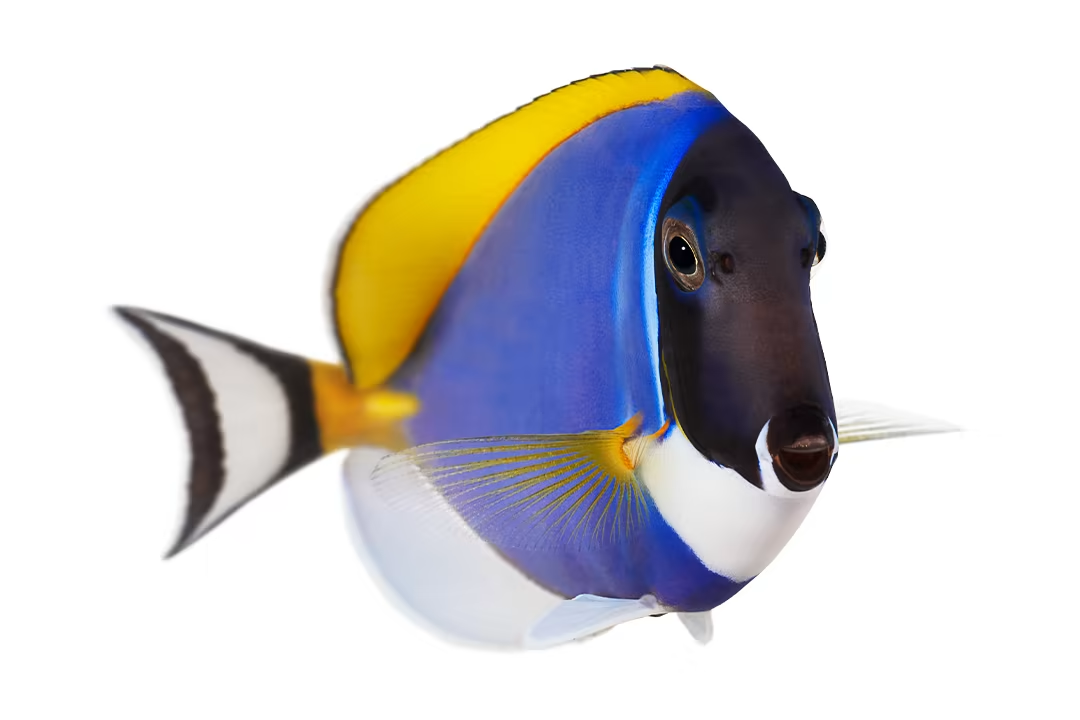
Learn how to care for a tang fish, recommended diet and aquarium setup. Find the right food, supplies and equipment at your neighborhood Petco.
Updated on November 13th, 2025
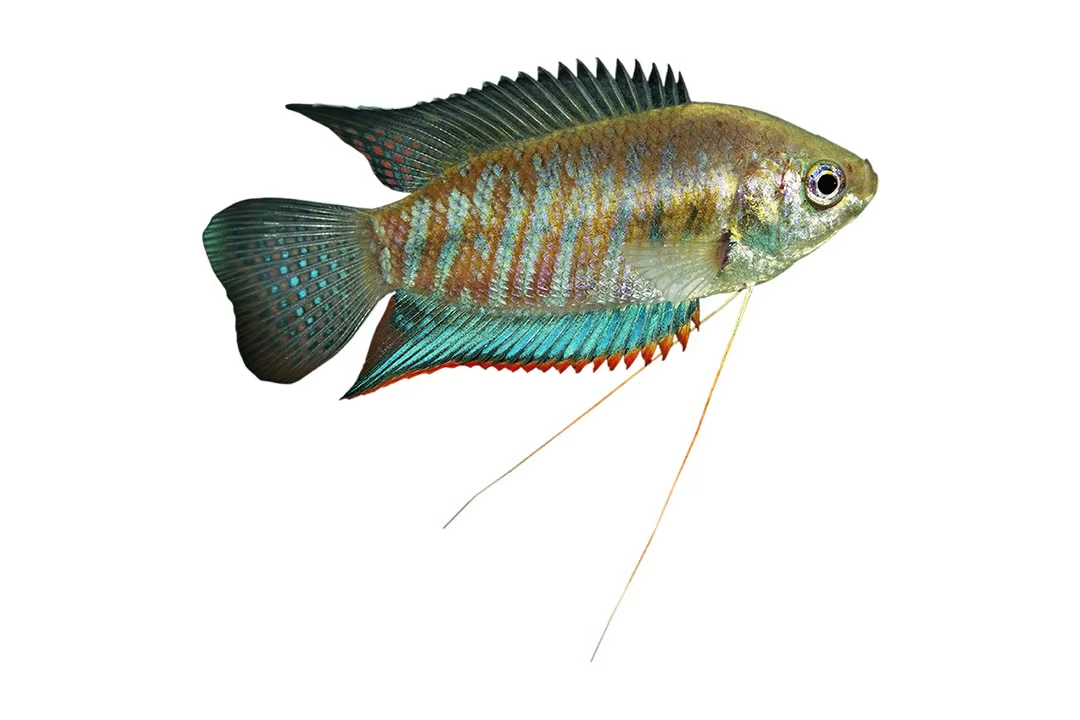
Learn how to care for Paradise fish, recommended diet and aquarium setup. Find the right food, supplies and equipment at your neighborhood Petco.
Updated on November 13th, 2025
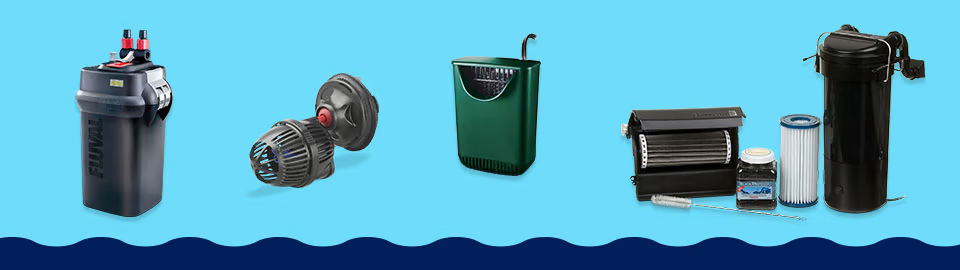
Discover the fish tank filter system that’s right for your aquarium. Learn about mechanical, chemical, and biological filtration at Petco.
Updated on November 13th, 2025
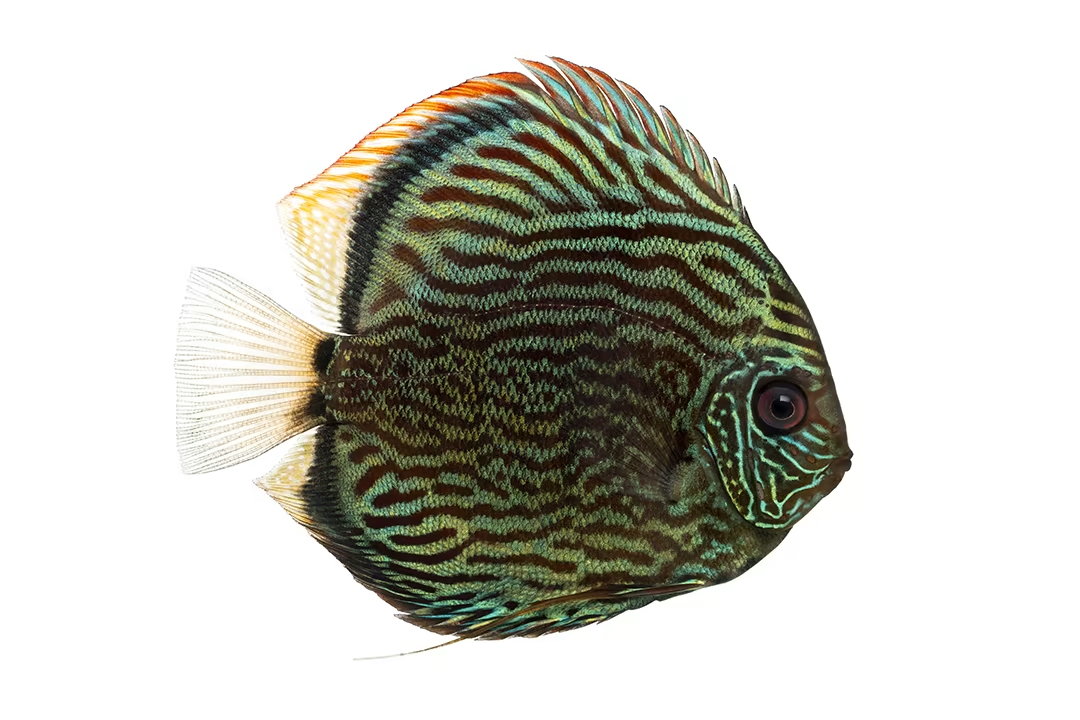
Learn how to care for a Discus, recommended diet and aquarium setup. Find Discus for sale, supplies and equipment at your neighborhood Petco.
Updated on November 13th, 2025
Search Petco to find out the harm of high nitrates in freshwater fish aquariums. We provide vital information to help keep your fish happy & healthy.
Updated on November 13th, 2025
Anytime you transport a fish, it can be stressful. Loud noises, vibrations and no filtration can cause stress. Check the water chemistry using a liquid home test kit or submit a water sample for testing. The local Petco may do this for free or for a small fee. Aim for an absence (0 ppm) of ammonia and nitrites with nitrates at 20 ppm or less. Perform a partial water change if indicated. Use only conditioned water that is temperature matched to prevent further stress or shock.
Updated on August 12th, 2025
Pimafix is an acceptable "natural" antifungal treatment. Melafix is for bacterial infections. Kanamycin, erythromycin or metronidazole are good broad spectrum antibiotics. Fungus Cure (by API) is an excellent antifungal. You can find these medications in the aquarium section of most pet stores or even online. Follow label directions carefully and remove the carbon filter insert during treatment if indicated. The cornerstone of any treatment is to first maintain pristine water quality and stable chemistry.
Updated on August 12th, 2025
Hi, and thanks for your question. This is a quite concerning presentation and it is likely to be related to water quality. Begin by submitting a water sample for quality testing. Most pet stores will do this for free or a nominal fee. Clinical examination should always include a water quality check, even if you have done so already. Water testing should be performed with a quality test kit, measuring NH4, NO2 and NO3. High ammonia levels, PH imbalances may be responsible for these signs. Oxygen concentration and quality of the filters should be determined as well. If water quality is good and there are no major imbalances, your fish should get examined to look for any sign of bacterial/fungal infection and eventually water should be treated. Hope this answer was helpful, but please do not hesitate to contact us again on the forum or by requesting a consultation if you have any more questions or to discuss it any further. If this answer was helpful please let us know, this will be used
Updated on August 12th, 2025
Water conditioning can be complicated and I recommend to stop by your local aquarium store. They are most often familiar with the local water quality and can give recommendations specific to your location. Some areas need buffering solutions to help control things like the water pH. Here are a few links which may help answer some of your questions about water condition: https://www.aqueon.com/articles/freshwater-aquarium-water-quality https://www.petcoach.co/article/aquarium-water-management-alkalinity-vs-water-hardness/ Before moving your goldfish, make sure all the conditions are appropriate for goldfish: https://www.aqueon.com/information/care-sheets/goldfish https://www.petcoach.co/article/how-to-help-your-new-goldfish-thrive/ I hope this helps and please feel free to post any additional questions.
Updated on August 12th, 2025
It is very difficult to get a good biotope in a just 1 foot long tank unless it is a few feet high. You will not be able to keep fish in it, only invertebrates, maybe a few shrimp or sea anemones. It is much harder to keep the water healthy in a small tank,and the appliances needed for running a salt water aquarium cost pretty much the same (if available) as appliances for a larger tank. I suggest you join a club of salt water aquarists who will be able to start you off perfectly. Your local fish/pet shop should be able to point you to a club.
Updated on August 12th, 2025