Two Easy Ways to Start Earning Rewards!
Become a member today! Members-only pricing and offers, personalized care notifications, Vital Care points back on every purchase and more!
 Become a credit card member today!
Earn 2X Pals Rewards points at Petco
when you use Petco Pay!APPLY NOWLearn More About Petco Pay Benefits
Tropic Marin Algaecides & Water Clarity


Related Articles & Questions
- Home & Habitat
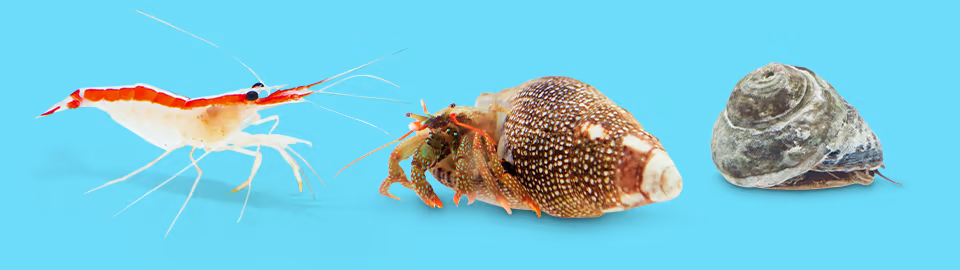
Saltwater Cleanup Crew: Banish Algae, Keep Your Tank Pristine
Visit Petco to learn about cleanup crews and how they can help your aquarium health.
Updated on November 13th, 2025
- New Pet
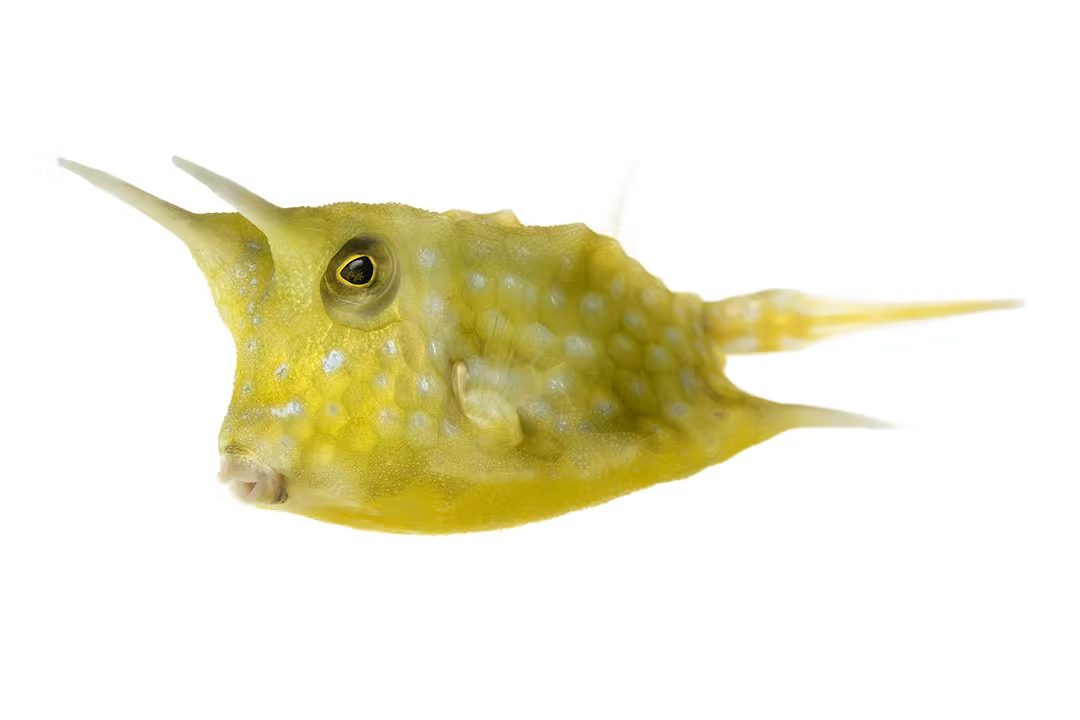
Advanced Boxfish & Cowfish Care: Ultimate Tank Setup, Food, & Safety
Learn how to care for Boxfish & Cowfish, recommended diet and aquarium setup. Find the right food, supplies and equipment at your neighborhood Petco.
Updated on November 13th, 2025
- New Pet
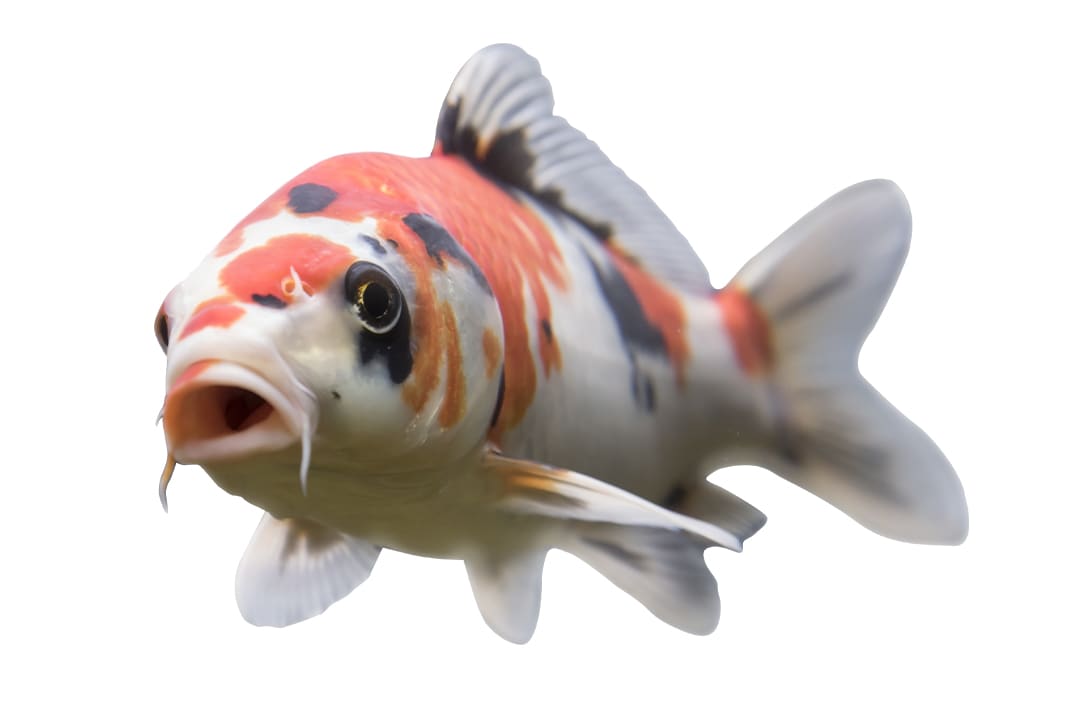
Mastering Koi Care: Optimal Tank, Food, Water Quality & Health Tips
Learn how to care for a Koi, recommended diet and aquarium setup. Find Koi for sale, supplies and equipment at your neighborhood Petco.
Updated on November 13th, 2025
- New Pet
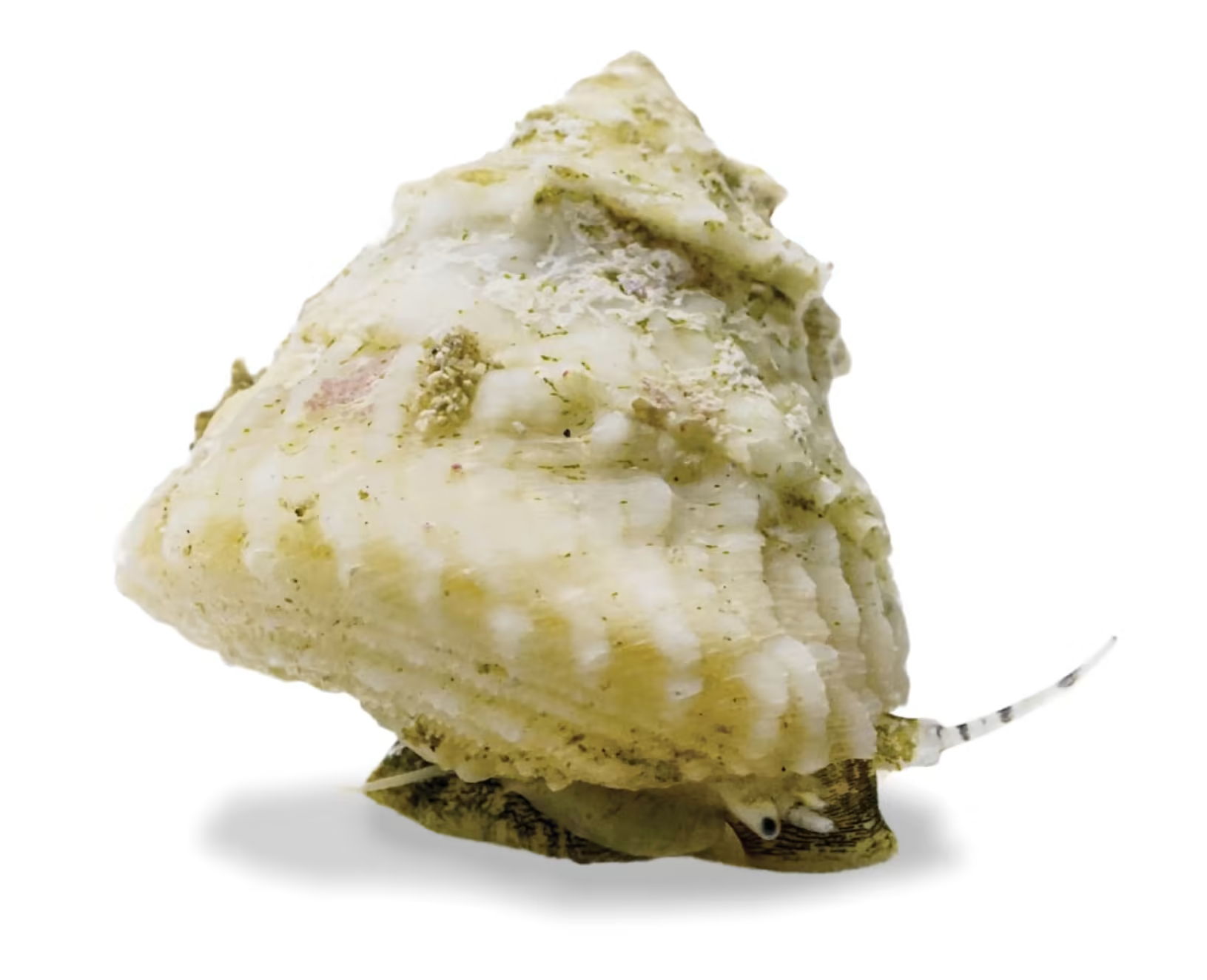
Saltwater Snail Care: Guide to a Healthy Reef Tank Cleanup Crew
Learn how to care for a marine snail, recommended diet and aquarium setup. Find marine snails for sale, supplies and equipment at your neighborhood Petco.
Updated on November 13th, 2025
- New Pet
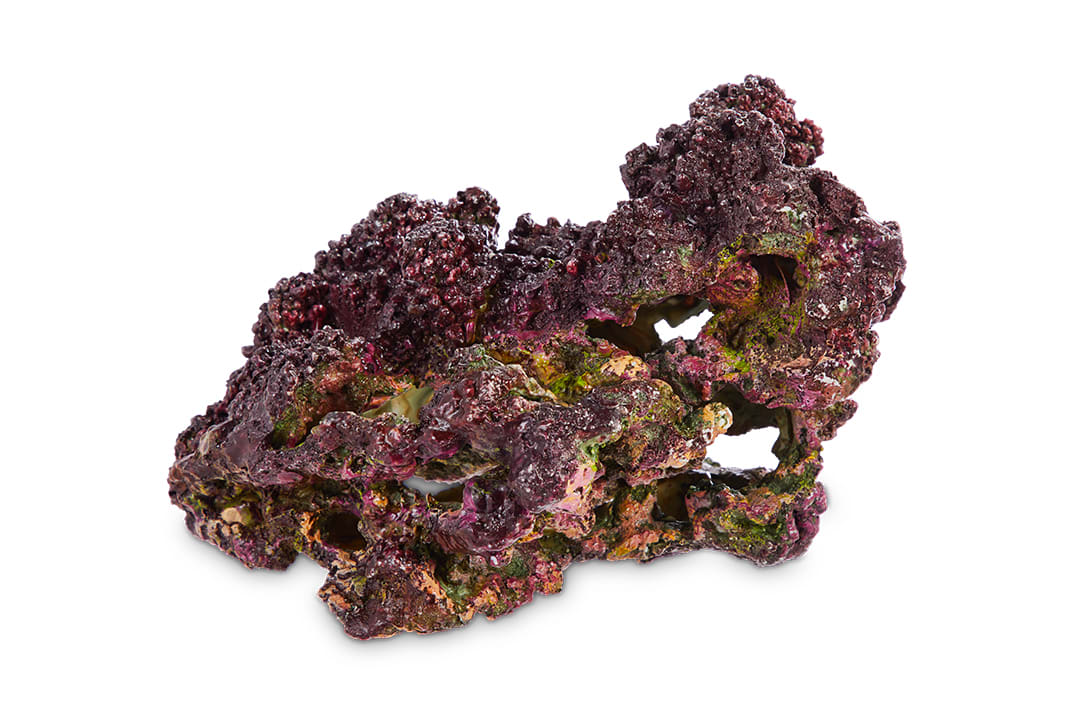
Live Rock & Sand: Setup, Curing, & Care for Thriving Reef Tanks
Learn how to care for live rock & sand. Live rock serves as a platform for coral and invertebrates and provides a surface for beneficial bacteria to live.
Updated on November 13th, 2025
- Health & Wellbeing
Best Antiparasite, Antibacterial and antifungal medicines for separately or combination for Fish ? And suggest the dose for parrot fish or other fish ?
Pimafix is an acceptable "natural" antifungal treatment. Melafix is for bacterial infections. Kanamycin, erythromycin or metronidazole are good broad spectrum antibiotics. Fungus Cure (by API) is an excellent antifungal. You can find these medications in the aquarium section of most pet stores or even online. Follow label directions carefully and remove the carbon filter insert during treatment if indicated. The cornerstone of any treatment is to first maintain pristine water quality and stable chemistry.
Updated on August 12th, 2025
- Health & Wellbeing
I have an African Sideneck turtle, and here recently algae has been growing in his tank. Is this hurting him?
I would try to keep the algae to a minimum. Algae growth is caused by combination of too many nutritions (food left-overs) in the water, not enough current in the water and more than enough light. So you need to re-visit your husbandry to make sure everything is 100% correct. If the water current and lighting are correct then chances are you are over-feeding him. If you can reduce the left-overs you'll probably effectively remove the source of the algae growth. Hope this helps. Best wishes.
Updated on August 12th, 2025
- Health & Wellbeing
How to treat ulcer in aquarium fish by antibiotics ?....Can I use tetracycline hydrochloride or Doxycycline for this condition ?
Either may work to treat ulcers which are caused by bacterial infection. Pristine water quality is just as important, if not more so, than medication. Elevated ammonia or nitrite levels can be stressful as well as toxic. A stressed fish is more likely to become ill. Use a home test kit or submit a water sample for testing. Aim for 0 ppm ammonia and nitrites, with nitrates at 20 ppm or less. If your fish are salt tolerant, you can use aquarium salt (NOT table or Epsom salt) in conjunction with an antibiotic. Dissolve 1 teaspoon of salt per gallon of water in a cup or two of tank water and gently pour it in. This will improve gill function, reduce stress, treat minor infection and aid in recovery. Treat for no more than 14 days then perform a partial water change to decrease salinity. Use only conditioned water that is temperature matched to prevent stress or shock.
Updated on August 12th, 2025
- Health & Wellbeing
Hi, Got a marine fish tank 120L. The blue tang got white ich a week back and it died and post that within a week all the other fishes died. Had a pair of clowns and various damsels. Now with no fishes in the tank, what should I do next? I plan to
Ich (Cryptocaryon) is an obligate parasite. This means it needs fish to survive. If your tank has no fish, continue to run the filter and tank empty for at least 6 weeks. You can increase temp to about 86 F to speed up the life cycle of the parasite. If your tank is not a reef tank and has no inverts, you can treat the tank with copper. Once treatment is complete, decrease temps to normal ranges. Continue to monitor salinity/chemistry. Quarantine any new fish for at least 10 days in a bare bottomed, established tank to prevent re-introduction of parasites into the main tank.
Updated on August 12th, 2025
- Health & Wellbeing
My goldfish has blood in his find. I searched what it could be and found a website that took me it was ammonia poisoning or something and I just needed to clean his tank. He's 8-9 years old and I got him from Mejier. I came home from school today to
Thanks for reaching out about Kitty and including pictures. It does appear as it a trauma occurred to the fin, Secondary infections could surely be from the water column. Ideally, Kitty should be removed to a quarantine tank. Non-iodized salt can be added at 1 Tablespoon per 5 gallons for 3 consecutive days, to gradually build up the salt concentration. This will not provide an anti-bacterial level of salt but will help osmotically. Antibiotics should be used to treat the infection. These are best administered through injections but a veterinary visit would be needed to prescribe medications. Parasitic infestation can also lead to dermal erosions. Any new fish, invertebrates (snails) or live plants added in the last several months could be a source. Good luck.
Updated on August 12th, 2025