Two Easy Ways to Start Earning Rewards!
Become a member today! Members-only pricing and offers, personalized care notifications, Vital Care points back on every purchase and more!
 Become a credit card member today!
Earn 2X Pals Rewards points at Petco
when you use Petco Pay!APPLY NOWLearn More About Petco Pay Benefits
Tropic Marin Fish Health & Wellness



Related Articles & Questions
- New Pet
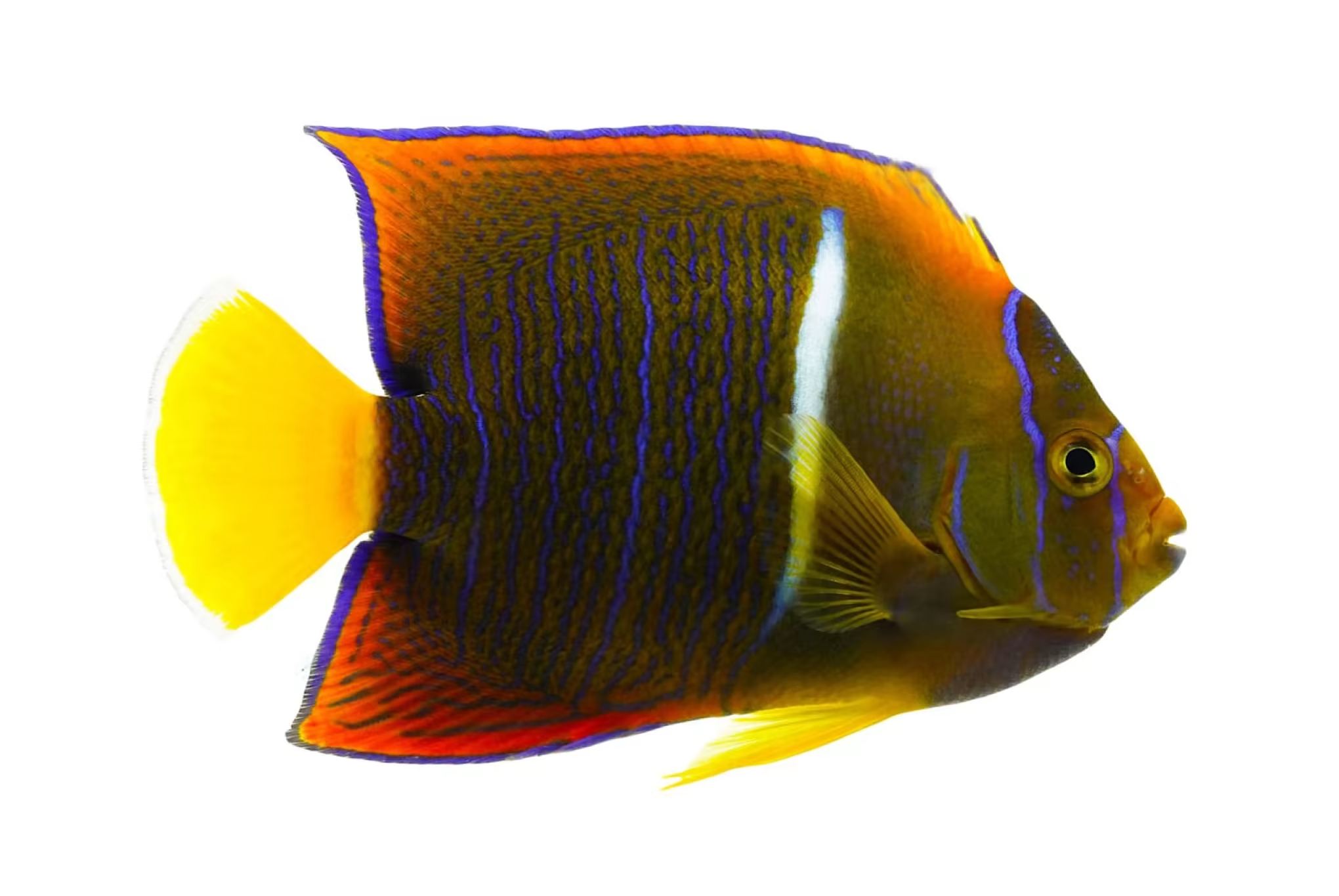
Essential Large Marine Fish Care Guide: Tank Setup, Diet, & Tank Mates
Learn how to care for large marine fish, recommended diet and habitat setup. Find the right food, supplies and equipment at your neighborhood Petco.
Updated on November 13th, 2025
- Home & Habitat
Freshwater Aquarium Salt: Benefits & Safe Use for Thriving Fish
Learn how to use aquarium salt in freshwater aquariums to promote healthy gill functions, reduce stress, and treat infections in fish.
Updated on November 13th, 2025
- New Pet
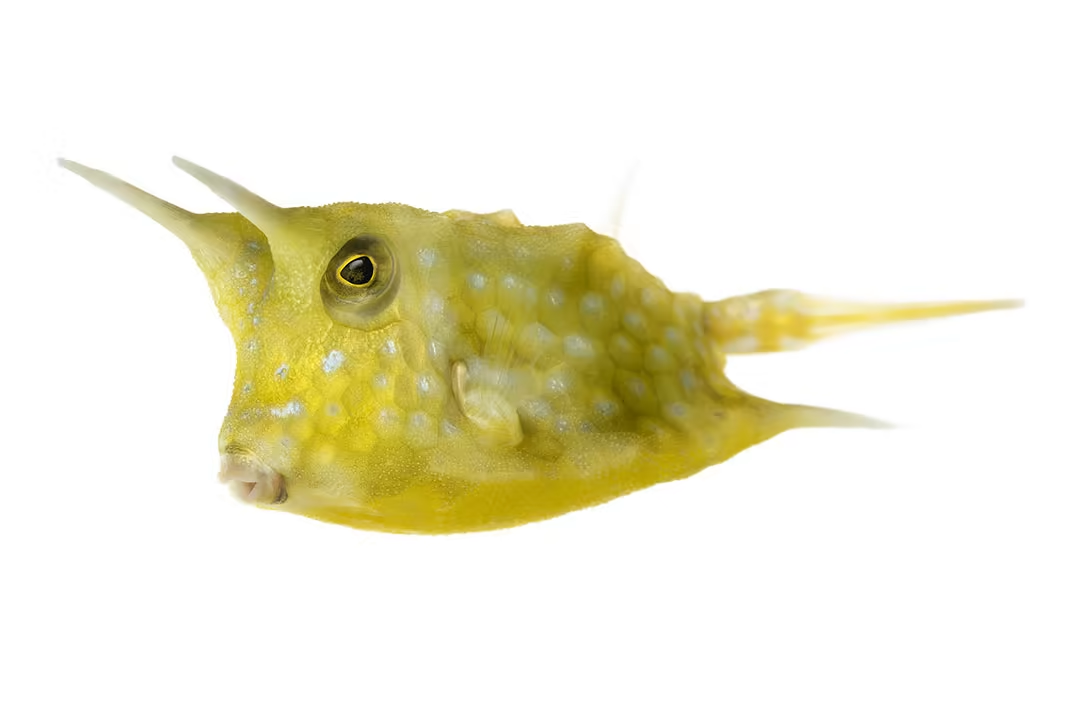
Advanced Boxfish & Cowfish Care: Ultimate Tank Setup, Food, & Safety
Learn how to care for Boxfish & Cowfish, recommended diet and aquarium setup. Find the right food, supplies and equipment at your neighborhood Petco.
Updated on November 13th, 2025
- Health & Wellbeing
Stressed Fish? How to Identify Causes & Calm Your Aquarium Pets
Learn how to spot the signs of a stressed fish and what you can do to calm them and and restore a peaceful, stress-free atmosphere for your aquarium inhabitants.
Updated on November 13th, 2025
- New Pet
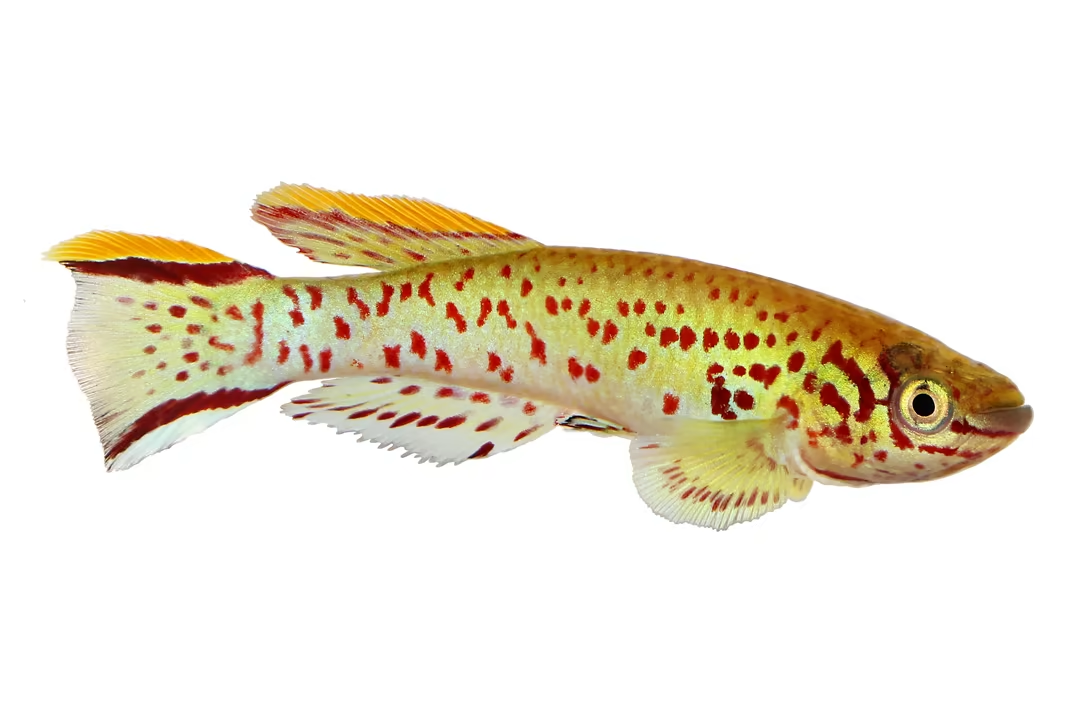
Killifish Care Guide: Unlock Vibrant Health for Your Aquarium Fish
Learn more about Killifish and their care to see if they are the right aquatic life to begin or add to your aquarium.
Updated on November 13th, 2025
- Health & Wellbeing
Concerned about what possible skin diseases?? Some of my fish possibly may have. Is it a possibility that some just algae on them. I recently treated the tank with copper sulfate because I believed that fish may have velvet.. however two days later;
Thanks for reaching out. Have you tested water quality for pH, ammonia, nitrite and nitrate. Correct problems. Don't see any signs of external lesion on the pictures, except fine erosion, and possible gravid fish. A veterinary visit is probably needed to trouble shoot for disease. Randomly adding chemicals to the water could have detrimental effects. Good luck.
Updated on August 12th, 2025
- Health & Wellbeing
Best Antiparasite, Antibacterial and antifungal medicines for separately or combination for Fish ? And suggest the dose for parrot fish or other fish ?
Pimafix is an acceptable "natural" antifungal treatment. Melafix is for bacterial infections. Kanamycin, erythromycin or metronidazole are good broad spectrum antibiotics. Fungus Cure (by API) is an excellent antifungal. You can find these medications in the aquarium section of most pet stores or even online. Follow label directions carefully and remove the carbon filter insert during treatment if indicated. The cornerstone of any treatment is to first maintain pristine water quality and stable chemistry.
Updated on August 12th, 2025
- Health & Wellbeing
My koi are loosing scales and one of my goldfish has white bumps on it's head. What could it be?
This could be bacterial or parasitic infection. It is difficult to determine definitively since the image provided is not clear. Fish can be difficult to photograph. Basic care includes checking water quality and chemistry. This can be done using a home test kit or by submitting a water sample for testing. The local Petco may do this for free or for a small fee. There should be an absence of ammonia and nitrites with nitrates at 20-60 ppm. pH should be as close to 7 as possible, avoiding large swings. Koi can tolerate a wide range in temperature, but generally do best between 65 F and 75 F. Again, avoid large swings in temperature to prevent stress or shock. If necessary, a partial water change can be done to stabilize chemistry and/or improve water quality. If you have other koi, consider placing this one in a hospital tank to make treatment easier and to prevent spread if the condition is infectious. Plain aquarium salt (NOT table or Epsom salt) can be used to reduce stress, impro
Updated on August 12th, 2025
- Health & Wellbeing
Hello, hal was an active fish but suddenly he was stagnant and didn't eat well.Is this normal? Thank you.
These are quite generic but concerning signs. The list of differentials is very long in this case, so I would recommend a logic and radical approach. Begin by submitting a water sample for quality testing. Most pet stores will do this for free or a nominal fee. Clinical examination should always include a water quality check, even if you have done so already. Water testing should be performed with a quality test kit, measuring NH4, NO2 and NO3. High ammonia levels, PH imbalances may be responsible for these signs. Oxygen concentration and quality of the filters should be determined as well. If water quality is good and there are no major imbalances, your fish should get examined to look for any sign of bacterial/fungal infection and eventually water should be treated. Hope this answer was helpful, but please do not hesitate to contact us again on the forum or by requesting a consultation if you have any more questions or to discuss it any further. Please find the time to give us a feed
Updated on August 12th, 2025
- Health & Wellbeing
What antibiotic should I get for my fish that had an injury and it is now infected internally as well
Thanks for reaching out about Candoris and including photos. A veterinary visit is recommended as systemic antibiotics needed. Medications added to the water are not absorbed systemically and will not help with internal infections and will likely affect the biological filter. Check and correct water quality as pristine conditions needed to heal. Adding 1 gram non-iodized salt (aquariums salt) per 1 Liter, to decrease stress and osmotic load on the fish. Good luck.
Updated on August 12th, 2025