Two Easy Ways to Start Earning Rewards!
Become a member today! Members-only pricing and offers, personalized care notifications, Vital Care points back on every purchase and more!
 Become a credit card member today!
Earn 2X Pals Rewards points at Petco
when you use Petco Pay!APPLY NOWLearn More About Petco Pay Benefits
Pure Water Pebbles Aquarium Sand, Gravel & Substrates


Related Articles & Questions
- New Pet
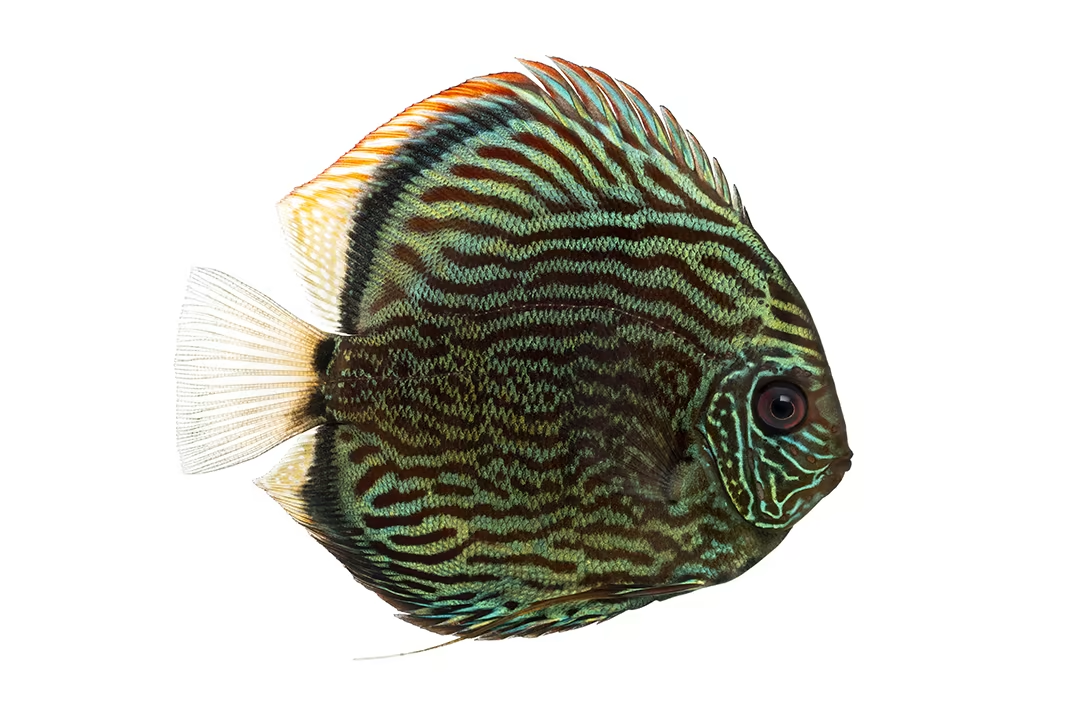
Mastering Discus Fish Care: Tank Setup, Feeding & Water Quality Guide
Learn how to care for a Discus, recommended diet and aquarium setup. Find Discus for sale, supplies and equipment at your neighborhood Petco.
Updated on November 13th, 2025
- New Pet
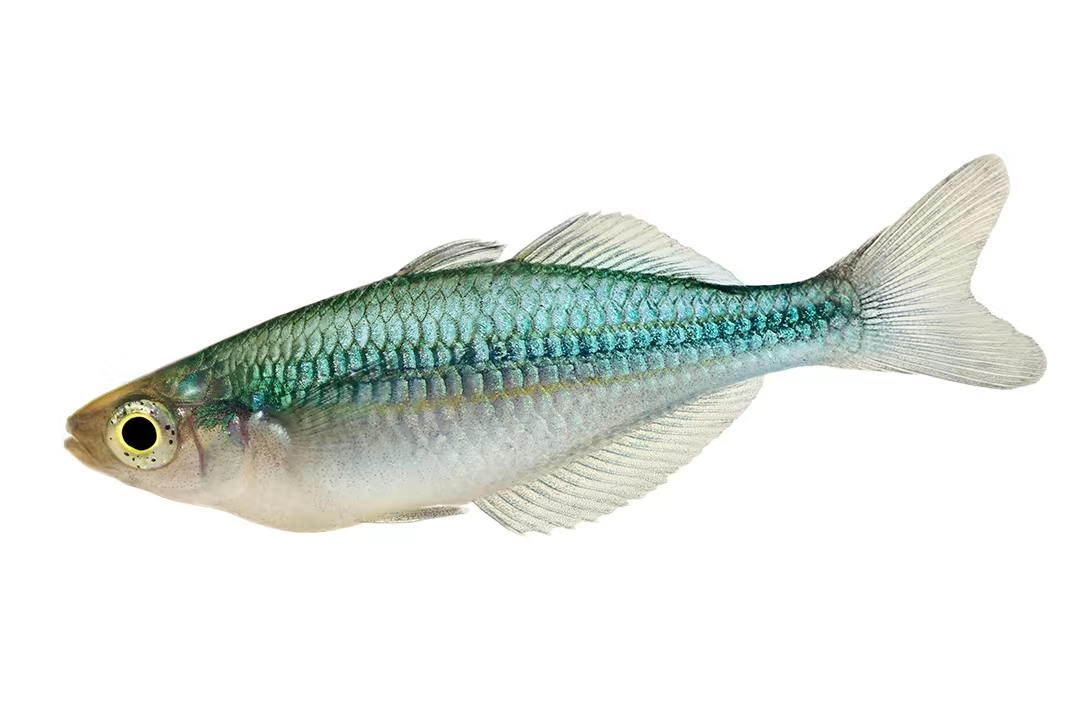
Rainbow Fish Care: Tank, Food, & Compatibility for Thriving Pets
Learn how to care for Rainbow fish, recommended diet and aquarium setup. Find the right food, supplies and equipment at your neighborhood Petco.
Updated on November 13th, 2025
- New Pet
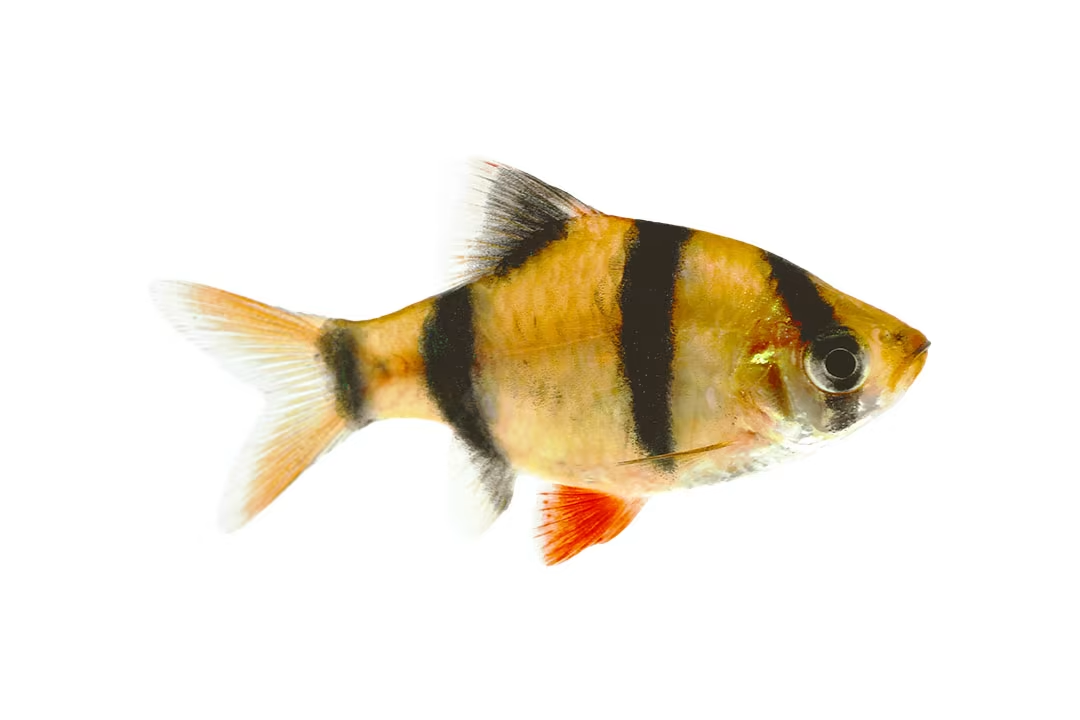
Barbs Fish Care Guide for Beginners: Tank, Food & Compatibility
Learn how to care for Barbs fish, recommended diet and aquarium setup. Find Barbs for sale, supplies and equipment at your neighborhood Petco.
Updated on November 13th, 2025
- New Pet
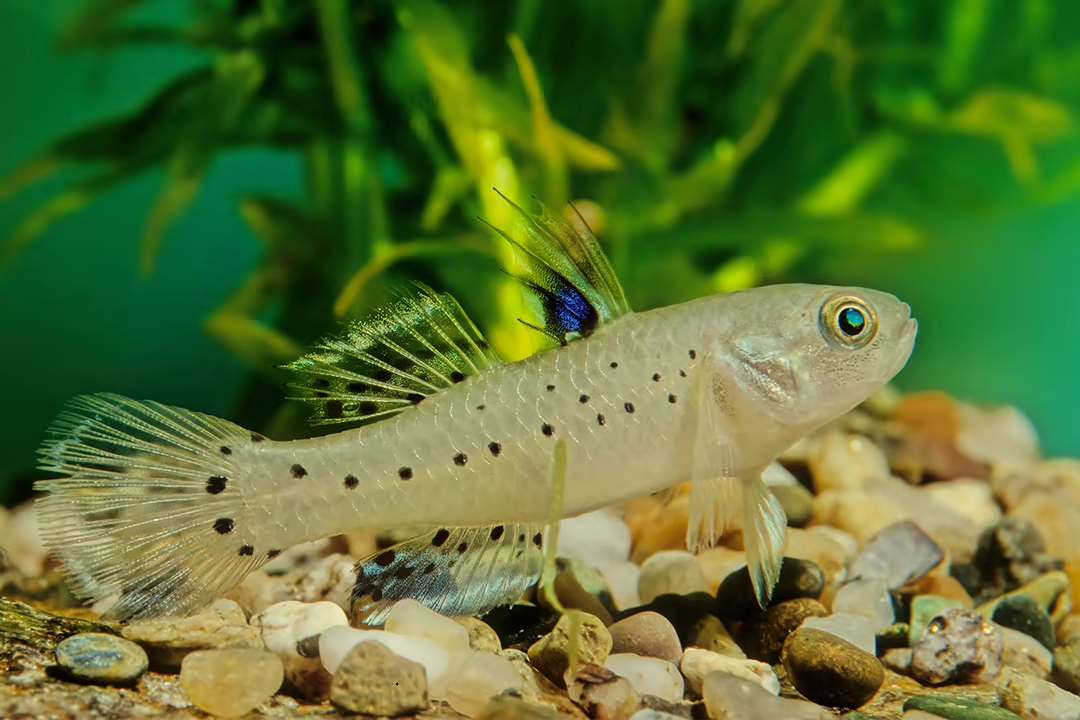
Master Goby Care: Freshwater & Brackish Tank Setup, Food, Health
Learn how to take care of Freshwater and Brackish Goby's, recommended diet and tank setup. Find the right food, supplies and equipment at your neighborhood Petco.
Updated on November 13th, 2025
- Health & Wellbeing
Cloudy Fish Tank? Find Causes, Get Crystal Clear Water & Happy Fish!
Have cloudy water in your fish tank? In order to clear up your water, first you need to understand the potential causes to apply the correct solution.
Updated on November 13th, 2025
- Health & Wellbeing
Rust colored algae in both of my 10 gallon tanks after switching from gravel to sand substrate. What can I do?
Sand substrate is always a problem as it promotes decay and anaerobic bacteria. If you need sand in a tank for a fish species (none of the ones you mentioned above actually need sand) you should not use it in the whole aquarium , but only in a small spot to accomodate the fish. Rust-colored spots on the glass and gravel are due to diatom algae. They likely were brought in with the silicates in the sand.Diatom algae need the silicates to make a shell they carry around with them. Remove the silicates, and the algae should die. Removing silicates can be done with a silicate and phosphate filter, or, in your case, I would remove the sand completely and refill your aquarium with washed gravel. Algae also need lots of nutrients, so if you overfeed your fish, algae will increase. Feed only what your fish eat in one minute, no more.
Updated on August 12th, 2025
- Health & Wellbeing
I have a 20 gallon tank. I'm thinking of buying +5 fish. Which fish could I buy and what would I need for the fish and tank?
A fish tank will need a filter, a light/hood and a heater. Make sure the filter is rated for at least twice the tank volume. The heater should be adjustable since water temperature will depend on the species of fish. Good "starter" fish include Tetras, Mollies, Danios or Tetras. A new tank should be set up and left running empty for several weeks before adding fish. A pinch of flake food can be sprinkled in daily. This "cycling" will allow a population of beneficial bacteria to colonize the tank and filter. These bacteria will break down wastes (ammonia, nitrites and nitrates) which are toxic to fish.
Updated on August 12th, 2025
- Health & Wellbeing
what is the best way to control the ph in a discus tank?
Thanks for reaching out. There are many products available in pet stores for either adjusting pH up or down. Adding a buffer as a substrate (dolomite) could help regulate also. Maintaining water quality is obviously very important. Good luck.
Updated on August 12th, 2025
- Health & Wellbeing
My Fish Stay at the Bottom of a Clean Tank, Are They Ok?
Cleaning the filter and changing the water may have upset the nitrogen cycle in your tank. This is due to removal of beneficial bacteria which convert ammonia (from waste, food, urine, etc.) to nitrites. Water and filter changes can be stressful as well. If you have the means, test your tank water for ammonia, nitrite, nitrate and pH levels. Adjust accordingly using conditioned water or additives that will bind harmful compounds. You can also submit a water sample for testing. Moat pet stores or professional aquarists will do this for free or for a nominal fee.
Updated on August 12th, 2025
- Health & Wellbeing
hi, I need some help with water condition of my fish tank. I’ve recently got 6 new fish and added in my 10 gallon fish tank three days ago. I did set up my tank for 48 hours before adding fish but now the water gets cloudy with tiny air bubbles on th
48 hours is not long enough for a tank to properly cycle. Several weeks to a couple months are needed for beneficial bacteria to populate the substrate and filter. These bacteria break down wastes (ammonia, nitrites, nitrates) that are harmful to fish and can promote bacterial blooms resulting in cloudy water. The overfeeding likely contributed to the bacterial bloom. You can cycle with or without fish, however cycling with fish will increase the risk of loss. You'll need to monitor chemistry using a liquid test kit. The kits with strips are not as accurate. Perform partial water changes, no more than 25%, every few days or if ammonia levels begin to affect fish. Use only aged or conditioned water that is temperature matched to prevent stress or shock. Feed them every other day. Normally, you would add one fish at a time but that isn't possible for you now. Monitor chemistry and perform water changes until ammonia and nitrites are 0.25ppm or less and nitrates are 40ppm or less. This
Updated on August 12th, 2025