Two Easy Ways to Start Earning Rewards!
Become a member today! Members-only pricing and offers, personalized care notifications, Vital Care points back on every purchase and more!
 Become a credit card member today!
Earn 2X Pals Rewards points at Petco
when you use Petco Pay!APPLY NOWLearn More About Petco Pay Benefits
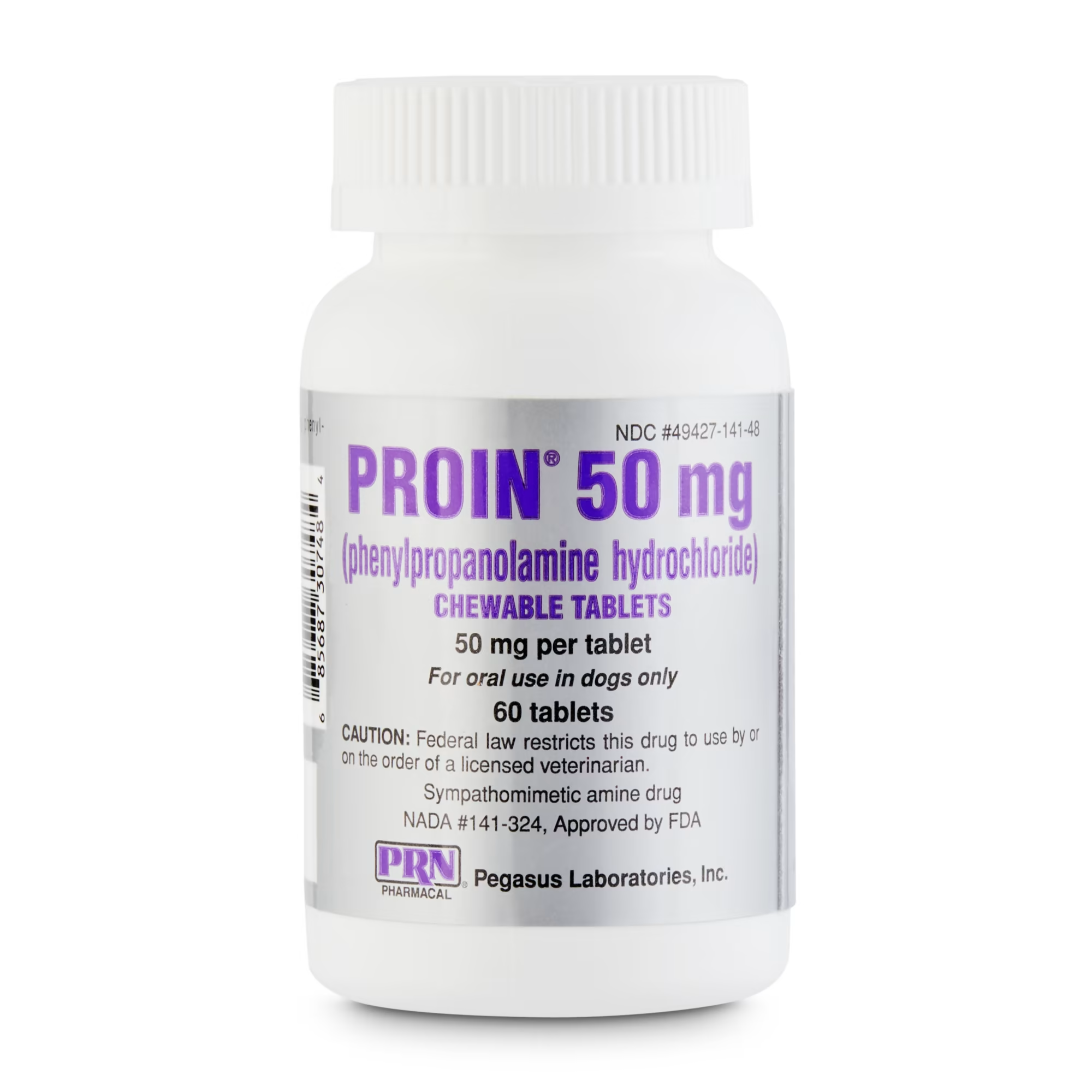
Potassium Citrate Dog Incontinence & Bladder Control Medicine

Related Searches
Related Articles & Questions
- Health & Wellbeing
Low Potassium in Pets? Spot Symptoms & Boost with Oral Supplements
Does your pet have potassium deficiency? Oral potassium supplements for dogs and cats can help you raise potassium levels. Visit Petco to learn more!
Updated on October 29th, 2025
- Health & Wellbeing
Proin for Dogs: Stop Urinary Leaks, Uses, Side Effects & Dosage
Does your dog have urinary incontinence problems? Proin may be a viable option to help your dog control their bladder.
Updated on October 29th, 2025
- Health & Wellbeing
Is Your Pet Straining? Bladder Stone Warning Signs in Dogs & Cats
Learn about bladder stones in dogs and cats and help improve your pet's urinary system. Causes, symptoms, treatments & more.
Updated on October 29th, 2025
- Health & Wellbeing
Methionine for Dogs & Cats: Stop Urinary Crystals & Stones
Methionine is a urinary acidifier used to prevent and treat urinary stones in dogs and cats. Vet Rx Required.
Updated on October 29th, 2025
- Health & Wellbeing
Enalapril for Pets: Treat Heart, Kidney & Blood Pressure Effectively
Do you think your dog or cat has heart issues and high blood pressure? Visit Petco to learn how enalapril can help your pet.
Updated on October 29th, 2025
- Health & Wellbeing
My Doberman pincher was diagnosed with urinary incontinence last year. She was prescribed proin 75mg twice a day and after fighting with her to take it for a month I looked for natural ways to help her and I have tried quite a few ones that either di
Hello, and thank you for using Boop by Petco. Unfortunately, there is nothing over the counter that is going to be anywhere near as effective as Proin for urinary incontinence. However, there are some supplements out there that can help. Here's the one I've had the most success with: https://www.petco.com/shop/en/petcostore/product/vetri-science-laboratories-bladder-strength-tablets-for-dogs?rrec=true Hope that helps!
Updated on August 12th, 2025
- Health & Wellbeing
I would like to get my dog evaluated to see if she would be eligible to be prescribed Proin, the medication that tightens the bladder sphincter muscle. Is Petco able to assist?
Hi there! I'm sorry to hear about Brittany's troubles. I am not sure if Petco has full veterinary services, as that is the appropriate avenue for eventually prescribing proin. When I see a dog for urinary incontinence issues, I start with a full blood and urine panel and a culture of the urine to rule out infections or any other health issues. I also will check the urinary bladder with an ultrasound and take a few xrays to make sure we don't have bladder or kidney stones, or cancer of some kind causing the incontinence. Once I've ruled out any other causes, and I know I need to use proin, I check a blood pressure to make sure that's normal too (because proin can cause side effecrs with that). I'll start a patient on the recommended dose and then recheck to make sure it's working. A couple weela after starting I'll usually check blood pressure, and then once more 4-6 weeks out. At that time I'll often check a mini panel and just double check some blood values. If all is well, i wi
Updated on August 12th, 2025
- Health & Wellbeing
I am very confused. My 14 yr Bichon had 2 oxalate bladder stones pushes back into bladder and removed. Thevet at the emergency hospital recommended royal canin so to get ph to 7. It is staying at 6.5 and sometimes 6. primary vet says this is fine and
Hello. Unfortunately, despite our best efforts, some of these dogs keep developing stones, & we just do not know the total reason & mechanism for this. So you are perfectly right to feel confused, & frustrated with this. The Royal Canin S/O has been one of the best options in terms of preventing stones through the diet, & of course, the more water he takes in, the more water there is to flush the oxalate elements out of his bladder before stones reoccur. Sometimes we do recommend potassium citrate, if urine pH is consistently lower than 6.5, & some newer thinking is to add hydrochlorothiazide if he does seem to be redeveloping urolithiasis frequently & he does not have high blood calcium levels. You could monitor his urine for blood with urine dip strips manufactured for this purpose ( your vet can help with this ). A full urinalysis should be done every 3-6 months to keep pH between 6.5 & 8 & to maintain urine specific gravity to 1.020 or lower. Imaging, with either ultrasound
Updated on August 12th, 2025
- Health & Wellbeing
Our Westie has went to the vet for a UTI and during the urinalysis struvite crystials were noted. She has been on C/D prescription diet for about 10 weeks to see if they clear up. In your article you mention that some animals are more predisposed to
They do make a pill known as DLM that helps lower the pH but if you lower it too much you can form calcium crystals in the urine that can lead to bladder stones as well. Either method takes frequent urine checks to monitor progress
Updated on August 12th, 2025
- Health & Wellbeing
My springer spaniel has an incontinence problem she is on medications however still needs to wear a diaper. She's seven years old and is spayed. I got her as a rescue.... I'm just looking for strategies that I can utilize
By medications, I am assuming you mean medications for incontinence. There are several medications available to treat this problem, and some patients will respond to a different type than the one they are currently on. You may also be able to increase the dose of the current medication, or give it more frequently. If Katie has not been evaluated for other possible urinary issues with your vet, it may be a good idea. She may have been misdiagnosed as urinary incontinent when in fact she may have urinary bladder stones, kidney disease, UTI, or a congenital defect causing urine to leak (like an ectopic ureter). If by medications you were not referring to those for incontinence, then she may be urinating frequently as a side effect of those medications. Incontinence medications may help with this issue. With either scenario, I would recommend that Katie see a vet for evaluation and possible medication adjustment.
Updated on August 12th, 2025