Two Easy Ways to Start Earning Rewards!
Become a member today! Members-only pricing and offers, personalized care notifications, Vital Care points back on every purchase and more!
 Become a credit card member today!
Earn 2X Pals Rewards points at Petco
when you use Petco Pay!APPLY NOWLearn More About Petco Pay Benefits
Petco Freshwater Fish

Related Searches
Petco Live Freshwater Fish
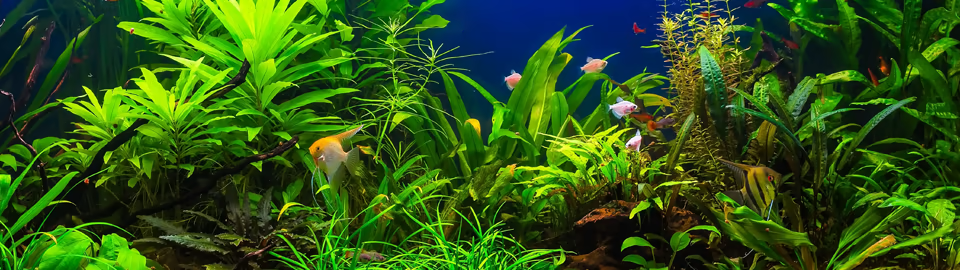
Setting up a freshwater fish aquarium can bring a serene nature scene into your home. Maintaining your live fish habitat is often a rewarding form of pet care that allows you to personalize your fish’s environment to suit your tastes and their needs.
If you’re a new aquarist, consider what size aquarium you want and what types of plants and décor you would like to include. This can help determine which fish you choose and how many. Or, if you have particular freshwater fish pets in mind, be sure the aquarium and accessories you choose are right for them.
Petco fish come in many colors and kinds—from slender rainbow sharks to showy neon guppies. When looking at live freshwater fish for sale, it’s very important to note their social needs and temperaments. You want to help create a peaceful environment, and some fish will get along better than others. Different fish breeds usually prefer different parts of the aquarium, too, so find the right types of fish at Petco for a balanced community.
Compatibility is about more than personality when it comes to live fish. Freshwater and marine fish obviously cannot live in the same habitat, but not all freshwater fish thrive together either. Your freshwater fish pets who share an aquarium should all require similar elements like water temperature, pH balance, live plants and décor and food types. This ensures that they are each in an environment that is well-suited for them.
Petco freshwater fish range in characteristics across social type, swimming areas, diet, level of care and water preferences. Some options include:
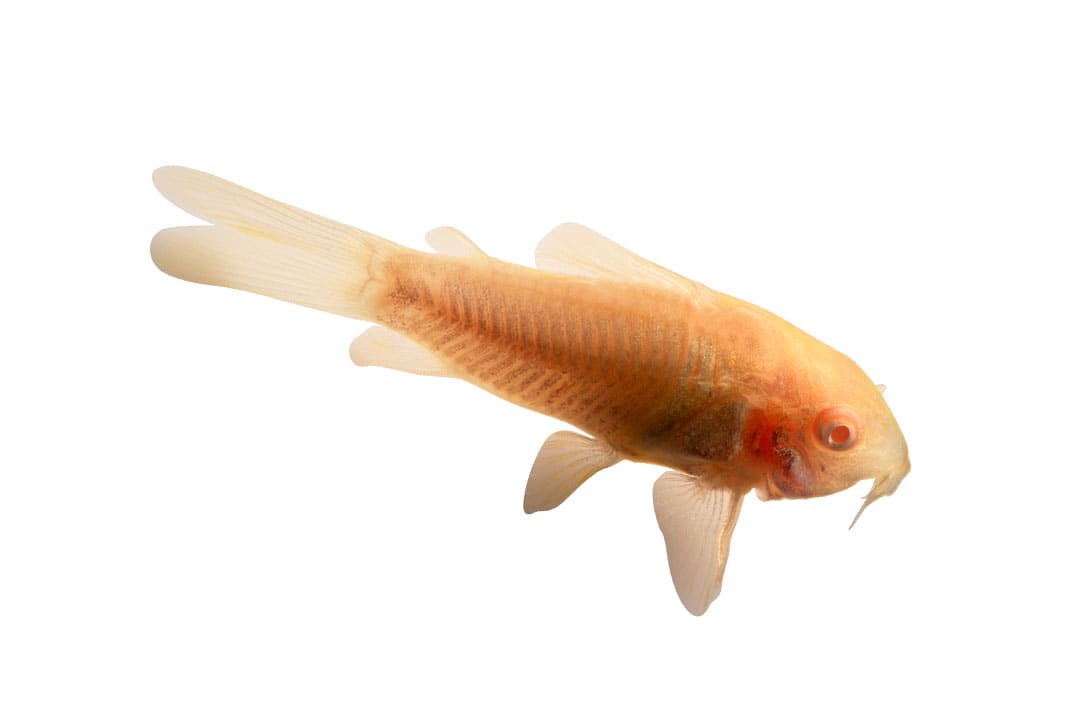
- Cory Catfish often prefer the bottom of the aquarium and are usually natural and effective cleaners. They can thrive in schools and usually get along well with small- and medium-sized peaceful fish.
- Betta These fish are popular for their vibrant coloring and graceful fins. Unlike cory fish, they prefer their own space with a comfortable place to hide.
- Goldfish Perhaps the most common fish pet, goldfish are often the longest-living freshwater fish. When well cared for, they can live up to 15 years. They can be great community fish and will most likely do well with others of their temperament.
- Cichlid This freshwater fish comes in many varieties, including firemouth, albino tiger Oscar and demasoni. They can be very interesting to observe but also can be territorial. It’s appropriate to keep different kinds of cichlids that don’t compete for the same food and space. Learn more with our Cichlid Family Care Sheet.
Freshwater fish pets eat a variety of diets, depending on their species. Freshwater fish food is often in flake form, but pellets and tablets can also great options for some. Freeze-dried foods such as Hikari shrimp, blood worms and tubifex worms can help provide needed protein and minerals for some freshwater fish while sinking pellets are often suitable for bottom-dwellers. Many Petco fish food options are formulated to help enhance your fish’s natural vibrant hues.
Related Articles & Questions
- New Pet
Freshwater Community Fish: Care, Setup & Compatibility Guide
Learn how to care for freshwater community fish, recommended diet & aquarium setup. Find the right food, supplies & equipment at your neighborhood Petco.
Updated on November 13th, 2025
- New Pet
10 Best Schooling Fish: Care & Setup for a Thriving Aquarium
Choosing the right schooling fish is essential to creating a thriving freshwater aquarium. At Petco, we carry a wide variety of small and large schooling fish great for any aquarium.
Updated on November 13th, 2025
- New Pet
Catfish Care Guide: Tank Setup, Feeding, & Species for Healthy Fish
Learn how to take care of Catfish, recommended diet and tank setup. Find the right food, supplies and equipment at your neighborhood Petco.
Updated on November 13th, 2025
- Product Guides
Aquarium Filtration: Pick the Best Filter for a Thriving Tank
Discover the fish tank filter system that’s right for your aquarium. Learn about mechanical, chemical, and biological filtration at Petco.
Updated on November 13th, 2025
- Health & Wellbeing
High Nitrates in Your Fish Tank? Protect Fish Health & Prevent Deaths
Search Petco to find out the harm of high nitrates in freshwater fish aquariums. We provide vital information to help keep your fish happy & healthy.
Updated on November 13th, 2025
- Health & Wellbeing
I'm doing a project for school about fish and here are some questions I have: What kind of fish is easiest to take care of? What size tank should someone start out with? What are some things people don't know about fish? What are the most common reas
Guppies or Neons are excellent "starter" fish. Care is simple and they are inexpensive. A standard 10 gallon tank is recommended to start. Most people don' t realize the amount of "work" needed to maintain a tank. Filter maintenance, monitoring water chemistry, water changes, monitoring fish health and providing a balanced diet are just a few items that need regular attention to keep a tank thriving. Even though fish aren't as cuddly as cats and dogs, they do have their own personalities and even respond to their owners, especially at feeding time! Studies have shown that simply watching fish in a tank can lead to a reduction in both heart rate and blood pressure. It is quite relaxing.
Updated on August 12th, 2025
- Health & Wellbeing
Is my fish ok. Does it have a sickness or diseases?
Thank you for using Boop by Petco! Ariel does look like she has a little bit of white on her abdomen, and potentially some raised scales. She also appears to be swimming towards the bottom of the tank, but this may just be a coincidence in the photo. The white on the abdomen can be caused by a fungal or parasitic infection, so I recommend separating this fish from the others. You may want to change the water and sanitize the tank if any other fish start to get similar symptoms. I hope this helps and am happy to answer any other questions you may have!
Updated on August 12th, 2025
- Health & Wellbeing
I am setting up a 20 gallon freshwater tank. I would like to have an assortment of live plants. I need recommendations on the type of plants to use and also the type gravel to use.
Our Standard Aquarium Plant Pack provides a convenient solution for your dilemma. This package includes Micro Sword or Dwarf Hairgrass, Anubias Nana or Anubias Barteri Round Leaf, Java Fern, Red Cryptocoryne or Green Cryptocoryne, Water Sprite, Hornwort, and Cabomba. http://www.liveaquaria.com/product/prod_display.cfm?c=768+2145+2146&pcatid=2146 A substrate specifically designed for live aquarium plants such as CaribSea Eco-Complete Plant Substrate is recommended for long-term success. http://www.drsfostersmith.com/product/prod_display.cfm?pcatid=9087 Be sure to provide proper lighting conditions by employing aquarium light fixtures specifically designed for planted aquarium use.
Updated on August 12th, 2025
- Health & Wellbeing
What is the best way to clean a fish tank? Am I allowed to remove the fish so i can clean it more properly?
Hello, and thank you for using Boop by Petco. The most common (and easiest) way to clean a fish tank is with a siphon-style cleaner. Fish tanks should be cleaned in stages, generally replacing 10-15% of the water at a time. There are times where a larger cleaning might be necessary, but removing the fish and changing too much of the water at once can be quite a shock and can be dangerous to the fish, so this should be saved for only extenuating circumstances. Here's a helpful video on using a siphon cleaner: http://video.petco.com/v/18852/how-to-clean-your-aquarium-with-the-aqueon-siphon-vacuum-/ And some more reading you may find interesting on general fish tank cleaning and maintenance: http://www.firsttankguide.net/waterchange.php Hope this helps!
Updated on August 12th, 2025
- Health & Wellbeing
I think my Lyretail Dalmatian molly has the swimmers bladder issue. I have videos that i could send or I can take pictures later. She stays near the top of the tank and seems to have trouble using her rear fin.
Check the water chemistry and quality. You can use a home test kit or submit a water sample for testing. The local Petco may do this for free or for a small fee. Aim for an absence (0 ppm) of ammonia and nitrites with nitrates at 20ppm or less. Elevated ammonia or nitrite levels can be toxic and could drive the fish to the surface. Water that is too warm may also do the same since it holds less dissolved oxygen. This can happen if water temp is above 82 F. Perform a partial water change, if necessary, to stabilize chemistry and/or to improve water quality. Use only conditioned water that is temperature matched to prevent stress or shock. To treat the swim bladder issue, fast her for 3 days, then feed bits of cooked and shelled green peas until swimming and defecation are normal. Constipation is a common cause of swim bladder disease. You can also consider a broad spectrum dewormer since parasites may also be the cause. Find one in the aquarium section of the local Petco. Follow label
Updated on August 12th, 2025