Two Easy Ways to Start Earning Rewards!
Become a member today! Members-only pricing and offers, personalized care notifications, Vital Care points back on every purchase and more!
 Become a credit card member today!
Earn 2X Pals Rewards points at Petco
when you use Petco Pay!APPLY NOWLearn More About Petco Pay Benefits
Nature Zone Bearded Dragon Food
Get It Today


Related Searches
Related Articles & Questions
- Food & Nutrition
Optimal Reptile Diet: Feed Your Pet for Peak Health & Vitality
Do you have questions about what to feed a reptile? Petco has the answers! Visit us to learn about reptile dietary needs.
Updated on November 13th, 2025
- Training & Behavior
Unlock Bearded Dragon Body Language: Know What They're Saying
Search Petco for all the information you need on bearded dragons. We’re here with tips and tricks to help you keep your pet happy and well cared for.
Updated on November 13th, 2025
- Home & Habitat
Reptile UVB Lighting: Help Your Pet Thrive with the Right Lamp
Learn the importance of UVB light for your reptiles and the right reptile lights for your pet’s habitat.
Updated on November 13th, 2025
- Health & Wellbeing
Bearded Dragon Brumation: Brumating or Sick? Know the Key Signs
Do you have questions about bearded dragon brumation? Visit Petco to learn what to do when the time comes.
Updated on November 13th, 2025
- New Pet
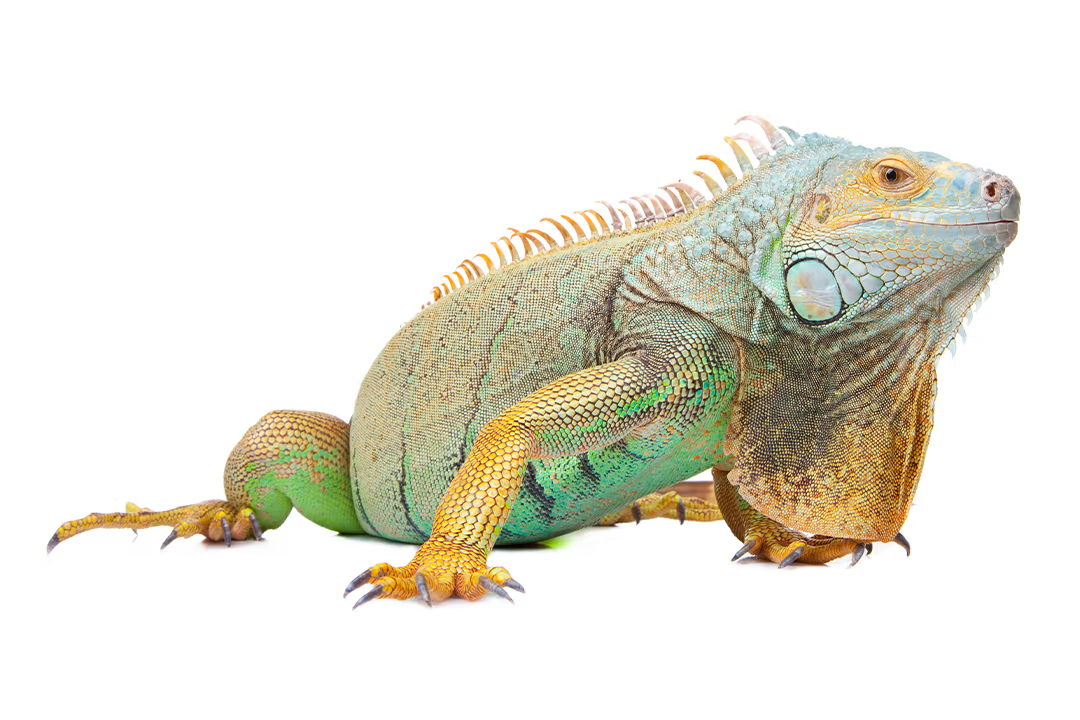
Green Iguana Care: The Ultimate Guide to Food, Habitat & Health
Learn how to take care of your Tropical Iguanas, recommended diet and housing setup. Find the right food, supplies and equipment at your neighborhood Petco.
Updated on November 13th, 2025
- Health & Wellbeing
I’ve been getting a lot of mixed answers as to what to feed my dragon and what the schedule should be I’m a new owner and I also want to know what the light schedule should be right now he seems hungry but won’t eat the collard greens I gave him how
Beardies are omnivores and eat a mix of greens and live prey. Adult beardies will eat more greens than prey. At his age, Majesty can be fed once daily. Alternate between prey and greens. Don't forget to dust food with a calcium supplement as well as a multivitamin. Always have fresh water available. Offer different types of greens such as mustard greens, dandelion greens, kale, bok choy or raw cabbage. Vegetables that can be fed include celery, carrots, squash and pumpkin. This list is my no means inclusive. If he won't eat greens, chop them finer and add strawberries or blueberries to the mix. Mixing in crickets or mealworms may also stimulate the appetite. As long as the stool is formed, size isn't an issue. It will change depending on how much and what he eats. A light cycle of 12 hours on and 12 hours off is sufficient. To get him acclimated to you, simply spend time with him. Initially, you'll want to just sit by his cage, then progress to placing your hand in the cage then
Updated on August 12th, 2025
- Health & Wellbeing
My beardie has a few problems To start off I feed her every day a balance between kale mealworms and the all living things juvenile bearded dragon diet food I get from your store but she will only go to the bathroom about every two weeks or so
Mealworms can be a problem for some beardies, especially juveniles, due the chitinous body. If you can, switch her over to appropriately sized crickets or dubia roaches. Gut load all prey for 24 hours prior to offering and dust with multivitamin and calcium powders to maximize nutritional value. Maintain adequate temperatures as well. Low temps can affect activity, appetite and digestion in reptiles. A temp gradient ranging from about 76 F (cool side) to 86 F (warm side) with a basking spot of 90 F to 100 F is recommended. To stimulate defecation, soak Lizzie in a warm 50/50 solution of water and unflavored PediaLyte. Gently massage her abdomen from front to back during the soak. The soak will also hydrate her and aid in shedding.
Updated on August 12th, 2025
- Health & Wellbeing
I adopted a bearded dragon she is eight years old and she has not been eating since I have a doctor which has been one week she has been given what the lady that gave her told me to give her but she still has not eaten anything
I commend you on adopting such a wonderful creature! She may need time to adjust to her new home and enclosure. Make sure it is large enough for her and located away from loud noises, vibrations, direct sunlight or high traffic areas. The commercial pellets are an excellent diet. You should also offer dark, leafy greens, diced vegetables and prey such as crickets or dubia roaches. These can be purchased from your local pet store. Gut load prey for 24 hours prior to offering to maximize nutritional value. Dust with a calcium supplement 3-5 times per week. Use a multivitamin 2-3 times per week. Make sure the temperature in her enclosure is appropriate. Low temps can affect appetite and activity in reptiles. The cage should be in the mid 70s F on the cool side and mid to high 80s F on the warm side. A basking spot of 90-100 F is recommended. She will also need a UVB light source running the length of her cage and about 12-14 inches away. This is vital for calcium, metabolism. You c
Updated on August 12th, 2025
- New Pet
Help my bearded dragon is looking too slim and not eating much. His skin is lose and wrinkly. I got him as a rescue he seems to have been malnourished and neglected. All he wants to do is be in a blanket burrito and be on me. He is so sweet, help m
First, have him physically examined by your veterinarian or a vet experienced in treating reptiles to diagnose and treat any underlying medical causes. Submit a stool sample to diagnose intestinal parasites. Confirm proper environmental parameters, especially temperature. Low temps can affect appetite and digestion in reptiles. You can review dragon care at the link below. http://www.anapsid.org/bearded.html Offer a variety of prey including, crickets, dubia roaches, mealworms and phoenix worms. Butterworms can be used as treats to get some weight on him. Gut load all prey for 24 hours prior to offering to maximize nutritional value. This can be done by feeding a high protein baby cereal, tropical fish and fresh fruits and greens.
Updated on August 12th, 2025
- Health & Wellbeing
Bought a baby bearded dragon a week ago and doesn't eat on his own, I have to feed him myself and sleeps all day , what to do ?
Confirm proper ambient and basking temps for your new beardie. Low temps can affect appetite and activity. Offer appropriately sized food and prey. Fresh foods should be finely diced, live prey should be no bigger than the space between his eyes. Setting up a proper environment closely mimicking his natural environment is also key. If he doesn't feel comfortable or secure, he will likely not eat. He may also be ill. Have him examined by an experienced herp veterinarian to diagnose illness or injury. Submit a stool sample to diagnose intestinal parasites. Follow the link for more information: http://www.anapsid.org/bearded.html Do not hesitate to request a consultation if you have further questions.
Updated on August 12th, 2025