Two Easy Ways to Start Earning Rewards!
Become a member today! Members-only pricing and offers, personalized care notifications, Vital Care points back on every purchase and more!
 Become a credit card member today!
Earn 2X Pals Rewards points at Petco
when you use Petco Pay!APPLY NOWLearn More About Petco Pay Benefits
Mazuri Turtle Food


Related Articles & Questions
- New Pet
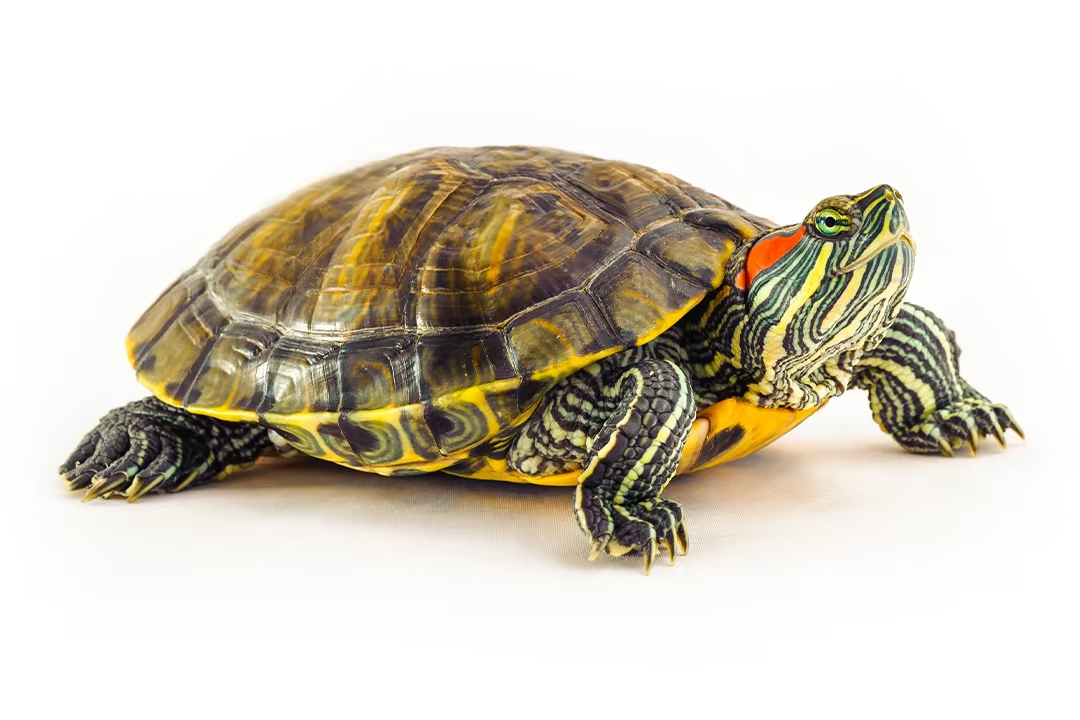
Aquatic Turtle Care: Master Tank, Food & Health for a Healthy Pet
Learn how to care for aquatic turtles available at Petco. Care Sheets provide you with essential info on how to best take care of these interesting pets.
Updated on November 13th, 2025
- Home & Habitat
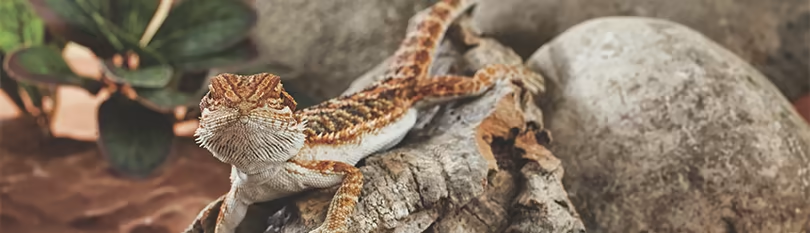
Reptile UVB Lighting: Help Your Pet Thrive with the Right Lamp
Learn the importance of UVB light for your reptiles and the right reptile lights for your pet’s habitat.
Updated on November 13th, 2025
- New Pet
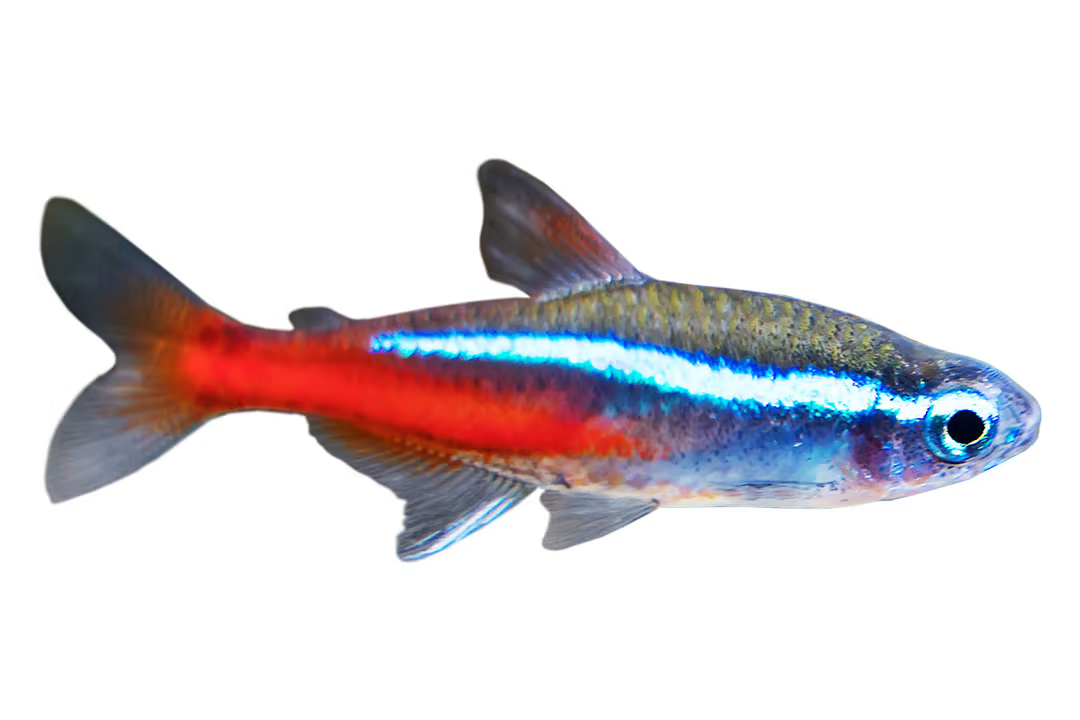
Complete Tetra Care: Tank Setup, Food, & Compatibility Tips
Learn how to care for a Tetra, recommended diet & habitat setup. Find the right food, supplies & equipment at your neighborhood Petco.
Updated on November 13th, 2025
- New Pet
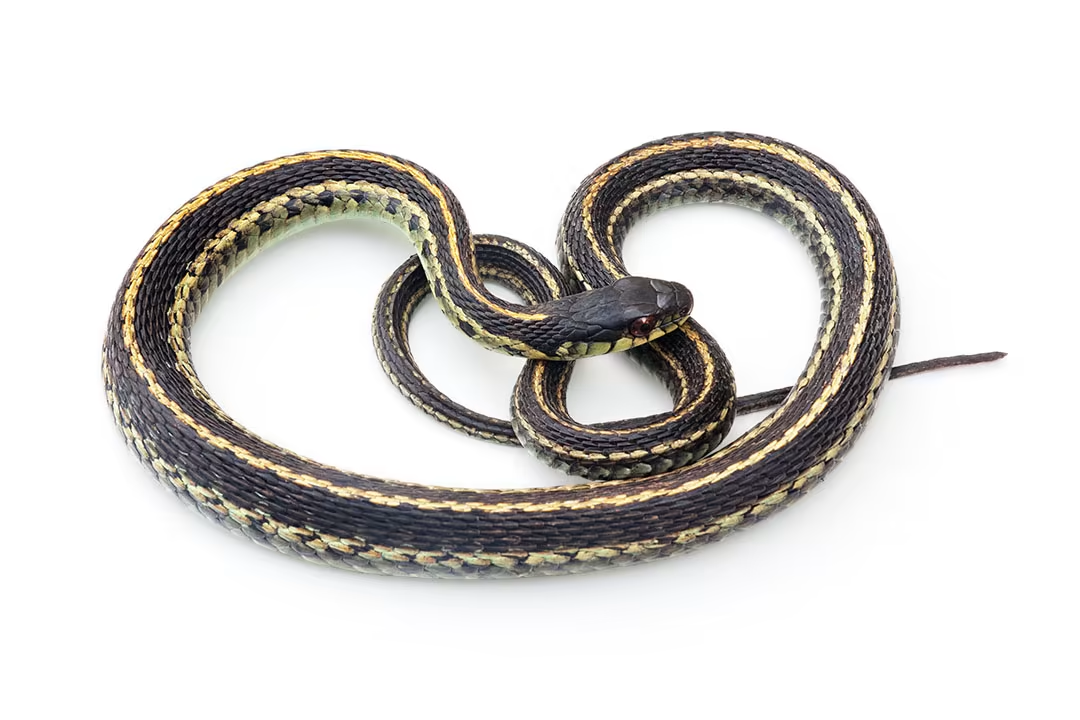
Garter & Water Snake Care: Help Your Pet Thrive! Habitat, Food, Health
Learn how to take care of Garter & Water Snakes, recommended diet and habitat setup. Find the right food, supplies and equipment at your neighborhood Petco.
Updated on November 13th, 2025
- New Pet
Master Terrestrial Frog Care: Habitat, Diet & Health Secrets
Learn how to care for small Terrestrial Frogs, recommended diet and habitat setup. Find the right food, supplies and equipment at your neighborhood Petco.
Updated on November 13th, 2025
- Health & Wellbeing
My turtle is a red eared slider I don't know if he is a male or female but I just assumed he's a male. Although my dad has been putting him in the fountain it doesn't have any chemicals but when I went outside to bring him to his tank the fountain ha
A vet exam is always recommended. IT appears to be Vitamin A deficiency - I think the fountain thing was just a coincidence. You can buy a Vitamin A eye drop to start putting in the eyes: https://www.petco.com/shop/en/petcostore/product/zoo-med-repti-turtle-eye-drops Next, start him on a good diet. I don't know what you are currently feeding but I recommend this diet. https://www.chewy.com/mazuri-fresh-water-turtle-food-12-oz/dp/124764 Hope this helps. Best wishes!
Updated on August 12th, 2025
- Health & Wellbeing
I have two baby red eared sliders about two inches long. Both we’re doing great, however the male one won’t eat. He has no mucus, isn’t wheezing or coughing, and doesn’t swim lopsided. He just doesn’t eat, and looks exhausted. His eyes are not swolle
Without an exam, it can be difficult to determine what may be wrong. Confirm proper environmental parameters, especially temperature. Low temps can affect appetite in reptiles. You can offer bits of raw beef heart to stimulate the appetite. Be sure to offer a balanced diet including protein (feeder fish, nightcrawlers, etc.) fresh greens and vegetables and a small amount of commercial pellets. A calcium supplement and a powdered multivitamin should also be used. You can review slider care at the links below. http://www.reptilesmagazine.com/Red-Eared-Slider-Care-Sheet/ http://www.anapsid.org/reslider.html
Updated on August 12th, 2025
- Food & Nutrition
My RES is not taking food for last 3 days. Becomes very lethargic. No activity.....there is no external sign of illness. As there is no reptiles specialist veterinary doctors, please help me.
Often when reptiles stop eating, it is due to suboptimal husbandry and diet. This may be what is occurring in Pilu. The reason that I say this is that from the picture that you have included, Pilu is actually not a red-eared slider, and actually looks to be a species of map turtle. Also, from the picture, it looks like Pilu has a very short tail, and may actually be a female turtle. This can drastically change how you will be housing Pilu, and may explain why she is not eating. I am not sure where you acquired Pilu, but it may be beneficial to first find out what species of map turtle she is (there are numerous types, and I am not sure what is most commonly available in your area), and then I would recommend adjusting her husbandry based on a care sheet (typically straightforward to find online once you know the species) that is specific for her species. Otherwise, the parameters for temperature, basking spot, type of haul out, amount of water in the environment, diet, etc. can be very
Updated on August 12th, 2025
- Health & Wellbeing
Hello I just got a Reeves turtle and was asking is dirt a good substrate for basking area as I saw it on YouTube? Thanks
An acceptable substrate would be river rocks or large gravel. Anything smaller could potentially be ingested causing an impaction or obstruction. You could also leave the bottom bare. The basking area doesn't necessarily need substrate. A ramp out of the water leading to a simple platform is acceptable.
Updated on August 12th, 2025
- Health & Wellbeing
I recently got a helmeted African side neck turtle and i'm not sure what to feed it and use to decorate its tank.
Sideneck turtles are omnivorous. You can offer earthworms, crickets, beef heart, feeder fish, collard greens, spinach, dandelion greens and mixed vegetables. Feed an adult as much as can be eaten in about a minute every other day. Juveniles should be fed more frequently. Decorate with rocks and logs to provide a means of getting into and out of the water for basking purposes. Gravel or sand can be used as substrate. A filter is necessary to maintain water quality. The tank should, ideally, be at least 55 gallons depending on Hanible's size.
Updated on August 12th, 2025