Two Easy Ways to Start Earning Rewards!
Earn 2X Pals Rewards points at Petco
when you use Petco Pay!
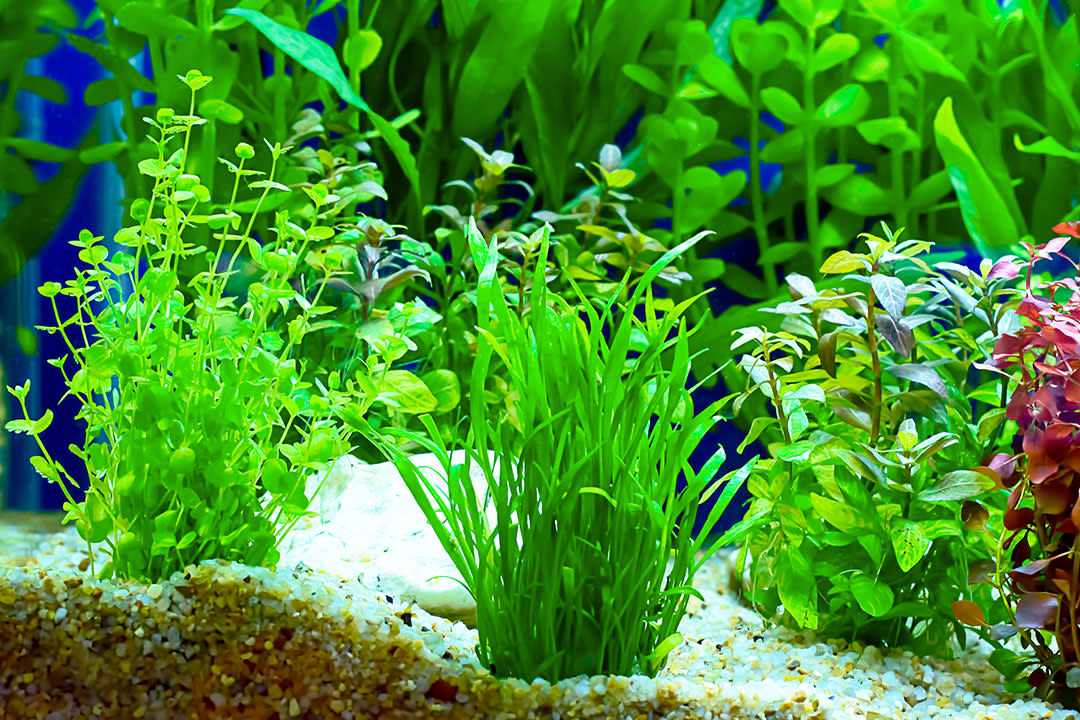
Tanks with live plants can be excellent additions to your home, bringing a touch of nature indoors. Learn how to take care of aquatic plants.
Updated on November 13th, 2025
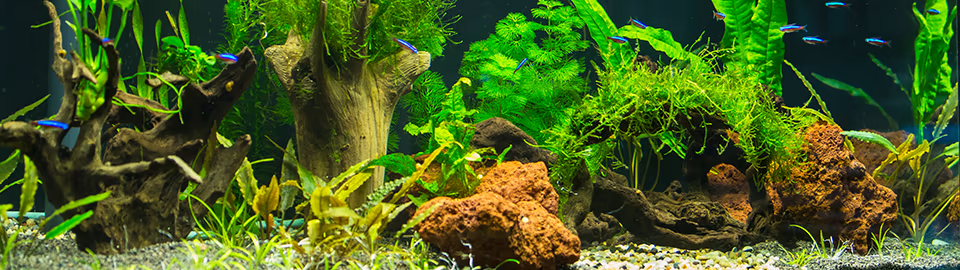
Discover how to hardscape your aquarium here at Petco. Visit Petco and check out aquarium hardscape ideas, solutions and much more for your fish.
Updated on November 13th, 2025
The cost of purchasing and operating an aquarium can often be more than people expect.
Updated on November 13th, 2025
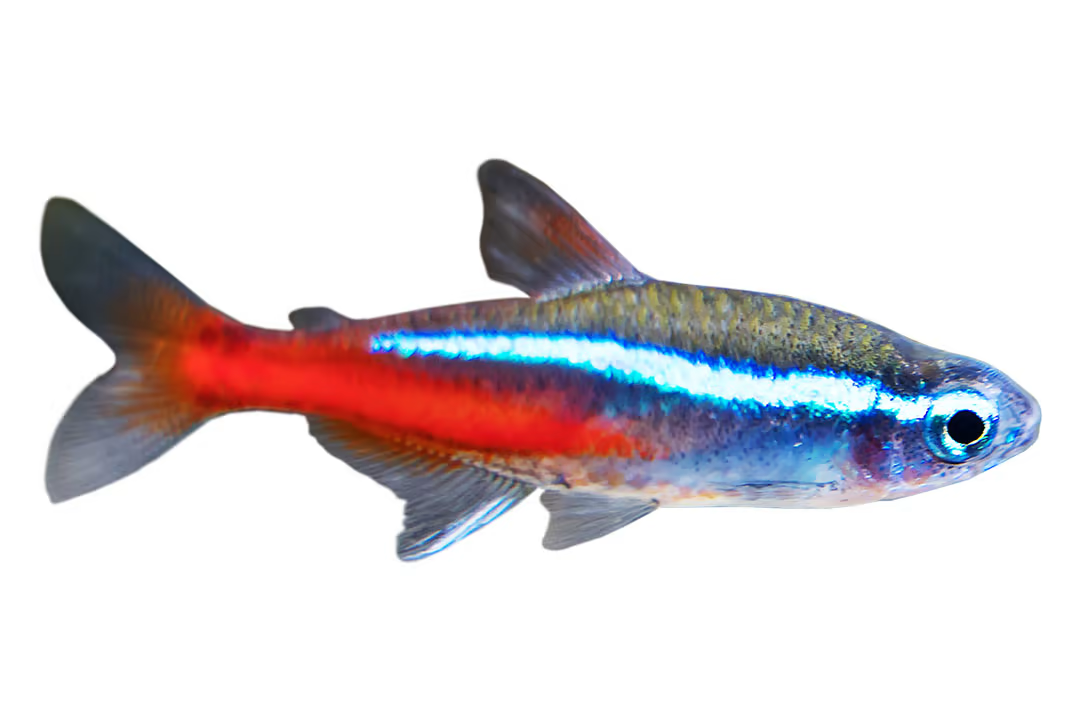
Learn how to care for a Tetra, recommended diet & habitat setup. Find the right food, supplies & equipment at your neighborhood Petco.
Updated on November 13th, 2025
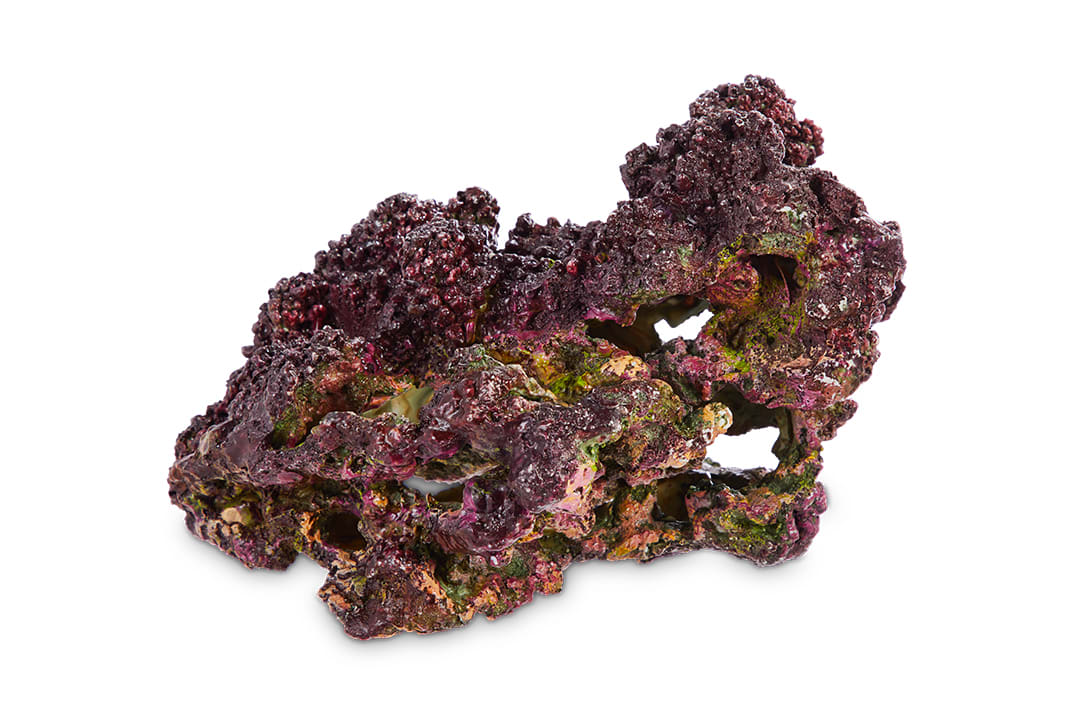
Learn how to care for live rock & sand. Live rock serves as a platform for coral and invertebrates and provides a surface for beneficial bacteria to live.
Updated on November 13th, 2025
The width will limit the tank size. The largest tank would be a 25 gallon tank. If you choose this size, make sure the stand can support upwards of 300lbs. That is what the tank will weigh once filled and set up.
Updated on August 12th, 2025
All these fish can grow quite large. The loach would be the "smallest" at about 6 to 8 inches when full grown. The Oscars can reach lengths of 18 inches and the Texas cichlid and sharks can reach a foot in length. All these fish will require much larger tanks than the ones you have now. The three Oscars alone would do best in a 125 gallon aquarium MINIMUM. The others may thrive in 55 to 75 gallon tanks. To leave them in small tanks will cause stress, aggression and likely infection.
Updated on August 12th, 2025
Adding more fish would likely cause overcrowding. This, in turn, could lead to stress, illness and aggression. You are probably at or very close to maximum capacity, especially if you have fish that are still growing.
Updated on August 12th, 2025
It is possible the tank has not cycled properly which results in high ammonia and nitrite levels which can kill fish. Allow the tank to run, without fish, for at least 4-6 weeks. During this time, use a home test kit or submit a water sample for testing every few days. The local Petco may do this for free or for a small fee. What you are looking for is to have ammonia and nitrites at 0 ppm and nitrates at 20ppm or less. pH can hover around 7 for most community fish. Avoid large, rapid swings in pH though. What is happening in the tank during this time is that beneficial bacteria are populating the gravel/substrate and the filter. These bacterial populations are responsible for the Nitrogen Cycle. This cycle breaks down wastes from fish, uneaten food and plant matter into by-products that are filtered out or dissipate. You can "cycle" a tank with fish, however this increases the risk of loss. Once your tank has cycled, you can add fish. You will still need to monitor water chemistry a
Updated on August 12th, 2025
Anything less than a 100 gallon tank would be insufficient for koi of your sizes. They can be fed as you feed outdoors. Filtration would be critical to maintain water quality. A combination of mechanical, biological and chemicals filtration would be required.
Updated on August 12th, 2025