Two Easy Ways to Start Earning Rewards!
Become a member today! Members-only pricing and offers, personalized care notifications, Vital Care points back on every purchase and more!
 Become a credit card member today!
Earn 2X Pals Rewards points at Petco
when you use Petco Pay!APPLY NOWLearn More About Petco Pay Benefits
Acurel Algaecides & Water Clarity
Get It Today


Related Articles & Questions
- Home & Habitat
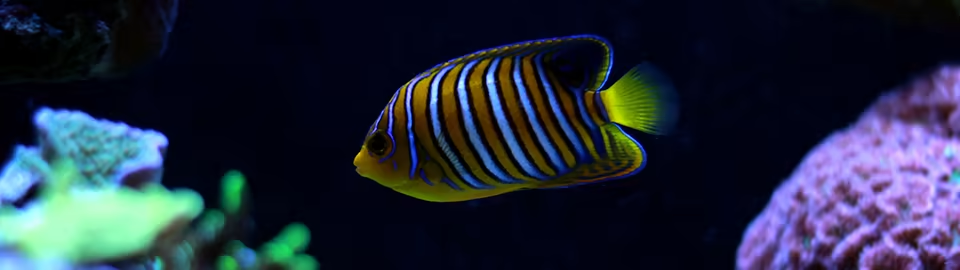
Blackwater Aquariums: Easy Setup & Benefits for Thriving Fish
Search Petco to learn about blackwater fish aquariums. We want to help you decide what lifestyle is best for your unique fish.
Updated on November 13th, 2025
- New Pet
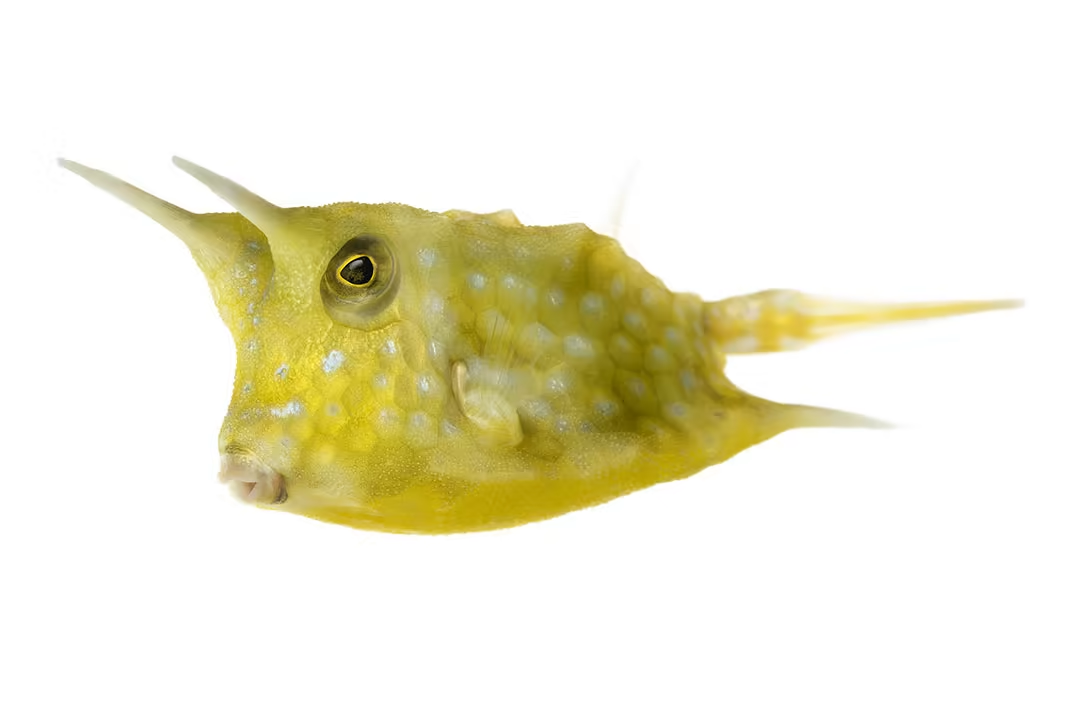
Advanced Boxfish & Cowfish Care: Ultimate Tank Setup, Food, & Safety
Learn how to care for Boxfish & Cowfish, recommended diet and aquarium setup. Find the right food, supplies and equipment at your neighborhood Petco.
Updated on November 13th, 2025
- New Pet
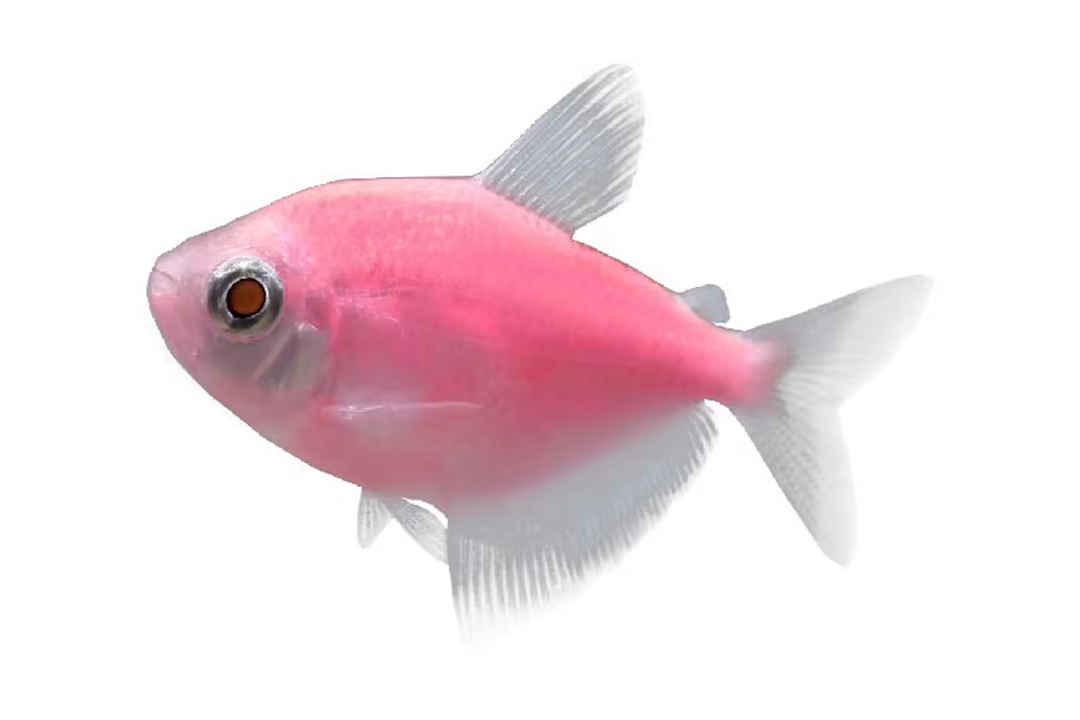
GloFish Care Guide: Tank, Food, & Compatibility for Thriving Fish
GloFish are brilliantly colored and beautiful fish. Learn how to care for GloFish, what to feed them, how long they live, their ideal tank size and more.
Updated on November 13th, 2025
- New Pet
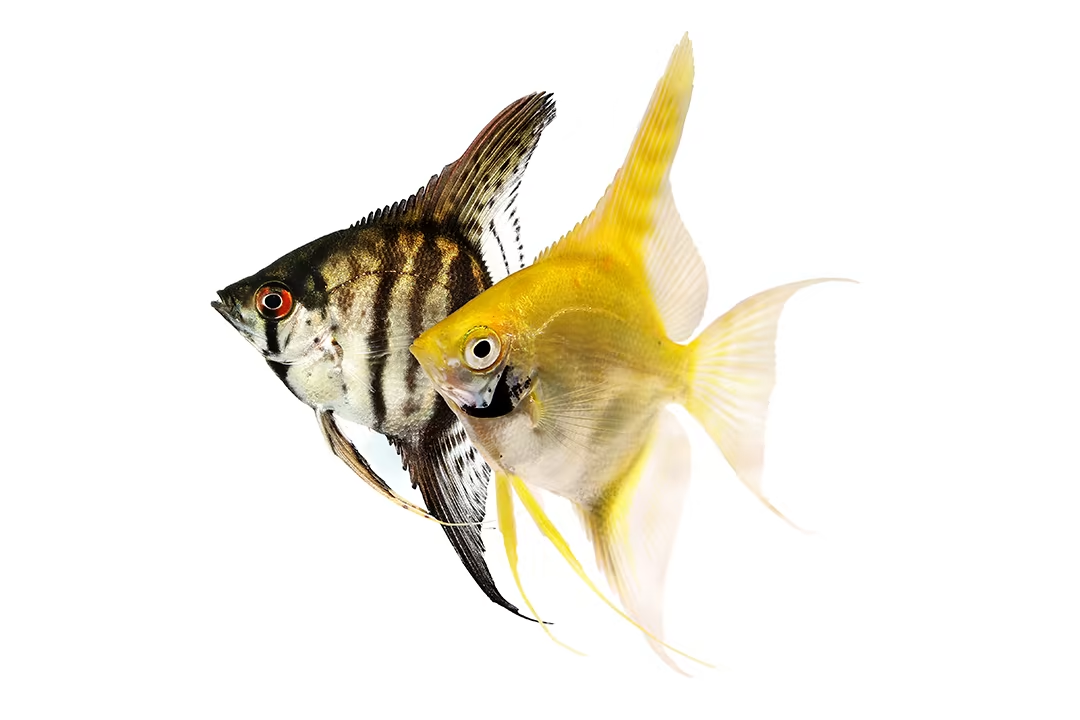
Freshwater Angelfish Care: Tank, Food, & Happy, Healthy Fish
Learn how to care for angelfish, recommended diet and aquarium setup. Find the right food, supplies and equipment at your neighborhood Petco.
Updated on November 13th, 2025
- New Pet
Freshwater Aquarium Setup: A Step-by-Step Guide for Beginners
Learn how to set up a freshwater fish tank and key considerations regarding placement, supplies needed, and the set up process.
Updated on November 13th, 2025
- Health & Wellbeing
Hello, all my koi fish are becoming sick. They're demonstrating a behavior called flashing. No, they don't have visible parasites like anchor worm or fish lice so it had to a disease. Their fins are also getting torn up. They die from slowly becoming
Consider a broad spectrum treatment such as General Cure by API or Parasite Clear by Jungle Labs. Follow label directions. Plain aquarium salt (NOT table salt) can be used concurrently to aid in healing and to treat minor infection and fin rot. Dissolve up to one tablespoon per gallon of water into a cup of tank water and gently pour it into the tank. Test water chemistry using a home test kit or submitting a water sample. Most pet or fish stores will do this for free or for a nominal fee. Correct any imbalances using aged or conditioned water that is temperature matched to prevent further stress or shock. Use a conditioner such as StressCoat as well. Confirm adequate filtration to maintain water quality.
Updated on August 12th, 2025
- Health & Wellbeing
My fish has been slowly losing pieces of his tail, and a weird brown stuff is growing on the tank. I clean it every week, but it won't go away and his tail won't grow back. What do I do?
It is likely fin rot which is caused by bacterial overgrowth. It may respond to treatment with simple aquarium salt. Place Alpha in a smaller tank, half gallon to one gallon, for easier treatment. Use 1-1.5 teaspoons per gallon. Perform a 100% water change each day and using a fresh water/salt solution. Do this for a maximum of 10 consecutive days. Strive for a water temp between 76 F and 78 F. This will inhibit bacterial growth. Turn off any tank light to further inhibit bacterial growth. Turn off the filter as the current may slow fin regrowth and the filter media may remove enough salt to affect treatment. This treatment should clear most cases of fin rot.
Updated on August 12th, 2025
- Health & Wellbeing
My 55 gallon fish tank has hard water how do i clean it out that won't harm fish?
If you are getting hard water deposits, use a utility razor and gently scrape the deposit off the glass. When you're doing a water change, if the water level drops below the deposits, use a cloth dampened with plain vinegar and scrub. Be careful to not allow any vinegar into the water. Wipe it well with a clean cloth to remove any vinegar residue and refill. Ideally, the tank should be emptied, sprayed with vinegar, sit for 10-20 minutes then scrubbed or scraped.
Updated on August 12th, 2025
- Health & Wellbeing
I dont know if you are a tropical fish specialist. But there is something going on in my tank and need help diagnosing it. My corydora has two raised growths ..one at the base of its fin. And one under the eye. My pleco seems a bit tattered too. A li
Thanks for reaching out about your aquarium and including photos. Did you test your water quality prior to the water change? Continue to test for pH, ammonia, nitrites and nitrates. Pristine water quality is needed for health. Are any of the fish new, that could have introduced parasites? Itching/flashing can be due to water quality, external parasites, bacterial or viral infections and other causes. The white lesions on the photo could be fungal infections. A skin scrape and examination under the microscope (at a veterinarian's office) is needed for an attempt to determine a cause. Fungal infections are often secondary problems, so check water quality first. Good luck.
Updated on August 12th, 2025
- Health & Wellbeing
I have a 10 gallon fish tank and I have about ten fish (plattys,mollys and cat fish not algae eating) and I have algae all over my rocks. How do I get it off?
Your tank may be overstocked which will contribute to excessive algae growth. Other causes include poor water quality, overfeeding, too much light and slow water current. Consider removing some fish to another tank or getting a larger tank. If you choose the latter, it will need to be properly cycled before you move fish. A general guideline is one inch of fish per gallon of water. Use the adult size of any fish you plan on keeping when estimating tank requirements. Put the lights on a timer. A photoperiod of 10-12 hours on and the remainder off should suffice. Increase filter flow if you can. Standing or slow moving water will promote algae growth. For now, you can use an algae scrubber to clean glass and tank furniture. Perform partial water changes and rinse filter media. Use only aged or conditioned water that is temperature matched to prevent stress or shock. Use tank water, not tap water, to rinse filter media to preserve beneficial bacteria in the sponge.
Updated on August 12th, 2025