Two Easy Ways to Start Earning Rewards!
Become a member today! Members-only pricing and offers, personalized care notifications, Vital Care points back on every purchase and more!
 Become a credit card member today!
Earn 2X Pals Rewards points at Petco
when you use Petco Pay!APPLY NOWLearn More About Petco Pay Benefits
Acurel


Related Articles & Questions
- New Pet
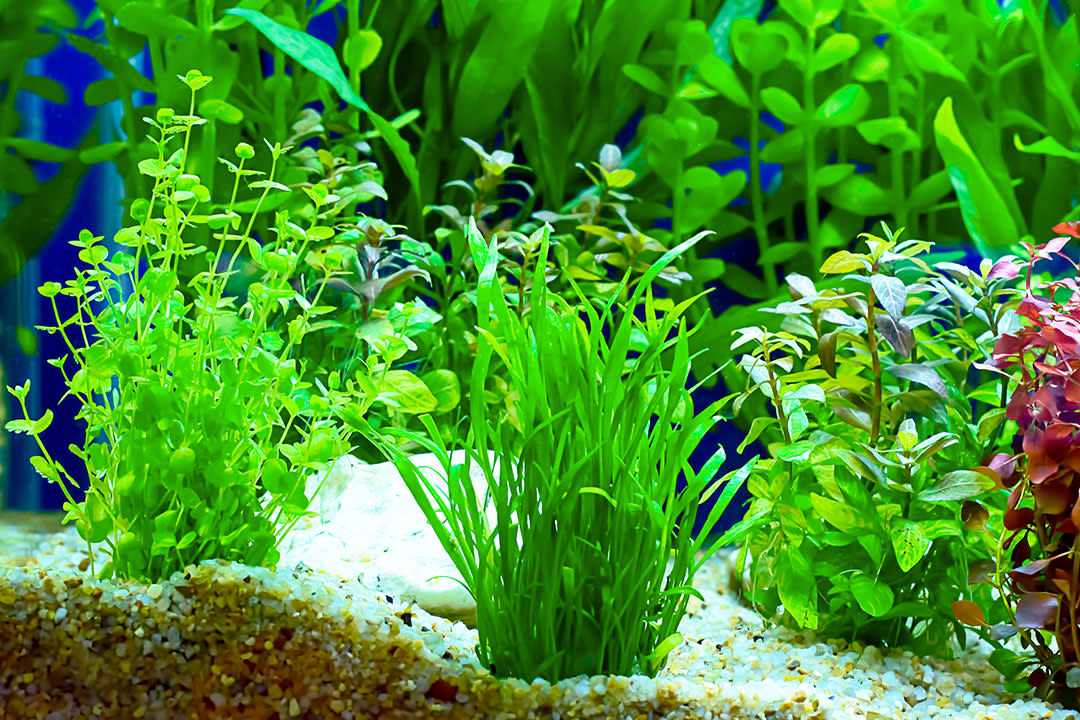
Master Aquatic Plant Care: Lush Aquarium Plants & Happy Fish
Tanks with live plants can be excellent additions to your home, bringing a touch of nature indoors. Learn how to take care of aquatic plants.
Updated on November 13th, 2025
- New Pet
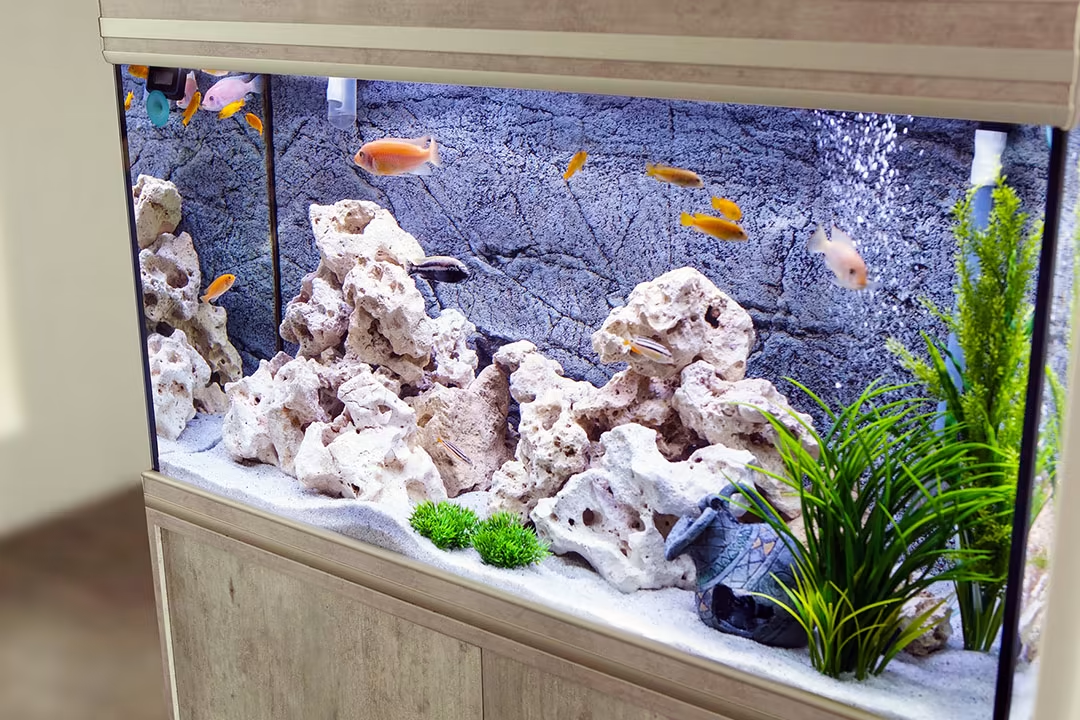
Aquarium Water Quality: Master Healthy Fish & Crystal Clear Tanks
Learn how to test your aquarium water. Poor water quality stresses fish, which leaves them susceptible to disease and possibly death.
Updated on November 13th, 2025
- New Pet
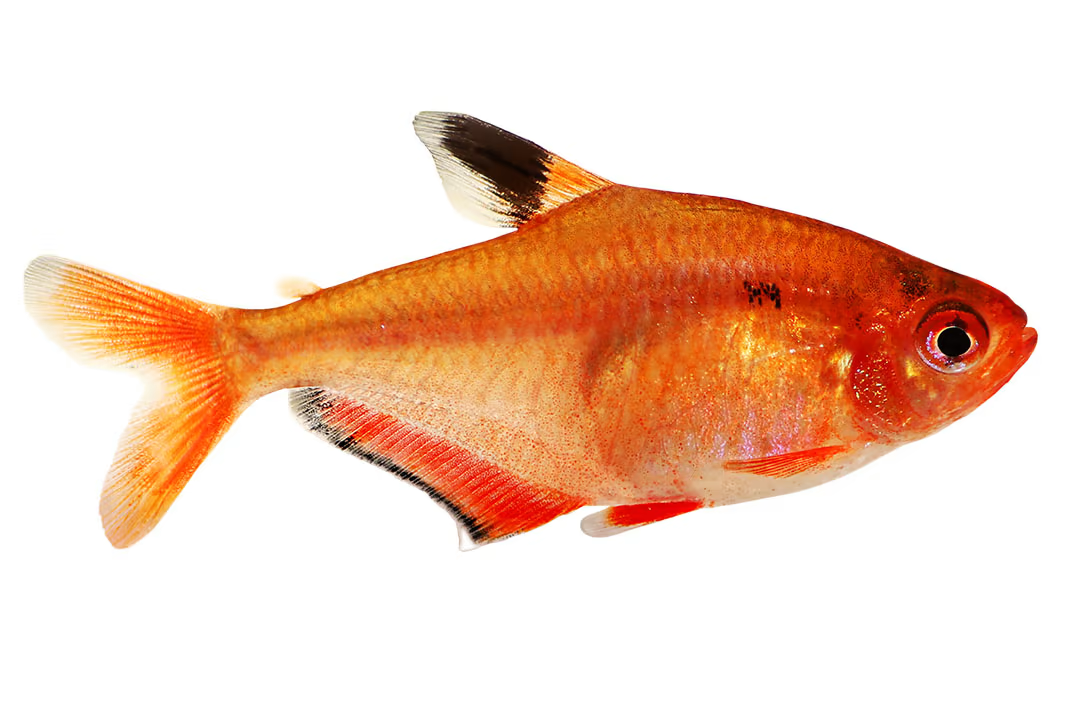
Freshwater Community Fish: Care, Setup & Compatibility Guide
Learn how to care for freshwater community fish, recommended diet & aquarium setup. Find the right food, supplies & equipment at your neighborhood Petco.
Updated on November 13th, 2025
- Food & Nutrition
Feeding Freshwater Fish: Ultimate Guide for a Thriving Aquarium
Feeding your freshwater fish isn't as simple as adding a pinch of flakes! Read these three tips to learn more about how to provide your pets the nutrition and environment they need.
Updated on November 13th, 2025
- Home & Habitat
Freshwater Aquarium Salt: Benefits & Safe Use for Thriving Fish
Learn how to use aquarium salt in freshwater aquariums to promote healthy gill functions, reduce stress, and treat infections in fish.
Updated on November 13th, 2025
- Health & Wellbeing
I have basic aquarium at home, since 2 days all are not active and seen abnormal, shark, gold, koi are all having bleeding on their body without any reason i know. Suddenly at one time continuously fishes getting die, even I changed water at overnigh
I'm sorry you are having difficulties with your aquarium. There are several issues that should be dealt with right now. They are water chemistry, aquarium size and choice/number of fish. Any new aquarium should be set up and, ideally, run empty for several weeks (usually 4-6 weeks). This is so beneficial bacteria have an opportunity to populate the substrate and filter. These bacteria are necessary to break down wastes that fish will produce. The technical phrase for this is "establishing the Nitrogen cycle". These bacteria will break down wastes into ammonia then nitrites then nitrates. Nitrates can then dissipate or be absorbed/used by live plants. In high enough concentrations, ammonia and nitrites are toxic and can kill fish. Cycling a tank with fish is possible but it increases the risk of loss. Water chemistry should be checked every few days using a liquid home test kit. A water sample can be submitted for testing , but is not as convenient as testing yourself. Most pet sto
Updated on August 12th, 2025
- Health & Wellbeing
All of my fish died after using a product purchased at Petco called ACUREL-F. How do I get their water safe to put in new fish?
I would recommend to have the water completely changed. New water should be ideally submitted for quality testing. Most pet stores will do this for free or a nominal fee. High ammonia levels, PH imbalances may be responsible for that as well. Oxygen concentration and quality of the filters should be determined as well. Please do not hesitate to contact us again on the forum or by requesting a consultation if you have any more questions or to discuss it any further.
Updated on August 12th, 2025
- Health & Wellbeing
hello, i bought a fish tank last week ans followed all the instructions the lady gave me for example leave the water in there for 3 days before buying the fish, cleaning the decorations bought the liquid that promotes good bacteria ect. yesterday I b
The quick start liquid will add nitrifying bacteria but will not eliminate ammonia or nitrites. Both are harmful and can kill fish in high enough concentrations. You can use a home test kit to test the water or you can submit a sample for testing. Most pet stores or aquarists will do this for free or for a nominal fee. There are chemical additives you can use to decrease levels. When adding water, use treated water or aged water. Ideally, the tank should be left empty for about 4 weeks to properly establish the nitrogen cycle before adding fish. At this point, you may lose the second fish regardless of treatment. Test the water, make adjustments, let the tank cycle and start fresh. Adding an airstone can increase oxygen levels.
Updated on August 12th, 2025
- Health & Wellbeing
My fish has droppy and I'm very scared for him. Please tell me how I can cure this effectively and fast
Begin by submitting a water sample for quality testing. Most pet stores will do this for free or a nominal fee. High ammonia levels, PH imbalances may be responsible for that. Oxygen concentration and quality of the filters should be determined as well. If water quality is good and there are no major imbalances, Cosmo should examined to look for any sign of bacterial/fungal infection and eventually water should be treated. Please do not hesitate to contact us again on the forum or by requesting a consultation (where you can post pictures ) if you have any more questions or to discuss it any further.
Updated on August 12th, 2025
- Health & Wellbeing
I have a three year old fish with grey and white stuff growing on her head. What should I do?
Thanks for reaching out about Ares and including photos. White cottony growths are often associated with fungal infections, which are normally secondary to other problems. Wounds, suboptimal water quality and parasites could be the initial cause. Test and correct water quality. A veterinary visit is recommended to assess and provide a diagnostic/treatment plan. There are commercially available fungal treatment available but use with caution, especially without getting a confirmed diagnosis first. If aggression from other fish suspected, might need to be separated. Good luck.
Updated on August 12th, 2025