Two Easy Ways to Start Earning Rewards!
Become a member today! Members-only pricing and offers, personalized care notifications, Vital Care points back on every purchase and more!
 Become a credit card member today!
Earn 2X Pals Rewards points at Petco
when you use Petco Pay!APPLY NOWLearn More About Petco Pay Benefits
Red Sea Algaecides & Water Clarity
Get It Today


Related Articles & Questions
- Home & Habitat
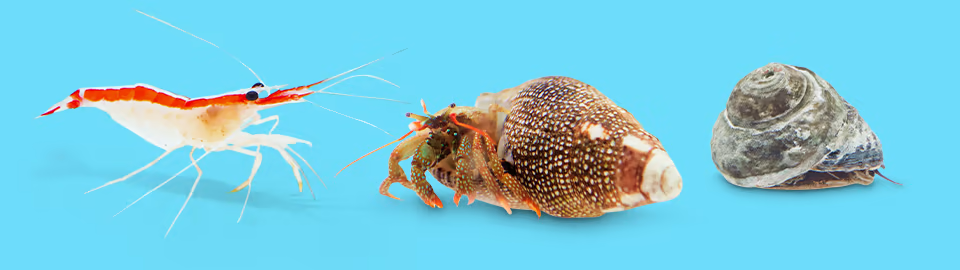
Saltwater Cleanup Crew: Banish Algae, Keep Your Tank Pristine
Visit Petco to learn about cleanup crews and how they can help your aquarium health.
Updated on October 29th, 2025
- New Pet
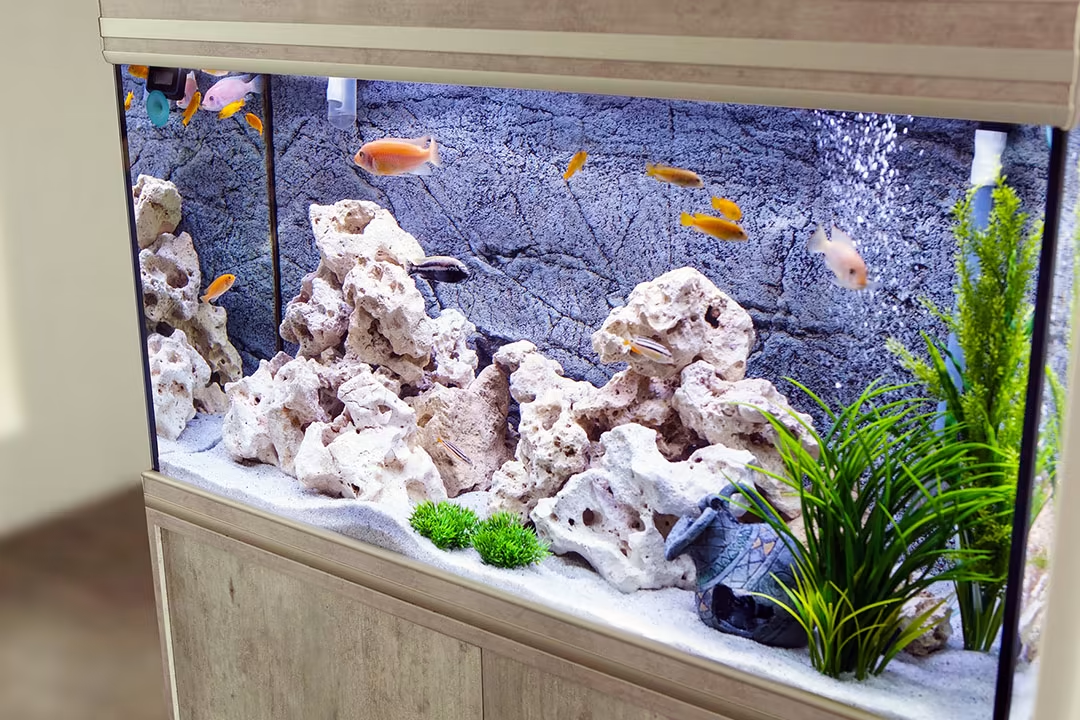
Aquarium Water Quality: Master Healthy Fish & Crystal Clear Tanks
Learn how to test your aquarium water. Poor water quality stresses fish, which leaves them susceptible to disease and possibly death.
Updated on October 29th, 2025
- Training & Behavior
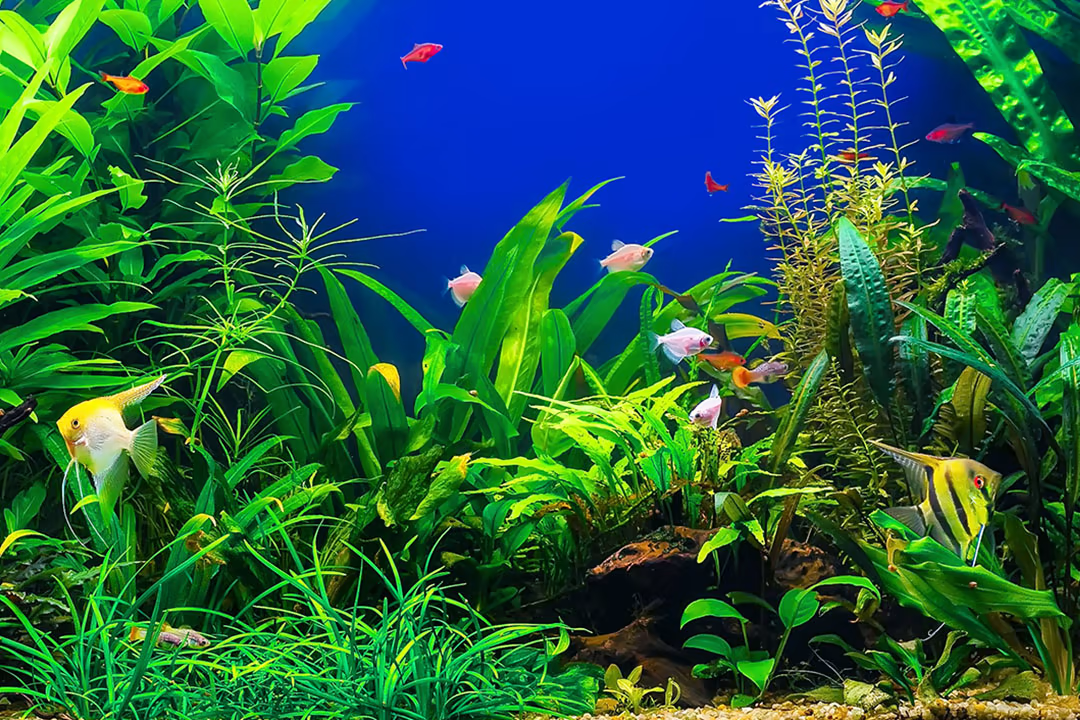
Finally! 10 Easy Ways to a Crystal Clear, Algae-Free Fish Tank
Our top ten most important tips for removing and keeping algae out of your aquarium.
Updated on October 29th, 2025
- New Pet
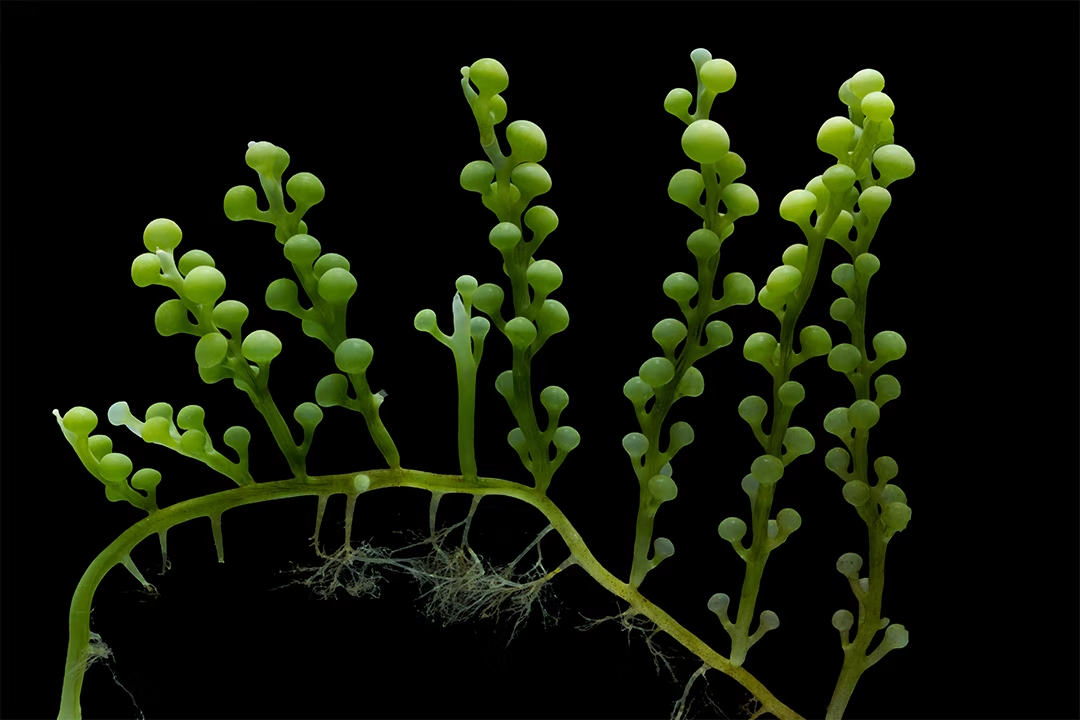
Marine Aquatic Plant and Macroalgae Care Sheet
Discover care tips for marine aquatic plant macroalgae & the benefits of having macroalgae in your tank! Learn aquarium requirements, propagation, and mating facts.
Updated on October 29th, 2025
- New Pet
Aquatic Pet Safety: Keep Your Home Aquarium Pets Healthy & Safe
Learn how to safely handle your aquatic life to avoid toxin & bacterial exposure. Find aquatic life care supplies at your neighborhood Petco pet care center.
Updated on October 29th, 2025
- Health & Wellbeing
My fish tank got infested with pink algae and green algae and the fish are acting lethargic and dying.
Check the water chemistry using a home test kit or submit a water sample for testing. The local Petco may do this for free or for a small fee. Aim for an absence (0 ppm) of ammonia and nitrites with nitrates at 20ppm or less. Perform partial water changes to stabilize chemistry and/or to improve water quality. Rinse the filter media in tank water, not tap water, and replace it. Use only conditioned water that is temperature matched to prevent stress or shock. To limit algae growth, maintain pristine water quality via filtration and regular water changes. If possible, turn up filter flow to keep water moving. If this stresses the fish though, do not do it. Do not overfeed and remove any uneaten food promptly. Limit lighting to 8 hours daily and closely monitor water temperature as well. All these can promote algae overgrowth.
Updated on August 12th, 2025
- Health & Wellbeing
My fish tank is getting brown on the decorations and gravel I tried cleaning it a couple days ago but came right back
Brown algae overgrowth can be due to high nitrates, too much light or overfeeding. Use a liquid home test kit or submit a water sample for testing. Most pet or fish stores will do this for free of for a small fee. If nitrates are over 40ppm, it can be decreased by performing partial water changes. Use only aged or conditioned water that is temperature matched to prevent stress or shock. You can also use a nitrate absorbing filter insert. The algae will need to be physically scrubbed from plants or rocks and can be scraped from glass. Rinse filter media using tank water NOT tap water. Limit light to 6 hours daily, 8 if you have live plants and do not over feed.
Updated on August 12th, 2025
- Health & Wellbeing
Sir i stay in odisha whichi is in India and im getting iron in my water supply and the water that we get from the tap is very dirty. How can i treat my water so that i could make a sucessful aquarium. Please suggest me some treatments that are avalia
Some iron is necessary for a healthy aquarium, but too much can promote algae growth or impart an unsightly yellow or orange tinge to the water. Reverse osmosis (RO) filters are deal for removing mineral and heavy metals from water but they can be prohibitively expensive. Buying RO water from a local market or pet store is also a possibility but not economically feasible if you have a large tank. The best option may be a Polyfilter, which can be purchased in the local pet store or online. These filters will remove iron or other metals/chemicals and must be changed monthly or quarterly. You can also buy a water conditioner that will precipitate out some of the iron which can then be removed by mechanical filtration. An example of just one is Rid Metals (by Kordon). Follow label directions carefully, perform regular water changes and monitor iron levels with a home test kit or by submitting a water sample for testing.
Updated on August 12th, 2025
- Health & Wellbeing
Concerned about what possible skin diseases?? Some of my fish possibly may have. Is it a possibility that some just algae on them. I recently treated the tank with copper sulfate because I believed that fish may have velvet.. however two days later;
Thanks for reaching out. Have you tested water quality for pH, ammonia, nitrite and nitrate. Correct problems. Don't see any signs of external lesion on the pictures, except fine erosion, and possible gravid fish. A veterinary visit is probably needed to trouble shoot for disease. Randomly adding chemicals to the water could have detrimental effects. Good luck.
Updated on August 12th, 2025
- Health & Wellbeing
Can I use Algecide for fish tanks in his tank? There is a lot of algae growth on the rocks and on the side of the tank. Is there any other advice to help me remove it?
There are different ways to control algae accumulation inside the tank: Limit the nitrate accumulation in it (regular water changes is the most common method of removing nitrate), limit the lighting period in the aquarium (4 hours a day) avoid overfeeding. Try Algone, very effective against nitrate, it is not an algaecide but it can control indirectly algae. If all these methods are not effective, algaecide are then needed.
Updated on August 12th, 2025