Two Easy Ways to Start Earning Rewards!
Become a member today! Members-only pricing and offers, personalized care notifications, Vital Care points back on every purchase and more!
 Become a credit card member today!
Earn 2X Pals Rewards points at Petco
when you use Petco Pay!APPLY NOWLearn More About Petco Pay Benefits
Petco Freshwater Inverts Bottom Dwellers


Related Articles & Questions
- New Pet
Freshwater Semi-Aggressive Fish: Top Secrets for a Thriving Tank
Learn how to care for semi-aggressive fish, recommended diet & aquarium setup. Find the right food, supplies & equipment at your neighborhood Petco.
Updated on November 13th, 2025
- Home & Habitat
Aquarium Hardscaping: Essential for Healthy Fish & Gorgeous Aquascapes
Discover how to hardscape your aquarium here at Petco. Visit Petco and check out aquarium hardscape ideas, solutions and much more for your fish.
Updated on November 13th, 2025
- New Pet
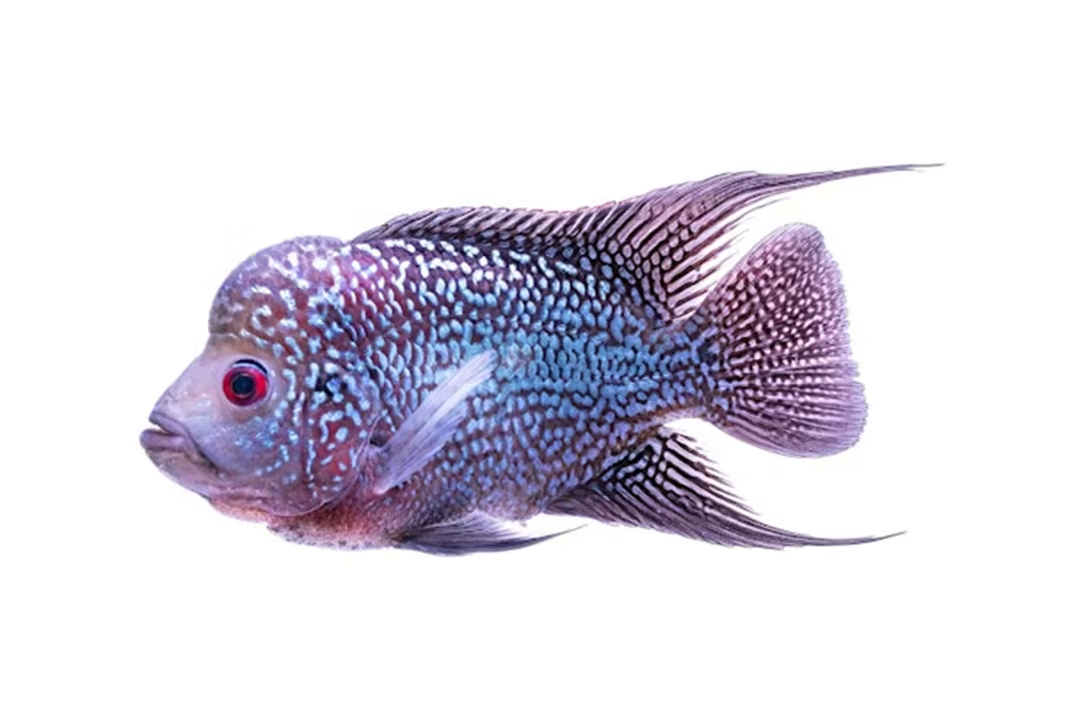
African Cichlid Care: Complete Tank Setup, Food & Compatibility
Learn how to take care of African Cichlids, recommended diet and tank setup. Find the right food, supplies and equipment at your neighborhood Petco.
Updated on November 13th, 2025
- New Pet
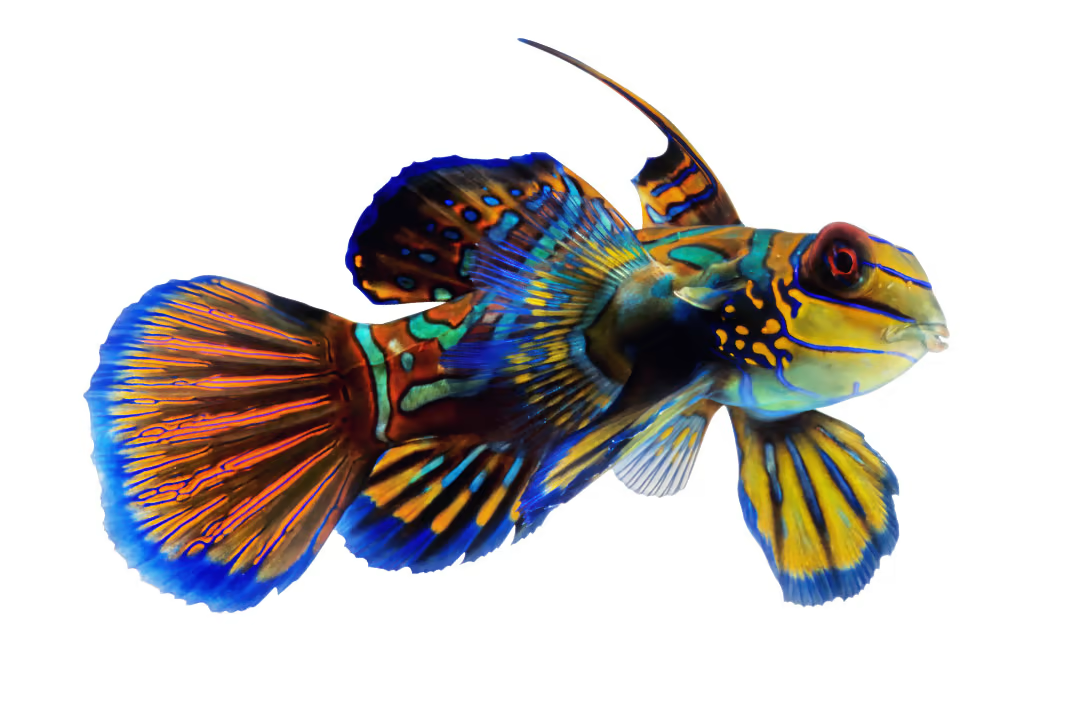
Advanced Mandarin Goby Care: Tank Setup, Diet, & Water Quality
Learn how to take care of Mandarin Gobies, recommended diet and tank size. Find the right food, supplies and equipment at your neighborhood Petco.
Updated on November 13th, 2025
- Home & Habitat
Thriving Aquarium: Build a Self-Sustaining, Low-Maintenance Tank
Learn how to make a self-sustaining aquarium. Visit Petco to learn all the steps to create the self-sustaining aquarium of your dreams!
Updated on November 13th, 2025
- Health & Wellbeing
What types of plants are suitable for a 24L tank with 2x shrimp, 3x snails, 2x Platies, 5x danios?
Thanks for reaching out about your tank. Long plastic plants that extend from the bottom, all the way to the top can providing hiding spaces to decrease any territoriality or aggression. Live plants might be susceptible to the snails, depending on their type. Good luck.
Updated on August 12th, 2025
- Health & Wellbeing
Hello, as I have been observing my new baby oranda goldfish, two out of the four I have received four days ago spend MOST of their time at the bottom of the tank, all four babies live in a 37 gallon aquarium together. When it is mealtime, all four of
Thanks for reaching out and including a photo. If water quality is perfect, stress could be a concern. The fish might be determining hierarchy and these two are low on the totem pole. Providing more hiding spaced could help. Look over their bodies for signs of external parasites. If noted, a veterinary visit is recommended to assess and provide a diagnostic/treatment plan. Good luck.
Updated on August 12th, 2025
- Health & Wellbeing
I have a 20 gallon tank. I'm thinking of buying +5 fish. Which fish could I buy and what would I need for the fish and tank?
A fish tank will need a filter, a light/hood and a heater. Make sure the filter is rated for at least twice the tank volume. The heater should be adjustable since water temperature will depend on the species of fish. Good "starter" fish include Tetras, Mollies, Danios or Tetras. A new tank should be set up and left running empty for several weeks before adding fish. A pinch of flake food can be sprinkled in daily. This "cycling" will allow a population of beneficial bacteria to colonize the tank and filter. These bacteria will break down wastes (ammonia, nitrites and nitrates) which are toxic to fish.
Updated on August 12th, 2025
- Health & Wellbeing
hi! I have gold fish in a tank and after doing a 20% water change my fish seems to be in shock just sitting at the bottom of the tank... could it be the PH level change? please help me!
It may be the pH change or other change in water chemistry. Use a home test kit to check water quality. Make adjustments as indicated. It may also be a response to a temperature change. Check water temperature and increase the heat if necessary, just don't forget to turn it down or off once the temp is within range.
Updated on August 12th, 2025
- Health & Wellbeing
I just bought my betta fish yesterday from a local shop ever since i bought it does not move much and keeps sitting at the bottom of the tank and has not eaten the fish food the owner gave me it keeps flapping its gill rapidly its my first time ownin
These are quite concerning signs. The tank where you place Ale is absolutely inadequate and will soon cause serious consequences. Water Quality and Temperature: Make sure your tank has a filter and especially a heater, room temperature is too cool. They are better off at about 78-82 degrees. If kept too cool, they get lethargic and refuse to eat. Bottled spring or drinking water seems to work out well. Never use distilled water. If kept in dirty and unfiltered water they are prone to fin and tail rot and other bacterial infections. Tank Size and Habitat: Some reccommend a five gallon tank with light filter and heater is perfect They do not like strong water current and should be provided a place near the surface to 'take a load off'.' Petco sells the betta hammocks. Also keep your Betta happy by providing artificial or live floating plants for them to swim around. Feeding Your Betta a Well-Balanced Diet: Betta pellets or high quality flake food. They can be fed every other day with
Updated on August 12th, 2025