Two Easy Ways to Start Earning Rewards!
Become a member today! Members-only pricing and offers, personalized care notifications, Vital Care points back on every purchase and more!
 Become a credit card member today!
Earn 2X Pals Rewards points at Petco
when you use Petco Pay!APPLY NOWLearn More About Petco Pay Benefits
Omega One Betta Fish Food


Related Articles & Questions
- New Pet
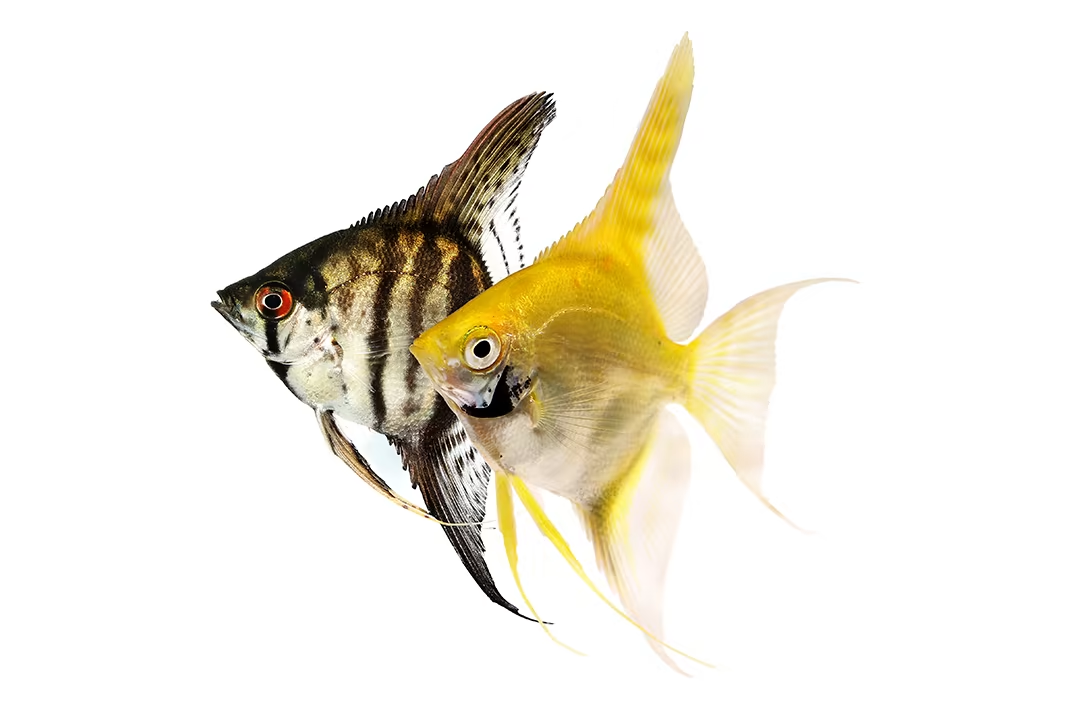
Freshwater Angelfish Care: Tank, Food, & Happy, Healthy Fish
Learn how to care for angelfish, recommended diet and aquarium setup. Find the right food, supplies and equipment at your neighborhood Petco.
Updated on November 13th, 2025
- New Pet
Brackish Water Fish Care: Your Complete Guide to Tank, Food & Species
Learn how to care for brackish water fish, recommended diet & aquarium setup. Find the right food, supplies & equipment at your neighborhood Petco.
Updated on November 13th, 2025
- New Pet
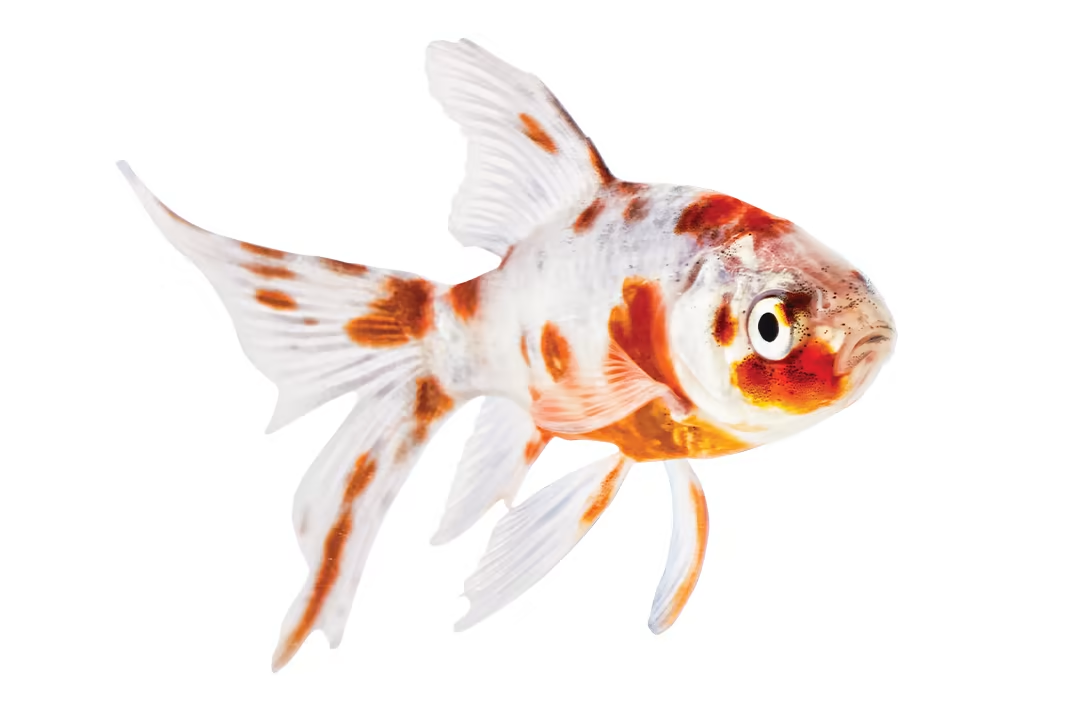
Goldfish Care Guide: Tank Size, Food, Water Quality for Thriving Fish
Learn how to care for Goldfish, recommended diet and aquarium setup. Find the right food, supplies and equipment at your neighborhood Petco.
Updated on November 13th, 2025
- New Pet
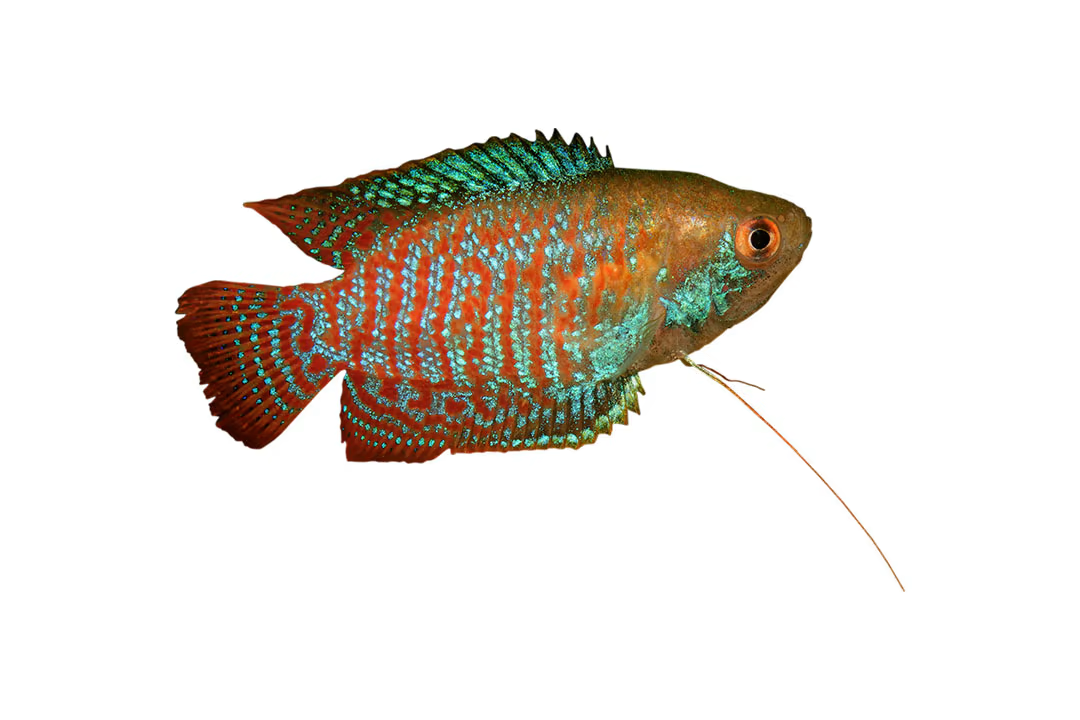
Mastering Gourami Care: Tank Setup, Food, & Habitat for Beginners
Learn how to care for Gourami, recommended diet and aquarium setup. Find the right food, supplies and equipment at your neighborhood Petco.
Updated on November 13th, 2025
- New Pet
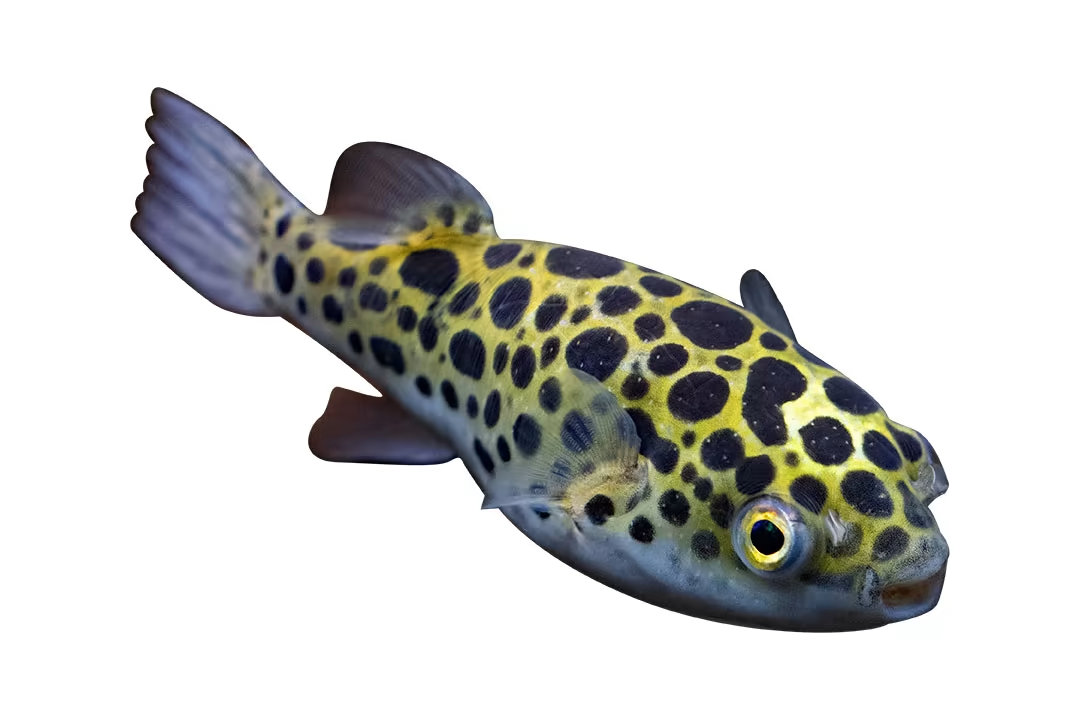
Pufferfish Care: Tank Setup, Diet, & Compatibility for Thriving Pets
Learn how to take care of Puffer Fish, recommended diet and tank size. Find the right food, supplies and equipment at your neighborhood Petco.
Updated on November 13th, 2025
- Health & Wellbeing
I just got a baby betta fish the other day and I have these little fish food pellets. I wanna know how many times I need to feed him and how many pellets should I give him?
Bettas are carnivores and need food high in protein. There are many foods available for your betta that can be bought at your local fish store or cultivated at home. Here’s a quick list to get you started. Remember that like people, a variety of foods allows your fish to get a balanced diet. *Frozen or live bloodworms or bloodworms in gel *Frozen or live brine shrimp or brine shrimp in gel *Frozen or live daphnia *Frozen glass worms *Frozen beef heart (can be purchased at your supermarket or butcher) *Frozen tubifex worms (live tubifex often carry parasites or bacteria and is better avoided) *Frozen mysis shrimp *Live white worms *Live grindal worms *Live flightless or wingless fruit flies *Live black worms. Frozen foods should not be confused with freeze-dried. Freeze-dried foods may cause digestion problems leading to more serious medical issues when fed in excess. If possible, try to avoid feeding dried pellets, flake or freeze-dried food. Some foods are marketed as “For Bettas”
Updated on August 12th, 2025
- Health & Wellbeing
I just got a betta fish yesterday. He was fine and swimming an hour ago but now he is at the bottom of the tank just kinda laying there and Hindi g in his cave. He is still alive just lathergic. I think he is dying. We put 8 drops of water conditione
Check the water chemistry and temperature. Use a home test kit or submit a water sample for testing. Most pet stores will do this for free or for a small fee. Aim for 0 ppm ammonia and nitrites with nitrates at 20 ppm or less. Perform partial water changes, no more than 30% total volume at a time, to stabilize chemistry and improve water quality. Use only aged or conditioned water that is temperature matched to prevent stress or shock. Bettas are tropical fish and do best between 78 F and 80 F. You may need a small, submersible water heater to maintain temperature. Feed either the pellets or the bloodworms at one meal. Offering both is too much and he likely won't eat it all. Any uneaten food will rot in the tank and foul the water.
Updated on August 12th, 2025
- Health & Wellbeing
Hello My male betta fish's name is Aries. He was introduced to his 1 gallon bowl 3 days ago from a pet store. He is really active and a god jumper and swimmer. He seems really healthy than I thought he would be considering the bowl size. But I when I
It would take your betta fish two weeks to completely starve to death so don't get too worried just yet. They usually don't eat due to stress. He probably does not like the food you have. Try some good quality food like Omega One Betta Buffet Pellets. Remember, the betta is a meat eating carnivore so if he does not enjoy the pellets I would advise getting him some bloodworms or dried shrimp. A new fish tank setup is always going to bring stress to the fish because its new. What is important to know is that stress puts a fish’s body at harm. Fish rarely get sick unless under stress levels. So if you can cut back on as much stress as possible, the better. Try bringing some darkness to the tank to reduce stress. Cover the tank with a small blanket so the fish doesn’t have to witness all the movement outside of the tank. Even though he is inside the tank, he still gets stress from movement in his surrounding view. Darkness helps this stress tell he is more used to the new environmen
Updated on August 12th, 2025
- Health & Wellbeing
My male betta fish has been in its 3 gallon tank for close to a month, today it was at bottom of the tank and is very slow. There is white fuzz behind its fins and at end of tail. Tail looks split too. There is a snail in the tanks as well and a smal
It could be some fin rot and fungus growth. The foundation for treatment and recovery is pristine water. You can use a home test kit or submit a water sample to confirm proper chemistry. Most pet stores will do this for free or for a small fee. Aim for 0 ppm ammonia, 0 ppm nitrites and 20 ppm or less nitrates. Perform a partial water change if indicated. Use aged or conditioned water that is temperature matched to prevent further stress or shock. Do this every few days to maintain water quality. To treat the fungal infection, you'll need a product such as Fungus Cure (API) or LifeGuard All In One (Tetra) . You can find them in the Aquarium section of the local Petco. Follow label directions and remove the carbon filter insert during treatment. Water changes and medication should resolve the infection in a week or two. The fins should slowly heal up afterwards. Perform regular testing and partial water changes to keep the tank clean. Remove any uneaten food to prevent fouling the water.
Updated on August 12th, 2025
- Health & Wellbeing
I have a fighter fish it's red but this morning it's color turned yellow he won't eat and he swims crazily as if he's scared and then stops and looks dead but he's not. Can you tell me what's wrong with him and how can I help him?
He appears stressed. When a fish has it's fine clamped, this means something is wrong. Check the water parameters. Temp should be between 78 F and 80 F. Chemistry should read 0 ppm (parts per million) for ammonia and nitrites, nitrates should be 40 ppm or less. You can use a home test kit or submit a sample for testing. Most pet stores or aquarists will do this for free or for a nominal fee. Correct any imbalances via partial water changes. Use aged or conditioned water that is temperature matched to prevent further stress or shock. If he has a bacterial, parasitic or fungal infection, you will need to treat him using an appropriate medication that can be purchased online or in the aquarium section of your local pet store.
Updated on August 12th, 2025