Two Easy Ways to Start Earning Rewards!
Earn 2X Pals Rewards points at Petco
when you use Petco Pay!
Learn how to safely handle your aquatic life to avoid toxin & bacterial exposure. Find aquatic life care supplies at your neighborhood Petco pet care center.
Updated on November 13th, 2025
Learn how to test your aquarium water. Poor water quality stresses fish, which leaves them susceptible to disease and possibly death.
Updated on November 13th, 2025
Learn how to care for Marine FOWLR Aquariums. These tanks have easier upkeep and require less testing and supplementation than a reef tank. You can keep many fish who would generally consume corals and invertebrates, making it a popular setup choice for more aggressive fish.
Updated on November 13th, 2025
Do you have questions about feeding your fish while on vacation? Petco has the answers! Visit us to learn about fish dietary needs.
Updated on November 13th, 2025
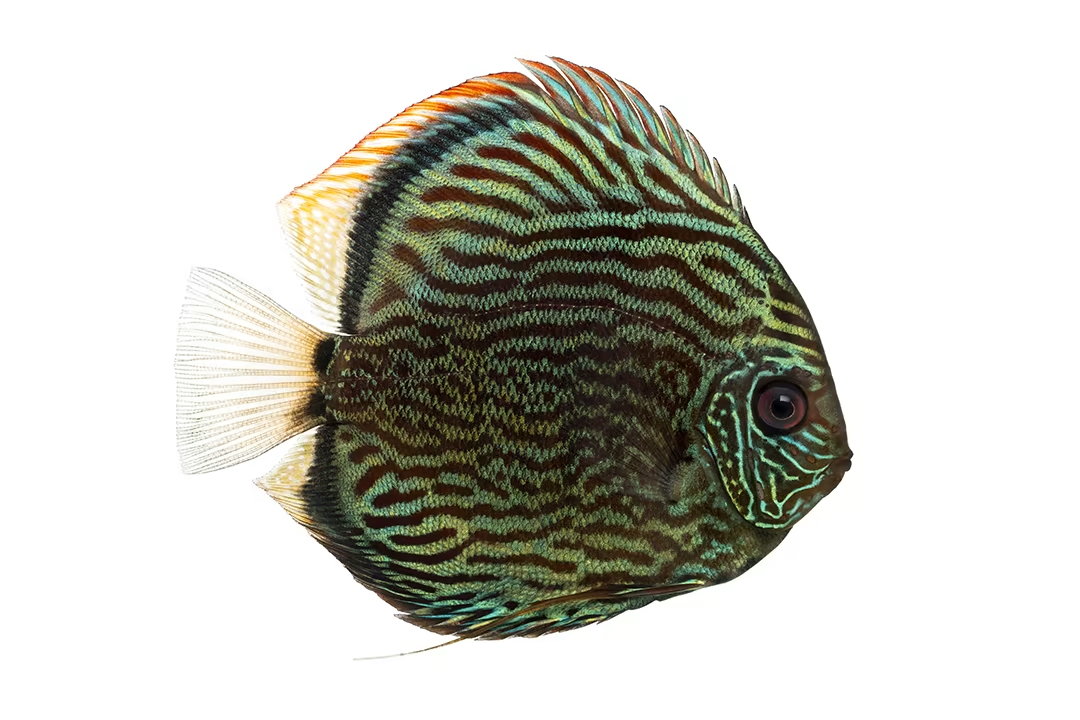
Learn how to care for a Discus, recommended diet and aquarium setup. Find Discus for sale, supplies and equipment at your neighborhood Petco.
Updated on November 13th, 2025
These are quite generic but concerning signs. The list of differentials is very long in this case, so I would recommend a logic and radical approach. Begin by submitting a water sample for quality testing. Most pet stores will do this for free or a nominal fee. Clinical examination should always include a water quality check, even if you have done so already. Water testing should be performed with a quality test kit, measuring NH4, NO2 and NO3. High ammonia levels, PH imbalances may be responsible for these signs. Oxygen concentration and quality of the filters should be determined as well. If water quality is good and there are no major imbalances, your fish should get examined to look for any sign of bacterial/fungal infection and eventually water should be treated. Hope this answer was helpful, but please do not hesitate to contact us again on the forum or by requesting a consultation if you have any more questions or to discuss it any further. Please find the time to give us a feed
Updated on August 12th, 2025
I would recommend to have the water completely changed. New water should be ideally submitted for quality testing. Most pet stores will do this for free or a nominal fee. High ammonia levels, PH imbalances may be responsible for that as well. Oxygen concentration and quality of the filters should be determined as well. Please do not hesitate to contact us again on the forum or by requesting a consultation if you have any more questions or to discuss it any further.
Updated on August 12th, 2025
This is a quite generic but concerning presentation. Begin by submitting a water sample for quality testing. Most pet stores will do this for free or a nominal fee. Clinical examination should always include a water quality check, even if you have done so already. Water testing should be performed with a quality test kit, measuring NH4, NO2 and NO3. High ammonia levels, PH imbalances may be responsible for these signs. Oxygen concentration and quality of the filters should be determined as well. If water quality is good and there are no major imbalances, your fish should get examined to look for any sign of bacterial/fungal infection and eventually water should be treated. Hope this answer was helpful, but please do not hesitate to contact us again on the forum or by requesting a consultation if you have any more questions or to discuss it any further. If this answer was helpful please let us know, this will be used to improve our service!
Updated on August 12th, 2025
Thanks for reaching out about Fish. Test and correct water quality for pH, ammonia, nitrites and nitrates. If all fish are affected, water quality problems the most likely. Alteration can lead to increased mucous production from the skin (white stuff), but fungal dermatitis or parasites are also possible. A veterinary visit is recommended if the water quality if appropriate, to assess and provide a diagnostic/treatment plan. Good luck.
Updated on August 12th, 2025
It is no trouble at all. It is why we are here! The first thing to check would be water chemistry. This can be done using a home test kit or by submitting a water sample for testing. Most pet stores will do this for free or for a small fee. Aim for 0 ppm ammonia and nitrites with a nitrate level of 20 ppm or less. Perform a partial water change, no more than 30% total volume, daily to stabilize or improve water chemistry. Use only aged or conditioned water that is temperature matched to prevent stress or shock. The species of fish you have do best in the mid to high 70s F up to about 82 F. If you have a newly set up tank, it may not have cycled properly or adequately. This would have led to toxic levels of ammonia which likely killed your fish. A tank needs to run, without fish ideally, for 4-6 weeks to establish a Nitrogen Cycle. This time period allows beneficial populations of bacteria to colonize the substrate and filter media. These bacteria are responsible for breaking down ammo
Updated on August 12th, 2025