Two Easy Ways to Start Earning Rewards!
Become a member today! Members-only pricing and offers, personalized care notifications, Vital Care points back on every purchase and more!
 Become a credit card member today!
Earn 2X Pals Rewards points at Petco
when you use Petco Pay!APPLY NOWLearn More About Petco Pay Benefits
Mazuri Freshwater Fish Food

Related Articles & Questions
- New Pet
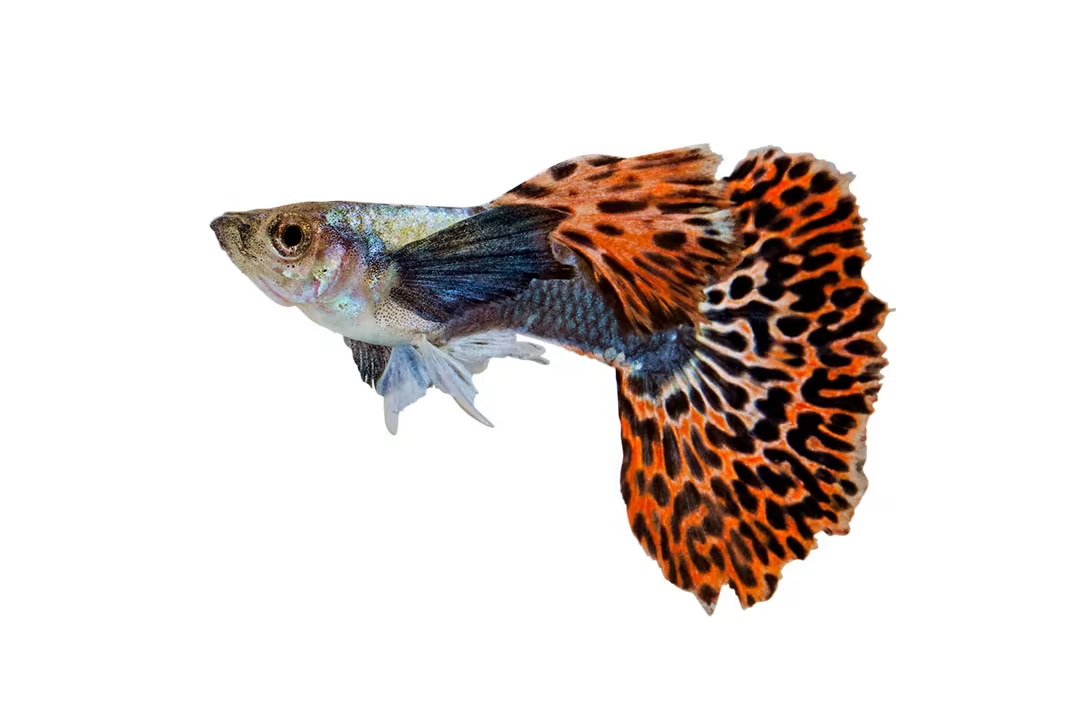
Beginner's Guide: Freshwater Livebearer Tank Setup, Food & Happy Fish
Learn how to care for freshwater livebearers, recommended diet & aquarium setup. Find the right food, supplies & equipment at your neighborhood Petco.
Updated on November 13th, 2025
- New Pet
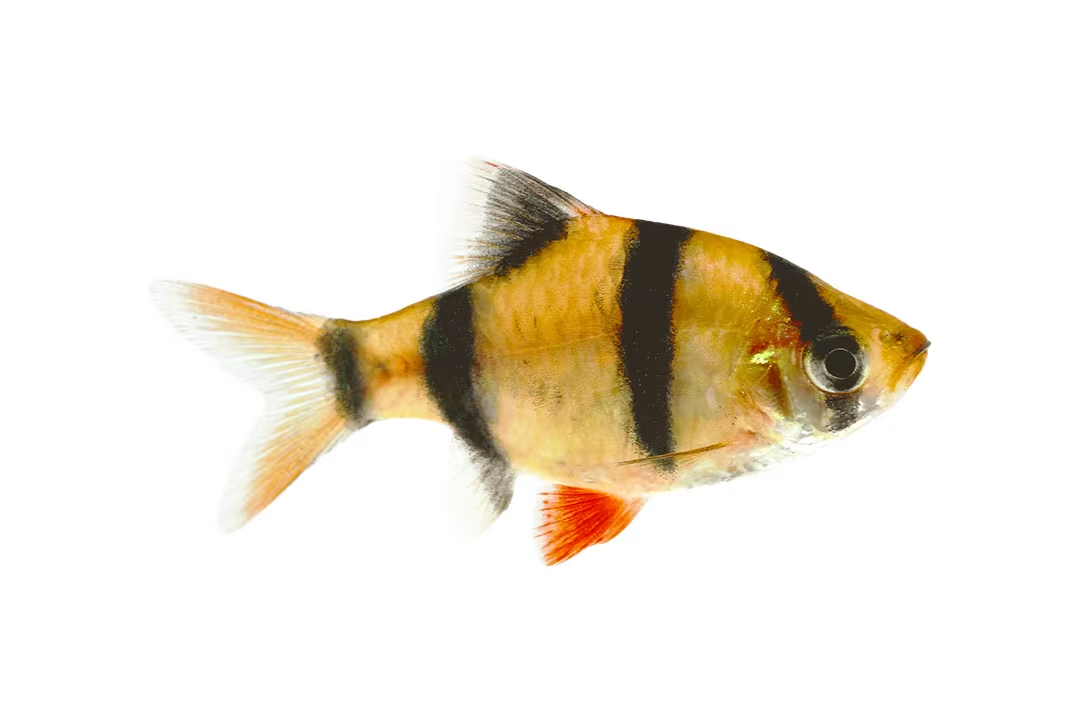
Barbs Fish Care Guide for Beginners: Tank, Food & Compatibility
Learn how to care for Barbs fish, recommended diet and aquarium setup. Find Barbs for sale, supplies and equipment at your neighborhood Petco.
Updated on November 13th, 2025
- New Pet
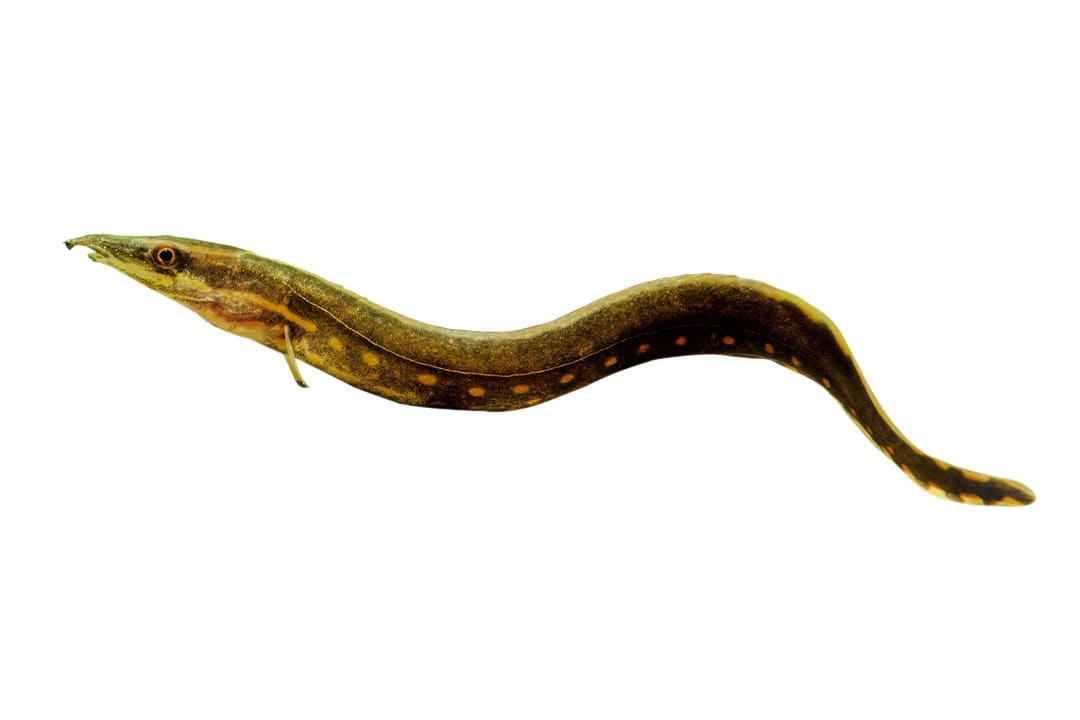
Ultimate Freshwater Eel Care Guide: Setup, Feeding, & Tank Mates
Learn how to take care of Freshwater Eels, recommended diet and tank setup. Find the right food, supplies and equipment at your neighborhood
Updated on November 13th, 2025
- Home & Habitat
Freshwater Aquarium Salt: Benefits & Safe Use for Thriving Fish
Learn how to use aquarium salt in freshwater aquariums to promote healthy gill functions, reduce stress, and treat infections in fish.
Updated on November 13th, 2025
- New Pet
Essential Large Marine Fish Care Guide: Tank Setup, Diet, & Tank Mates
Learn how to care for large marine fish, recommended diet and habitat setup. Find the right food, supplies and equipment at your neighborhood Petco.
Updated on November 13th, 2025
- Health & Wellbeing
I went on vacation and put a vacation feeder in the tank when I came home his tank was a sandy color. After cleaning his tank complete I put him back in and after that he hasn't been the same going on a week with out eating. What did I do wrong? Now
Check the water chemistry. Confirm ammonia and nitrite levels are 0.25ppm or less and nitrates are 40ppm or less. Use a liquid test kit or submit a sample for testing. Most pet stores or aquarists will do this for free or for a small fee. Partial water changes, about 30% can be done to decrease high levels. Use only aged or conditioned water that is temperature matched to prevent further stress or shock. My preferences for water conditioning are AmQuel Plus and NovAqua in addition to StressCoat. Confirm water temperature between 78F and 80F. You can soak pellets in some garlic juice to stimulate his appetite.
Updated on August 12th, 2025
- Health & Wellbeing
I have recently bought 2 tiger Oscars which are about 3 inches in length. But they don't eat normal pellet which I use to give to other fishes. On net I saw prawns or shrimps are very good for Oscars. So, I began to give small pieces of prawns to the
My rule for exotic pets (fish included) is feed them what they were designed to eat. In the wild they are consuming multiple types of prey, so alternating the diet is always beneficial. Thanks for posting the question! Enjoy your aquarium!
Updated on August 12th, 2025
- Food & Nutrition
My flower horn fish is not eating food I changed the aquarium 2 days back and I also changed the water but also it's not eating food properly
This is a quite generic but concerning presentation. Begin by submitting a water sample for quality testing. Most pet stores will do this for free or a nominal fee. Clinical examination should always include a water quality check, even if you have done so already. Water testing should be performed with a quality test kit, measuring NH4, NO2 and NO3. High ammonia levels, PH imbalances may be responsible for these signs. Oxygen concentration and quality of the filters should be determined as well. If water quality is good and there are no major imbalances, your fish should get examined to look for any sign of bacterial/fungal infection and eventually water should be treated. Hope this answer was helpful, but please do not hesitate to contact us again on the forum or by requesting a consultation if you have any more questions or to discuss it any further. If this answer was helpful please let us know, this will be used to improve our service!
Updated on August 12th, 2025
- Health & Wellbeing
My turtle is a red eared slider I don't know if he is a male or female but I just assumed he's a male. Although my dad has been putting him in the fountain it doesn't have any chemicals but when I went outside to bring him to his tank the fountain ha
A vet exam is always recommended. IT appears to be Vitamin A deficiency - I think the fountain thing was just a coincidence. You can buy a Vitamin A eye drop to start putting in the eyes: https://www.petco.com/shop/en/petcostore/product/zoo-med-repti-turtle-eye-drops Next, start him on a good diet. I don't know what you are currently feeding but I recommend this diet. https://www.chewy.com/mazuri-fresh-water-turtle-food-12-oz/dp/124764 Hope this helps. Best wishes!
Updated on August 12th, 2025
- Health & Wellbeing
Which fish and plants suitable in planted tank (75 litre ) ?....And which substrate use are.....And how to medication apply for Discus and tetra fish in planted tank without harm to plants and biological filter ?
Java Moss, Java Fern, Anubias and Amazon Swords are among the easiest live plants to care for and cultivate in an aquarium. You can use aquarium soil or aquarium sand depending on the species of plant(s) chosen. When medicating fish, it is best to remove them to a hospital or quarantine tank. This will spare live plants as well as beneficial bacterial populations, especially if an antibiotic is used. Medicated food is also an option.
Updated on August 12th, 2025