Two Easy Ways to Start Earning Rewards!
Become a member today! Members-only pricing and offers, personalized care notifications, Vital Care points back on every purchase and more!
 Become a credit card member today!
Earn 2X Pals Rewards points at Petco
when you use Petco Pay!APPLY NOWLearn More About Petco Pay Benefits
HatchRite Bioactive Terrariums

Related Articles & Questions
- New Pet
How to Prevent Reptile Illness: Safe Handling & Habitat Cleaning
Read these guidelines about handling reptiles to provide a safe and fun environment for your pet, friends and family.
Updated on November 13th, 2025
- New Pet
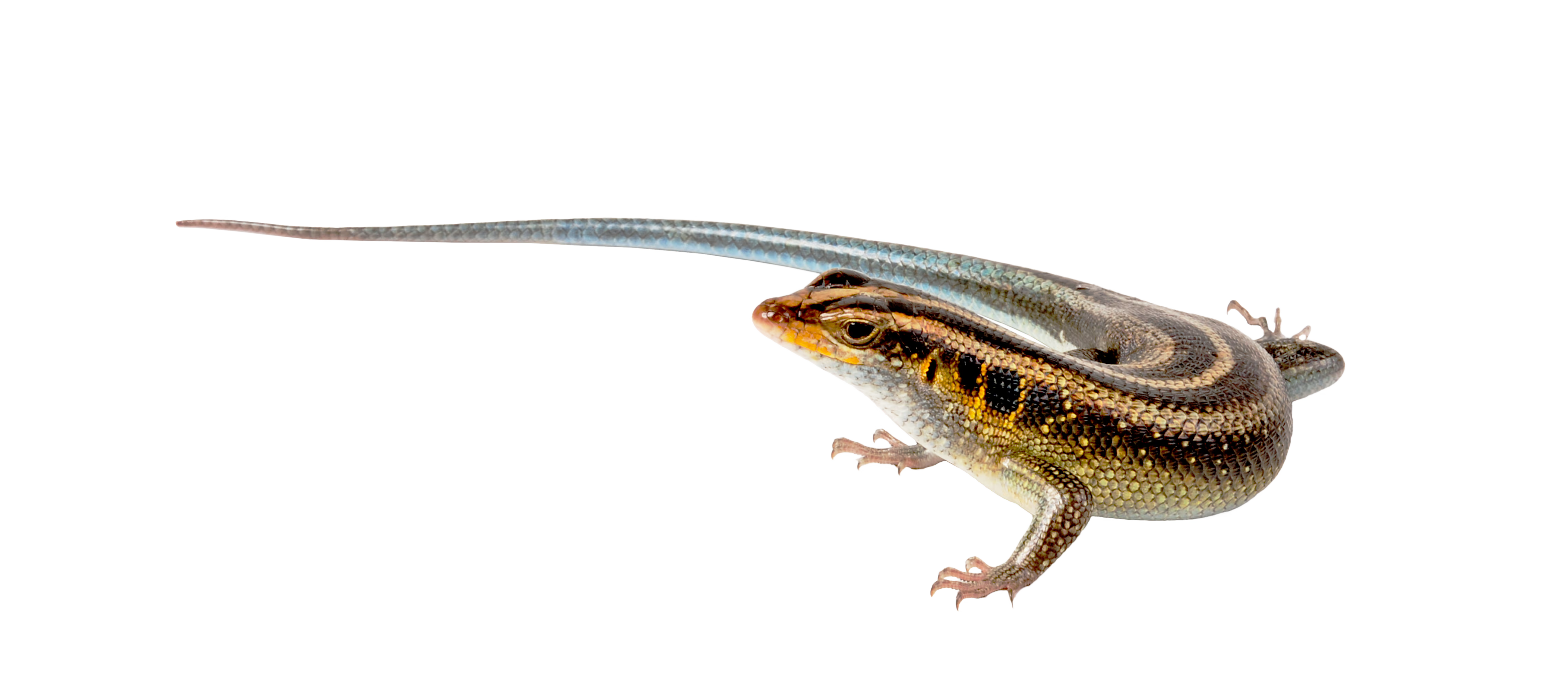
Arid Skink Care: Your Ultimate Guide to Habitat, Food & Health Tips
Learn how to care for an Arid Skink, recommended diet and habitat setup. Find the right food, supplies and equipment at your neighborhood Petco.
Updated on November 13th, 2025
- Health & Wellbeing
Reptile Scale Rot: Spot, Treat, & Prevent This Serious Threat
Search Petco for treatment for scale rot on your reptile. We can help you make sure your pet is always happy and healthy.
Updated on November 13th, 2025
- New Pet
How to Safely Handle Reptiles: Stop Salmonella, Protect Your Family
Read more about our recommendations for preventing the transmission of infectious diseases in reptiles. Keep pets safe with these best practices.
Updated on November 13th, 2025
- New Pet
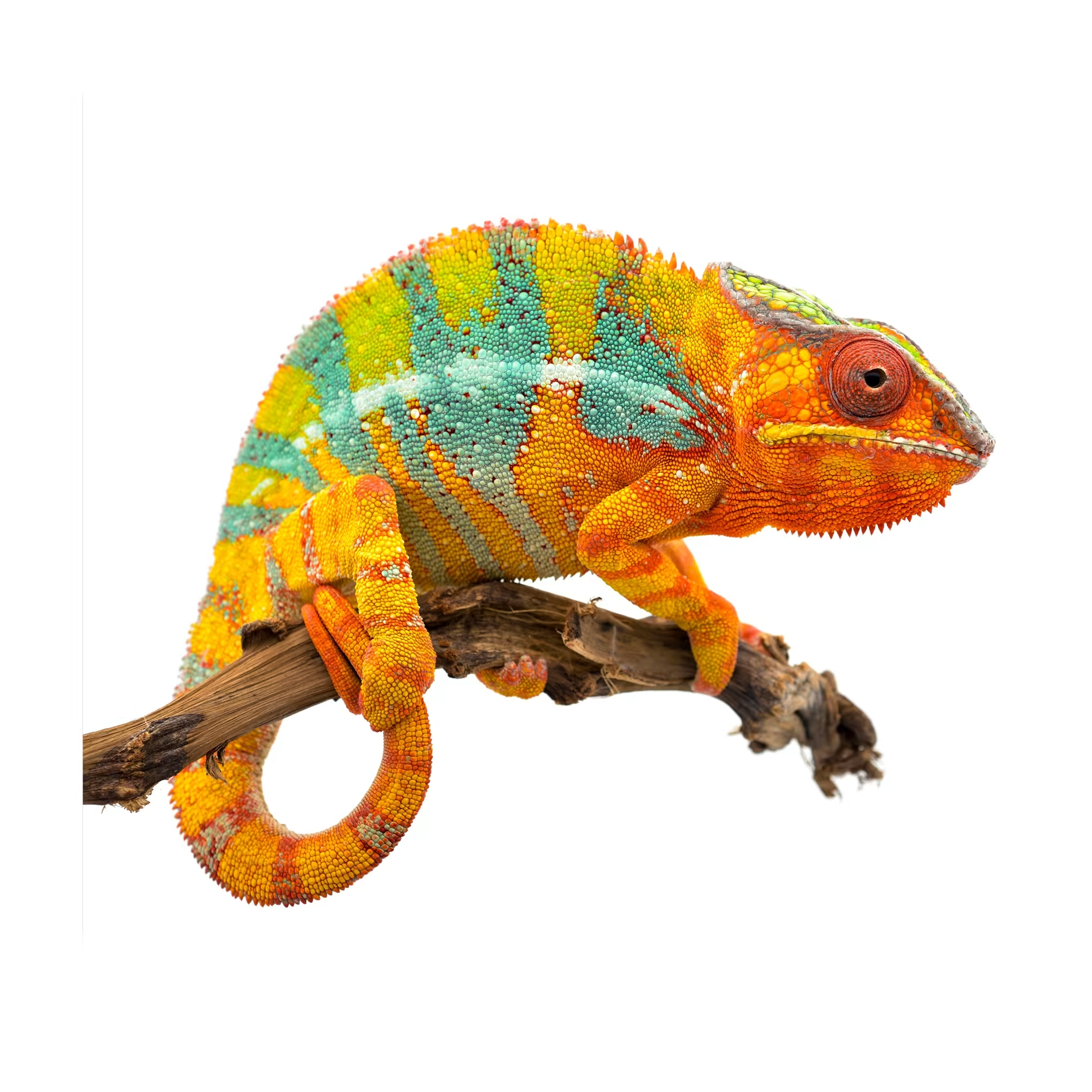
Warm Climate Chameleon Care: Best Food, Habitat & Health Tips
Learn how to care for warm climate Chameleons, recommended diet & habitat setup. Find the right food, supplies & equipment at your neighborhood Petco.
Updated on November 13th, 2025
- Health & Wellbeing
What is the best way to treat reptiles mites?
You must treat both the environment and the pet. You can try some over the counter products but many can be ineffective if the environment is not treated concurrently. Ivermectin can be dispensed by your veterinarian to use systemically or topically. Do not treat with ivermectin without the advice of your veterinarian as it is quite easy to overdose. A 30 minute soak in a diluted Betadine bath can remove most mites and may soothe irritated skin. Remove the substrate, bag it and take it outdoors. Clean and sanitize the cage, bowls and tank furniture. You can use hot, soapy water followed by a 1:30 dilution of bleach and water followed by a thorough rinsing on the tank, bowls and non porous surfaces. Discard anything that cannot be sanitized. You may need to clean and sanitize the enclosure weekly for several weeks. The pet may need multiple treatments as well.
Updated on August 12th, 2025
- Health & Wellbeing
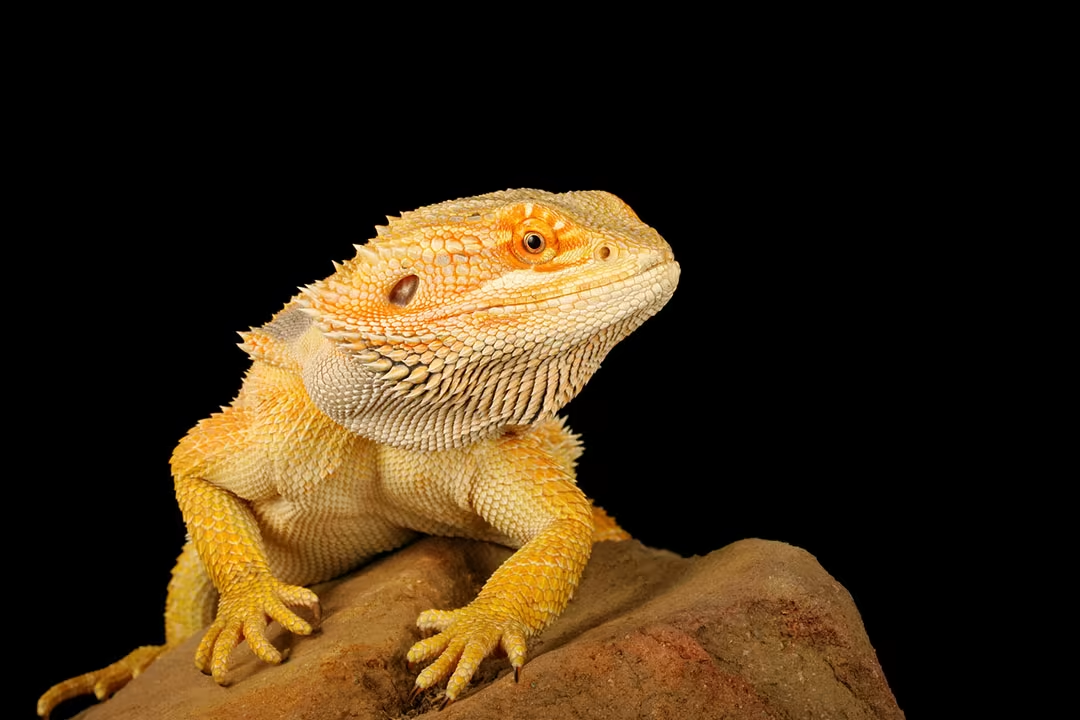
Is my set up for my bearded dragon good? (See attachment)
Thanks for your question about Smaug, and thanks for the photo as well! I think that you have a good start to your set up, and that we can tweak a few items. First, your lighting situation appears adequate - I see a UVB light (please change this bulb every 4-6 months), a basking light, and a ceramic heat bulb. I would ensure that your temperatures are appropriate for this species, and that you are monitoring them using digital thermometers (I think that you see both a digital and analog thermometers currently) at the level of Smaug. Analog thermometers are inaccurate, so I don't recommend using them (also, they are high up on the sides of the enclosure, so they wouldn't be giving an accurate temperature read for Smaug). For the cage furniture that you have, I like that you have places for Smaug to climb and hide. However, I would recommend having a hide on both the warm side of the enclosure and the cool side so that Smaug has choices. Same for the climbing structures. I may have misse
Updated on August 12th, 2025
- Health & Wellbeing
SO i am thinking about getting a leopard gecko, but i am not spending a ridiculous amount of money on a cage so i am using a plastic laundrey hamper that seems about maybe 10 gallons and i am setting up little hiddy spots and stuff but i dont know wh
A 10 gallon tank can be purchased in the local Petco for less than twenty dollars ( https://www.petco.com/shop/en/petcostore/product/fish/fish-aquariums-kits/aquariums-up-to-ten-gallons/aqueon-standard-glass-aquarium-tank-10-gallon ). It would be easier to keep and secure than a laundry hamper. Given the temps required for geckos, plastic may not be the best option either. You will need a a heat lamp for day use and maybe a heat source if nighttime temperatures drop below 70 F. You can use slate, reptile carpet, plain paper towels or a coconut fiber substrate. Review gecko care at the link below. http://www.reptilesmagazine.com/Care-Sheets/Lizards/Leopard-Gecko/
Updated on August 12th, 2025
- Food & Nutrition
Is this a good setup for Nighthawk, the first photo is the over all setup, the second one is the side view and the third is the water and calcium dishes. I use an under tank heater that stays at about 88 degrees Fahrenheit and the vines are fake. He
Thanks for reaching out regarding Night Hawk and including photos. The pictures appear good and seems a lot of thought went into your set up. You haven't mentioned UVB radiation or diet, but everything else appears good. Even though geckos are noctunal, they are often inactive during the day but receiving radiation. Insect species need to be varied and gut loaded with a variation of fresh vegetables. Good luck.
Updated on August 12th, 2025
- Health & Wellbeing
Hello. So right now for my baby crested gecko tank set up I have a 10 gallon with live plants and some wood. (First time reptile owner) I have had this problem before. There are these VERY small little silver bugs and they are in the dirt and also on
They are probably springtails. It is likely they came in on the plants or wood. They aren't harmful, but can be unsightly in large numbers. In bioactive tanks, they are used as "janitors" to clean up decaying matter, uneaten food and feces.
Updated on August 12th, 2025