Two Easy Ways to Start Earning Rewards!
Become a member today! Members-only pricing and offers, personalized care notifications, Vital Care points back on every purchase and more!
 Become a credit card member today!
Earn 2X Pals Rewards points at Petco
when you use Petco Pay!APPLY NOWLearn More About Petco Pay Benefits
AquaZen Aquariums, Tanks & Bowls

Related Articles & Questions
 Product Guides
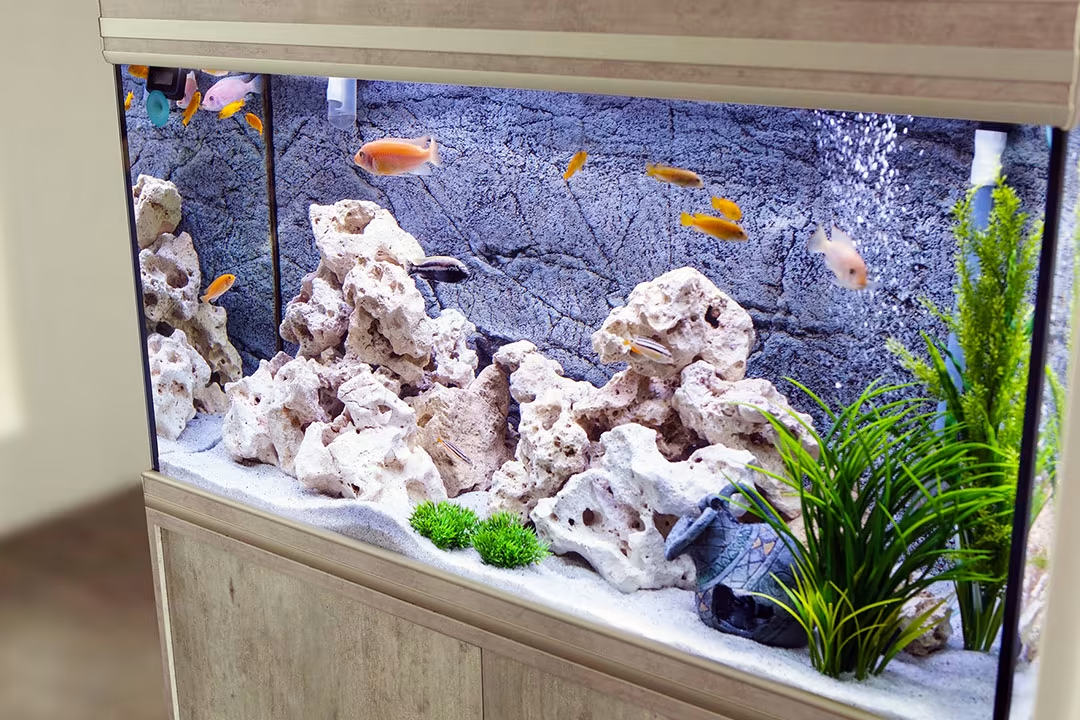
Mini Aquarium Guide: Setup, Care & Maintenance for Small Spaces
Small, AKA “Nano” tanks have grown in popularity over the past couple years and continue to gain momentum. Find out if a mini aquarium is right for you.
Updated on November 13th, 2025
- New Pet
Aquarium Water Quality: Master Healthy Fish & Crystal Clear Tanks
Learn how to test your aquarium water. Poor water quality stresses fish, which leaves them susceptible to disease and possibly death.
Updated on November 13th, 2025
- New Pet
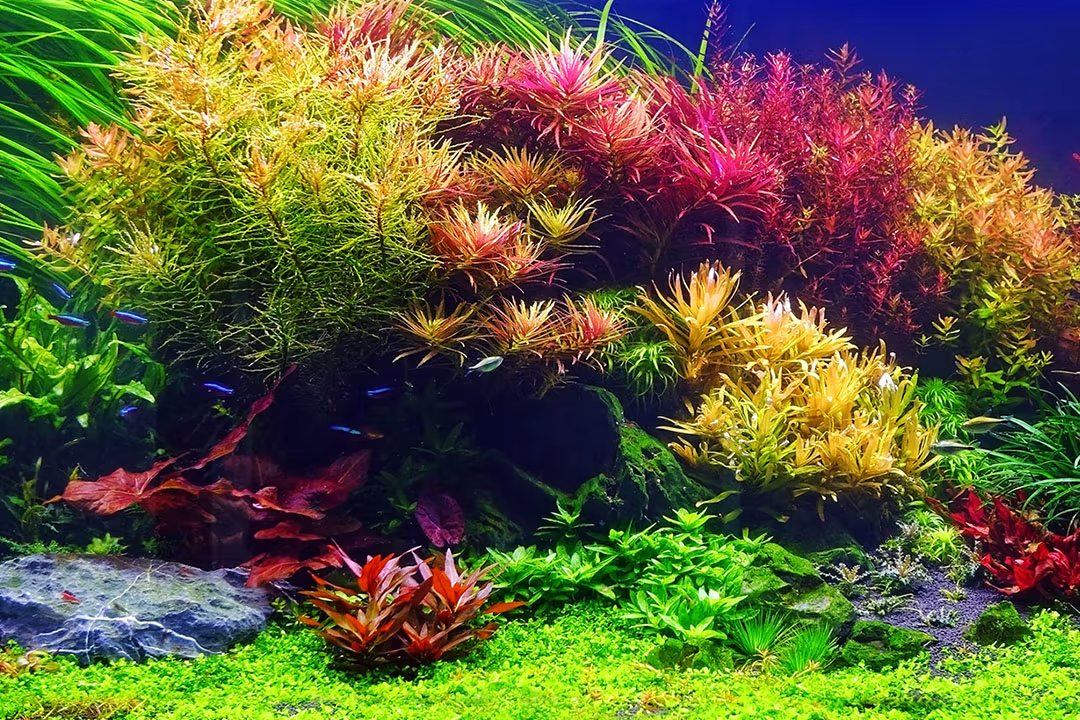
Grow Thriving Plants: Planted Aquarium Setup, Care & Benefits
Tanks with live plants can be excellent additions to your home, bringing a touch of nature indoors. There are many varieties of beginner-friendly plants to build your planted aquatic environment. Learn how to build & care for a planted tank.
Updated on November 13th, 2025
- New Pet
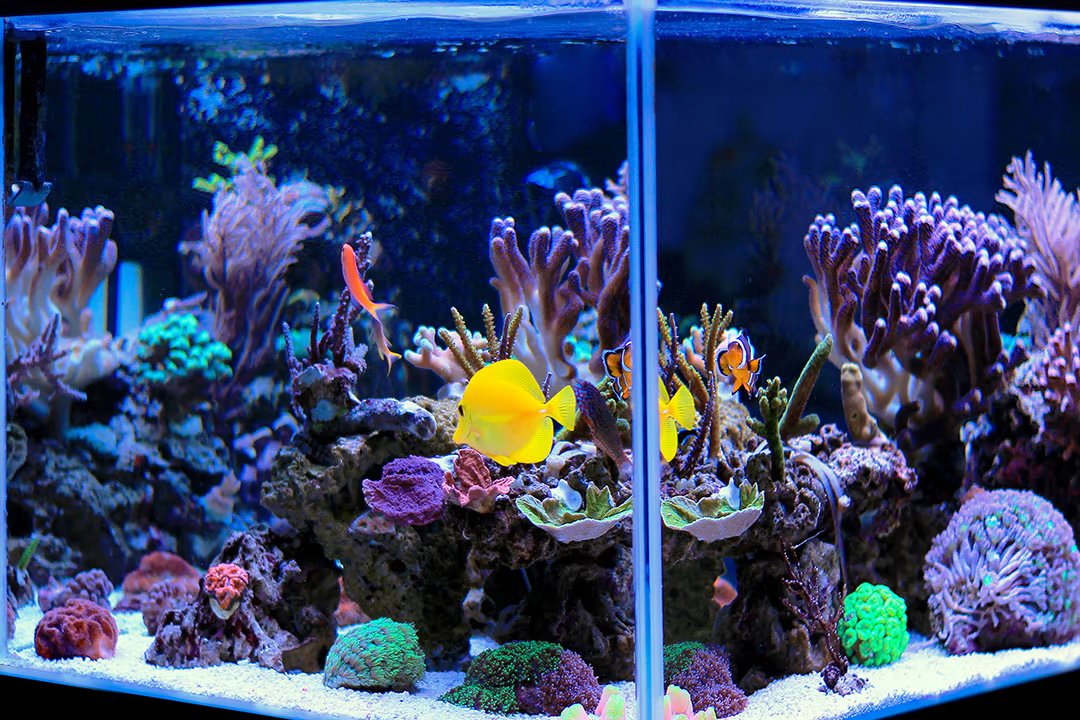
Build Your Thriving Saltwater Tank: Easy Setup for Marine Life
Learn how to set up a saltwater fish tank and key considerations regarding placement, supplies needed, and the overall set up process.
Updated on November 13th, 2025
- New Pet
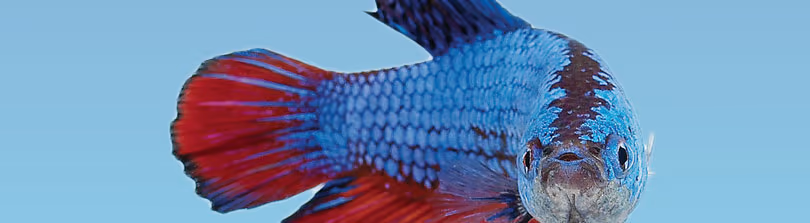
Ultimate Betta Fish Care: Tank Setup, Water Quality & Health
If you’re thinking of adding a betta fish to your family, learn a few fun facts about these underwater wonders.
Updated on November 13th, 2025
- Health & Wellbeing
Hello... I would like to offer filtration coaching for fish questions. Can I answer questions on this forum?
You should contact by email the administrators of the website (you can find general email on the contact section) and they put you in touch with the Head Vet in charge of hiring new experts. Best of luck and hope to see you joining the team soon. Dr. Orioles
Updated on August 12th, 2025
- Health & Wellbeing
I bought a betta 5 days ago and I have him in a medium fish bowl and I want to know what type of fish I can put in their with him Can I ad a little fresh water crab ? What type of fish can I put in the fish bowl ?
To safely mix fish species together, there are a few considerations to keep in mind. First, you want to choose fish that have similar temperature requirements as your betta. Otherwise the fish can be stressed. Second, you want to get species that have similar oxygen requirements - bettas don’t need a lot of bubblers in their tanks, but not all species are like that, so unless you want to do some adjustments to you betta tank, it is a good idea to get other species that don’t need a lot of oxygen. Third, it depends on how many gallons your tank is. Overcrowding is a common problem for many fish owners, and it can make it very difficult to keep up on the water quality. The general rule of thumb you can use is one square inch of fish per gallon. When using this rule, go based on the adult size of fish, because often people get fish that are young and small and don’t anticipate that they will get bigger! I would advise getting your thoughts together about the parameters above, and then vi
Updated on August 12th, 2025
- Health & Wellbeing
setting up my first ever freshwater fish tank, need to know how many fish should I put in my 55 gallon fish tank,
For small bodied fish (tetras, minnows, guppies, etc) the general "one inch of fish per gallon" rule will likely be fine. For larger bodied fish (goldfish, plecos, Oscars, etc), it should be closer to one inch of fish per 3 gallons of water. Always use the full grown adult size when deciding how many fish to keep. Take into account schooling fish as well which should be kept on groups of at least 5-6 fish.
Updated on August 12th, 2025
- Health & Wellbeing
My 5gal goldfish tank (for a 4 in goldfish) is currently at a really low pH (6.0-6.4). What is the ideal range for goldfish, what is the best way to alter the pH and how gradually does the change need to be.
Here is a helpful link: https://www.aqueon.com/information/care-sheets/goldfish Your local aquarium store will likely carry a powdered product to add to the water to increase the pH. The package will have dosing instructions. I hope this helps and please feel free to post any additional questions.
Updated on August 12th, 2025
- Health & Wellbeing
My fish are dying,Had other fish in there before these new one but now so far the new one are dying. what to do.
Check the water chemistry first. Use a home test kit or submit a sample of water for testing. Most pet stores will do this for free or for a small fee for. High ammonia or nitrite levels can be toxic to fish. Aim for 0 ppm ammonia and nitrites with a nitrate level of 20ppm or less. Perform a partial water change, if indicated, to stabilize chemistry and maintain water quality. Use only aged or conditioned water that is temperature matched to prevent stress or shock. Check the water temperature as well, confirming it is appropriate for your species of fish.
Updated on August 12th, 2025