Two Easy Ways to Start Earning Rewards!
Become a member today! Members-only pricing and offers, personalized care notifications, Vital Care points back on every purchase and more!
 Become a credit card member today!
Earn 2X Pals Rewards points at Petco
when you use Petco Pay!APPLY NOWLearn More About Petco Pay Benefits
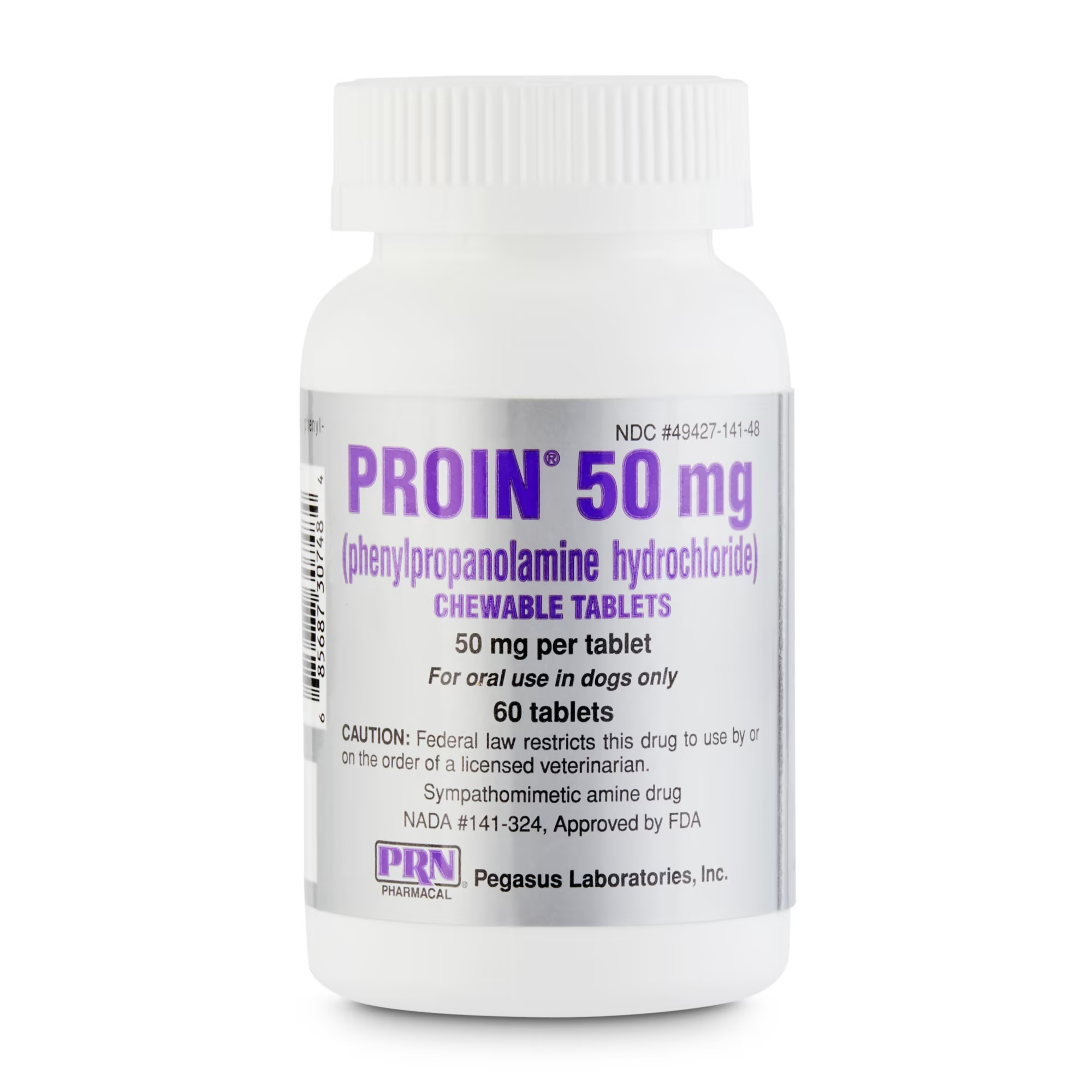
Allopurinol Dog Incontinence & Bladder Control Medicine

Related Searches
Related Articles & Questions
- Health & Wellbeing
Proin for Dogs: Stop Urinary Leaks, Uses, Side Effects & Dosage
Does your dog have urinary incontinence problems? Proin may be a viable option to help your dog control their bladder.
Updated on November 12th, 2025
- Health & Wellbeing
Amlodipine for Pets: Protect Your Dog & Cat from High Blood Pressure
Search Petco for information on amlodipine medication. We will give you details to make sure your pets are kept happy and healthy.
Updated on November 12th, 2025
- Health & Wellbeing
Clavamox for Dogs & Cats: Treat Infections & Keep Pets Healthy
Do you think your pet has a bacterial infection? Visit Petco to learn how Clavamox can help your dog and cat.
Updated on November 12th, 2025
- Health & Wellbeing
Pimobendan for Dogs & Cats: Heart Meds, Dosage, Uses & Side Effects
Want to know if it is safe to give your dog or cat Pimobendan? Petco has the answers to this and other pet medication questions!
Updated on November 12th, 2025
- Health & Wellbeing
Acepromazine: Stress-Free Vet Visits & Travel for Dogs & Cats
Do you have questions about acepromazine, a commonly used sedative in dogs & cats? Visit Petco to learn about dosage, side effects & more.
Updated on November 12th, 2025
- Health & Wellbeing
My 13-year old spayed Miniature Schnauzer has been bed wetting. Is PPA a good choice for her? Can you provide a prescription? Thank you.
Hi there. PPA (phenylpropanolamine, or Proin) is a very common first-line choice for urinary incontinence in female dogs, and often works well in my experience. So it's likely that this could be a good option for Sofi, depending on whether she has any other underlying health issues to consider. Unfortunately, we cannot provide a prescription over the internet, as legally this has to be done by a veterinarian who has physically examined your pet. So I would recommend making an appointment with a veterinarian in your area to bring Sofi in for an exam. He/she can discuss medication options for urinary incontinence with you, and should be able to provide a prescription for whatever medication the two of you decide to try.
Updated on August 12th, 2025
- Health & Wellbeing
I would like to get my dog evaluated to see if she would be eligible to be prescribed Proin, the medication that tightens the bladder sphincter muscle. Is Petco able to assist?
Hi there! I'm sorry to hear about Brittany's troubles. I am not sure if Petco has full veterinary services, as that is the appropriate avenue for eventually prescribing proin. When I see a dog for urinary incontinence issues, I start with a full blood and urine panel and a culture of the urine to rule out infections or any other health issues. I also will check the urinary bladder with an ultrasound and take a few xrays to make sure we don't have bladder or kidney stones, or cancer of some kind causing the incontinence. Once I've ruled out any other causes, and I know I need to use proin, I check a blood pressure to make sure that's normal too (because proin can cause side effecrs with that). I'll start a patient on the recommended dose and then recheck to make sure it's working. A couple weela after starting I'll usually check blood pressure, and then once more 4-6 weeks out. At that time I'll often check a mini panel and just double check some blood values. If all is well, i wi
Updated on August 12th, 2025
- Health & Wellbeing
Senior dog has frequent urination & accidents. I was hoping for a medication for this. I know when I take antihistamines my need to urinate is reduced.
You are correct, Proin and DES are both medications that are commonly used to treat urinary incontinence in dogs. However, its possible that urinary tract infections, bladder stones, or bladder tumors could also cause these symptoms. Therefore, a visit to your vet for at least a urinalysis (urine test) is indicated. If no cause is found, then medication such as DES or Proin can be prescribed by your veterinarian. Antihistamines will have a significant effect on urination in dogs. If you feel that we haven't met your expectations, please contact customer service at customerservice@petcoach.com. Thank you for using Boop by Petco!
Updated on August 12th, 2025
- Health & Wellbeing
My dog has been incontinent for approx. 7 years and have recently had to uncrease her dosage by up to 5 times the dose she has always been on. She is 12 years old and I haven't changed her diet or exercise routine. Is this normal? She is on Propalin.
Thanks for using Boop by Petco! I'm sorry to hear Jess has been having issues with incontinence. Incontinence needs can change with age, resulting in a need to alter medications over time. Has she had any bloodwork recently? A development of a new issue (such as kidney disease or diabetes) can also affect incontinence, as well as a urinary tract infection. With time, some dogs can need increases in doses of their medication, or a secondary medication added to help with their incontinence. I would recommend she be re-evaluated by her veterinarian, have any repeat testing done if it hasn't been done recently, and then alter her medications (or add a second one) if needed.
Updated on August 12th, 2025
- Health & Wellbeing
Hello my dog is wetting the bed and I have found a medicine online called ppa and was just wondering if you have to be told by a vet and if wrong with diagnosis could harm her
Yes, all medications can have side effects and can be ineffective or even dangerous if given in the wrong situations. Your vet will likely want to run a urine test to rule out complications such as diabetes, infection, inflammation or even bladder tumours which could be triggering the reduced bladder control and if all is clear they can then prescribe medication to help reduce the leaking if it is simple incontinence
Updated on August 12th, 2025