Two Easy Ways to Start Earning Rewards!
Earn 2X Pals Rewards points at Petco
when you use Petco Pay!
Get It Today
Search Petco for information about metabolic bone disease, which is fairly common in many reptiles. Use our tips to help keep your reptile comfortable.
Updated on November 13th, 2025
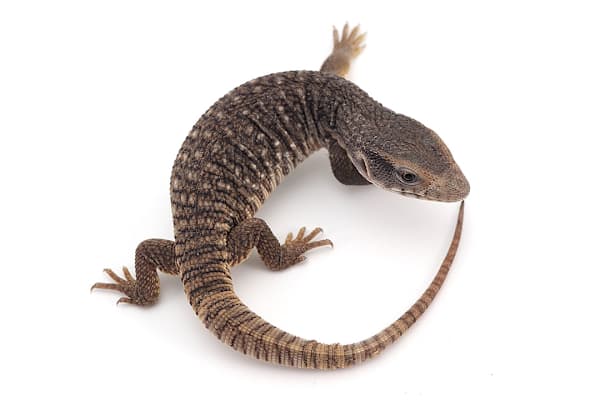
Learn how to care for a monitor lizard, recommended diet and habitat setup. Find the right food, supplies and equipment at your neighborhood Petco.
Updated on November 13th, 2025
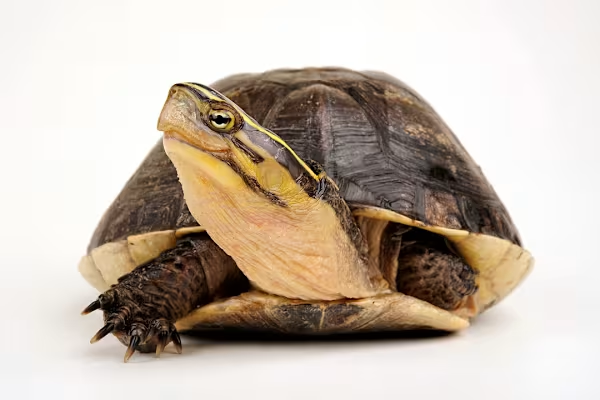
Learn how to care for terrestrial turtles, recommended diet & habitat setup. Find the right food, supplies & equipment at your neighborhood Petco.
Updated on November 13th, 2025
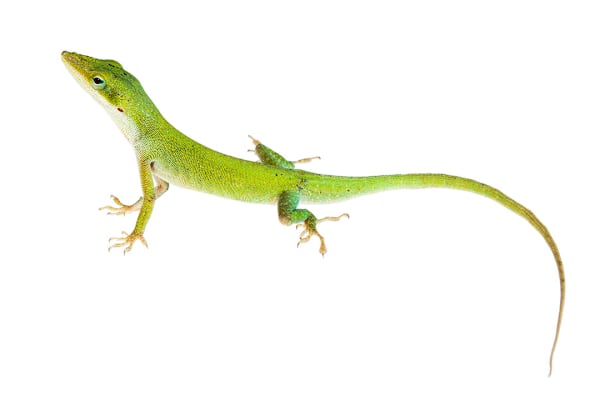
Learn how to take care of Green & Bahama Anoles, recommended diet and tank size. Find the right food, supplies and equipment at your neighborhood Petco.
Updated on November 13th, 2025
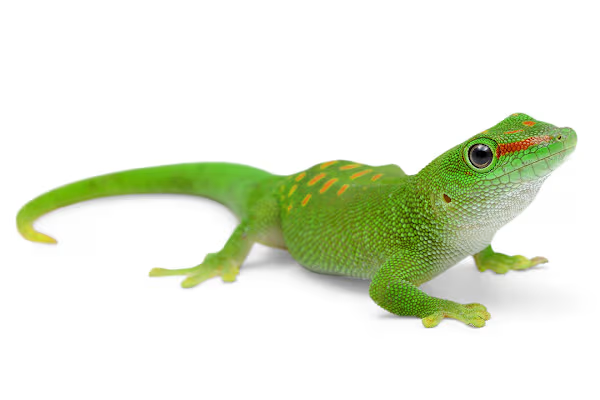
Learn how to care for a Giant Day Gecko, recommended diet & habitat setup. Find the right food, supplies & equipment at your neighborhood Petco.
Updated on November 13th, 2025
Why change a working system? You are obviously doing very well in the way you keep your turtle. Since apparently your turtle is doing well, it is getting everything it needs with the Reptomin. You could try offering it leafy greens, freeze-dried shrimp or krill, crickets, superworms, rosy red minnows and even pinky mice as an occasional treat.
Updated on August 12th, 2025
Thanks for reaching out about Ruby. Meat such as chicken, is a poor food since it is low in calcium and high in phosphorus. My usually recommendation is 1/3-1/3-1/3, meaning parts vegetables (green, red, yellow, orange), pellets and live fish (goldfish, tetras). The benefit of whole live fish is environmental enrichment (hunting, foraging) and has a skeleton with calcium, muscle and organs rich in other nutrients. Vegetables provide a wide variety of vegetables and the pellets a fairly balanced diet. Water temperature, a basking site with UVB and heat and water quality are also important. Good luck.
Updated on August 12th, 2025
A vet exam is always recommended. IT appears to be Vitamin A deficiency - I think the fountain thing was just a coincidence. You can buy a Vitamin A eye drop to start putting in the eyes: https://www.petco.com/shop/en/petcostore/product/zoo-med-repti-turtle-eye-drops Next, start him on a good diet. I don't know what you are currently feeding but I recommend this diet. https://www.chewy.com/mazuri-fresh-water-turtle-food-12-oz/dp/124764 Hope this helps. Best wishes!
Updated on August 12th, 2025
Shrimp should not be the sole source of nutrition. This may lead to deficiencies. Sliders are omnivorous and should be fed a combination of greens and proteins. Offer live prey such as crickets, minnows, nightcrawlers and superworms. Dark, leafy greens can be chopped finely and offered. A commercial pellet or stick formula should also be fed. To stimulate the appetite, you can soak pellets in some water used to rehydrate dried shrimp or krill. Fasting the turtles for a day or two will also get them hungry enough to eat pellets or prey. Be sure to provide adequate space, heat and lighting. Allow 10 gallons per inch of she'll as a guideline for tank size. Three sliders, when fully grown will need a large tank. UVB lighting will aid in calcium metabolism and heat is necessary for proper digestion and health in reptiles. Water temperature should range between 75F and 85F. A basking area should be 90F to 95F. Care should be taken when housing wild caught turtles with captive bred turtl
Updated on August 12th, 2025
It does appear to be of the takydromus species. These grass lizards are common and fairly easy to keep. Being adept climbers, more vertical space should be offered in an enclosure. Branches and vines can be placed for climbing. Bring reptiles, they need an external heat source and UVB lighting. Daytime temps can range from 24 C to 30 C (75-85 F). Provide a basking spot of around 35 C to 38 C (95-100 F) using a heat lamp. Aim for 70-80% humidity. Provide a shallow bowl for water. Mist the cage daily. Feed appropriately sized prey, no bigger than the space between the eyes, that have been gutload for 24 hours prior to offering. This will maximize nutritional value. Crickets, mealworms, dubia roaches, waxworms or wingless fruit flies can all be offered. Dust prey with a calcium supplement and a multivitamin supplement several times weekly. Ideally, the wound should be addressed by a veterinarian experienced in treating reptiles. You can clean it with dilute Betadine or chlorhexidine
Updated on August 12th, 2025