Two Easy Ways to Start Earning Rewards!
Earn 2X Pals Rewards points at Petco
when you use Petco Pay!
Get It Today
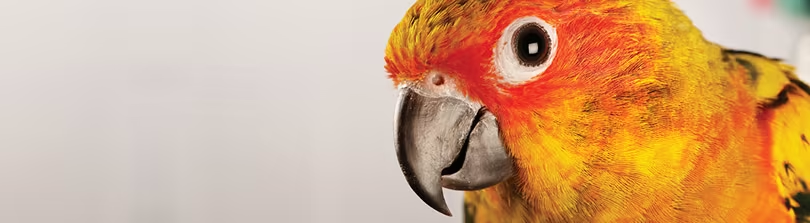
Learn how to take care of Conures, recommended diet and housing setup. Find the right food, supplies and equipment at your neighborhood Petco.
Updated on April 9th, 2026
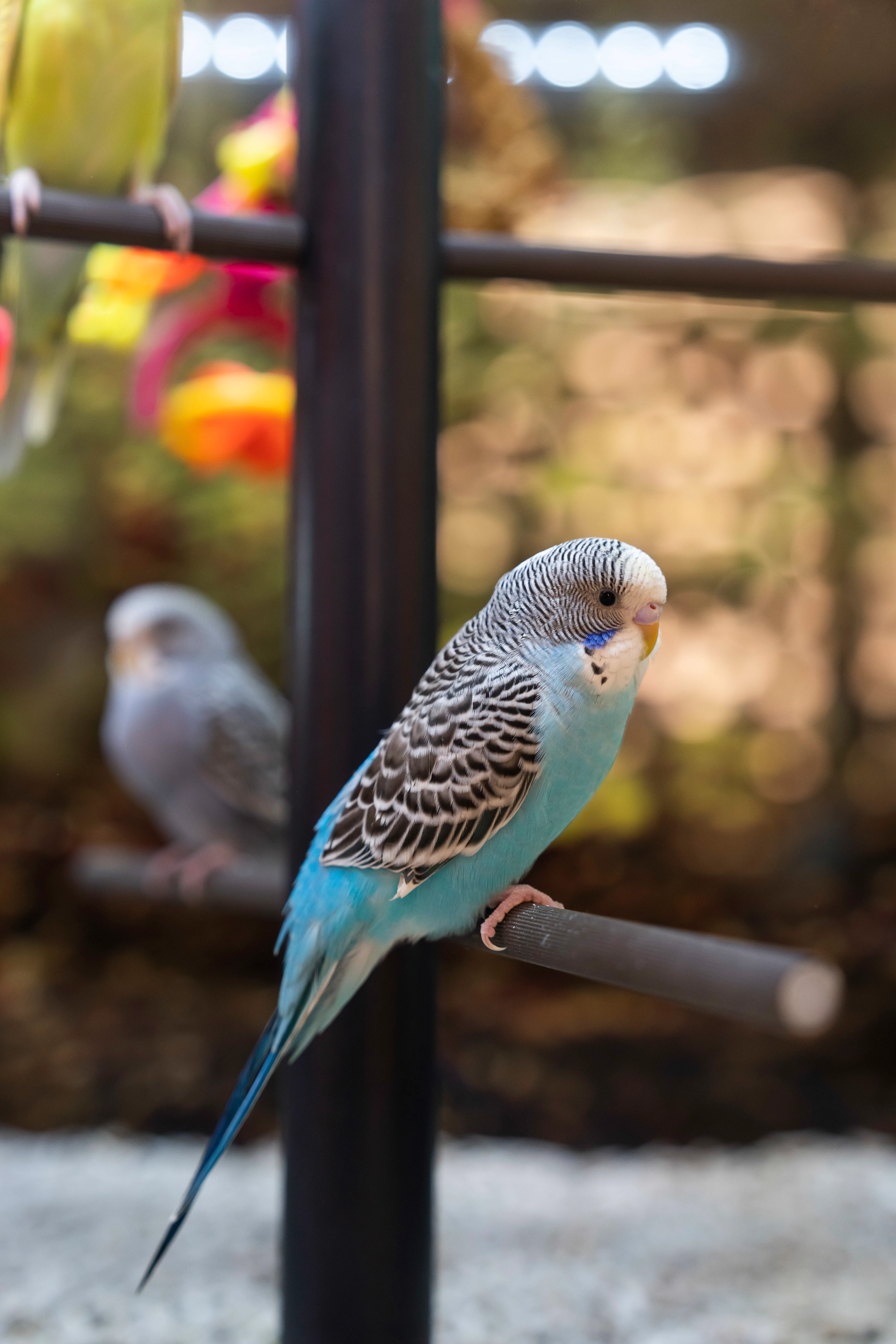
Learn some tips about bringing your new pet bird home for the first time. Find out what supplies and actions will help her feel most at home.
Updated on October 23rd, 2025
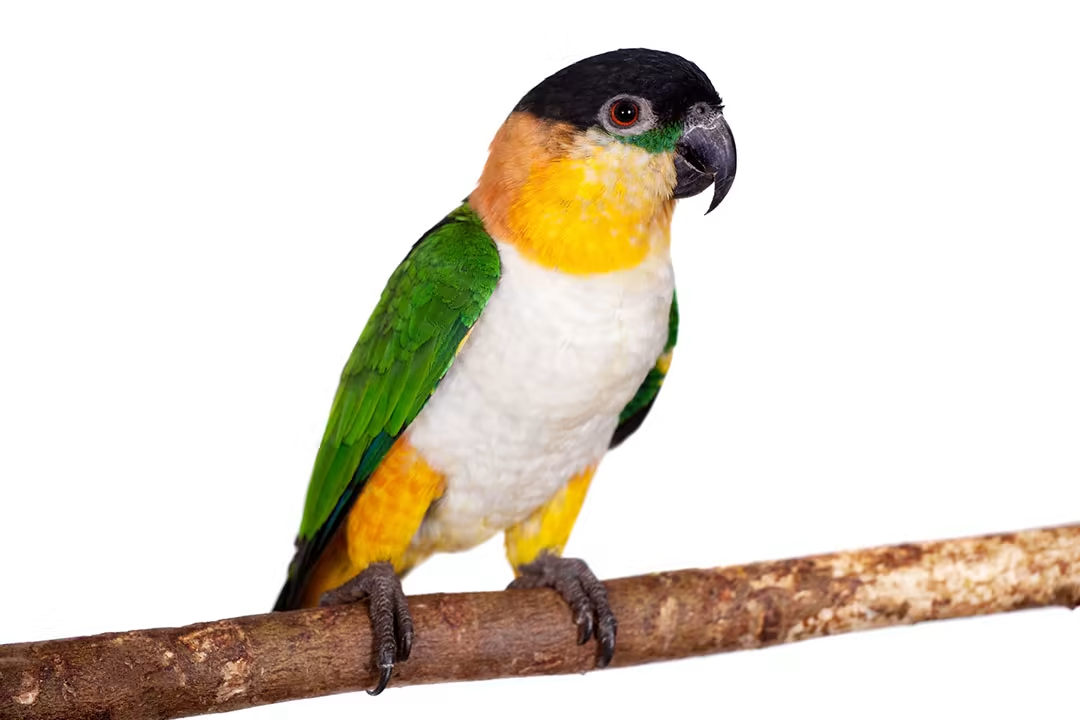
Learn how to care for small hookbill parrots, recommended diet & bird cage setup. Find the right food, supplies & equipment at your neighborhood Petco.
Updated on April 9th, 2026
Read more to learn some basics of bird grooming that include bathing, nail trimming, and wing clipping.
Updated on July 17th, 2026
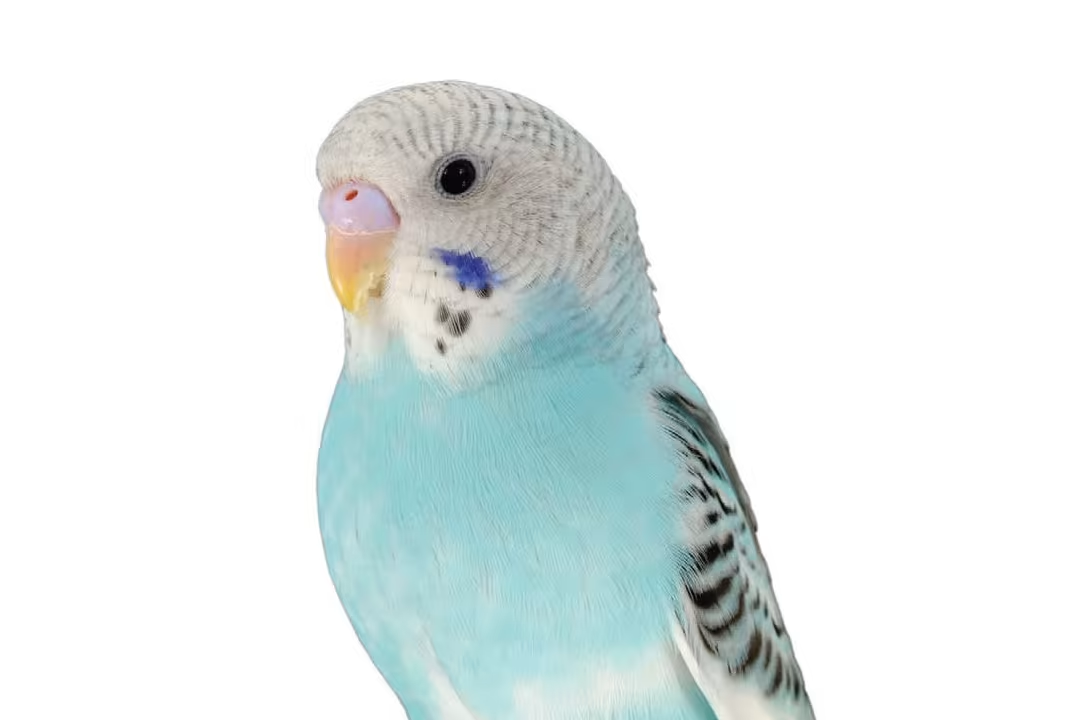
Learn how to care for parakeets (budgies), recommended diet and habitat setup. Find the right food, supplies and equipment at your neighborhood Petco.
Updated on October 23rd, 2025
Time, patience, and lots of treats. If you notice Curio has a favorite food, you can start by offering that favorite food only when you're interacting with him. IE, when you pet him, approach his cage, let him out, etc. This can help him to associate you with something fun/good and also make him more curious every time you come by to spend time with him. The same can also be done with toys he likes to play with. Sitting near them when he's out of the cage playing, and feeding a treat every time he comes close or shows interest in you can help teach him that you are safe to interact with and play around. If at any time Curiou becomes nervous or scared, stopping the activity and letting him calm down is best. From there, you can go back to the previous way he was OK with (IE just giving a treat from your hand but not petting) and work again from there.
Updated on September 24th, 2025
Harrison's Bird Diet is the best food out there. It is pelleted so there can be some resistance from your bird transitioning to the new diet if he has been on a seed diet, but it is nutritionally complete and very high quality. Toys I find that lovebirds like have been cotton rope toys that they can preen and groom like the feathers of another bird.
Updated on September 24th, 2025
Thanks for reaching out about Rico. Establishing dominance and enforcing that Rico has a low position on the family hierarchy, is the challenge. Positive reinforcement for good behavior, and time outs, for inappropriate behavior. A book titled "A Guide to a Well Behaved Parrot" is a good start. Good luck.
Updated on September 24th, 2025
Thanks for your question about Zinnia. I didn't see how long you have had Zinnia, but part of the reason may be that she is nervous and adjusting to her new home/environment. I am not sure what types of toys you have present, but in the picture I could see some rope material, some wood, and some fibrous types of material. These are all very appropriate toys for a lovebird. Other options may include bells (ensure they are made of stainless steel, including the clapper, as heavy metal toxicity is a concern in birds), plastic (ensure that it is sturdy, as we don't want any ingestion of foreign materials!), and you can make homemade toys as well out of tissue paper (with no dyes) and toilet paper or paper towel rolls. To make these more interesting for Zinnia, you may need to play with the toys with her - of course, this will depend on how social she is with you. You can also incorporate food in with the toys to make them more appealing - this can be done using pellets or produce items. This will not only allow for her to have interaction with the toys, but will provide her with foraging opportunities, which is very important for our pet birds. I hope that gives you a place to start, and congratulations on your new pet!
Updated on September 24th, 2025
Based on the symptoms you are describing I would be concerned that the bird is either not getting enough nutrition or that he has aspirated some of the food and now is developing pneumonia. My best recommendation for you is to have your bird examined by an avian veterinarian. If your bird did aspirate he will need some antibiotics to help with the infection. Your bird may also need supplemental oxygen while the infection is getting under control. I hope this helps. Thanks for using Petco Pet Education Center, formerly Petcoach. Best of luck.
Updated on September 24th, 2025