Two Easy Ways to Start Earning Rewards!
Earn 2X Pals Rewards points at Petco
when you use Petco Pay!
Get It Today
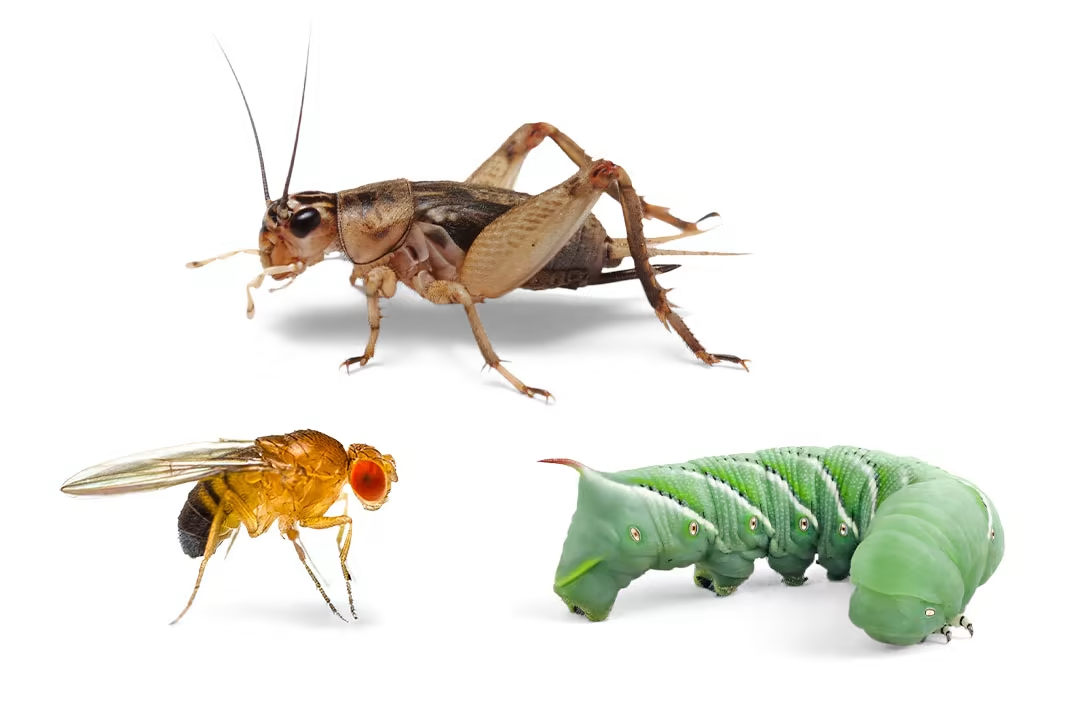
Learn about live insects for reptile feeding, recommended diet & habitat setup. Find the right food, supplies & equipment at your neighborhood Petco.
Updated on November 13th, 2025
Read these guidelines about handling reptiles to provide a safe and fun environment for your pet, friends and family.
Updated on November 13th, 2025
Whether you temporarily lose access to AC or are experiencing unexpected temperature changes, you can use these tips to keep your reptiles happy and healthy.
Updated on November 13th, 2025
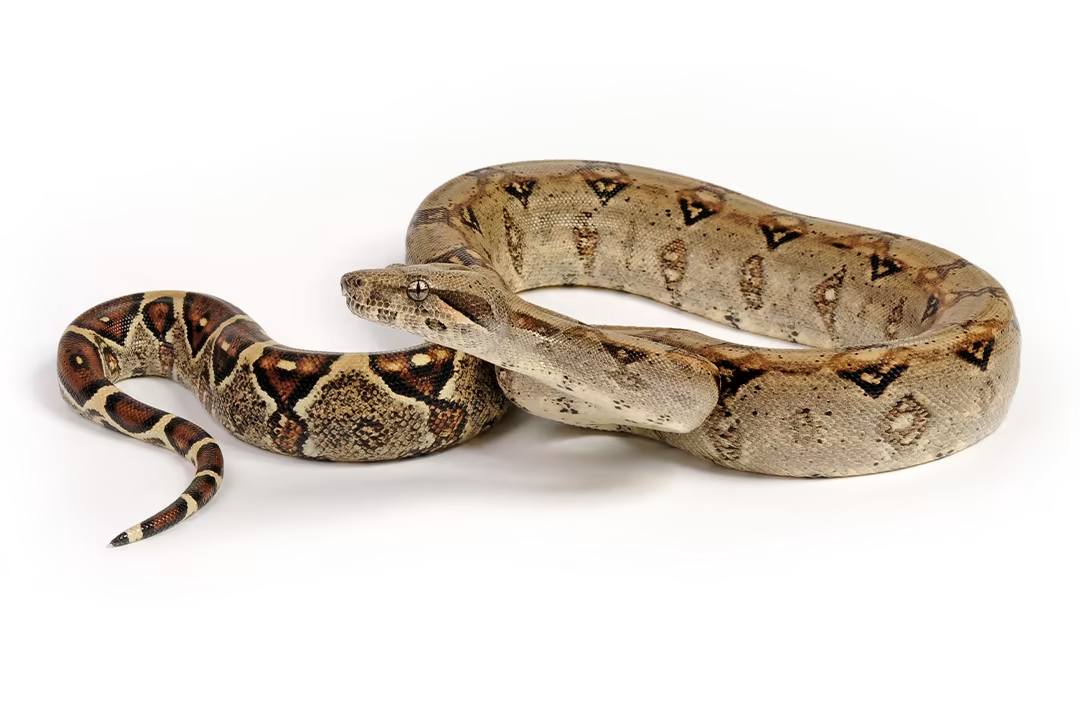
Red-Tailed Boas require a large area and need consistent interaction with humans to remain tame.
Updated on November 13th, 2025
Search Petco for treatment for scale rot on your reptile. We can help you make sure your pet is always happy and healthy.
Updated on November 13th, 2025
A RES requires full spectrum lighting (UVA and UVB) and lighting that provides heat. The dry dock, or basking area, should be completely out of the water. Basking temps should range between 90F and 95F (32-35C). You should place the UVA/UVB bulb as close to the heat lamp as possible. It should be no more than 12" away from your RES and should not have a barrier between it and your turtle. Glass, acrylic and plastic block UVB while screens with grids under 1/2" can obstruct a good portion of UVB rays negating the health benefits. Lighting should be on for around 12 hours a day, depending on the time of year. Full UVA/UVB bulbs need replacing every 6 months. The simplest combination for adequate lighting is a UVA/UVB fluorescent bulb and an incandescent light bulb (for heat). Incandescent light bulbs are standard household lights easily purchased at stores such as Home Depot or Lowes. Make sure your RES cannot splash water on it or come into contact with it. You can also consider halog
Updated on August 12th, 2025
Thanks for reaching out. Heat rocks are bad. One recommendation is to utilize under tank heat as the background heat source, keeping the environment at 70-75 F 24-hours a day, then an overheat lamp can be set up as a timer to turn on for 12-14 hours/day and raise the day time heat to the appropriate level. Timers work great for the UVB bulb and extra heat. Good luck.
Updated on August 12th, 2025
This would depend on tank size. Unless you have a large tank (50 gallons +), a UTH in the 8-12 watt range should be sufficient. Be sure to use a rheostat/thermostat to control temperature. You'll need a lamp for a basking spot on one side of the enclosure. Use whatever wattage will achieve a temp in the basking spot of about 95F. Start with a 40 watt and go from there. This should create a gradient down to the 80s F on the cool side. Turn the lamp off at night, use a timer, butt leave the UTH on. Nighttime temperature can drop to about 75F.
Updated on August 12th, 2025
Those bumps aren't presenting the way burns would, but without a physical exam, it is difficult to say for sure. Infection would be high on the list. You'll need to have him seen by your veterinarian or a vet experienced in treating reptiles. If infection is diagnosed, S will need antibiotics. Keep him warm and as stress free as possible until he sees the doctor. S soak in a warm 50/50 solution of water and unflavored PediaLyte can treat or prevent minor dehydration. It may also provide some itch relief.
Updated on August 12th, 2025
Check the temperature in his enclosure. Low temps can affect appetite in reptiles. If he isn't eating or not exposed to high quality UVB lighting, he can become calcium deficient which could account for the tremors. If he is less than 30 inches long, confirm a basking temp of around 115 F. If he is bigger, bump basking temp to between 125 F and 135 F. Multiple lower wattage lights over a larger area are recommended over one high intensity light source. Try to get him to eat and offer a calcium supplement. If you can get a liquid supplement, that would be best right now. Zoo Med and Fluker's offer such a supplement.Soak him in a warm 50/50 solution of water and unflavored PediaLyte to treat or prevent minor dehydration. if he doesn't eat or if the tremors worsen, have him examined by your veterinarian or a vet experienced in treating reptiles as soon as possible.
Updated on August 12th, 2025