Two Easy Ways to Start Earning Rewards!
Earn 2X Pals Rewards points at Petco
when you use Petco Pay!
Get It Today
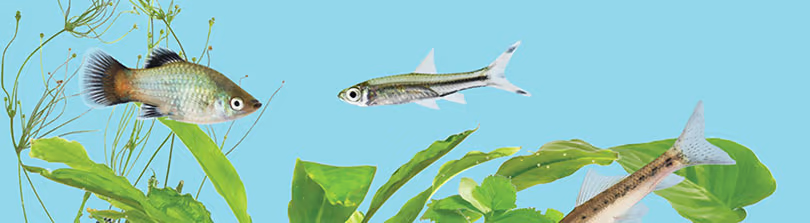
Feeding your freshwater fish isn't as simple as adding a pinch of flakes! Read these three tips to learn more about how to provide your pets the nutrition and environment they need.
Updated on November 13th, 2025
Dropsy, Swim Bladder Disorder & Popeye are common illnesses in aquarium fish. Learn more about spotting the signs and treatment of these diseases.
Updated on November 13th, 2025
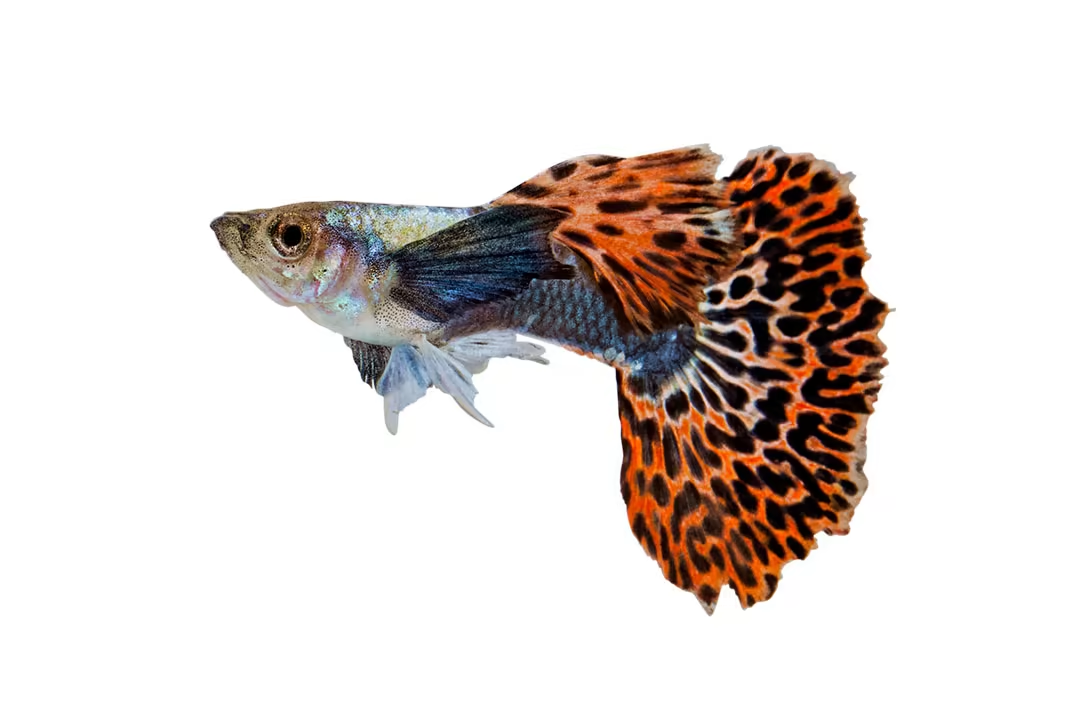
Learn how to care for freshwater livebearers, recommended diet & aquarium setup. Find the right food, supplies & equipment at your neighborhood Petco.
Updated on November 13th, 2025
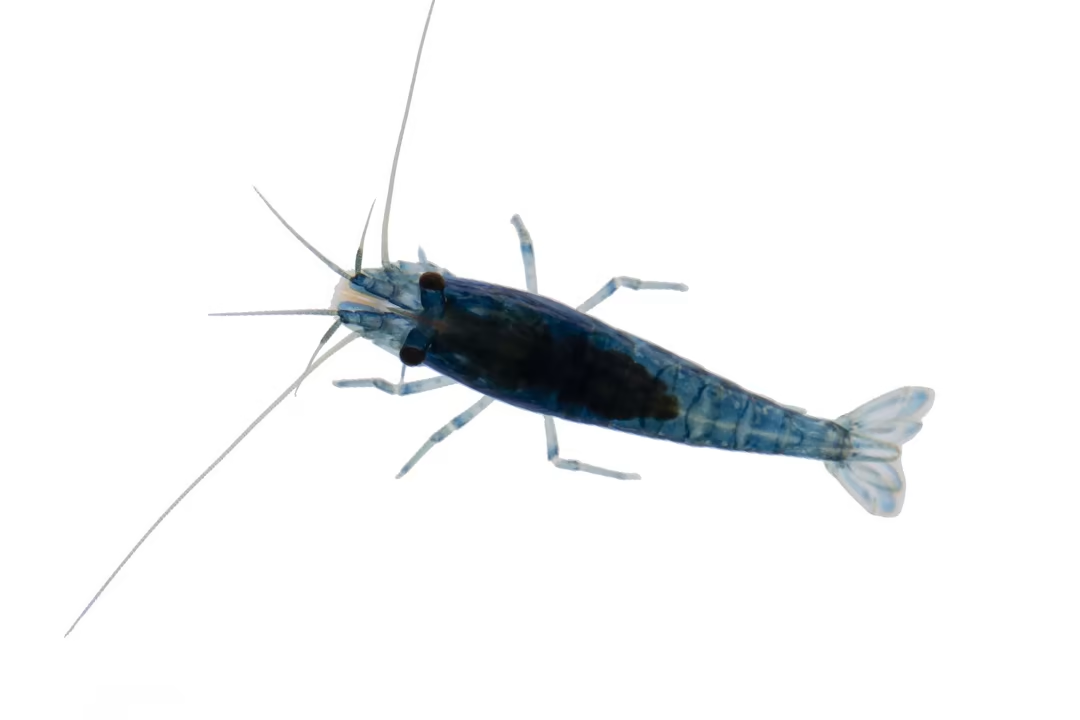
Learn how to care for Freshwater Shrimp, recommended diet & aquarium setup. Find the right food, supplies & equipment at your neighborhood Petco.
Updated on November 13th, 2025
Do you have questions about brown algae (diatom)? Visit Petco and learn the causes, how to get rid of & how to prevent it.
Updated on November 13th, 2025
Check the water chemistry. Confirm ammonia and nitrite levels are 0.25ppm or less and nitrates are 40ppm or less. Use a liquid test kit or submit a sample for testing. Most pet stores or aquarists will do this for free or for a small fee. Partial water changes, about 30% can be done to decrease high levels. Use only aged or conditioned water that is temperature matched to prevent further stress or shock. My preferences for water conditioning are AmQuel Plus and NovAqua in addition to StressCoat. Confirm water temperature between 78F and 80F. You can soak pellets in some garlic juice to stimulate his appetite.
Updated on August 12th, 2025
Thanks for reaching out about Darwin and including photos. Unfortunately, medications added to the water rarely get absorbed systemically. This is likely a swim bladder infection, and systemic medications needed. A veterinary visit can assist with diagnostics and/or treatments. Injections of antibiotics are recommended. If dropsy is present, an aquatic veterinarian should be able to aspirate the fluid off, giving some temporary assistance while medications take effect. Check and correct water parameters and diet. Good luck.
Updated on August 12th, 2025
It is possible the tank has not cycled properly which results in high ammonia and nitrite levels which can kill fish. Allow the tank to run, without fish, for at least 4-6 weeks. During this time, use a home test kit or submit a water sample for testing every few days. The local Petco may do this for free or for a small fee. What you are looking for is to have ammonia and nitrites at 0 ppm and nitrates at 20ppm or less. pH can hover around 7 for most community fish. Avoid large, rapid swings in pH though. What is happening in the tank during this time is that beneficial bacteria are populating the gravel/substrate and the filter. These bacterial populations are responsible for the Nitrogen Cycle. This cycle breaks down wastes from fish, uneaten food and plant matter into by-products that are filtered out or dissipate. You can "cycle" a tank with fish, however this increases the risk of loss. Once your tank has cycled, you can add fish. You will still need to monitor water chemistry a
Updated on August 12th, 2025
Thanks for reaching out about Diesel. This surely points to water quality issues. Have you tested the ammonia, nitrites and nitrates? Any chance of copper in the system? Parasites and bacteria rarely cause death this quickly. Remove all fish and place in new tanks, with spring water (bottled or reverse osmosis). Change or add carbon filtration. Good luck.
Updated on August 12th, 2025
ECheck the water chemistry. The recent water change may have upset it. Use a liquid home test kit or submit a sample for testing to confirm 0 ppm ammonia and nitrites with a 40ppm or less nitrate level. Confirm proper temperature for the species of fish as well. If necessary, another partial water change can be done to stabilize chemistry and maintain water quality. Use only aged or conditioned water that is temperature matched to prevent further stress or shock. My preferences for conditioners include AmQuel Plus, NovAqua and StressCoat. Other options include StressZyme and Prime. To manage swim bladder issues, withhold food for 2-3 days then feed bits of cooked and shelled green peas. Do this until the fish is swimming and defecating normally. Fast one day a week to maintain regularity.
Updated on August 12th, 2025