Two Easy Ways to Start Earning Rewards!
Earn 2X Pals Rewards points at Petco
when you use Petco Pay!
Get It Today
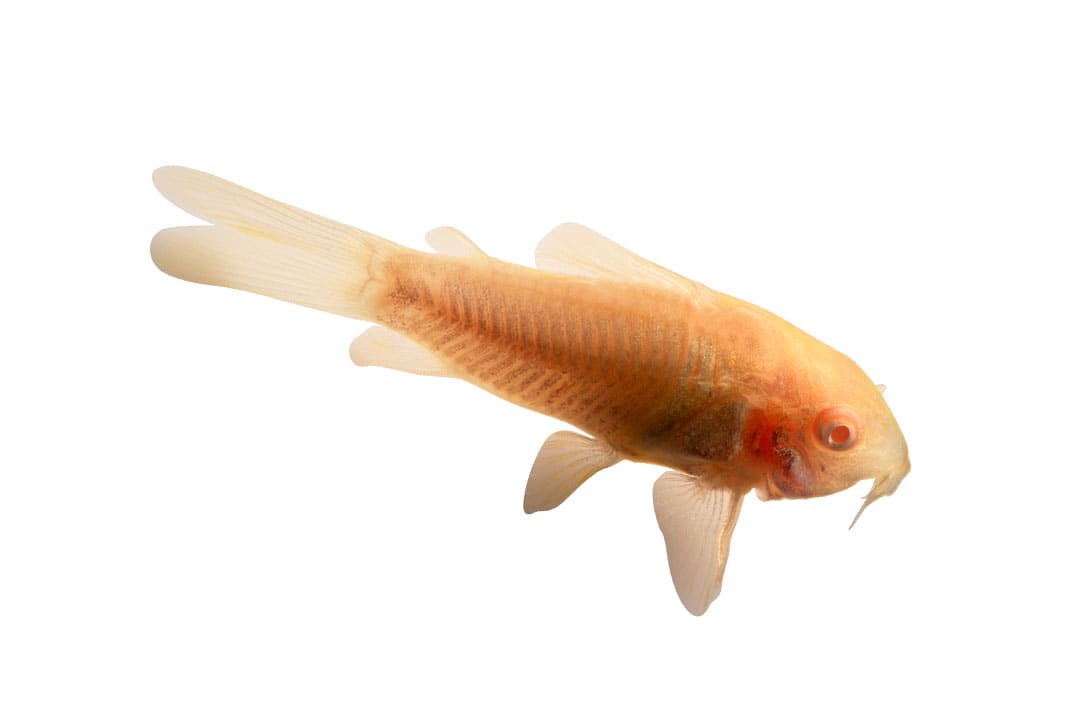
Learn how to take care of Catfish, recommended diet and tank setup. Find the right food, supplies and equipment at your neighborhood Petco.
Updated on November 13th, 2025
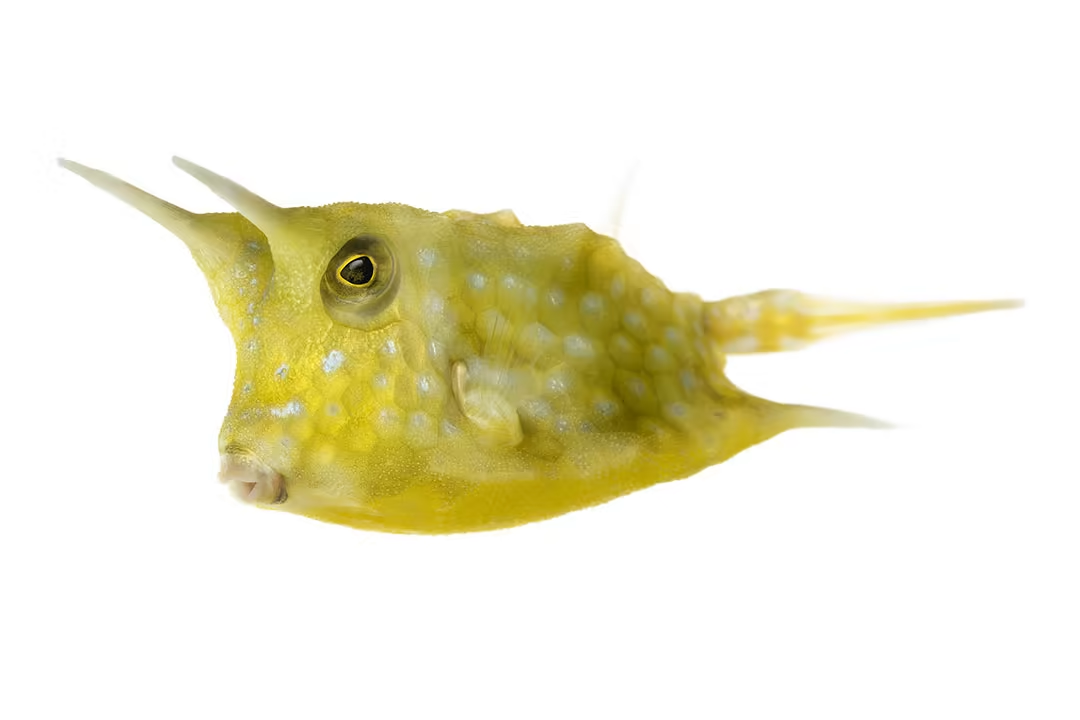
Learn how to care for Boxfish & Cowfish, recommended diet and aquarium setup. Find the right food, supplies and equipment at your neighborhood Petco.
Updated on November 13th, 2025
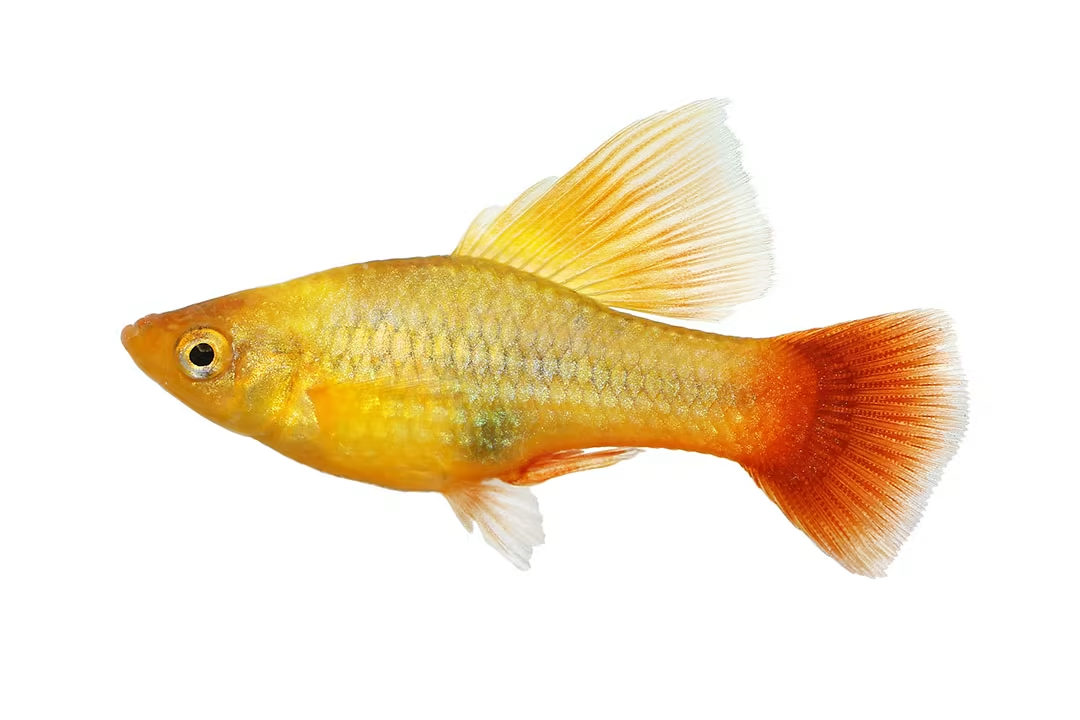
Learn how to care for Platy fish, recommended diet & aquarium setup. Find the right food, supplies & equipment at your neighborhood Petco.
Updated on November 13th, 2025
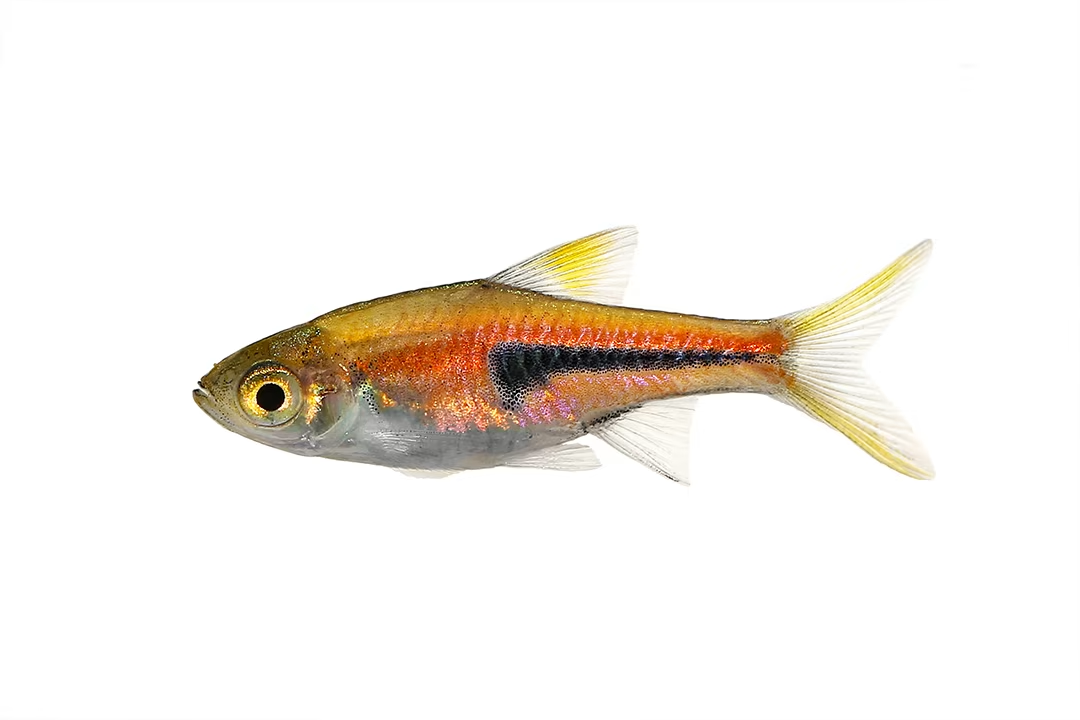
Learn how to care for Rasbora's, recommended diet & aquarium setup. Find the right food, supplies & equipment at your neighborhood Petco.
Updated on November 13th, 2025
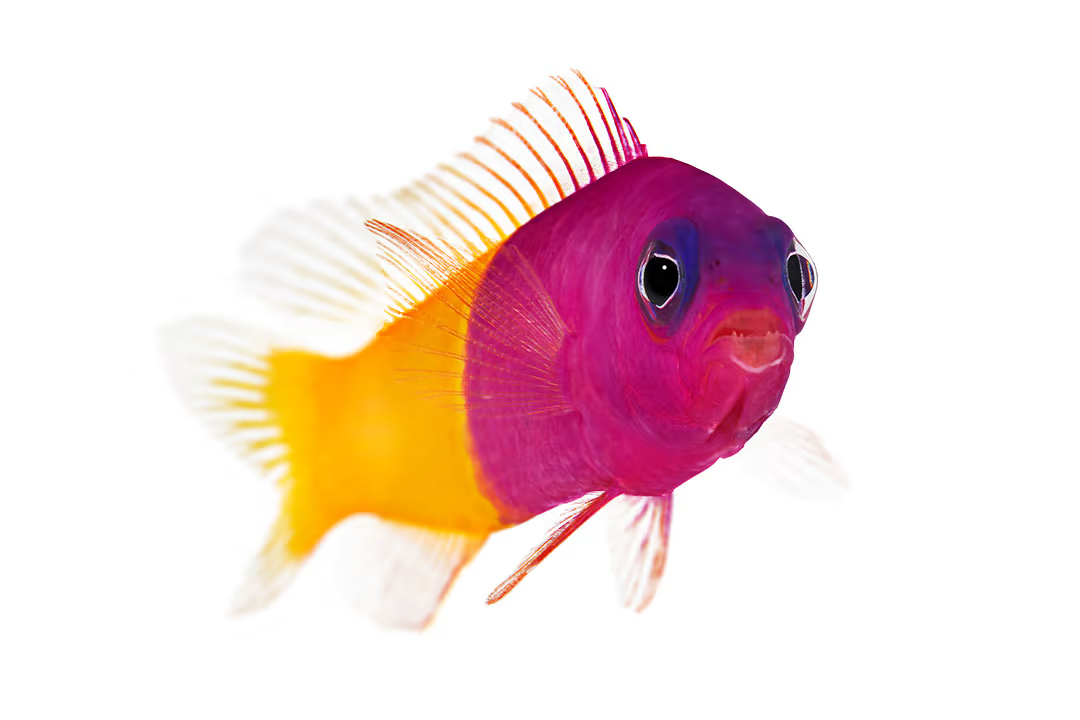
Small Marine Fish are favorites with marine aquarists and includes a wide range of species.
Updated on November 13th, 2025
Hello and thank you for reaching out to Boop by Petco. Begin your preparation for the move a week or so before the day itself, by removing ornaments and other obstacles from within the tank. Each day leading up to the move, perform a 15-20% water change, so that by the time you are ready to move, the tank water will be clean but also stable and mature. On the day itself, preserve as much of the original tank water as possible, to re-introduce into the tank at the other end. The best way to transport your fish is within thick bags, like the ones pet shops provide when you buy new fish. Make sure that the top of the bag is well sealed to prevent spillages. Store the bags containing your fish in a sturdy box, padded with polystyrene or other filled bags to keep the bags secure and upright. Cover the box, as darkness helps to reduce stress in your fish, then secure the box safely within your vehicle. Since your journey is more than a couple of hours long then you may need to arrange for a
Updated on August 12th, 2025
Anytime there is an unexpected loss of fish, water chemistry should be checked. Use a home test kit ( https://www.petco.com/shop/en/petcostore/product/api-freshwater-master-test-kit# ) or submit a water sample for testing. Most pet stores will do this for free or for a small fee. Confirm an absence ( 0 ppm ) of ammonia and nitrites with a nitrate level of 20 ppm. pH can range between 6.5 and 8, water temp should be 65 F to 75 F. If chemistry and water quality are within normal parameters, then illness or aggression would be other reasons for the loss. It is always recommended to quarantine fish in a separate tank for 2-4 weeks prior to adding them to the main tank. During this time, they can be treating for infection or parasites. I am sorry for the loss of your fish.
Updated on August 12th, 2025
Check the water chemistry and quality first. Poor quality can predispose him to infection. Use a home test kit or submit a water sample for testing. Your local Petco may do this for free or for a small fee. If ammonia and/or nitrite levels are elevated, perform partial water changes until both read 0 ppm and nitrates are 20 ppm or less. Use only conditioned water that is temperature matched to prevent further stress or shock. Providing pristine water quality is the foundation for treatment and healing. Check the water temperature since low temps can affect appetite and activity in fish. If the water is too warm, it can also affect activity since warm water does not hold as much oxygen as cooler waters. Fast the fish for 2-3 days then feed tiny bits of cooked and shelled green peas. This will aid in defecation if there is constipation. Plain aquarium salt (not table salt or Epsom salt) can be used for most fish as a general tonic to reduce stress, improve gill function, treat minor in
Updated on August 12th, 2025
Thank you for using Boop by Petco! It looks like the tank provides enough room for Speedy and Explorer to swim comfortably. Keep an eye on them, and move them into a larger tank if they get significantly larger or you notice signs of fighting or increasing ammonia levels in the tank.
Updated on August 12th, 2025
An immediate veterinary check up is needed. Fish may have got spiky bones in it, or may have been not in good hygiene status. Considering his age and the signs you are describing an examination is necessary to shed some light on the underlying cause of it. Antibiotics and nutritional support may be needed as well.
Updated on August 12th, 2025