Two Easy Ways to Start Earning Rewards!
Earn 2X Pals Rewards points at Petco
when you use Petco Pay!
Get It Today
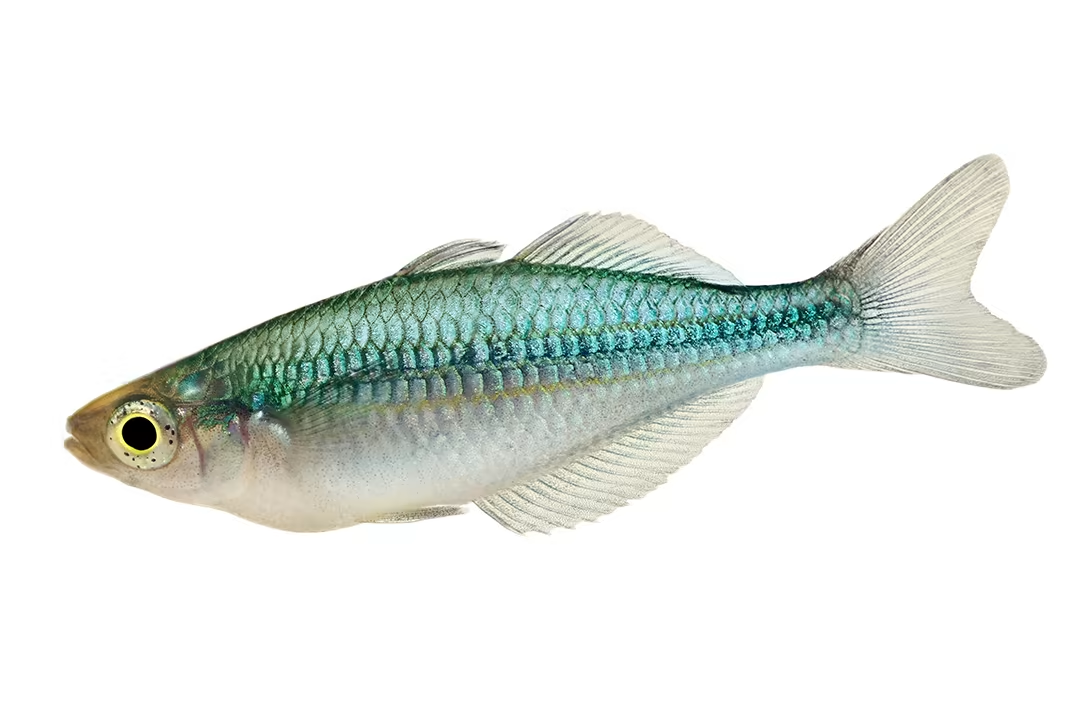
Learn how to care for Rainbow fish, recommended diet and aquarium setup. Find the right food, supplies and equipment at your neighborhood Petco.
Updated on November 13th, 2025

Read about Habitattitude and Petco's commitment to protect our environment. At Petco, animals always come first. Learn how you can help.
Updated on November 13th, 2025
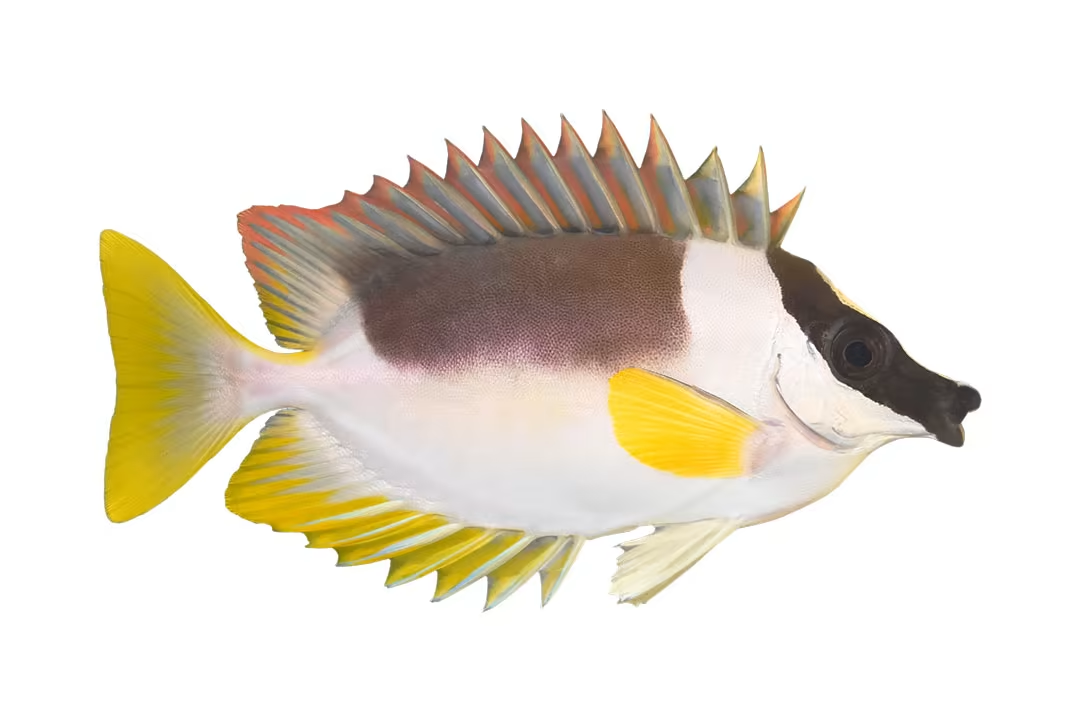
Learn how to care for Foxface fish & Rabbitfish, recommended diet and aquarium setup. Find the right food, supplies and equipment at your neighborhood Petco.
Updated on November 13th, 2025
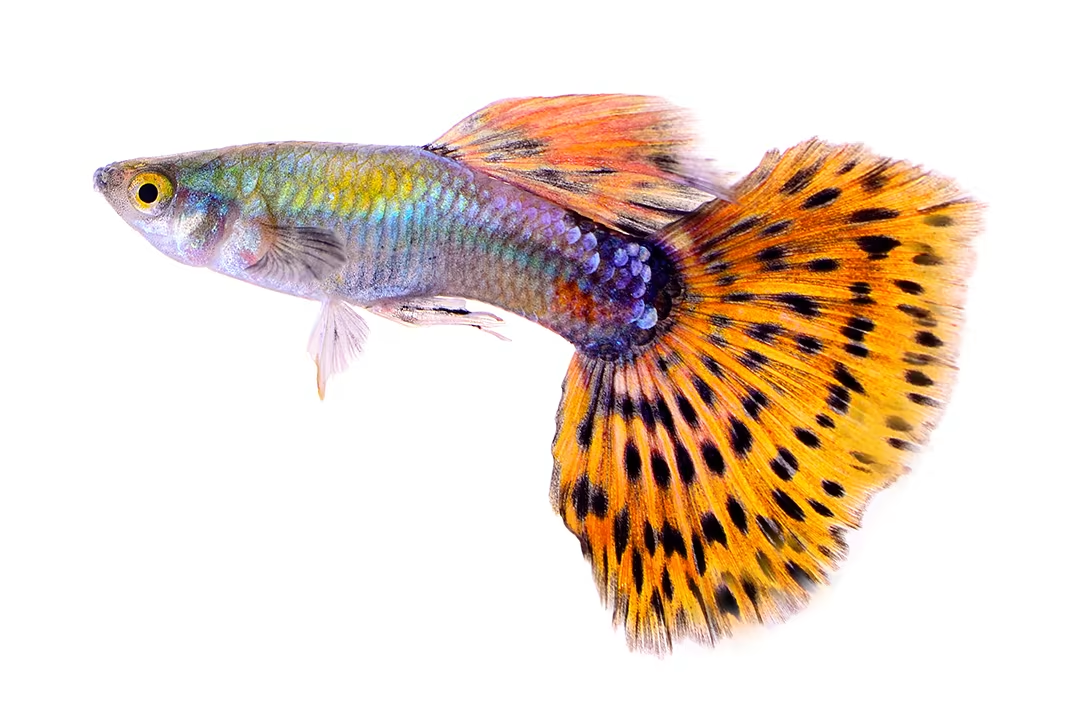
Learn how to care for Guppy fish, recommended diet & aquarium setup. Find the right food, supplies & equipment at your neighborhood Petco.
Updated on November 13th, 2025
Choosing the right schooling fish is essential to creating a thriving freshwater aquarium. At Petco, we carry a wide variety of small and large schooling fish great for any aquarium.
Updated on November 13th, 2025
Guppies or Neons are excellent "starter" fish. Care is simple and they are inexpensive. A standard 10 gallon tank is recommended to start. Most people don' t realize the amount of "work" needed to maintain a tank. Filter maintenance, monitoring water chemistry, water changes, monitoring fish health and providing a balanced diet are just a few items that need regular attention to keep a tank thriving. Even though fish aren't as cuddly as cats and dogs, they do have their own personalities and even respond to their owners, especially at feeding time! Studies have shown that simply watching fish in a tank can lead to a reduction in both heart rate and blood pressure. It is quite relaxing.
Updated on August 12th, 2025
Begin by submitting a water sample for quality testing. Most pet stores will do this for free or a nominal fee. High ammonia levels, PH imbalances may be responsible for that. Oxygen concentration and quality of the filters should be determined as well. Lack of oxygenation could be the cause of it. If water quality is good and there are no major imbalances, Bubbles should examined to look for any sign of bacterial/fungal infection and eventually water should be treated. Please do not hesitate to contact us again on the forum or by requesting a consultation (where you can post pictures ) if you have any more questions or to discuss it any further.
Updated on August 12th, 2025
First, perform a partial water change, vacuum gravel thoroughly and wipe down any tank furniture. This is critical because clean water is the cornerstone for treatment and recovery. Use only conditioned water that is temperature matched to prevent stress or shock. Next, you can use any one of the commercial ich medications, such as Ich Guard (Tetra), Super Ick Cure (API) or Rid Ich Plus (Kordon). These can be found in the Aquarium section of the local Petco. Follow label directions carefully. This method will typically work with most fish. Another option would be to use plain aquarium salt ( NOT table or Epsom salt). Dissolve 1 tablespoon of salt per 5 gallons of water in a cup or two of tank water and gently pour it into the tank. At the same time, gradually increase the water temp to about 86 F. Hold it there for 14 days. The warm temps will speed up the life cycle of the parasite and the salt will kill it. Afterwards, gradually reduce water temp and perform another partial water ch
Updated on August 12th, 2025
How frequently to change the filter depends on what type of filter you have. There are mesh filters that filter large particles of uneaten food, feces, etc. - these often just need to be rinsed to remove the material and that is it. If they get damaged in any way, that is when they need to be replaced. Other filters that remove toxins - often carbon filters or ammonia filters, have a set time frame that they should be changed with. This time frame is often set by the manufacturer, and usually ranges between 1-3 months, but you can look at the package or talk to the pet store where you purchased it for more guidance. The biological filter, which is made up of a surface for bacteria to live on, usually don’t need a great deal of cleaning as you can kill all of the good bacteria. I hope that helps to answer your question - if you need further assistance, I would recommend a store with fish experience, or we can do a consultation together here as well! Good luck!
Updated on August 12th, 2025
Check the water chemistry first. Use a home test kit or submit a water sample for testing. The local pet store or fish store may do this for free or for a small fee. Aim for an absence (0 ppm) of ammonia and nitrites with a nitrate level of 20 ppm or less. Perform partial water changes as needed to stabilize chemistry and/or to improve water quality. Use only conditioned water that is temperature matched to prevent stress or shock. These fish produce a larger than average bio-load (wastes), so strong filtration is a necessity. The filter should be rated for at least twice the volume of the tank. The size of the tank may also be an issue. When keeping koi, tanks or ponds in the hundreds (or even thousands) of gallons are common. The number of fish in the current tank is too high. Consider getting multiple tanks or a significantly larger tank. 9 goldfish would need at least a 100 gallon tank. The additional koi increases this number.
Updated on August 12th, 2025