Two Easy Ways to Start Earning Rewards!
Earn 2X Pals Rewards points at Petco
when you use Petco Pay!
Get It Today
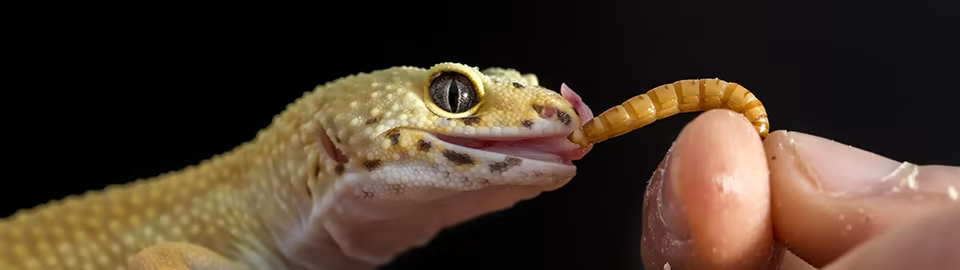
Do you have questions about what to feed a reptile? Petco has the answers! Visit us to learn about reptile dietary needs.
Updated on November 13th, 2025
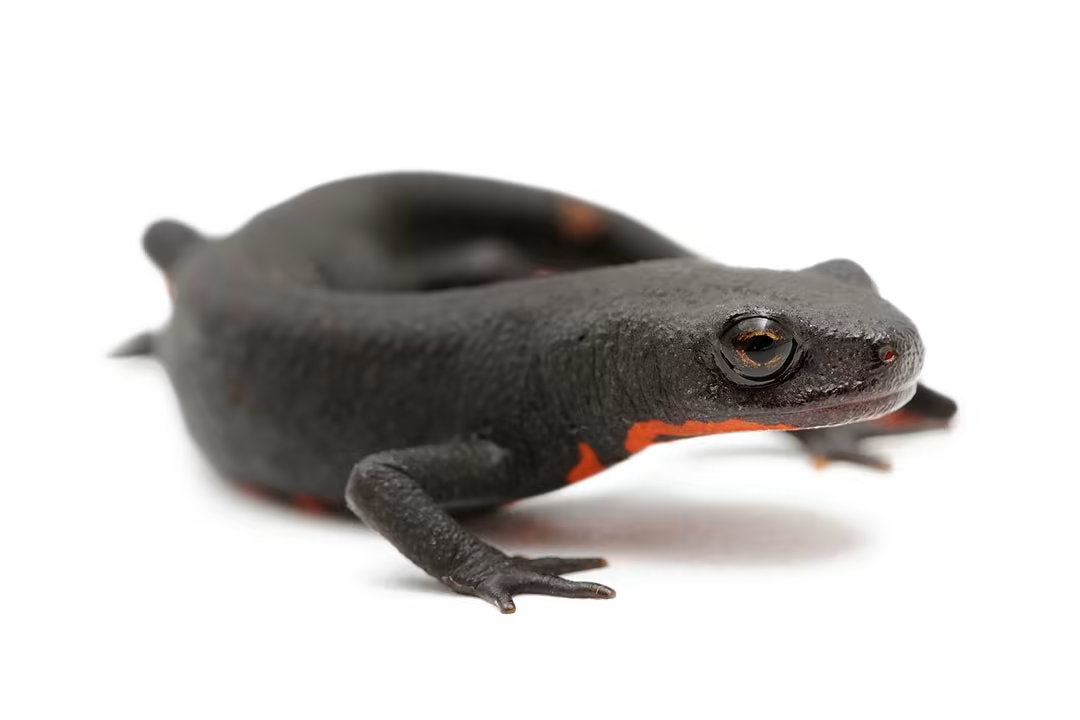
Learn How to Care for a Salamander & Newts, recommended diet and habitat setup. Find the right food, supplies and equipment at your neighborhood Petco.
Updated on November 13th, 2025
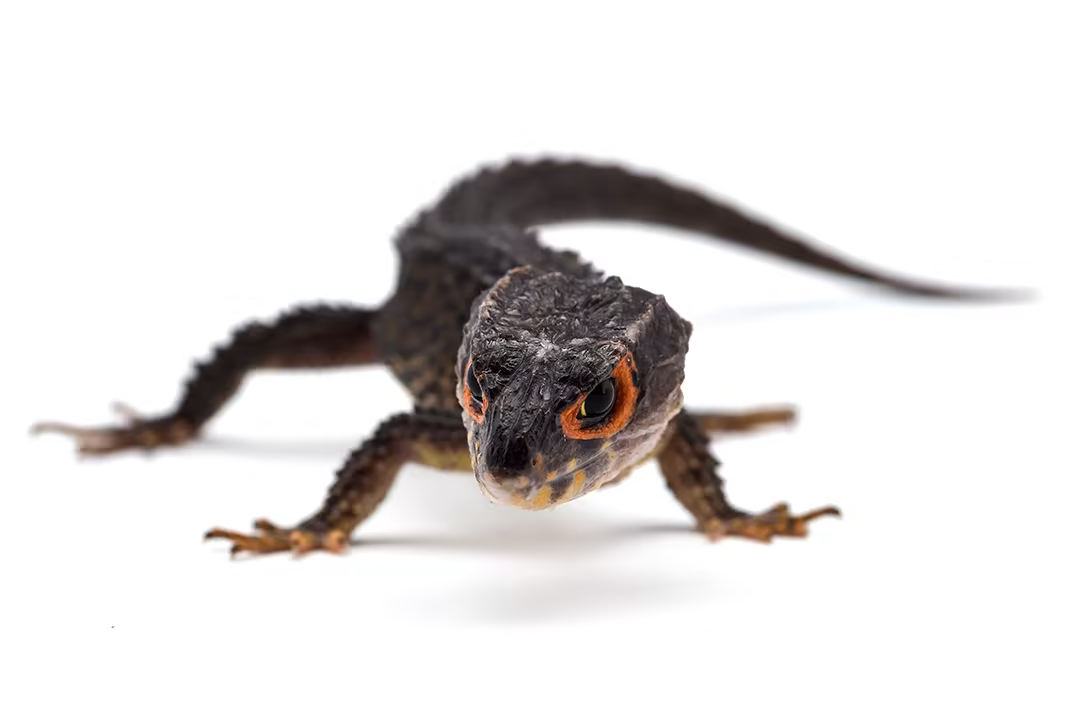
Learn how to care for Red-Eyed Crocodile Skink, recommended diet & aquarium setup. Find the right food, supplies & equipment at your neighborhood Petco.
Updated on November 13th, 2025
Read these guidelines about handling reptiles to provide a safe and fun environment for your pet, friends and family.
Updated on November 13th, 2025

Learn how to care for tropical roaches, recommended diet & habitat setup. Find the right food, supplies & equipment at your neighborhood Petco.
Updated on November 13th, 2025
Check the temperature an dlighting. Low temps can affect appetite and digestion in reptiles. Offer a biologically appropriate diet. This can include a commercial pelleted or stick diet, and being omnivorous, should also include insects, fresh fruit and vegetables. See your veterianrian or vet experienced in treating reptiles if she does not regain her appetite.
Updated on August 12th, 2025
Thanks for reaching out about Carmine. Not sure what type of food you are searching for, a powder to top-coat insects. A variety of insects can be offered, and gut loaded. Vitamin D3 can be over supplemented so powdered should only be used once weekly. Exposure to ultraviolet B radiation is very important for the absorption of calcium in the intestinal tract. Catch insects outdoors, as long as your not spraying. Good luck.
Updated on August 12th, 2025
Thanks for reaching out about Brutus and including photos. You are correct in that blueberries and mealworms are an incomplete diet. A wide variety of vegetables are required. Try offering frozen/thawed medley pack. If he trusts you, offer by hand. Fresh vegetables are healthier and can be offered in small amounts. Green, yellow, red and orange vegetables are all required as each provides different nutrients. Good luck.
Updated on August 12th, 2025
Thanks for reaching out about Ruby. Meat such as chicken, is a poor food since it is low in calcium and high in phosphorus. My usually recommendation is 1/3-1/3-1/3, meaning parts vegetables (green, red, yellow, orange), pellets and live fish (goldfish, tetras). The benefit of whole live fish is environmental enrichment (hunting, foraging) and has a skeleton with calcium, muscle and organs rich in other nutrients. Vegetables provide a wide variety of vegetables and the pellets a fairly balanced diet. Water temperature, a basking site with UVB and heat and water quality are also important. Good luck.
Updated on August 12th, 2025
At worst, you may see some stomach upset (vomiting or diarrhea). Either can typically be managed at home with a short fast followed by a bland diet fed in small, frequent amounts until symptoms resolved.
Updated on August 12th, 2025