Two Easy Ways to Start Earning Rewards!
Become a member today! Members-only pricing and offers, personalized care notifications, Vital Care points back on every purchase and more!
 Become a credit card member today!
Earn 2X Pals Rewards points at Petco
when you use Petco Pay!APPLY NOWLearn More About Petco Pay Benefits
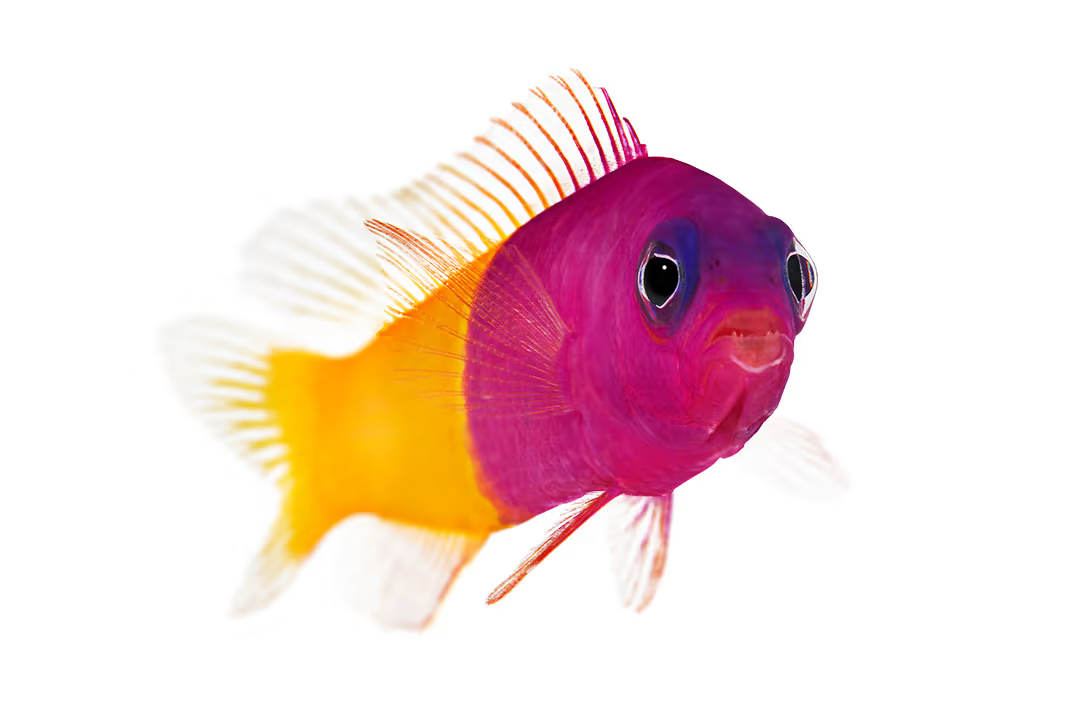
Rainbowfish


Related Articles & Questions
- New Pet
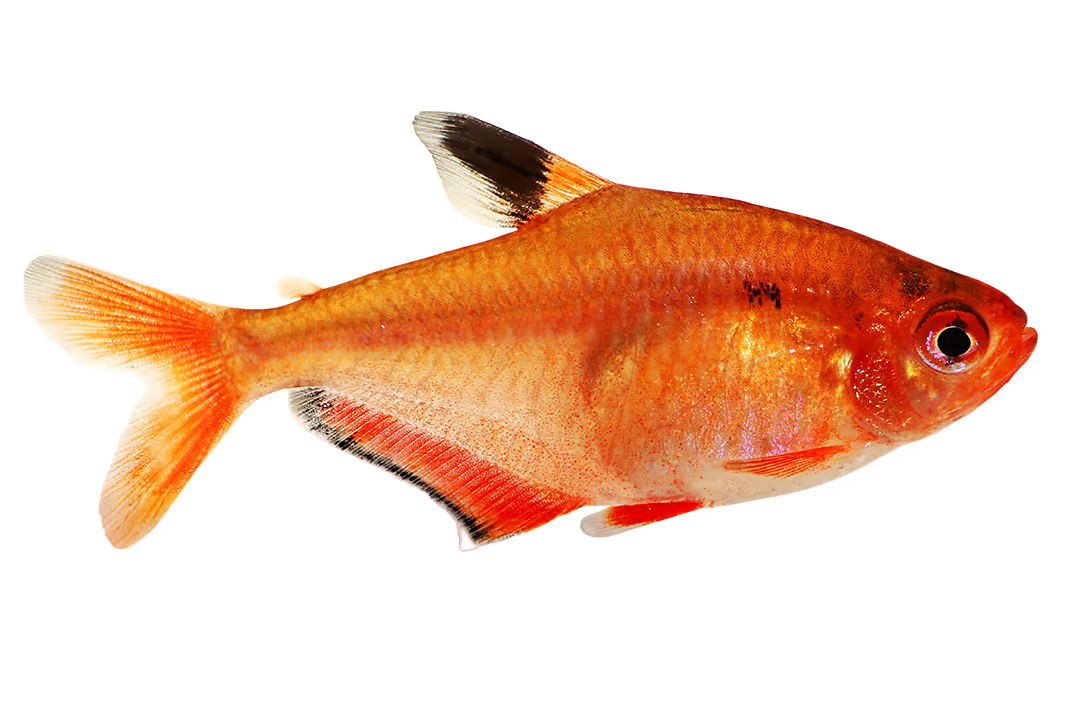
Freshwater Community Fish: Care, Setup & Compatibility Guide
Learn how to care for freshwater community fish, recommended diet & aquarium setup. Find the right food, supplies & equipment at your neighborhood Petco.
Updated on November 13th, 2025
- New Pet
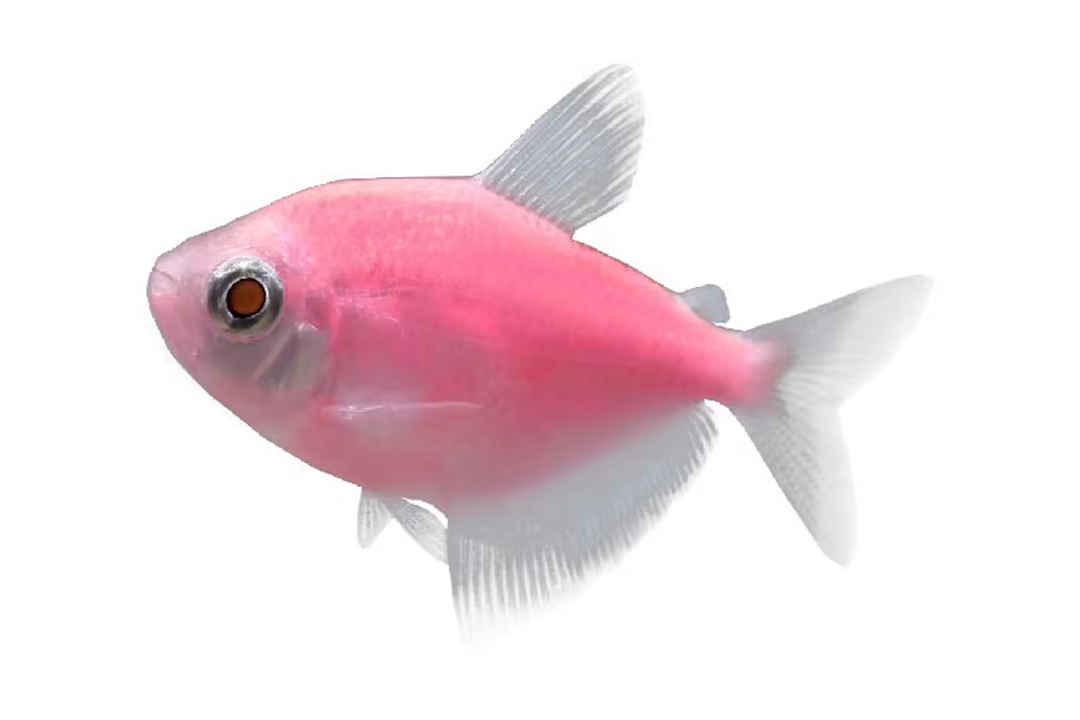
GloFish Care Guide: Tank, Food, & Compatibility for Thriving Fish
GloFish are brilliantly colored and beautiful fish. Learn how to care for GloFish, what to feed them, how long they live, their ideal tank size and more.
Updated on November 13th, 2025
- New Pet
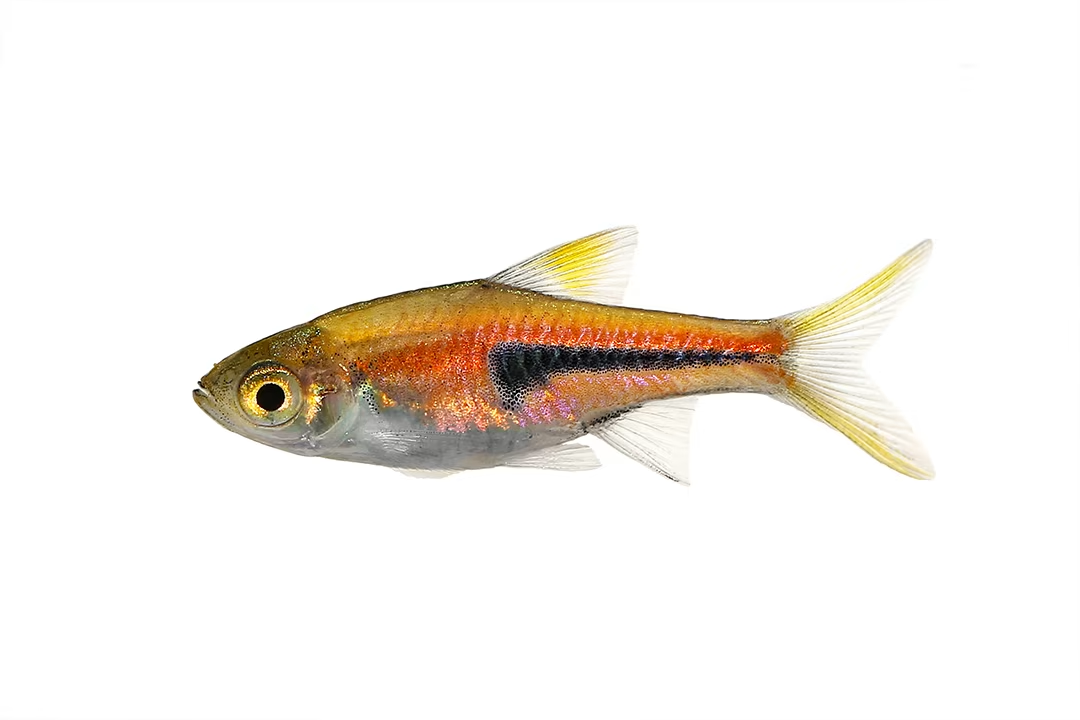
Master Rasbora Care: Tank Setup, Food & Compatibility for Beginners
Learn how to care for Rasbora's, recommended diet & aquarium setup. Find the right food, supplies & equipment at your neighborhood Petco.
Updated on November 13th, 2025
- New Pet
Aquatic Pet Safety: Keep Your Home Aquarium Pets Healthy & Safe
Learn how to safely handle your aquatic life to avoid toxin & bacterial exposure. Find aquatic life care supplies at your neighborhood Petco pet care center.
Updated on November 13th, 2025
- New Pet
Master Small Marine Fish Care: Tank Setup, Food, & Compatibility Guide
Small Marine Fish are favorites with marine aquarists and includes a wide range of species.
Updated on November 13th, 2025
- Health & Wellbeing
I have a 65 litre aquarium tank with 8 small tiger barbs fish ,6 Red eye tetra fish, 2 big golden molly, 2 rainbow sharks.........so can I add Discus Fish with these tank mates ? If yes ...if no ....so which tank mates is suitable for discus fish ? I
Thanks for your questions about your tank. You have a number of fish in your tank already - a general rule of thumb is 2.5 square centimeters of fish per 3.8 liters. Depending on how large your fish are, you may be close to the carrying capacity of your tank, and you will also need to plan on how the fish in your tank will grow over time (mostly the rainbow sharks). If you are looking for tank mates for discus, it is best to look for fish that are housed in the same temperature zone, and occupy different areas in the water column than they do. Examples would be bottom feeders like cory catfish, those that live on the sides and bottom such as plecos, and those that are in the middle of the water column like some species of tetras. For the question about vacation - I would not recommend leaving your tank for that long without someone checking on it regularly. Power outages can be detrimental for tanks, and water changes or additions would likely be required. Also, automatic feeders als
Updated on August 12th, 2025
- Health & Wellbeing
I have a Australian Bass and i want to breed it with another. How do i know if its male or female and what will i need for breeding the pairs.
Males are much smaller than females. Males will reach sexual maturity between 3-4 years of age, females won't be ready until they are 5-6 years of age. You can check the vent of the fish. Males will have an oblong opening while the females will be more circular. In the springtime, mature females will become fat with roe (eggs). During this time of year, you can gentle massage the abdomen of an adult fish, if a milky substance comes out then you have a male. This is its sperm. You can follow this link to find information regarding breeding and the necessary supplies. http://www.aquablueseafoods.com.au/bass-breeding.shtml
Updated on August 12th, 2025
- Health & Wellbeing
I just recently got a fish friend of a friend type thing and nobody seems to know what kind of fish he looks kind of lind a gold fish hes a shiny dirty white color with white dots on his tail and two white long whiskers on the bottom of him i just no
It looks like a species of gourami. Most can be kept in a community tank with other fish. The black may be caused by high ammonia levels. Submit a water sample for testing or use a liquid home test kit to check chemistry. Ammonia can kill fish if levels are high enough. Partial water changes can be done daily to stabilize chemistry and maintain water quality. Use only aged or conditioned water that is temperature matched to prevent further stress or shock. My preferences for water conditioners include AmQuel Plus, NovAqua and StressCoat.
Updated on August 12th, 2025
- Health & Wellbeing
I have a 20 gallon tank. I'm thinking of buying +5 fish. Which fish could I buy and what would I need for the fish and tank?
A fish tank will need a filter, a light/hood and a heater. Make sure the filter is rated for at least twice the tank volume. The heater should be adjustable since water temperature will depend on the species of fish. Good "starter" fish include Tetras, Mollies, Danios or Tetras. A new tank should be set up and left running empty for several weeks before adding fish. A pinch of flake food can be sprinkled in daily. This "cycling" will allow a population of beneficial bacteria to colonize the tank and filter. These bacteria will break down wastes (ammonia, nitrites and nitrates) which are toxic to fish.
Updated on August 12th, 2025
- Health & Wellbeing
My cichlid is looking really pale not moving his tail much is he going to be ok I took him to the vet at 5pm on 4-19-19 he did fine on the way there but had to wait an hour after our schedule appointment after that we waited the bus to go home there
Anytime you transport a fish, it can be stressful. Loud noises, vibrations and no filtration can cause stress. Check the water chemistry using a liquid home test kit or submit a water sample for testing. The local Petco may do this for free or for a small fee. Aim for an absence (0 ppm) of ammonia and nitrites with nitrates at 20 ppm or less. Perform a partial water change if indicated. Use only conditioned water that is temperature matched to prevent further stress or shock.
Updated on August 12th, 2025