Two Easy Ways to Start Earning Rewards!
Become a member today! Members-only pricing and offers, personalized care notifications, Vital Care points back on every purchase and more!
 Become a credit card member today!
Earn 2X Pals Rewards points at Petco
when you use Petco Pay!APPLY NOWLearn More About Petco Pay Benefits
Tetra Reptile Habitat Filters & Pumps
Get It Today


Related Searches
Related Articles & Questions
- New Pet
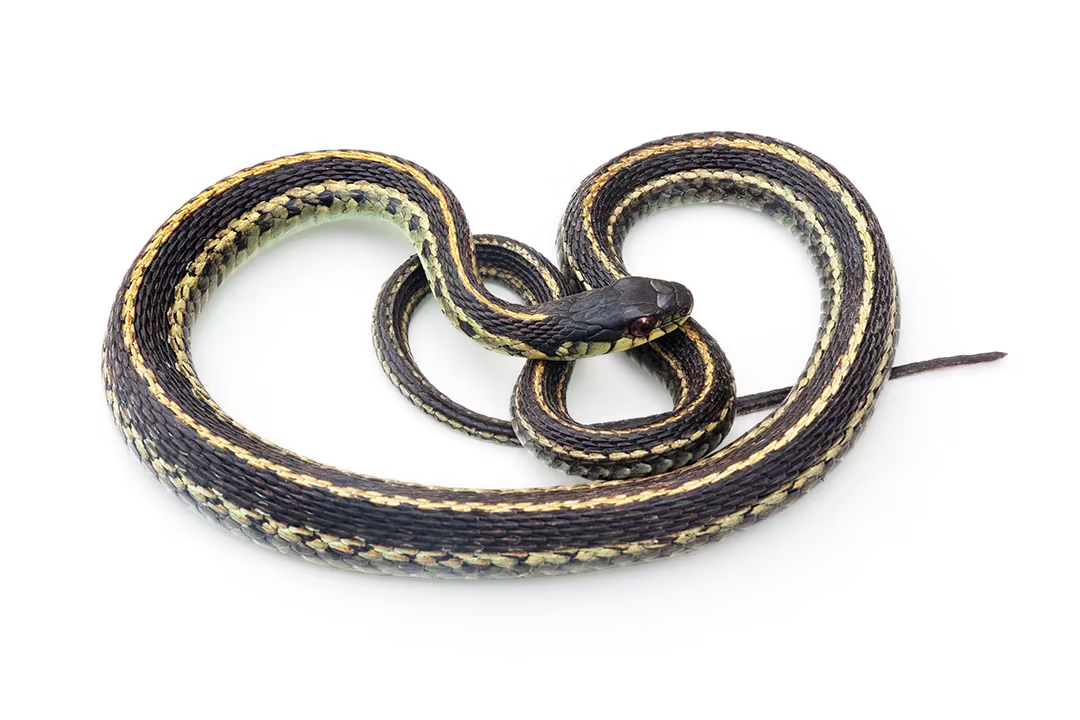
Garter & Water Snake Care: Help Your Pet Thrive! Habitat, Food, Health
Learn how to take care of Garter & Water Snakes, recommended diet and habitat setup. Find the right food, supplies and equipment at your neighborhood Petco.
Updated on November 13th, 2025
- New Pet
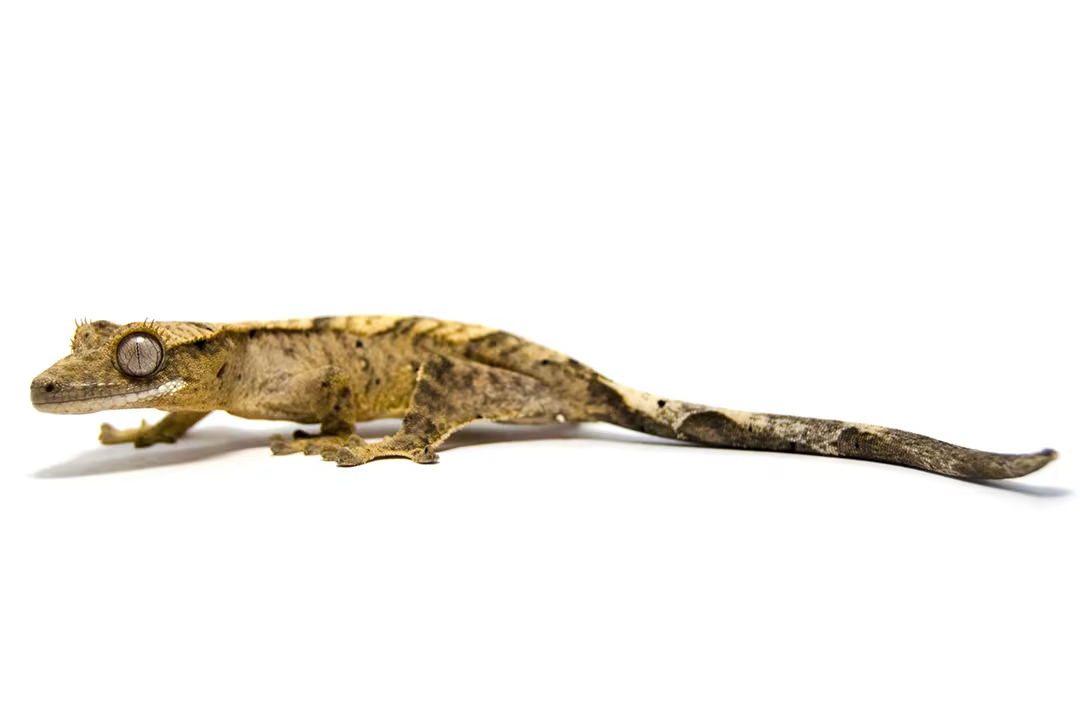
Crested Gecko Care: Habitat, Diet, Health, Supplies - Ultimate Guide
Learn how to take care of your Crested Gecko, tank size, diet & habitat setup. Find the right food, supplies and equipment at your neighborhood Petco.
Updated on November 13th, 2025
- New Pet
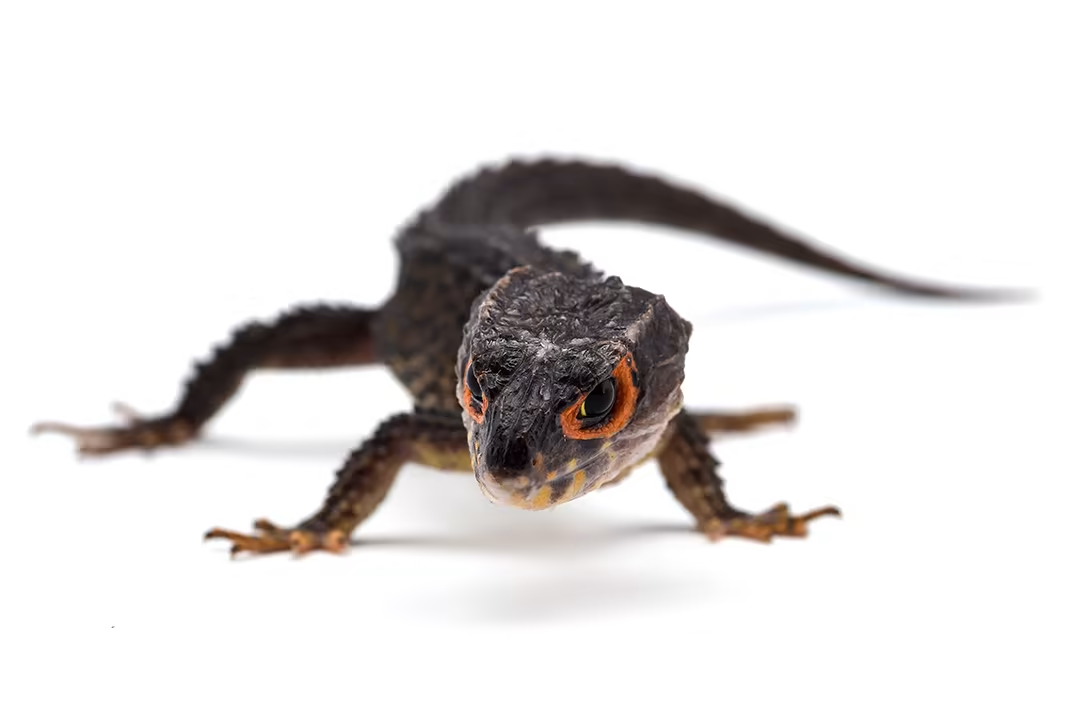
Ultimate Red-Eyed Crocodile Skink Care Guide: Habitat, Food & Health
Learn how to care for Red-Eyed Crocodile Skink, recommended diet & aquarium setup. Find the right food, supplies & equipment at your neighborhood Petco.
Updated on November 13th, 2025
- New Pet
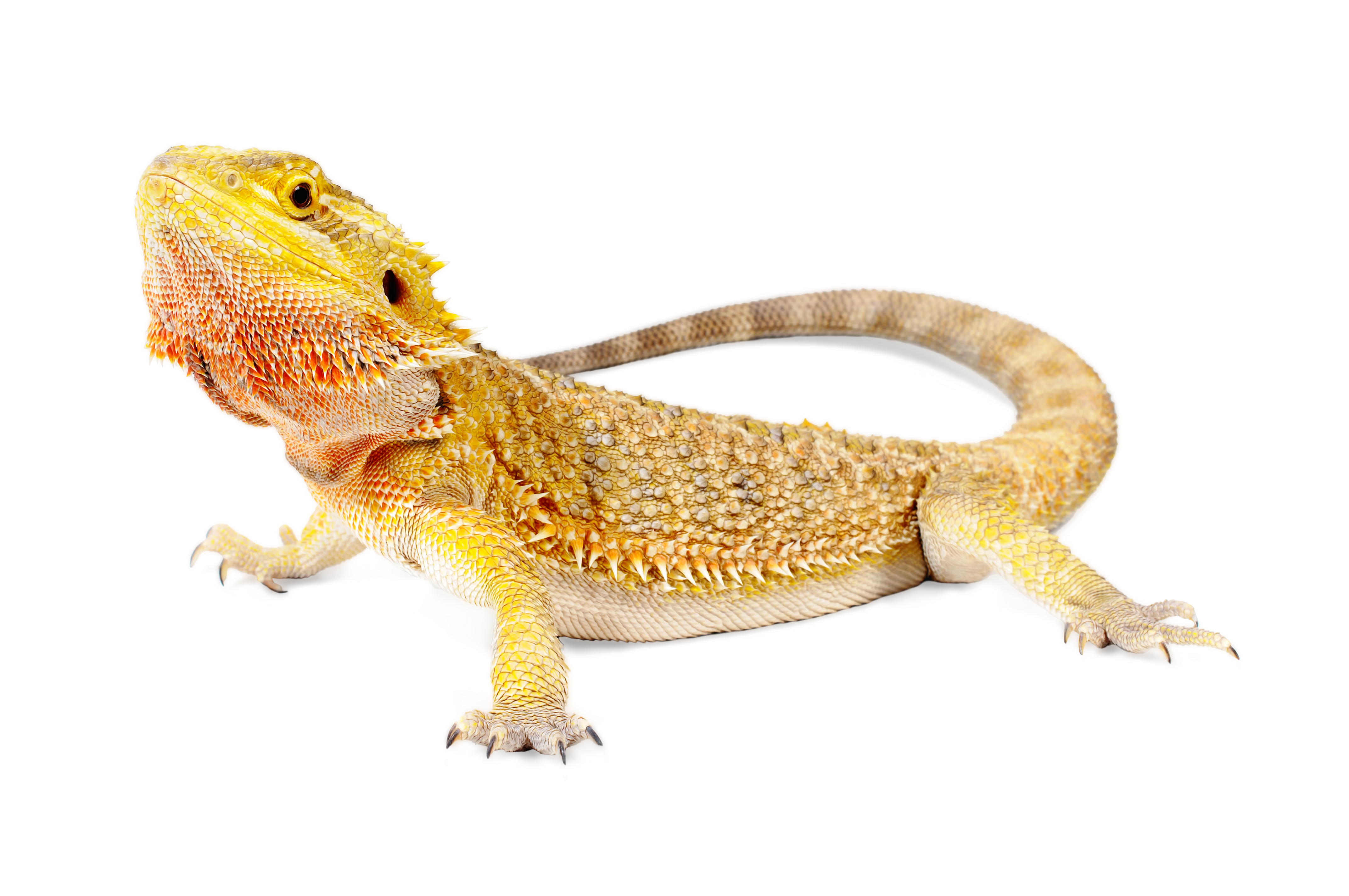
Arid Lizard Care: Expert Tips for Optimal Habitat, Diet & Health
Learn how to care for arid lizards, recommended diet & habitat setup. Find the right food, supplies & equipment at your neighborhood Petco.
Updated on November 13th, 2025
- New Pet
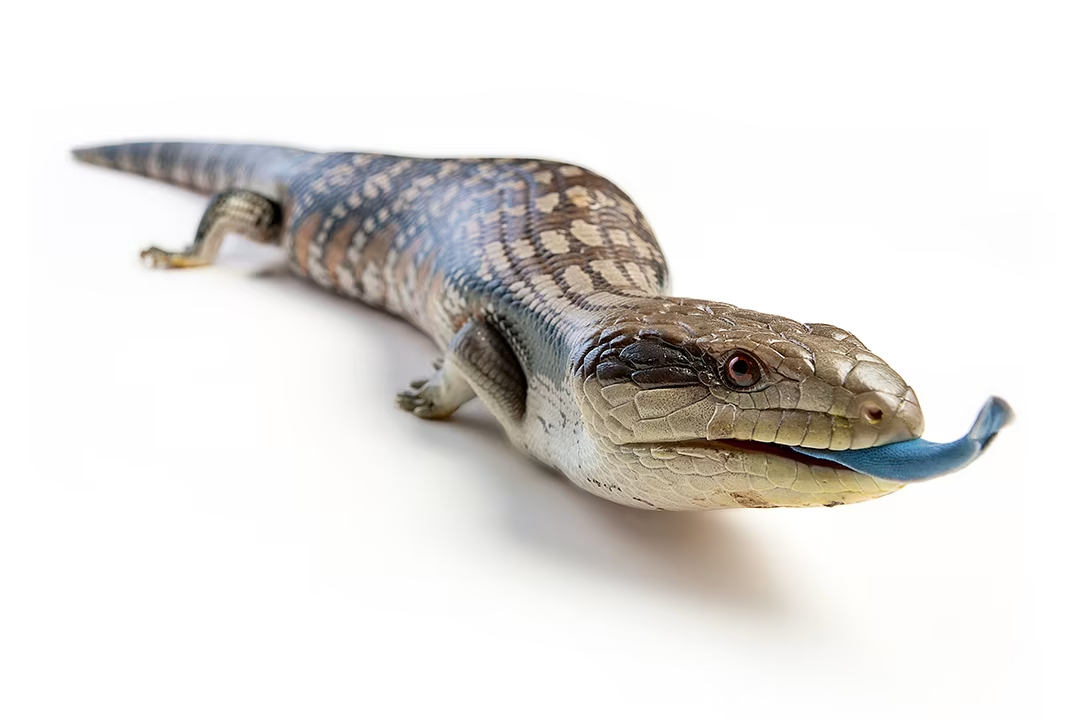
Tropical Skink Care: Habitat, Food, Health & Handling Guide
Learn how to care for Blue-Tongued Skink, recommended diet and habitat setup. Find the right food, supplies and equipment at your neighborhood Petco.
Updated on November 13th, 2025
- Health & Wellbeing
I'm about to buy some new fishes mostly Tetra Can you help me what fish should I buy because I am beginner in this things. Please tell me what sort of things I should bring I have a one foot tank now other than that What should I purchase from Aquar
Before you buy any fish, you will need to set up the tank. A basic set up includes: a tank, filter, hood/light, heater, gravel and some decor. The tank should run without fish for at least 4 to 6 weeks. This gives it time to cycle. The Nitrogen Cycle is critical to the health of the tank and any fish you will be keeping. During this time, beneficial bacterial will populate the filter and substrate (gravel). These bacteria will be responsible for breaking down fish wastes and other wastes (uneaten food, dead plants, etc.). You will need a home test kit to monitor water chemistry (ammonia, nitrites, nitrates, pH) or you will have to submit water samples for testing. Most pet stores will do this for free or for a small fee. At first, you will see high levels of ammonia and nitrites. Over time, as bacteria grow, these levels will drop. When ammonia and nitrites are at 0 ppm and nitrates are below 20 ppm, you can consider adding fish. Regular (every 1 or 2 weeks) partial water changes as we
Updated on August 12th, 2025
- Health & Wellbeing
I have a 20 gallon tank. I'm thinking of buying +5 fish. Which fish could I buy and what would I need for the fish and tank?
A fish tank will need a filter, a light/hood and a heater. Make sure the filter is rated for at least twice the tank volume. The heater should be adjustable since water temperature will depend on the species of fish. Good "starter" fish include Tetras, Mollies, Danios or Tetras. A new tank should be set up and left running empty for several weeks before adding fish. A pinch of flake food can be sprinkled in daily. This "cycling" will allow a population of beneficial bacteria to colonize the tank and filter. These bacteria will break down wastes (ammonia, nitrites and nitrates) which are toxic to fish.
Updated on August 12th, 2025
- Food & Nutrition
What types of fish should I buy because I'm a beginner in this . I have a 1 feet tank . One more thing I have heard that live-bearers could be best But I want your suggestion. And also what other Things I should buy and can you tell me a site that ca
Without anything to use for scale, it is hard for me to tell how big your tank is, but in general it seems very small. Also, the water that is in the tank appears very cloudy right now, so that would be the first place to start. Water quality is very important, and will make or break your ability to house and care for fish. I would recommend getting a good filter system (you can visit a local pet store to assist you with brands in your area, as I am not familiar with what you can get in India). Be sure to bring the measurements (height, length, width) of your tank, or the gallons or liters so they can tell you what capacity of filter you will need. Everything else will depend on what types of fish you get - if you plan on getting multiple fish, they will need to be small - a general rule of thumb is one square inch of fish per gallon of water. Depending on the species you get, you may need to also get a bubbler to ensure there is enough oxygen in the water for them, and you will also
Updated on August 12th, 2025
- Food & Nutrition
hello i just got 2 pet turtles they're pretty small. My friend gave them to me and I honestly don't know what they need and I dont know what's their sex. I just need to know everything overall, tank, food everything. thank you!
If you post another question with images of Nala and Simba attached, we can possibly identify the species. This would make it easier for us to provide correct care information. In general, aquatic turtles need: a tank, clean water, a submersible heater, an area out of the water for basking, a heat source, a UVB light source and proper food. Two babies will be fine in a 10 gallon tank for now (20 gallons would be better), but as they grow, so their tank must grow. Ideally, you want to provide 10 gallons of water per inch of turtle as a general guideline. This means you may be looking at a 100 gallon tank or larger when they are full grown.Please don't release them into the wild after reading that! The water level should be no deeper than twice the length of their shells. That will increase as they grow and become adept swimmers. Most species do well in water that is kept about 80 F. A heat lamp can provide an area for basking near 90 F. A UVB light provides beneficial rays to aid in
Updated on August 12th, 2025
- Health & Wellbeing
Hello I just got a Reeves turtle and was asking is dirt a good substrate for basking area as I saw it on YouTube? Thanks
An acceptable substrate would be river rocks or large gravel. Anything smaller could potentially be ingested causing an impaction or obstruction. You could also leave the bottom bare. The basking area doesn't necessarily need substrate. A ramp out of the water leading to a simple platform is acceptable.
Updated on August 12th, 2025