Two Easy Ways to Start Earning Rewards!
Become a member today! Members-only pricing and offers, personalized care notifications, Vital Care points back on every purchase and more!
 Become a credit card member today!
Earn 2X Pals Rewards points at Petco
when you use Petco Pay!APPLY NOWLearn More About Petco Pay Benefits
Tetra Saltwater Health & Wellness


Related Articles & Questions
- New Pet
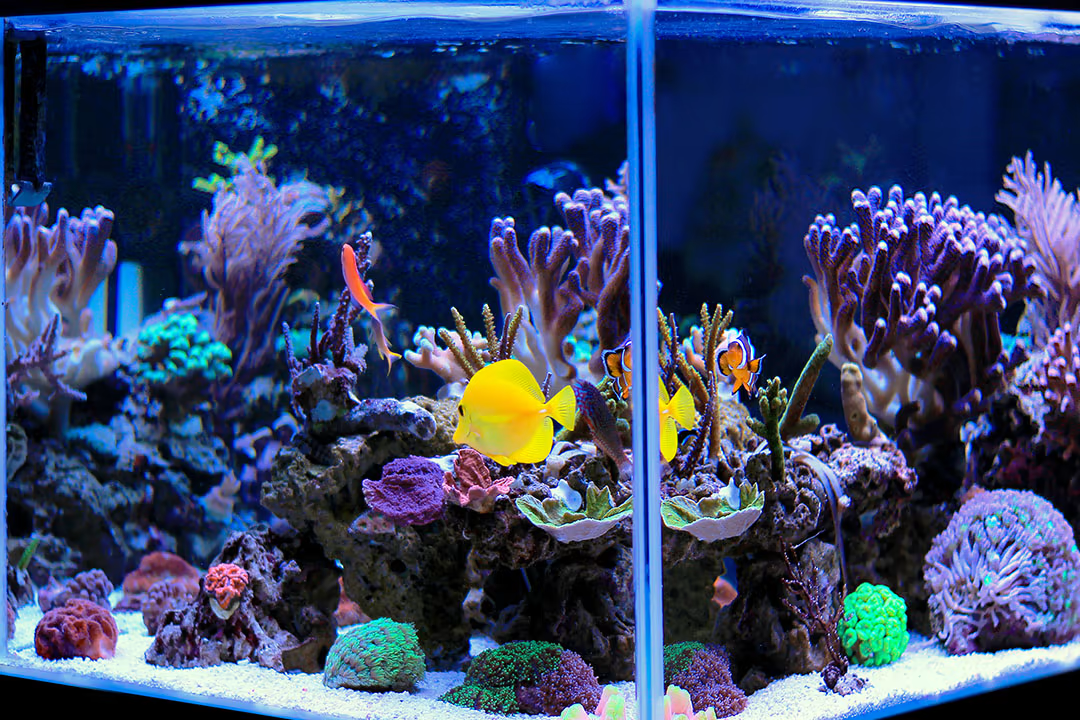
Build Your Thriving Saltwater Tank: Easy Setup for Marine Life
Learn how to set up a saltwater fish tank and key considerations regarding placement, supplies needed, and the overall set up process.
Updated on November 13th, 2025
- Home & Habitat
Your Guide to Healthy Freshwater Aquarium Plants & Thriving Fish
Learn how to pick the right aquarium plants, substrate, lighting, and fertilizers to ensure that your aquarium plants thrive and stay healthy.
Updated on November 13th, 2025
- New Pet
Mastering Soft Coral Care: Setup, Feeding, & Water for a Healthy Reef
Learn how to care for soft coral, recommended care & habitat setup. Find the right food, supplies & equipment at your neighborhood Petco.
Updated on November 13th, 2025
- New Pet
Master Small Marine Fish Care: Tank Setup, Food, & Compatibility Guide
Small Marine Fish are favorites with marine aquarists and includes a wide range of species.
Updated on November 13th, 2025
- New Pet
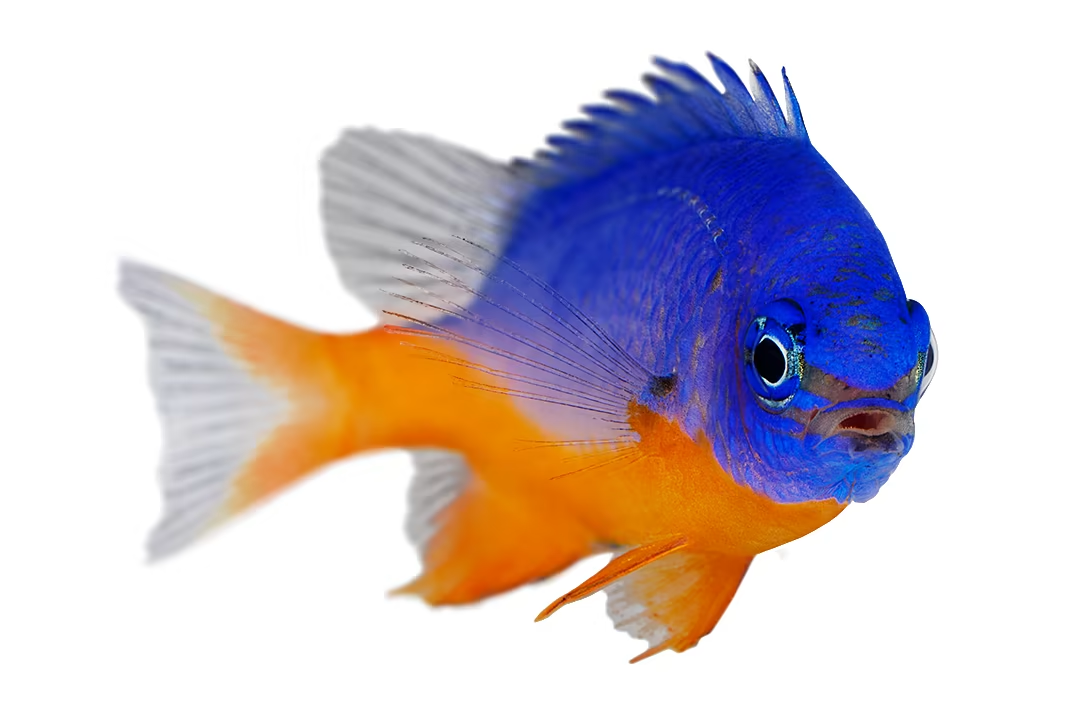
Damselfish Care: Expert Tips for a Thriving, Healthy Fish Tank
Learn how to care for a Damselfish, recommended diet and aquarium setup. Find Damselfish for sale, supplies and equipment at your neighborhood Petco.
Updated on November 13th, 2025
- Health & Wellbeing
I have 3 plattys 2 mollys 3 neon tetras and 2 catfish. I feed them worms and flakes once a day ( night time) and do a water change once a month. Is this good?
It depends on how big the tank is as well as the type of filter in use. Smaller tanks and more heavily stocked tanks will require more frequent water changes, about 20% every week or two. Check the chemistry (ammonia, nitrites, nitrates, pH) regularly. This will give you a better idea of when to perform tank maintenance. Tetras and platys are schooling fish and ideally, do better in groups of at least 5 or six.
Updated on August 12th, 2025
- Health & Wellbeing
Hi there! Having a few questions: i dont know what is happening, all of our fishes are always dieing. I would like a fish expert answer. What is happening to these blue fishes? On their skin there are multiple grey spots, and another fishes are getti
Check the water chemistry. The discoloration could be due to elevated ammonia levels which can cause "burns". Use a home test kit or submit a water sample for testing. The local Petco may do this for free or for a small fee. Aim for an absence (0 ppm) of ammonia and nitrites with nitrates at 20ppm or less. Perform partial water changes to stabilize chemistry and/or to improve water quality. Use only conditioned water that is temperature matched to prevent stress or shock. The Neons (blue fish) appear to be infected with Ich, a parasite. Treatment is possible with commercial products found in the local Petco. Follow label directions carefully. You will need to treat the entire tank until all traces are gone. Removing a lump from your fish on your own is never recommended. You can cause severe injury. Most broad spectrum antibiotics (Kanaplex, Maracyn, Maracyn 2, etc.) found in the aquarium section of the local Petco should help treat or prevent infection. Choose one and follow label d
Updated on August 12th, 2025
- Health & Wellbeing
I have a few problems in my cichlids tank currently. 1. There are these tiny white gnat like flying bugs coming out of the water? 2. Brown algae on the glass won’t go away! But I have snails and an eel so I don’t know what to use that won’t kill the
Those could be copepods. They are typically harmless and difficult to completely eradicate. On the good side, they are a sign of a healthy tank and are useful in eating decaying matter in the aquarium. The brown algae can be due to insufficient lighting or lighting periods. You can wipe down the glass and plants, perform a partial water change and increase lighting. It can take weeks to month to resolve. Use only aged or conditioned water that is temperature matched to prevent stress or shock. Confirm stable water chemistry and quality. Make sure the water temperature is correct as well. Too warm or too cold can cause stress. Look the Jack Dempsey over for signs of injury or infection. Ich, bacterial infection or fungal infection can cause the fish too twitch or shiver. Plain aquarium salt (NOT table salt or Epsom salt) dissolved at 1 tablespoon per 5 gallons of water is a great general tonic that can reduce stress, improve gill function, treat minor infection and aid in any recover
Updated on August 12th, 2025
- Health & Wellbeing
My koi are loosing scales and one of my goldfish has white bumps on it's head. What could it be?
This could be bacterial or parasitic infection. It is difficult to determine definitively since the image provided is not clear. Fish can be difficult to photograph. Basic care includes checking water quality and chemistry. This can be done using a home test kit or by submitting a water sample for testing. The local Petco may do this for free or for a small fee. There should be an absence of ammonia and nitrites with nitrates at 20-60 ppm. pH should be as close to 7 as possible, avoiding large swings. Koi can tolerate a wide range in temperature, but generally do best between 65 F and 75 F. Again, avoid large swings in temperature to prevent stress or shock. If necessary, a partial water change can be done to stabilize chemistry and/or improve water quality. If you have other koi, consider placing this one in a hospital tank to make treatment easier and to prevent spread if the condition is infectious. Plain aquarium salt (NOT table or Epsom salt) can be used to reduce stress, impro
Updated on August 12th, 2025
- Health & Wellbeing
My betta has been having a hard time swimming recently because it looks like she's developed a curved spine in the last few weeks. I've also noticed that her gills are inflamed,, she's gasping for air, and her eyes may be a bit bulged. The only probl
Recheck water chemistry to confirm 0 ppm ammonia and nitrites with nitrates at 20 ppm or less. A pH of 7 is fine and they can adjust to more acidic water as long as the change is gradual. Temperature should range between 78 F and 80 F. Plain aquarium salt (NOT table salt or epsom salt) can be used as a general tonic to reduce stress, improve gill function, treat minor infection and aid in recovery. Dissolve 1 teaspoon of salt per gallon of water in a cup or two of tank water and gently pour it into the tank. Perform partial water changes every couple of days to maintain water quality. Treat only the volume of water being replaced. Treat with aquarium salt for no more than 14 days then reassess the condition. An antibiotic, such as kanamycin or erythromycin, can be found in the aquarium section of the local Petco if the salt treatment doesn't help. Follow label directions carefully and remove the carbon filter insert during treatment if indicated.
Updated on August 12th, 2025