

Two Easy Ways to Start Earning Rewards!
Become a member today! Members-only pricing and offers, personalized care notifications, Vital Care points back on every purchase and more!
 Become a credit card member today!
Earn 2X Pals Rewards points at Petco
when you use Petco Pay!APPLY NOWLearn More About Petco Pay Benefits
Sera Aquarium Water Test Kits


Related Articles & Questions
- Home & Habitat
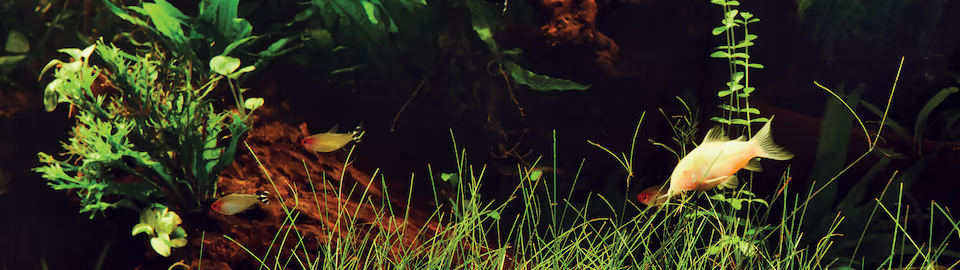
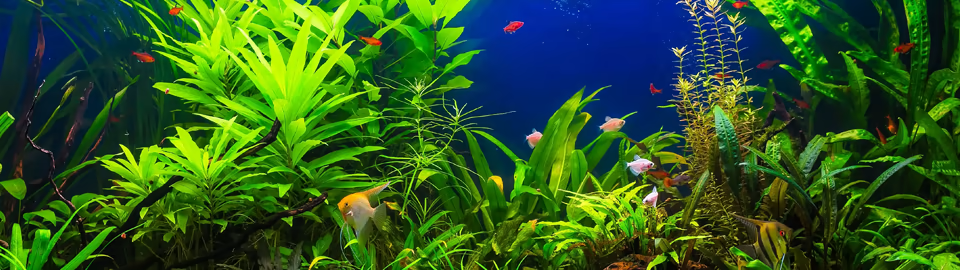
Your Guide to Healthy Freshwater Aquarium Plants & Thriving Fish
Learn how to pick the right aquarium plants, substrate, lighting, and fertilizers to ensure that your aquarium plants thrive and stay healthy.
Updated on October 23rd, 2025
- New Pet
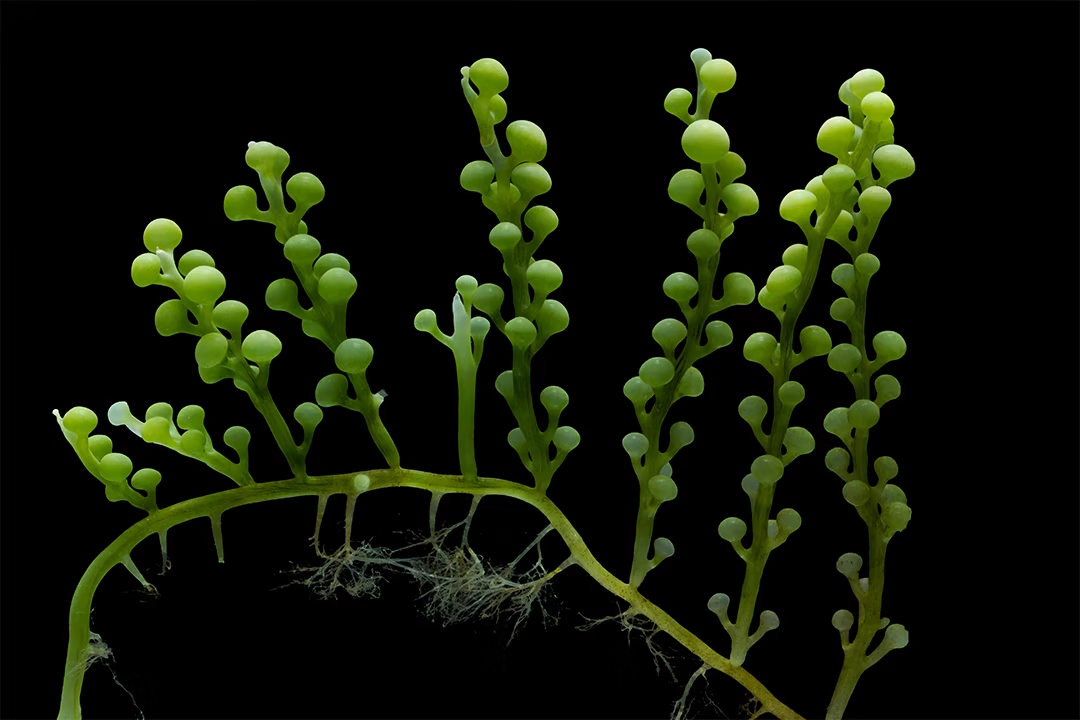
Marine Aquatic Plant and Macroalgae Care Sheet
Discover care tips for marine aquatic plant macroalgae & the benefits of having macroalgae in your tank! Learn aquarium requirements, propagation, and mating facts.
Updated on December 22nd, 2025
- Home & Habitat
Freshwater Aquarium Salt: Benefits & Safe Use for Thriving Fish
Learn how to use aquarium salt in freshwater aquariums to promote healthy gill functions, reduce stress, and treat infections in fish.
Updated on October 23rd, 2025
- New Pet
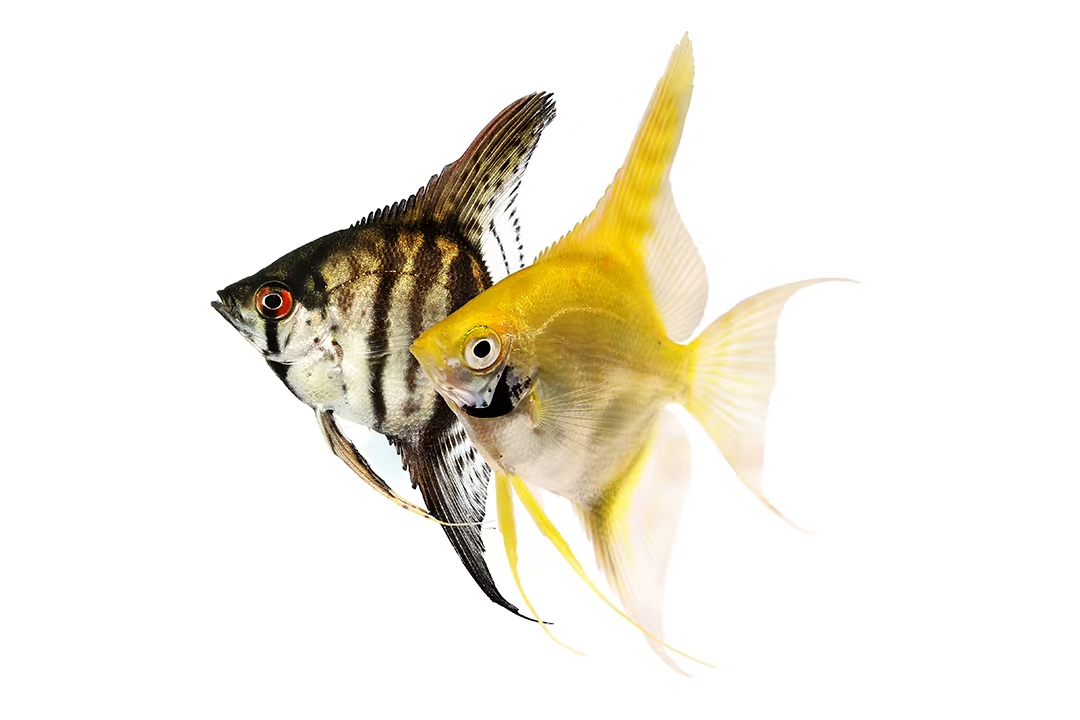
Freshwater Angelfish Care: Tank, Food, & Happy, Healthy Fish
Learn how to care for angelfish, recommended diet and aquarium setup. Find the right food, supplies and equipment at your neighborhood Petco.
Updated on October 23rd, 2025
- New Pet
How to Acclimate New Fish & Aquatic Life: Thriving Tank Guide
Acclimation helps your aquatic life adjust to the new chemistry of your tank, thereby helping ensure the health of your new addition.
Updated on October 23rd, 2025
- Health & Wellbeing
Is it necessary to test the Ph levels and all the other things for the fish tank water?
Yes, in order to have a healthy tank and to give your fish the best environment, it is necessary. Here is a good write-up on the reasons why: https://www.petcoach.co/article/water-chemistry-basics-ph-temperature-water-hardness-waste/
Updated on September 24th, 2025
- Health & Wellbeing
We have added fish to our newly set up aquarium twice now and both times the fish were dead or dying within 24 hours. The pH is at the proper level. The tank was filled with spring water. Why do our fish keep dying?
It is possible the tank has not cycled properly which results in high ammonia and nitrite levels which can kill fish. Allow the tank to run, without fish, for at least 4-6 weeks. During this time, use a home test kit or submit a water sample for testing every few days. The local Petco may do this for free or for a small fee. What you are looking for is to have ammonia and nitrites at 0 ppm and nitrates at 20ppm or less. pH can hover around 7 for most community fish. Avoid large, rapid swings in pH though. What is happening in the tank during this time is that beneficial bacteria are populating the gravel/substrate and the filter. These bacterial populations are responsible for the Nitrogen Cycle. This cycle breaks down wastes from fish, uneaten food and plant matter into by-products that are filtered out or dissipate. You can "cycle" a tank with fish, however this increases the risk of loss. Once your tank has cycled, you can add fish. You will still need to monitor water chemistry a
Updated on September 24th, 2025
- Health & Wellbeing
My rainbow albino shark is slow to grab the food...now it is a little bit inactive...is this a sign where in it is under nurish...?thank you for the reply already...bless you guys...
Unfortunately this is a very generic sign and a radical approach must be followed in these cases to find the problem. Begin by submitting a water sample for quality testing. Most pet stores will do this for free or a nominal fee. High ammonia levels, PH imbalances may be responsible for that. Oxygen concentration and quality of the filters should be determined as well. If water quality is good and there are no major imbalances, your Fishy should examined to look for any sign of bacterial/fungal infection and eventually water should be treated. Please do not hesitate to contact us again on the forum or by requesting a consultation if you have any more questions or to discuss it any further.
Updated on September 24th, 2025
- Health & Wellbeing
I have a emerald cory and it’s skin looks like it’s peeling. I am worried it’s some type of infection. It’s color also got considerably darker and is swimming sluggishly and haphazardly. What do you recommend?
Hi, and thanks for your question. Begin by submitting a water sample for quality testing. Most pet stores will do this for free or a nominal fee. Clinical examination should always include a water quality check, even if you have done so already. Water testing should be performed with a quality test kit, measuring NH4, NO2 and NO3. High ammonia levels, PH imbalances may be responsible for these signs. Oxygen concentration and quality of the filters should be determined as well. If water quality is good and there are no major imbalances, your fish should get examined to look for any sign of bacterial/fungal infection and eventually water should be treated. Hope this answer was helpful, but please do not hesitate to contact us again on the forum or by requesting a consultation if you have any more questions or to discuss it any further.
Updated on September 24th, 2025
- Health & Wellbeing
I have an angelfish and a red tail shark in a 15 gallon tank for about 4 days and they get along great. The angel fish has been almost swimming kind of lazy like almost floating and then will swim when off balance. And belly kinda looks swollen as we
Check the water chemistry and temperature. Use a home test kit or submit a water sample to test fro elevated ammonia or nitrite levels. Most pet stores will do this for free or for a small fee. Partial water changes can be done, if indicated, to stabilize chemistry and improve or maintain water quality. Ideally, you want 0 ppm ammonia and nitrites with nitrates at 20 ppm or less in a non-planted tank or 40 ppm or less in a planted tank. Use only aged or conditioned water that is temperature matched to prevent stress or shock. You'll need to keep the temp at the upper limits for Red Tails in order to keep the Angelfish comfortable. That would be in the 78F to 80 F range. Both have similar pH requirements, 6.8 to 7.5. You can fast the Angel for 2-3 days then feed bits of cooked, shelled green peas. This will usually resolve constipation and bloating. Pristine water quality may resolve the patch on your shark. Recommending a medication without more information or a clear image would be
Updated on September 24th, 2025