

Two Easy Ways to Start Earning Rewards!
Become a member today! Members-only pricing and offers, personalized care notifications, Vital Care points back on every purchase and more!
 Become a credit card member today!
Earn 2X Pals Rewards points at Petco
when you use Petco Pay!APPLY NOWLearn More About Petco Pay Benefits
Sera Aquarium Water Care
Get It Today


Related Articles & Questions
- New Pet
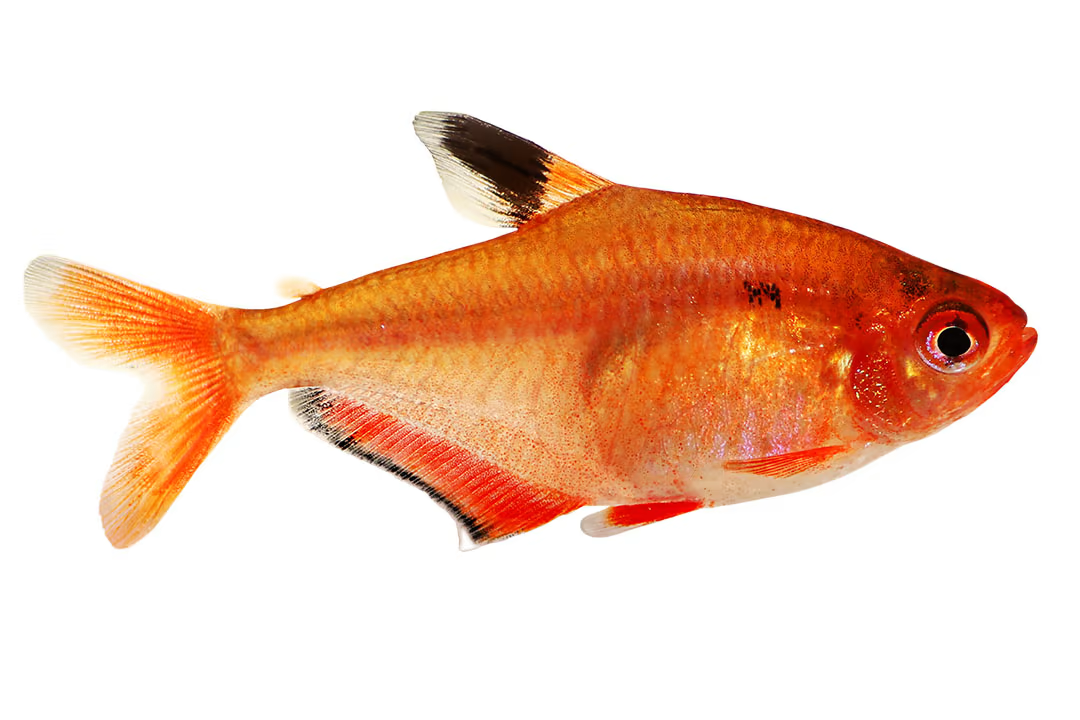
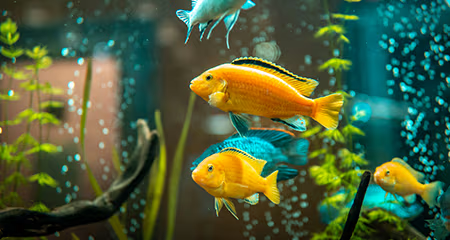
Freshwater Community Fish: Care, Setup & Compatibility Guide
Learn how to care for freshwater community fish, recommended diet & aquarium setup. Find the right food, supplies & equipment at your neighborhood Petco.
Updated on October 23rd, 2025
 Product Guides
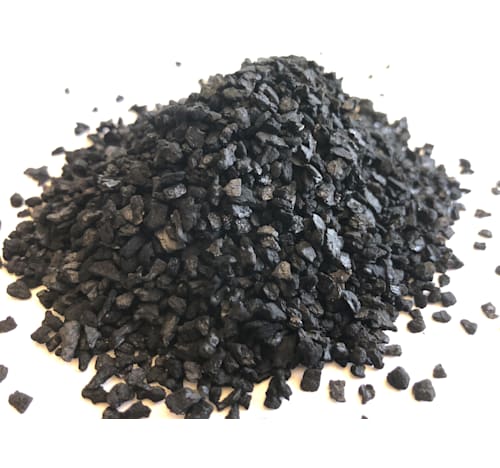
Activated Carbon for Aquariums: Get Crystal Clear Water & Healthy Fish
What is activated carbon and should you add it to your aquarium filter? Learn about activated carbon's uses, maintenance, and how to add it to your filter.
Updated on October 23rd, 2025
- New Pet
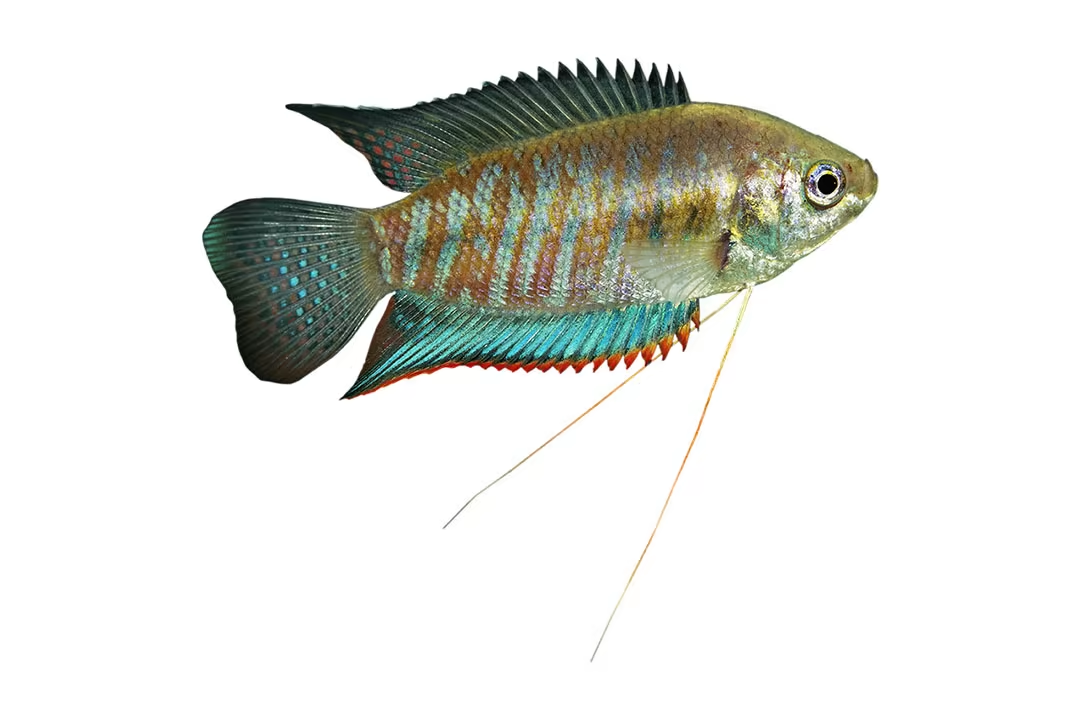
Paradise Fish Care: Complete Guide to Tank Size, Food, & Habitat Setup
Learn how to care for Paradise fish, recommended diet and aquarium setup. Find the right food, supplies and equipment at your neighborhood Petco.
Updated on October 23rd, 2025
- New Pet
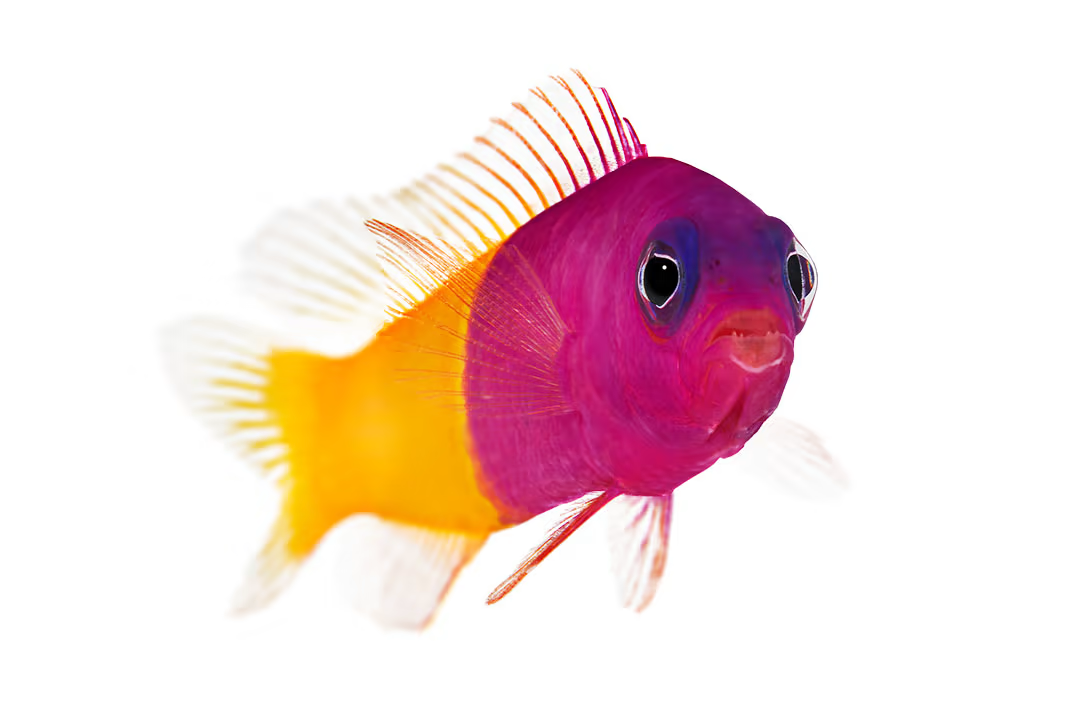
Master Small Marine Fish Care: Tank Setup, Food, & Compatibility Guide
Small Marine Fish are favorites with marine aquarists and includes a wide range of species.
Updated on October 23rd, 2025
- Home & Habitat
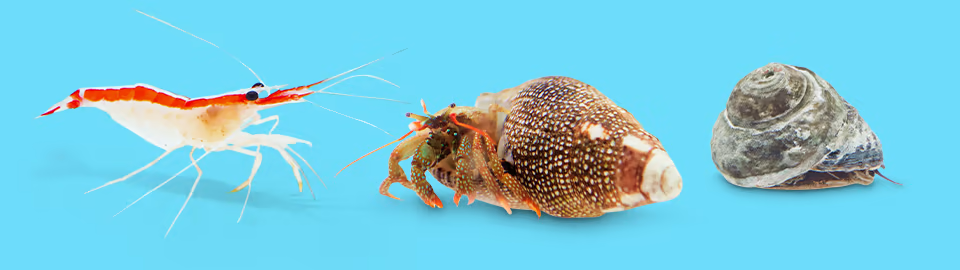
Saltwater Cleanup Crew: Banish Algae, Keep Your Tank Pristine
Visit Petco to learn about cleanup crews and how they can help your aquarium health.
Updated on October 23rd, 2025
- Health & Wellbeing
My koi are loosing scales and one of my goldfish has white bumps on it's head. What could it be?
This could be bacterial or parasitic infection. It is difficult to determine definitively since the image provided is not clear. Fish can be difficult to photograph. Basic care includes checking water quality and chemistry. This can be done using a home test kit or by submitting a water sample for testing. The local Petco may do this for free or for a small fee. There should be an absence of ammonia and nitrites with nitrates at 20-60 ppm. pH should be as close to 7 as possible, avoiding large swings. Koi can tolerate a wide range in temperature, but generally do best between 65 F and 75 F. Again, avoid large swings in temperature to prevent stress or shock. If necessary, a partial water change can be done to stabilize chemistry and/or improve water quality. If you have other koi, consider placing this one in a hospital tank to make treatment easier and to prevent spread if the condition is infectious. Plain aquarium salt (NOT table or Epsom salt) can be used to reduce stress, impro
Updated on September 24th, 2025
- Health & Wellbeing
I dont know if you are a tropical fish specialist. But there is something going on in my tank and need help diagnosing it. My corydora has two raised growths ..one at the base of its fin. And one under the eye. My pleco seems a bit tattered too. A li
Thanks for reaching out about your aquarium and including photos. Did you test your water quality prior to the water change? Continue to test for pH, ammonia, nitrites and nitrates. Pristine water quality is needed for health. Are any of the fish new, that could have introduced parasites? Itching/flashing can be due to water quality, external parasites, bacterial or viral infections and other causes. The white lesions on the photo could be fungal infections. A skin scrape and examination under the microscope (at a veterinarian's office) is needed for an attempt to determine a cause. Fungal infections are often secondary problems, so check water quality first. Good luck.
Updated on September 24th, 2025
- Health & Wellbeing
My fish is laying down at the bottom of the tank.
If persistent this is a very concerning but generic sign, which requires a logic but quite radical approach. Begin by submitting a water sample for quality testing. Most pet stores will do this for free or a nominal fee. High ammonia levels, PH imbalances may be responsible for that. Oxygen concentration and quality of the filters should be determined as well. If water quality is good and there are no major imbalances, your fish should get examined to look for any sign of bacterial/fungal infection and eventually water should be treated. Hope this answer was helpful, but please do not hesitate to contact us again on the forum or by requesting a consultation if you have any more questions or to discuss it any further.
Updated on September 24th, 2025
- Health & Wellbeing
What’s the difference between reptile water conditioner and any other kind of water conditioner life fish
Reptile water conditioner usually contains chemicals such as Water, Dechloraminating Agents, Synthetic Organic Polymers (Colloids), Chelating Agents, Electrolytes. The reptile conditioner usually also has a chemical that binds calcium in the water as well as a slime protecting agent that is good for amphibians and fish. Aquarium water conditioners (for fresh water fish) contains chemicals such as sulfates such as sodium thiosulfate. Thiosulfate is a Redox reducing agent. Either should be ok for reptiles or fish, however I would stick with reptile conditioner for reptile tanks or mixed (reptile and fish) tanks and for aquaria with fish only I would use specific aquarium water conditioner. The main reason to use a water conditioner is to remove chlorine in water. This, however, can also be attained by leaving the aquarium water fresh from the tap sitting over night. The chlorine will dissipate.
Updated on September 24th, 2025
- Health & Wellbeing
We have added fish to our newly set up aquarium twice now and both times the fish were dead or dying within 24 hours. The pH is at the proper level. The tank was filled with spring water. Why do our fish keep dying?
It is possible the tank has not cycled properly which results in high ammonia and nitrite levels which can kill fish. Allow the tank to run, without fish, for at least 4-6 weeks. During this time, use a home test kit or submit a water sample for testing every few days. The local Petco may do this for free or for a small fee. What you are looking for is to have ammonia and nitrites at 0 ppm and nitrates at 20ppm or less. pH can hover around 7 for most community fish. Avoid large, rapid swings in pH though. What is happening in the tank during this time is that beneficial bacteria are populating the gravel/substrate and the filter. These bacterial populations are responsible for the Nitrogen Cycle. This cycle breaks down wastes from fish, uneaten food and plant matter into by-products that are filtered out or dissipate. You can "cycle" a tank with fish, however this increases the risk of loss. Once your tank has cycled, you can add fish. You will still need to monitor water chemistry a
Updated on September 24th, 2025