Two Easy Ways to Start Earning Rewards!
Become a member today! Members-only pricing and offers, personalized care notifications, Vital Care points back on every purchase and more!
 Become a credit card member today!
Earn 2X Pals Rewards points at Petco
when you use Petco Pay!APPLY NOWLearn More About Petco Pay Benefits
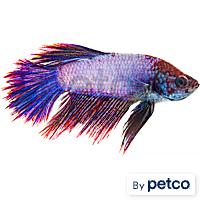
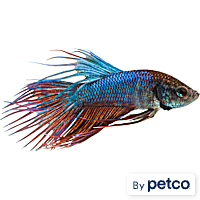
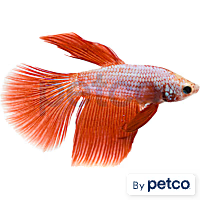
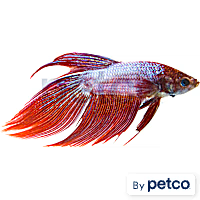
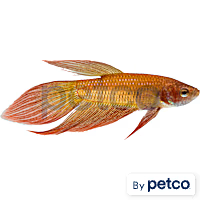
Imagitarium Bettas


Related Articles & Questions
- Care Sheets
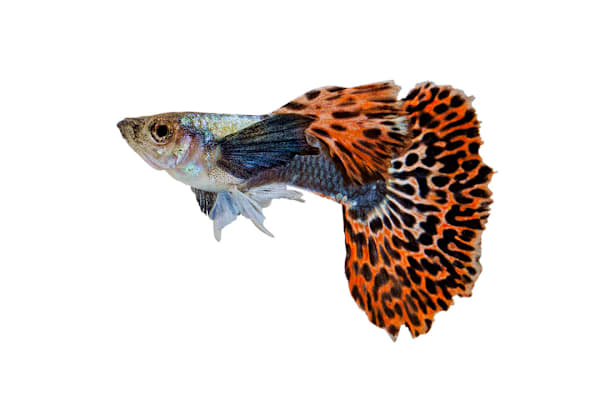
Beginner's Guide: Freshwater Livebearer Tank Setup, Food & Happy Fish
Learn how to care for freshwater livebearers, recommended diet & aquarium setup. Find the right food, supplies & equipment at your neighborhood Petco.
Updated on April 9th, 2026
- Care Sheets
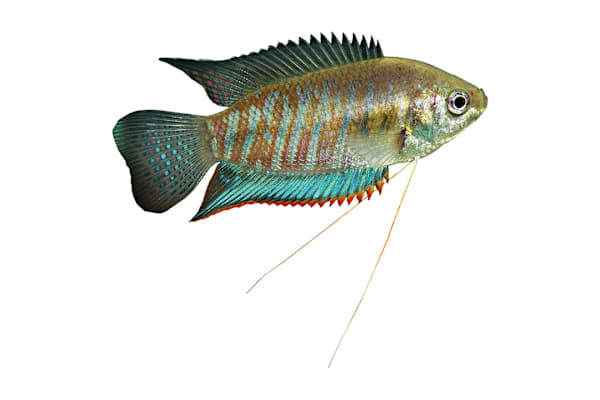
Paradise Fish Care: Complete Guide to Tank Size, Food, & Habitat Setup
Learn how to care for Paradise fish, recommended diet and aquarium setup. Find the right food, supplies and equipment at your neighborhood Petco.
Updated on April 9th, 2026
 Care Sheets
Aquatic Pet Owners: Stop Invasive Species, Save Our Waterways
Read about Habitattitude and Petco's commitment to protect our environment. At Petco, animals always come first. Learn how you can help.
Updated on October 23rd, 2025
- Care Sheets
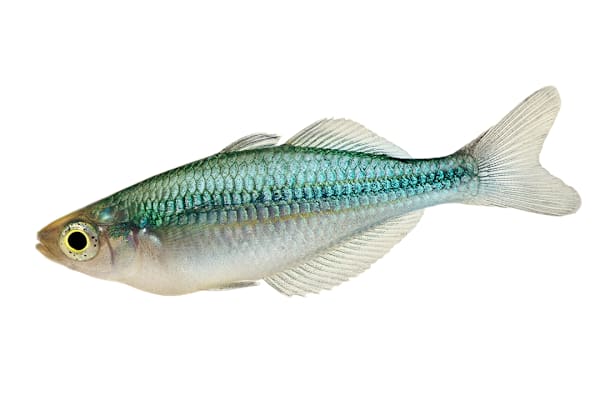
Rainbow Fish Care: Tank, Food, & Compatibility for Thriving Pets
Learn how to care for Rainbow fish, recommended diet and aquarium setup. Find the right food, supplies and equipment at your neighborhood Petco.
Updated on April 9th, 2026
- Care Sheets
Marimo Moss Ball Care: Easy Guide to Thriving in Your Aquarium
Do you want to know how to take care of Marimo moss balls? Visit Petco to learn everything about Marimo balls care.
Updated on October 23rd, 2025
- Vet Q & A
What fish are best for a 3-gallon tank? Can bettas have tank mates?
Hi Tori, I have found that fancy guppies are pretty, fun, and small fish that would do well in a small tank. Mollies would be another good choice. A 3 gallon could probably support 3 or 4 of them well. Beta fish don't seem to care much about snails in My experience. Have fun!
Updated on September 24th, 2025
- Vet Q & A
First fish tank: What Tetras and supplies for my 12-inch tank?
Before you buy any fish, you will need to set up the tank. A basic set up includes: a tank, filter, hood/light, heater, gravel and some decor. The tank should run without fish for at least 4 to 6 weeks. This gives it time to cycle. The Nitrogen Cycle is critical to the health of the tank and any fish you will be keeping. During this time, beneficial bacterial will populate the filter and substrate (gravel). These bacteria will be responsible for breaking down fish wastes and other wastes (uneaten food, dead plants, etc.). You will need a home test kit to monitor water chemistry (ammonia, nitrites, nitrates, pH) or you will have to submit water samples for testing. Most pet stores will do this for free or for a small fee. At first, you will see high levels of ammonia and nitrites. Over time, as bacteria grow, these levels will drop. When ammonia and nitrites are at 0 ppm and nitrates are below 20 ppm, you can consider adding fish. Regular (every 1 or 2 weeks) partial water changes as well as filter changes will be needed to maintain stable water chemistry and adequate water quality. The size of your tank will determine what fish and how many you will be able to keep. Most Tetras do best in groups, so a 12 inch tank may not be large enough. There are several article in the Petco Pet Education Center, formerly Petcoach Library that will provide more detailed information. Click on "Educational Center" at the top of the page, then scroll down to "Articles" and click. Use the Search Bar to find articles regarding aquarium set up and fish keeping.
Updated on September 24th, 2025
- Food & Nutrition
Why is my betta fish at the bottom, barely moving, and breathing hard?
The first thing that needs to be done is a water quality analysis. If you don't have a test kit, most pet stores sell a basic test kit that measures pH, ammonia, nitrite and nitrate. If any of those are amiss, correct that problem. Laying on the bottom of the tank is often a sign of swim bladder disease. This could be an infection, fluid accumulation or a mass pressing on the swim bladder. All of these create a situation where the swim bladder can not contain air, that allows them to control their buoyancy in the water column. The best treatment for this is seek assistance at a veterinary clinic with experience with fish, and have systemic antibiotics prescribed. A radiographs would be helpful in diagnosis. A good fish veterinarian would probably be able to aspirate the swim bladder and collect a sample for diagnosis. The majority of antibiotics available for fish over-the-counter are not good for internal infections and could possibly make things worse. Good luck.
Updated on September 24th, 2025
- Vet Q & A
Why are my new betta fish dying so fast after bringing them home?
As long as you are properly setting up the environment for your new fish, not stressing him out too much, and making sure he is happy and healthy, he shouldn't pass away at a certain time of day. A google search can give you a myriad of information about how to care for your betta, however most do best in an actual tank with a proper filter and heater to keep things warm and fresh, a lid to keep active bettas from jumping out and becoming injured, and for males, no other bettas or aggressive fish in the tank. If you're unsure if your tank environment is safe, most pet stores will test water samples for free and point you in the direction of any changes you need to make.
Updated on September 24th, 2025
- Vet Q & A
What fish are suitable for a 2.5 gallon bowl, and is it humane?
It's not really recommended to keep fish in bowls with no filtration. And 2.5 gallons isn't really big enough for much. A Beta fish may possibly do ok in it if you can maintain it. But I would recommend more doing plants and a few snails or ghost shrimp type of animals in a bowl that size.
Updated on September 24th, 2025