Two Easy Ways to Start Earning Rewards!
Earn 2X Pals Rewards points at Petco
when you use Petco Pay!
Get It Today
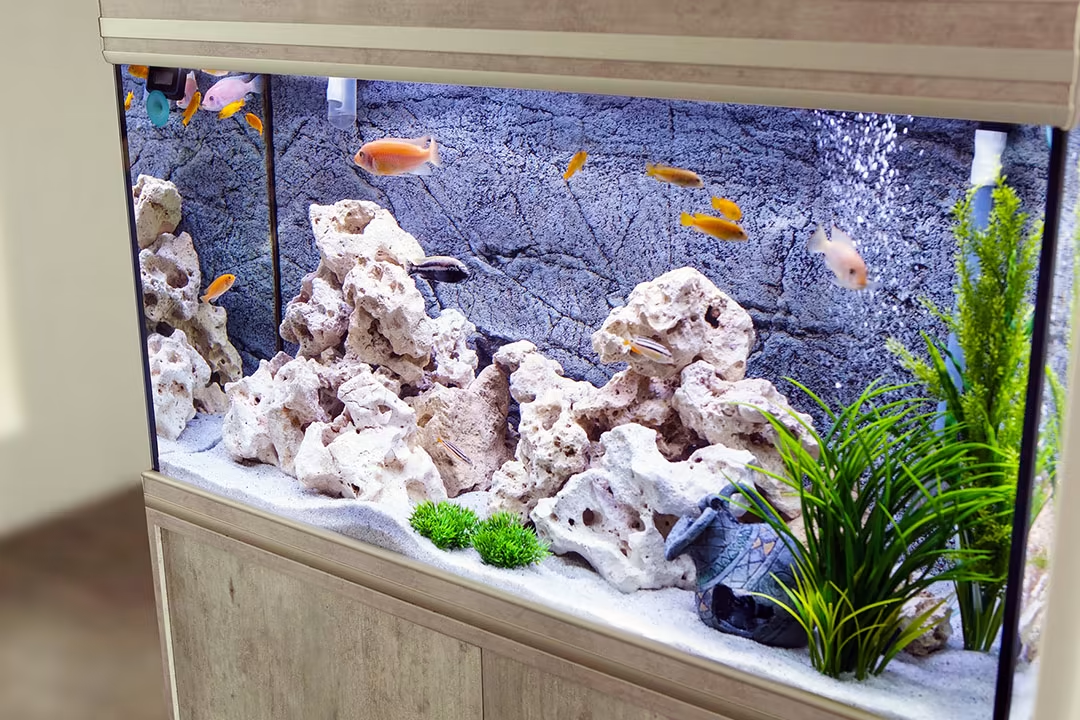
Learn how to test your aquarium water. Poor water quality stresses fish, which leaves them susceptible to disease and possibly death.
Updated on November 13th, 2025
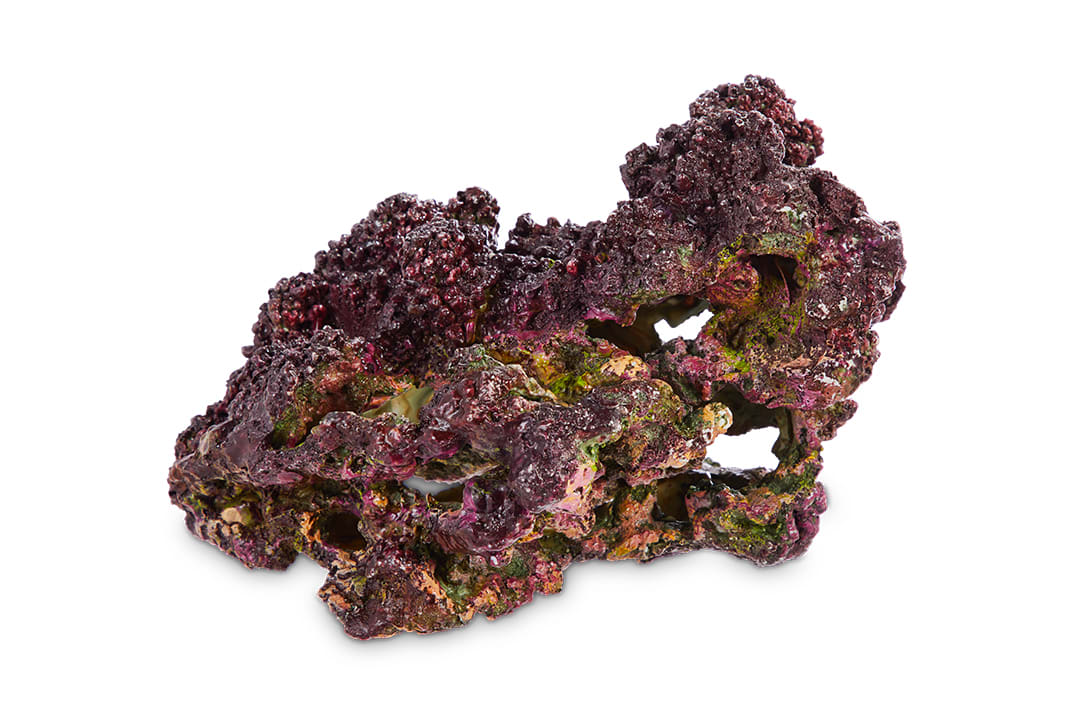
Learn how to care for live rock & sand. Live rock serves as a platform for coral and invertebrates and provides a surface for beneficial bacteria to live.
Updated on November 13th, 2025
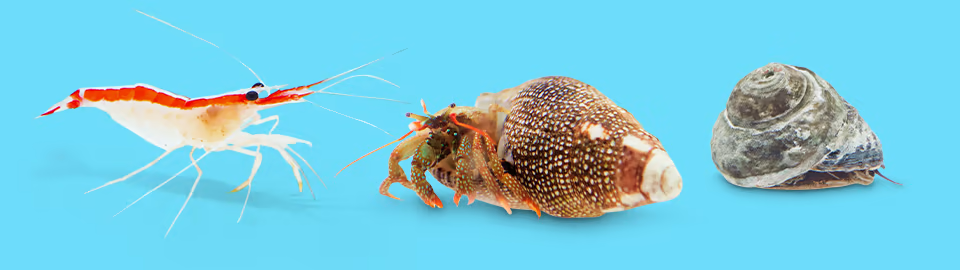
Visit Petco to learn about cleanup crews and how they can help your aquarium health.
Updated on November 13th, 2025
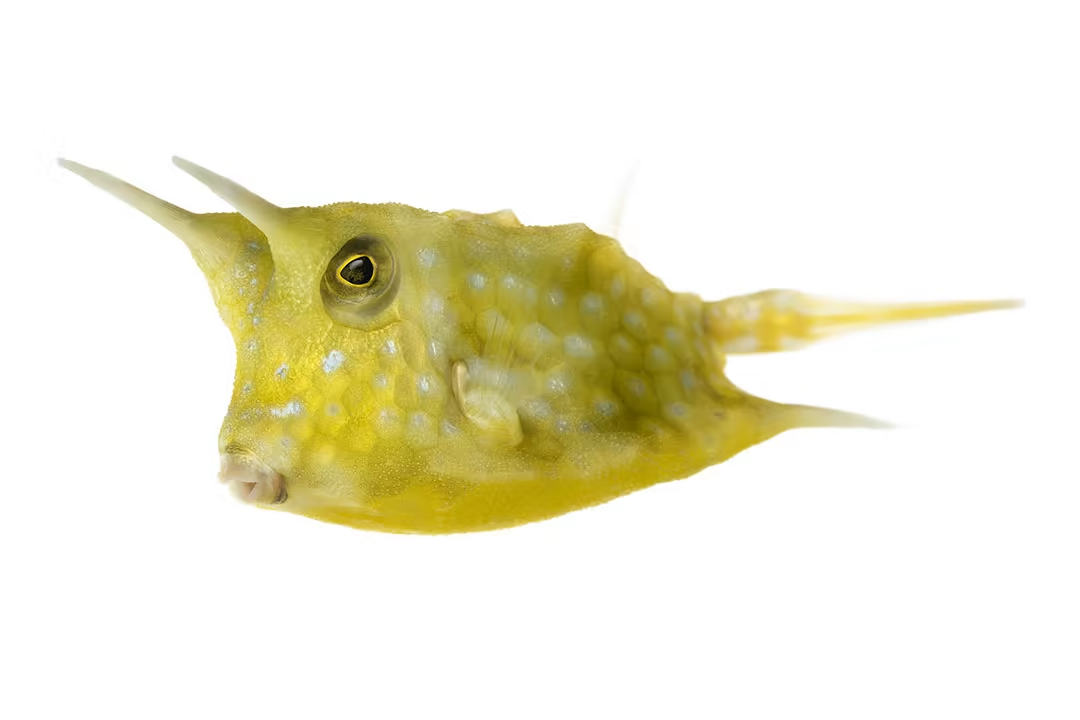
Learn how to care for Boxfish & Cowfish, recommended diet and aquarium setup. Find the right food, supplies and equipment at your neighborhood Petco.
Updated on November 13th, 2025
Wondering why you may need CO2 in your fish aquarium? Learn the basics from a Petco aquatics specialist.
Updated on November 13th, 2025
Check water chemistry first. Use a home test kit or submit a water sample for testing. The local Petco may do this for free or for a small fee. Aim for an absence ( 0 ppm) of ammonia and nitrites with nitrates at 20 ppm or less. Perform partial water changes, no more than 30% at a time, to stabilize chemistry and/or to improve water quality. Use only conditioned water that is temperature matched to prevent stress or shock. Check water temp as well. Any of these can drive a fish to the surface. The "flashing" (darting about) can be due to infection (bacterial, fungal or parasites). Consider a broad spectrum antibiotic or an "all in one" product to treat multiple infections. Look in the Aquarium section of the local Petco for options. Follow label directions carefully and remove the carbon filter insert during treatment if indicated.
Updated on August 12th, 2025
Thanks for reaching out. There are many products available in pet stores for either adjusting pH up or down. Adding a buffer as a substrate (dolomite) could help regulate also. Maintaining water quality is obviously very important. Good luck.
Updated on August 12th, 2025
Consider a broad spectrum treatment such as General Cure by API or Parasite Clear by Jungle Labs. Follow label directions. Plain aquarium salt (NOT table salt) can be used concurrently to aid in healing and to treat minor infection and fin rot. Dissolve up to one tablespoon per gallon of water into a cup of tank water and gently pour it into the tank. Test water chemistry using a home test kit or submitting a water sample. Most pet or fish stores will do this for free or for a nominal fee. Correct any imbalances using aged or conditioned water that is temperature matched to prevent further stress or shock. Use a conditioner such as StressCoat as well. Confirm adequate filtration to maintain water quality.
Updated on August 12th, 2025
Water conditioning can be complicated and I recommend to stop by your local aquarium store. They are most often familiar with the local water quality and can give recommendations specific to your location. Some areas need buffering solutions to help control things like the water pH. Here are a few links which may help answer some of your questions about water condition: https://www.aqueon.com/articles/freshwater-aquarium-water-quality https://www.petcoach.co/article/aquarium-water-management-alkalinity-vs-water-hardness/ Before moving your goldfish, make sure all the conditions are appropriate for goldfish: https://www.aqueon.com/information/care-sheets/goldfish https://www.petcoach.co/article/how-to-help-your-new-goldfish-thrive/ I hope this helps and please feel free to post any additional questions.
Updated on August 12th, 2025
Anytime there is an unexpected loss of fish, water chemistry should be checked. Use a home test kit ( https://www.petco.com/shop/en/petcostore/product/api-freshwater-master-test-kit# ) or submit a water sample for testing. Most pet stores will do this for free or for a small fee. Confirm an absence ( 0 ppm ) of ammonia and nitrites with a nitrate level of 20 ppm. pH can range between 6.5 and 8, water temp should be 65 F to 75 F. If chemistry and water quality are within normal parameters, then illness or aggression would be other reasons for the loss. It is always recommended to quarantine fish in a separate tank for 2-4 weeks prior to adding them to the main tank. During this time, they can be treating for infection or parasites. I am sorry for the loss of your fish.
Updated on August 12th, 2025