Two Easy Ways to Start Earning Rewards!
Become a member today! Members-only pricing and offers, personalized care notifications, Vital Care points back on every purchase and more!
 Become a credit card member today!
Earn 2X Pals Rewards points at Petco
when you use Petco Pay!APPLY NOWLearn More About Petco Pay Benefits
Exo-Terra Frog Tanks & Terrariums



Related Articles & Questions
- Care Sheets
Master Terrestrial Frog Care: Habitat, Diet & Health Secrets
Learn how to care for small Terrestrial Frogs, recommended diet and habitat setup. Find the right food, supplies and equipment at your neighborhood Petco.
Updated on April 9th, 2026
- Care Sheets
Freshwater Amphibian Care: Ultimate Tank, Food & Habitat Guide
Learn how to care for Freshwater Amphibians, recommended diet and habitat setup. Find the right food, supplies and equipment at your neighborhood Petco.
Updated on April 9th, 2026
- Care Sheets
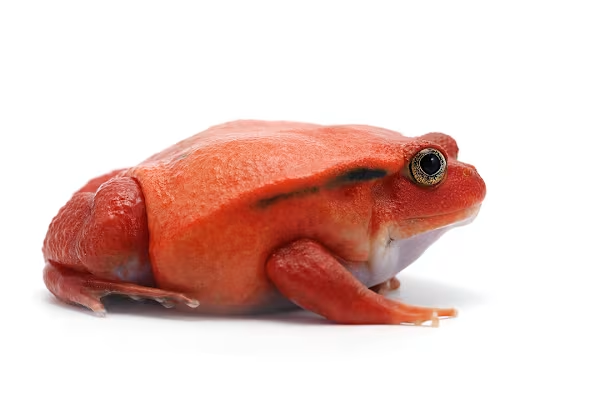
Tomato Frog Care: Ultimate Guide to Habitat, Food & Health Success
Learn how to take care of your Tomato Frog, tank size, diet & habitat setup. Find the right food, supplies and equipment at your neighborhood Petco.
Updated on April 9th, 2026
- Care Sheets
Amphibian Safety: Essential Tips for Healthy Handling & Care
Learn how to safely handle your pet amphibian to avoid toxin & bacterial exposure. Find amphibian care supplies at your neighborhood Petco pet care center.
Updated on October 23rd, 2025
- Care Sheets
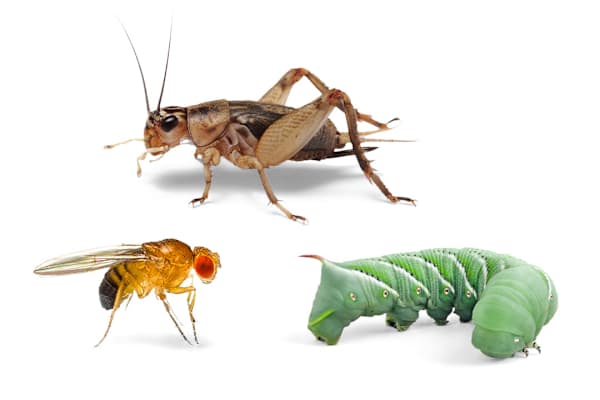
Reptile Feeding: Live Insect Selection & Care for Optimal Health
Learn about live insects for reptile feeding, recommended diet & habitat setup. Find the right food, supplies & equipment at your neighborhood Petco.
Updated on April 9th, 2026
- Health & Wellness
My horned frog has red leg. What are the recommended treatment options?
Thanks for reaching out about Fray. Red leg is typically caused by a bacterial infection, Aeromonas hydrophila andis secondary to other concerns. Water quality and husbandry need to be reviewed and corrected. A veterinary visit is recommended to assist with the prescription of antibiotics needed to treat. Nothing over the counter will treat this, no matter what the advertisement. Good luck.
Updated on September 24th, 2025
- Health & Wellness
My pet frog won't eat. Is it hibernating? Can I release it outside?
Releasing it would not be recommended and in some locations, may be illegal. You can continue to feed nightcrawlers in addition to commercial frog pellets, brine shrimp, blood worms and small insect prey (nothing wild caught). Frogs are very sensitive to water quality and environmental parameters. Low temps can affect activity and appetite in amphibians and reptiles as can poor water quality. If you can provide the species of frog or an image, we can provide more comprehensive advice.
Updated on September 24th, 2025
- Home & Habitat
Is my bearded dragon's tank setup good for their health and safety?
Thanks for your question about Smaug, and thanks for the photo as well! I think that you have a good start to your set up, and that we can tweak a few items. First, your lighting situation appears adequate - I see a UVB light (please change this bulb every 4-6 months), a basking light, and a ceramic heat bulb. I would ensure that your temperatures are appropriate for this species, and that you are monitoring them using digital thermometers (I think that you see both a digital and analog thermometers currently) at the level of Smaug. Analog thermometers are inaccurate, so I don't recommend using them (also, they are high up on the sides of the enclosure, so they wouldn't be giving an accurate temperature read for Smaug). For the cage furniture that you have, I like that you have places for Smaug to climb and hide. However, I would recommend having a hide on both the warm side of the enclosure and the cool side so that Smaug has choices. Same for the climbing structures. I may have missed a food and water dish in the enclosure - I would recommend that both of these be shallow, and be large enough for Smaug's entire body to fit within them. I cannot tell what type of shavings that you have on the bottom of the enclosure, but the only wood shavings that I recommend are aspen shavings. If they are pine, these can be irritating to the respiratory system. I hope that gives you a place to start, and thanks for using Petco Pet Education Center, formerly Petcoach!
Updated on September 24th, 2025
- Training & Behavior
How to calm my male toad after new bedding and keep bowl clean?
Thanks for reaching out about Q'Bert. Is there a visual blind between him and the female? If he can not see her, that might calm him down. Coconut fiver is not a normal substrate but is commonly used. It should be changed regularly to avoid fungal and bacterial overgrowth. Frogs can release pheromones, so separation of the male and female might require more distance. Good luck.
Updated on September 24th, 2025
- Home & Habitat
Overhead vs. under tank heating: What's best for my reptile?
Thanks for reaching out. Heat rocks are bad. One recommendation is to utilize under tank heat as the background heat source, keeping the environment at 70-75 F 24-hours a day, then an overheat lamp can be set up as a timer to turn on for 12-14 hours/day and raise the day time heat to the appropriate level. Timers work great for the UVB bulb and extra heat. Good luck.
Updated on September 24th, 2025