

Two Easy Ways to Start Earning Rewards!
Become a member today! Members-only pricing and offers, personalized care notifications, Vital Care points back on every purchase and more!
 Become a credit card member today!
Earn 2X Pals Rewards points at Petco
when you use Petco Pay!APPLY NOWLearn More About Petco Pay Benefits
Arcadia Reptile
Get It Today


Related Articles & Questions
- New Pet
Clean & Disinfect Your Reptile Cage: Keep Your Herp Healthy!
Regular cleaning and disinfecting of your pet's cage and accessories is one of the keys to keeping your reptile healthy. Learn how often you should clean your cage.
Updated on November 13th, 2025
 Health & Wellbeing
Reptile Power Outage: Protect Your Pet, Keep Them Warm & Safe
A few ideas to use to get your pet safely through a power outage, regardless of the time of year.
Updated on November 13th, 2025
- Seasonal Topics
How to Keep Your Reptiles Cool in Emergencies and Excessive Heat
Whether you temporarily lose access to AC or are experiencing unexpected temperature changes, you can use these tips to keep your reptiles happy and healthy.
Updated on November 13th, 2025
- New Pet
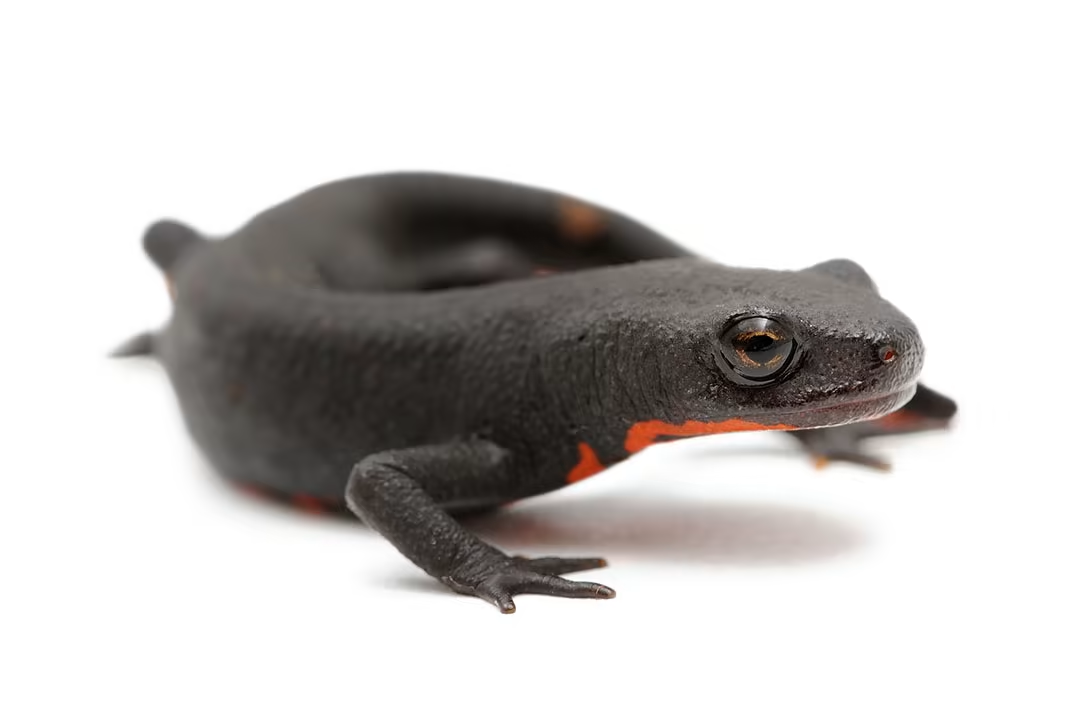
Mastering Pet Salamander & Newt Care: Food, Habitat, Health Guide
Learn How to Care for a Salamander & Newts, recommended diet and habitat setup. Find the right food, supplies and equipment at your neighborhood Petco.
Updated on November 13th, 2025
- New Pet
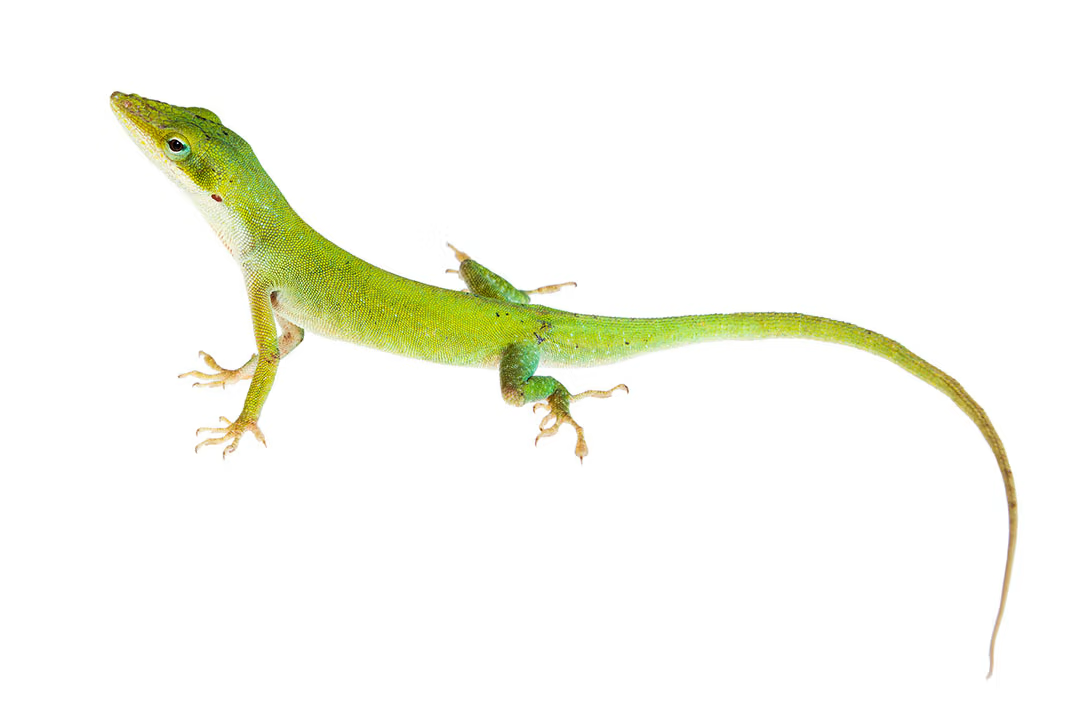
Green & Bahama Anole Care: Your Guide to Habitat, Food & Health
Learn how to take care of Green & Bahama Anoles, recommended diet and tank size. Find the right food, supplies and equipment at your neighborhood Petco.
Updated on November 13th, 2025
- Health & Wellbeing
He isnt eating well and hasnt had the appetite he used to for a long time also he had some nose rub im wondering what could be wrong if its his enclosure or him being stressed from being close to my chameleon or something i need to take him to the ve
Use a background to block his view. This may prevent glass surfing or nose rubbing as well as provide more privacy/security. Again, check the temps in his enclosure to make sure it is species appropriate. Offer a variety of crickets, mealworms, dubia roaches, silkworms and wax worms. Gut load prey for 24 hours prior to offering. Dust appropriately with vitamins and minerals regularly. He may also benefit from a soak in a warm 50/50 solution of water and unflavored PediaLyte. If his appetite does not return after adjustments to environment and diet, have him examined by your veterinarian or a vet experienced in treating reptiles. Submit a stool sample to diagnose intestinal parasites or bacterial overgrowth.
Updated on August 12th, 2025
- Health & Wellbeing
Hi! I was wondering what reptile/amphibian/insect/arachnid I can keep in a medium eco terra faunarium? (Roughly 7.5 x 12 inches)
It is too small to be used for much beyond transport, quarantine or temporary housing (i.e. during cleaning of main enclosure). The plastic construction does not allow for light or heat sources which most reptiles or exotic pets require.
Updated on August 12th, 2025
- Health & Wellbeing
I just want to know if my tank looks ok and if I might need anything else. P.S. the temperature isn't as high because I just connected the lights because I was cleaning the tank. The grass is fake btw
Ideally, the UVB light source should run the entire length of the tank. A thermometer/hygrometer should be on each end of the tank to confirm cool and warm sides. Use a digital thermometer to verify temps. Those little ones you have can be inaccurate. Provide a hide on both sides as well. Personally, I would remove the fake grass as it has the potential to cause eye injuries. Your tank looks good otherwise.
Updated on August 12th, 2025
- New Pet
I rescued (was abandoned to die) a turtle (or tortoise) about a month ago. I would like to have her (or him) checked and to get some guidance to learn how to take care of properly. Does Pecto has Vets that are reptiles specialists?
A better option would be to use the link below to find a veterinarian experienced in treating reptiles. https://arav.site-ym.com/search/custom.asp?id=3661 In the meantime, change out the rocks for something "softer", such as a soil/most mix. Rocks can cause tiny scrapes on the shell which can introduce infection. Use a thermometer in the basking spot to make sure temps don't get too high. A thermometer on the other end would be recommended to make sure temps aren't too low. Offer a commercial pelleted diet along with fresh greens and vegetables.
Updated on August 12th, 2025
- Food & Nutrition
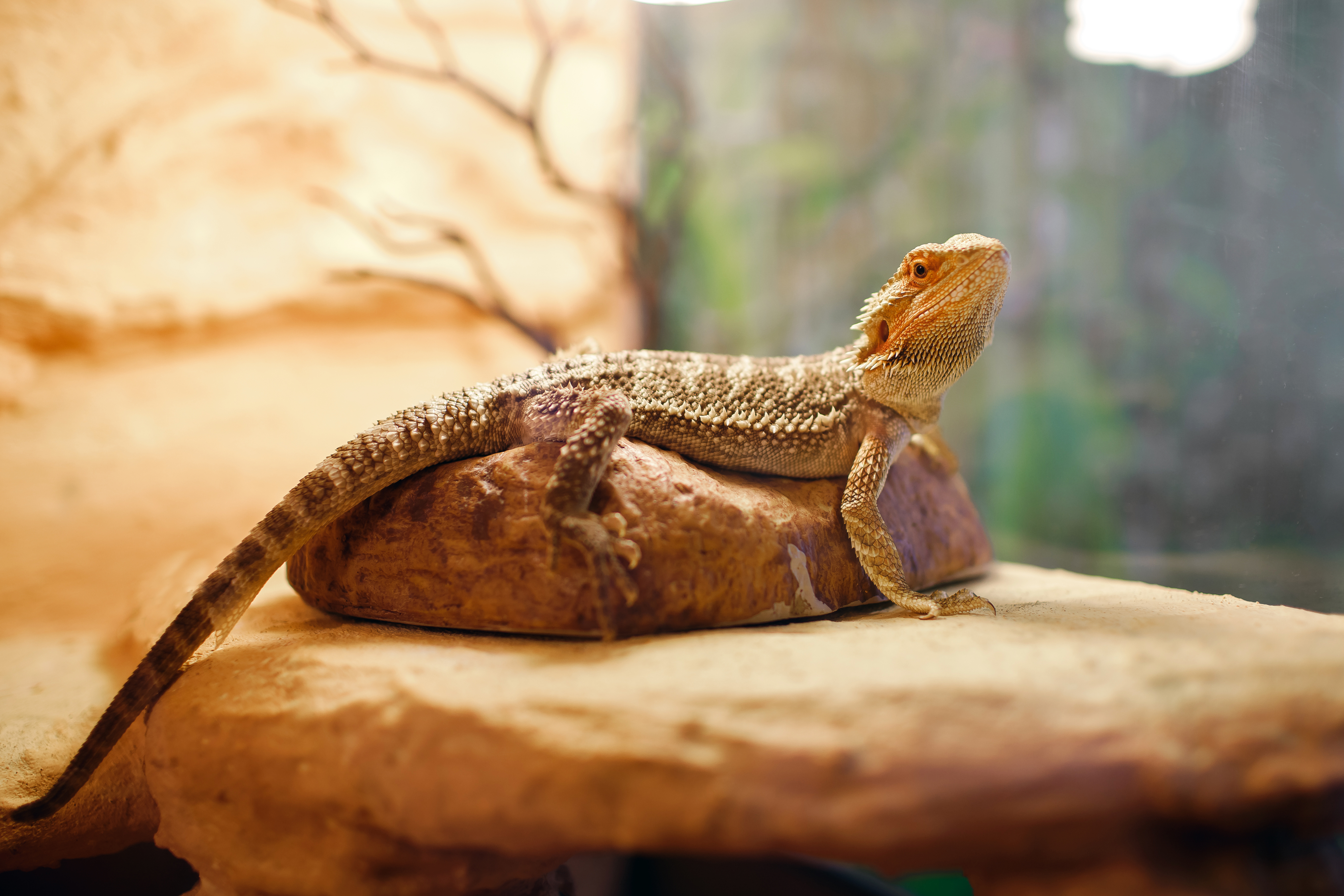
Hi! We recently got a juvenile bearded dragon and I just want to make sure i’m doing enough for them. unsure of age or sex. Attached are photos of the dimensions of their enclosure, as well as the description of the bulb we are using. I leave a bowl
Congratulations on your new addition! The tank is sufficient for a juvenile, however you will likely need a larger one when Sonora is fully grown. Make sure Sonora can get into and out of the bowl easily to prevent drowning. Place thermometers in the enclosure to monitor temperature. You will need 3. One at the cool side, one on the warm side and one for the basking spot. Hygrometers can also be used to monitor humidity. You can review care information at the link below. http://www.anapsid.org/bearded.html
Updated on August 12th, 2025