

Two Easy Ways to Start Earning Rewards!
Become a member today! Members-only pricing and offers, personalized care notifications, Vital Care points back on every purchase and more!
 Become a credit card member today!
Earn 2X Pals Rewards points at Petco
when you use Petco Pay!APPLY NOWLearn More About Petco Pay Benefits
Arcadia Reptile Reptile
Get It Today


Related Articles & Questions
- New Pet
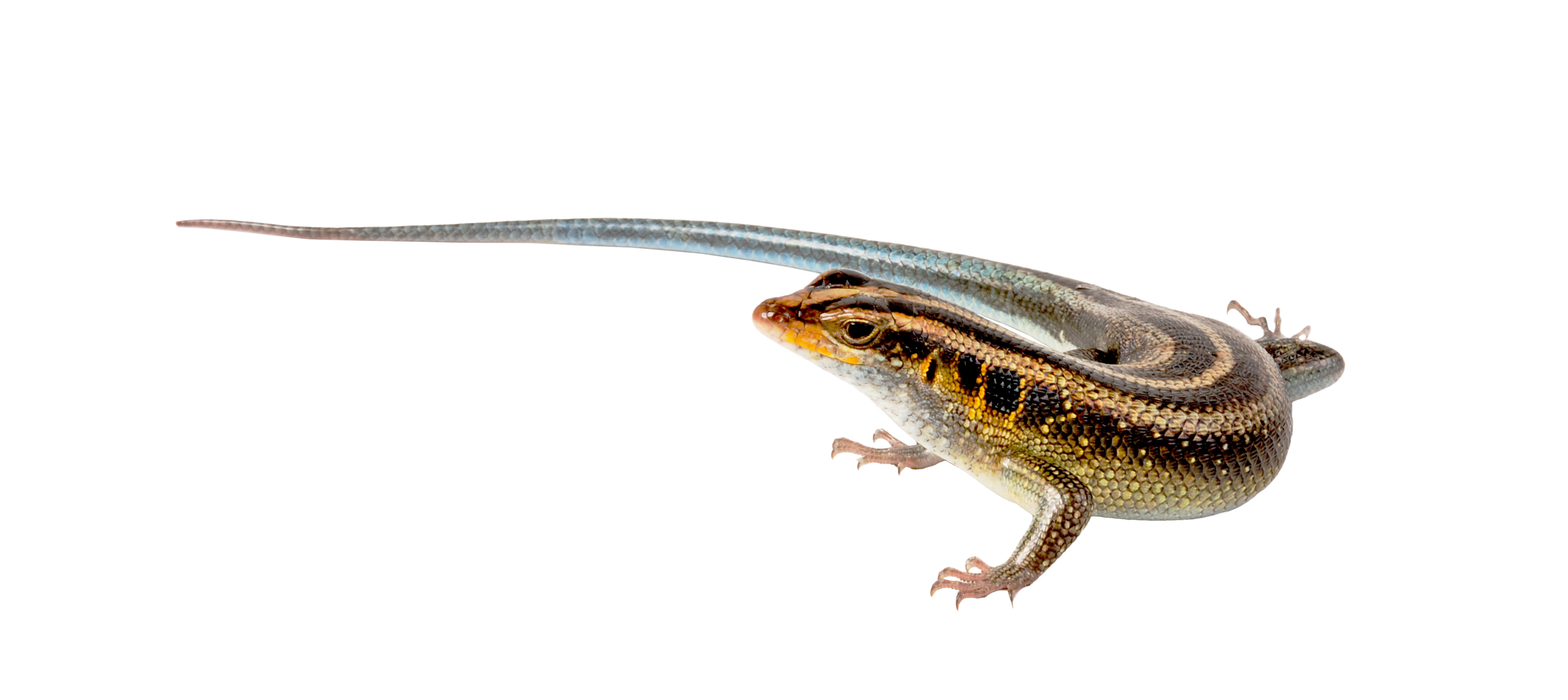
Arid Skink Care: Your Ultimate Guide to Habitat, Food & Health Tips
Learn how to care for an Arid Skink, recommended diet and habitat setup. Find the right food, supplies and equipment at your neighborhood Petco.
Updated on October 23rd, 2025
- New Pet
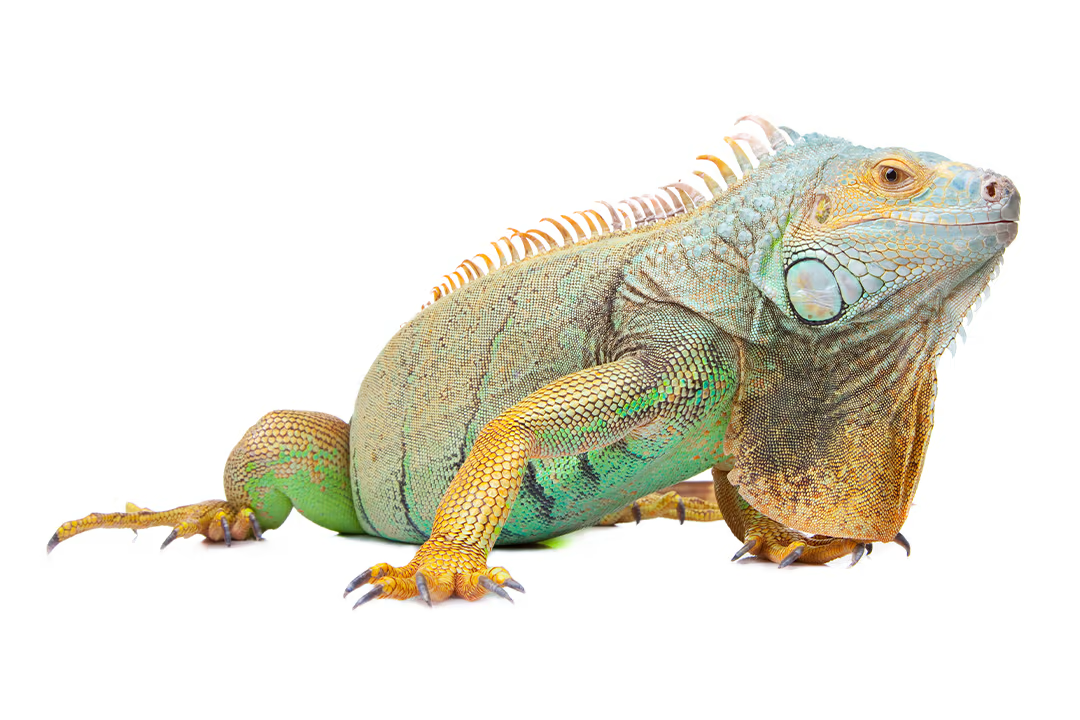
Green Iguana Care: The Ultimate Guide to Food, Habitat & Health
Learn how to take care of your Tropical Iguanas, recommended diet and housing setup. Find the right food, supplies and equipment at your neighborhood Petco.
Updated on October 23rd, 2025
- New Pet
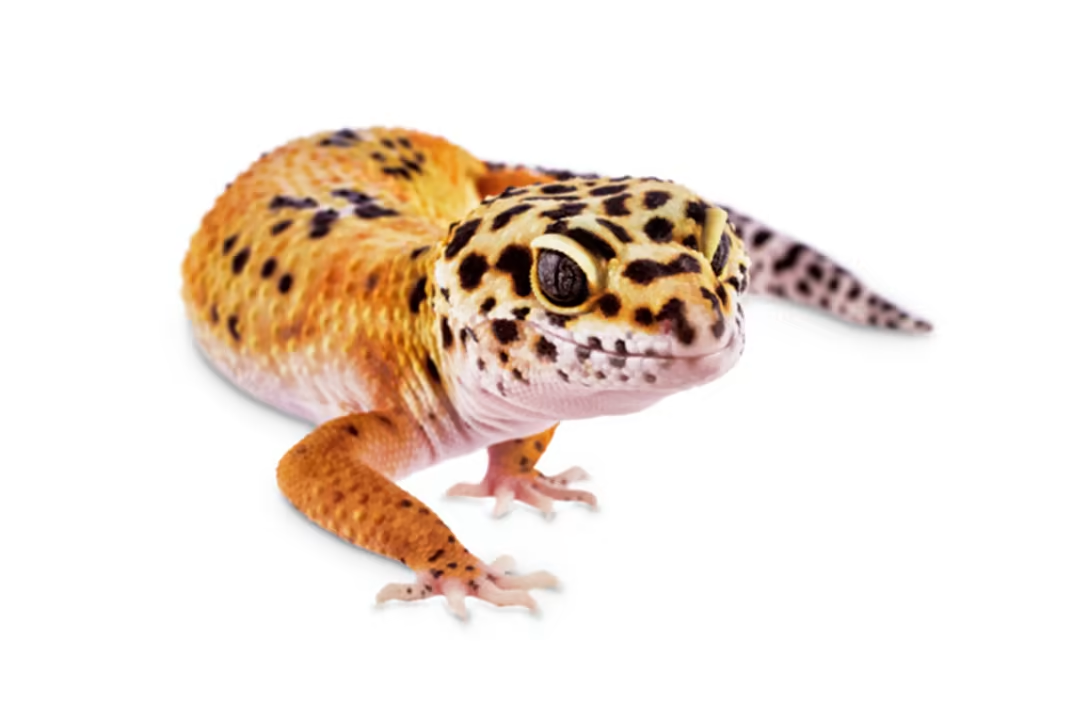
How to Care for Arid Geckos: Food, Habitat & Health Tips
Learn how to care for an Arid Gecko, recommended diet and habitat setup. Find the right food, supplies and equipment at your neighborhood Petco.
Updated on October 23rd, 2025
- New Pet
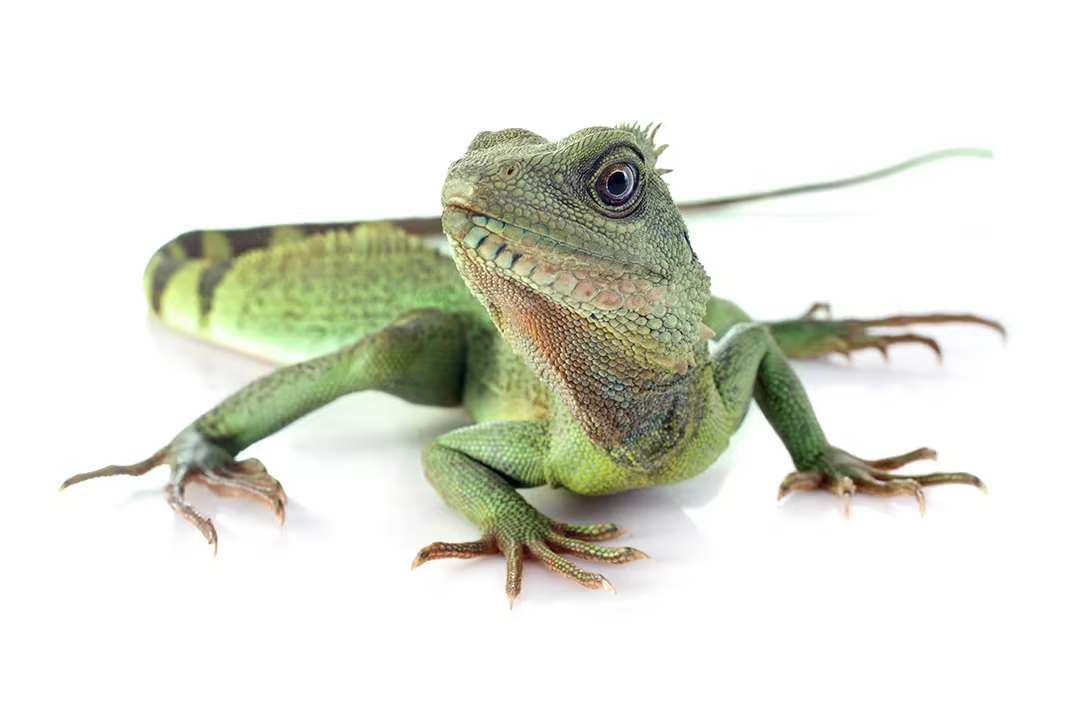
How to Care for a Water Dragon: Habitat, Food, Health & Setup
Learn how to take care of Water Dragons, recommended diet and habitat setup. Find the right food, supplies and equipment at your neighborhood Petco.
Updated on October 23rd, 2025
- New Pet
Jackson's Chameleon Care: Thrive Guide for Food, Habitat & Health
Learn how to care for Jackson's Chameleons, recommended diet & habitat setup. Find the right food, supplies & equipment at your neighborhood Petco.
Updated on October 23rd, 2025
- Health & Wellbeing
What should I feed my red ear slider with shell pyramiding and how often?Also which heat lamp would you recommend?Picture 1 or 2?How many watts should I get for the heat lamp?
A proper diet for red-eared sliders includes a complete pellet, such as those made by ReptoMin, and dark leafy green vegetables. This can be fed once per day, and the amount should be based on how many pellets Cooper can eat in 5-7 minutes. This is just a guideline, and your veterinarian can help you to determine if this is appropriate based on Cooper's body condition score (i.e. whether she is overweight or not). For a heat lamp - photo 1 just looks like the dome, and there doesn't appear to be a bulb in it. The second lamp looks like it is a daytime only heat lamp - it is often beneficial to have a heat source that can be used during the day or at night, and if that is what you are looking for, I would recommend a ceramic heat bulb. If you are looking for only a daytime basking bulb, there are many brands that would be appropriate. The key words that you should look for are "daytime basking bulb." For watts - it depends on how far the bulb is away from your turtle - there are some b
Updated on September 24th, 2025
- Food & Nutrition
Hi! We recently got a juvenile bearded dragon and I just want to make sure i’m doing enough for them. unsure of age or sex. Attached are photos of the dimensions of their enclosure, as well as the description of the bulb we are using. I leave a bowl
Congratulations on your new addition! The tank is sufficient for a juvenile, however you will likely need a larger one when Sonora is fully grown. Make sure Sonora can get into and out of the bowl easily to prevent drowning. Place thermometers in the enclosure to monitor temperature. You will need 3. One at the cool side, one on the warm side and one for the basking spot. Hygrometers can also be used to monitor humidity. You can review care information at the link below. http://www.anapsid.org/bearded.html
Updated on September 24th, 2025
- Health & Wellbeing
How can I transport my bearded dragon? how do I keep him warm(it’s starting to get pretty cold now), safe, and happy/calm? and which carrier do you recommend? The plastic ones or the bag-like ones? Thanks so much!
An appropriately sized plastic carrier would retain heat much more effectively. Pad the carrier with towels for protection. If you are traveling any distance, consider wrapping a hand warmer in a towel and placing it in the bottom to provide heat.
Updated on September 24th, 2025
- Health & Wellbeing
Can u help me identify this turtle species. Im not sure if it is a yellow bellied slider. Help me by giving me tips on how to keep it
The images are a bit blurry. It can be difficult to keep those little guys still! It does look like a YBS. They are not native to the UK and are typically captive bred. They are quite easy to keep. They need warm, clean water, a water heater, a basing spot with an overhead heat lamp, UVB lighting, a balanced diet consisting of animal protein and plant matter, calcium supplementation and multivitamin supplementation. For now, keep water depth no deeper than twice the length of the shell. As it grows, you can increase water depth. Maintain water quality via filtration and regular water changes. Feed a varied diet of prey (appropriately sized feeder fish, earthworms, crickets, etc.) and fresh greens and vegetables. Use a calcium and vitamin supplement and provide UVB lighting. You can review slider care at the link below. It is titled for Red Eared Sliders, however, Yellow Bellied Slider care is the same. http://www.anapsid.org/reslider.html
Updated on September 24th, 2025
- Food & Nutrition
I have always given my turtle ReptoMin for the past 14 years. Are there any other foods or treats i can feed her?
Why change a working system? You are obviously doing very well in the way you keep your turtle. Since apparently your turtle is doing well, it is getting everything it needs with the Reptomin. You could try offering it leafy greens, freeze-dried shrimp or krill, crickets, superworms, rosy red minnows and even pinky mice as an occasional treat.
Updated on September 24th, 2025