Two Easy Ways to Start Earning Rewards!
Become a member today! Members-only pricing and offers, personalized care notifications, Vital Care points back on every purchase and more!
 Become a credit card member today!
Earn 2X Pals Rewards points at Petco
when you use Petco Pay!APPLY NOWLearn More About Petco Pay Benefits
Zoo Med Snake Food
Get It Today



Related Articles & Questions
- Care Sheets
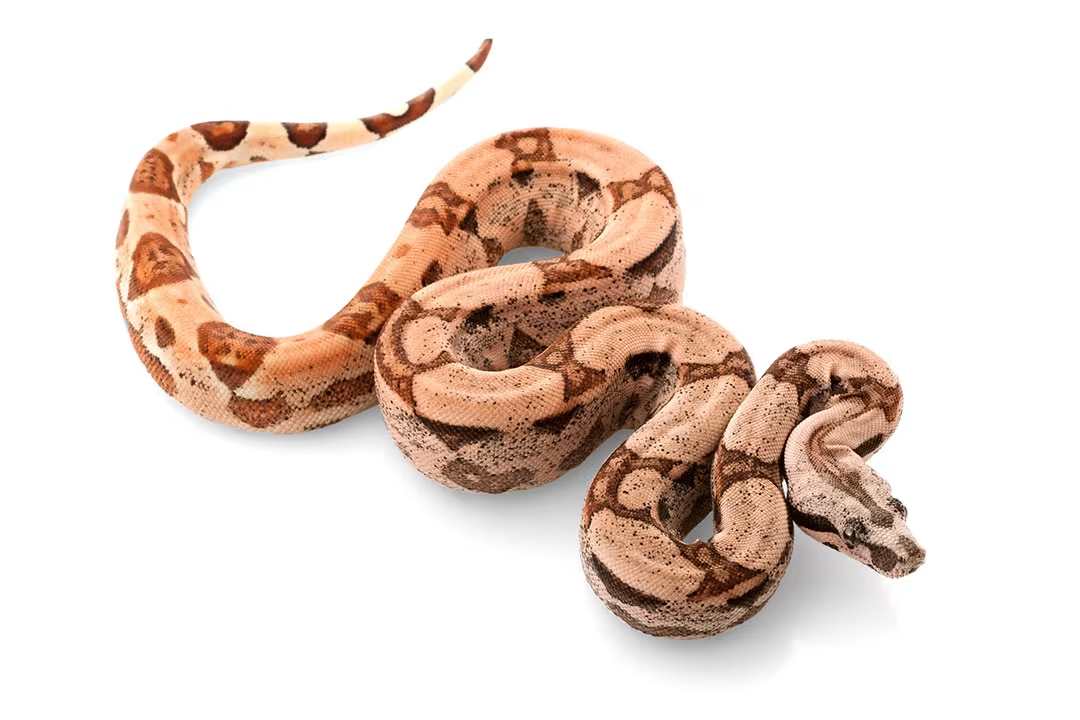
Boa Constrictor Care: The Ultimate Food, Habitat & Health Guide
Learn how to care for Boas, recommended diet & habitat setup. Find the right food, supplies & equipment at your neighborhood Petco.
Updated on April 9th, 2026
- New Pet
Reptile Habitat Setup Guide | Petco
Learn how to setup your reptiles terrarium to ensure your reptile lives a wholesome & happy life. Shop at your local Petco for all reptile terrarium needs.
Updated on July 17th, 2026
- Care Sheets
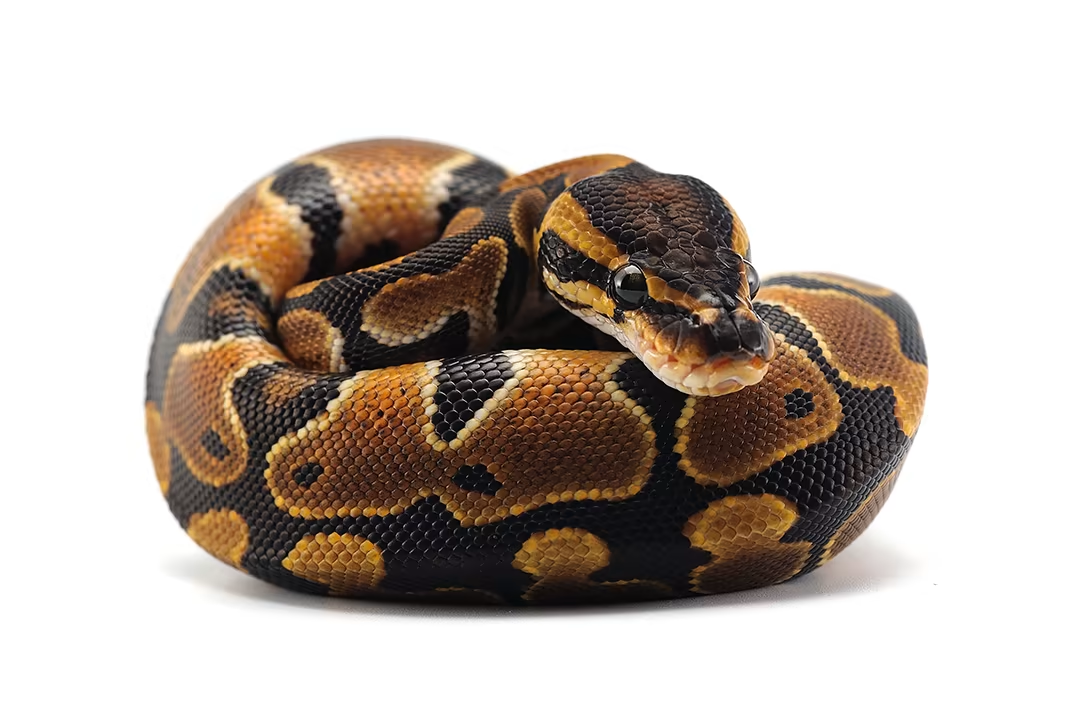
Ultimate Ball Python Care: Setup, Feeding, & Health for Beginners
Learn how to care for a Ball Python, recommended diet and habitat setup. Find the right food, supplies and equipment at your neighborhood Petco.
Updated on October 23rd, 2025
- Care Sheets
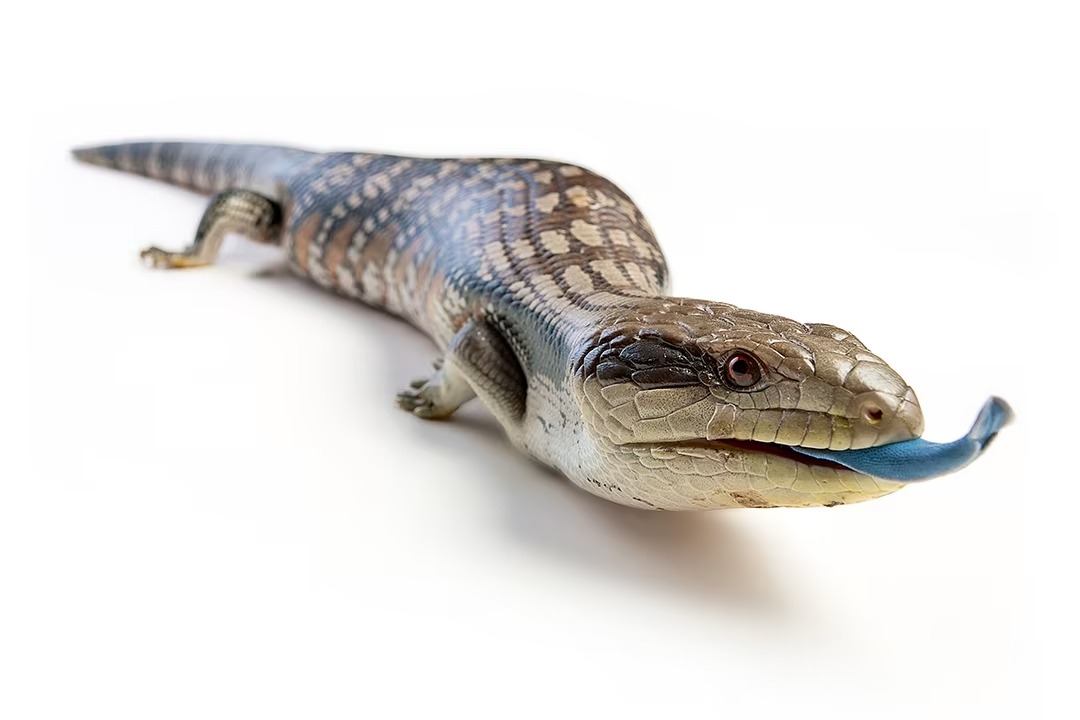
Tropical Skink Care: Habitat, Food, Health & Handling Guide
Learn how to care for Blue-Tongued Skink, recommended diet and habitat setup. Find the right food, supplies and equipment at your neighborhood Petco.
Updated on April 9th, 2026
- Care Sheets
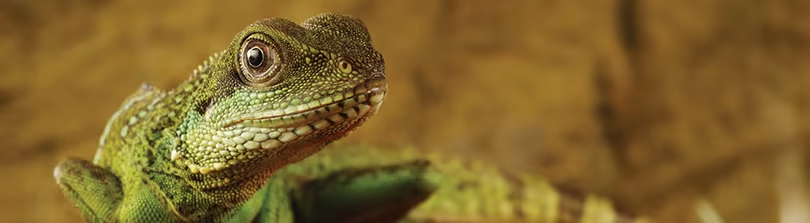
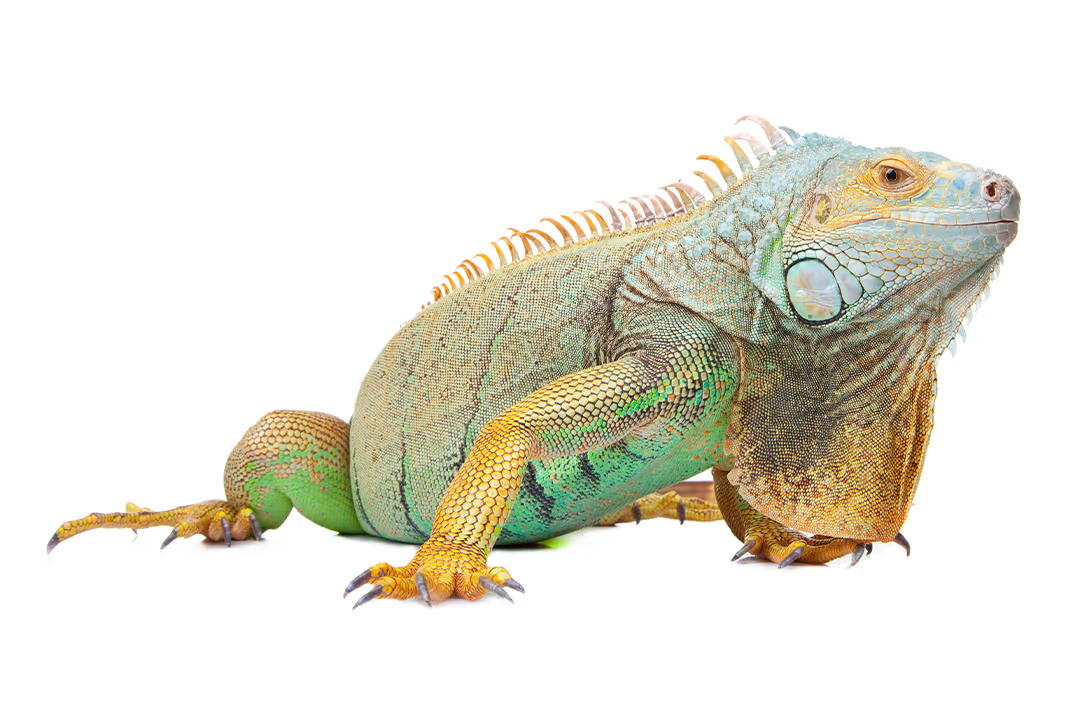
Green Iguana Care: The Ultimate Guide to Food, Habitat & Health
Learn how to take care of your Tropical Iguanas, recommended diet and housing setup. Find the right food, supplies and equipment at your neighborhood Petco.
Updated on April 9th, 2026
- Vet Q & A
My snake was missing, now won't eat, yellow, injured. What to do?
I'm glad you found him! Since he was missing for so long, an exam with your veterinarian or an experienced herp vet would be strongly recommended to diagnose and treat any illness or injury. In the meantime, give him a good soak in a warm 50/50 solution of water and unflavored PediaLyte. This will warm him up and provide hydration. Once he's warm and hydrated, he will be more likely to accept prey.
Updated on September 24th, 2025
- Food & Nutrition
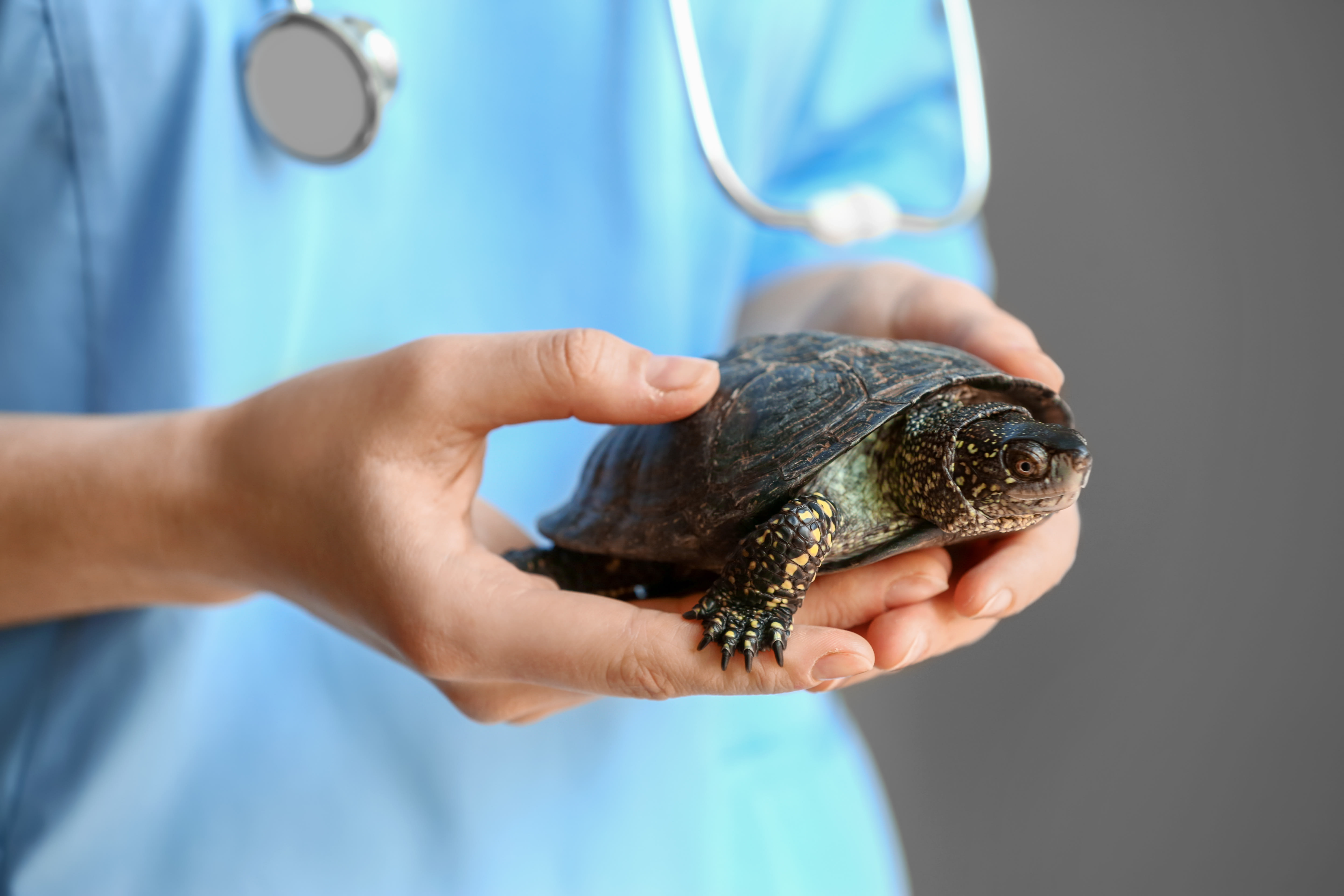
How to feed a red ear slider with pyramiding & choose a heat lamp?
A proper diet for red-eared sliders includes a complete pellet, such as those made by ReptoMin, and dark leafy green vegetables. This can be fed once per day, and the amount should be based on how many pellets Cooper can eat in 5-7 minutes. This is just a guideline, and your veterinarian can help you to determine if this is appropriate based on Cooper's body condition score (i.e. whether she is overweight or not). For a heat lamp - photo 1 just looks like the dome, and there doesn't appear to be a bulb in it. The second lamp looks like it is a daytime only heat lamp - it is often beneficial to have a heat source that can be used during the day or at night, and if that is what you are looking for, I would recommend a ceramic heat bulb. If you are looking for only a daytime basking bulb, there are many brands that would be appropriate. The key words that you should look for are "daytime basking bulb." For watts - it depends on how far the bulb is away from your turtle - there are some brands that have a chart on the side of the box that will give you distances and temperatures that correlate with the distance. This information, combined with your desired temperature for the basking area will help you to decide on what wattage to get. I hope that gives you more information!
Updated on September 24th, 2025
- Health & Wellness
My ball python won't eat or shed. Why is this happening and what to do?
Thank you for reaching out about your ball python - she is really cute! There are a few things you can try/check for the appetite. Often times, when we are seeing issues with appetite, the first thing we try to do is check the husbandry and ensure that it is as perfect as it can be. Sometimes in between seasons the temperatures can get off in the enclosure, and I would recommend checking that first. Also, the humidity can affect the shedding intervals, in addition to the temperature. I would recommend evaluating the temperatures in the enclosure with digital thermometers to ensure that they are appropriate. Also, based on how she looks in the photos, she appears to be in fair body condition, so she may also be regulating herself as far as her weight/appetite goes. This would be a bit of an exception for a ball python, as most of them will overeat and become overweight. But, there are exceptions to the rule and maybe she is one of them! For the prey items - I like that you are using a separate container, and that you are warming the prey items in warm water. Please ensure that the water gets them to body temperature for rodents, which is around 100-102F. Often snakes will eat prey items that are cooler than that, but if a snake is being picky I try to encourage owners to get them measure the temperature to ensure it is warm enough. I hope that this gives you a place to start, and if she doesn't eat despite all of these changes, I would recommend a veterinary visit for her!
Updated on September 24th, 2025
- Food & Nutrition
What should I feed my red-eared slider? So much conflicting info!
Thanks for reaching out about Ruby. Meat such as chicken, is a poor food since it is low in calcium and high in phosphorus. My usually recommendation is 1/3-1/3-1/3, meaning parts vegetables (green, red, yellow, orange), pellets and live fish (goldfish, tetras). The benefit of whole live fish is environmental enrichment (hunting, foraging) and has a skeleton with calcium, muscle and organs rich in other nutrients. Vegetables provide a wide variety of vegetables and the pellets a fairly balanced diet. Water temperature, a basking site with UVB and heat and water quality are also important. Good luck.
Updated on September 24th, 2025
- Home & Habitat
New corn snake owner: Shedding signs, care, and best bedding?
Just prior to shedding, the skin will become dull and the eyes will turn a cloudy blueish white. The snake will also begin to rub on anything and everything in the enclosure. Increase humidity or provide a moist hide to facilitate shedding. A water bowl should be provided as well. Aspen shavings are ideal for bedding. Avoid anything dusty such as sand or kitty litter.
Updated on September 24th, 2025