Two Easy Ways to Start Earning Rewards!
Earn 2X Pals Rewards points at Petco
when you use Petco Pay!
Get It Today
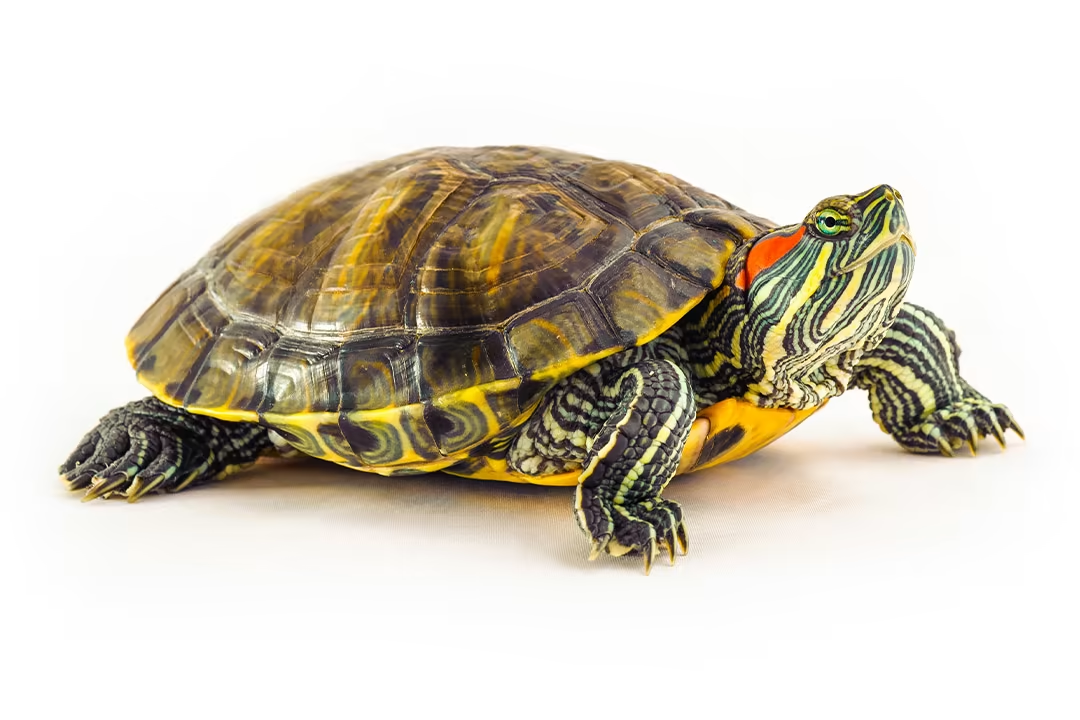
Learn how to care for aquatic turtles available at Petco. Care Sheets provide you with essential info on how to best take care of these interesting pets.
Updated on November 13th, 2025
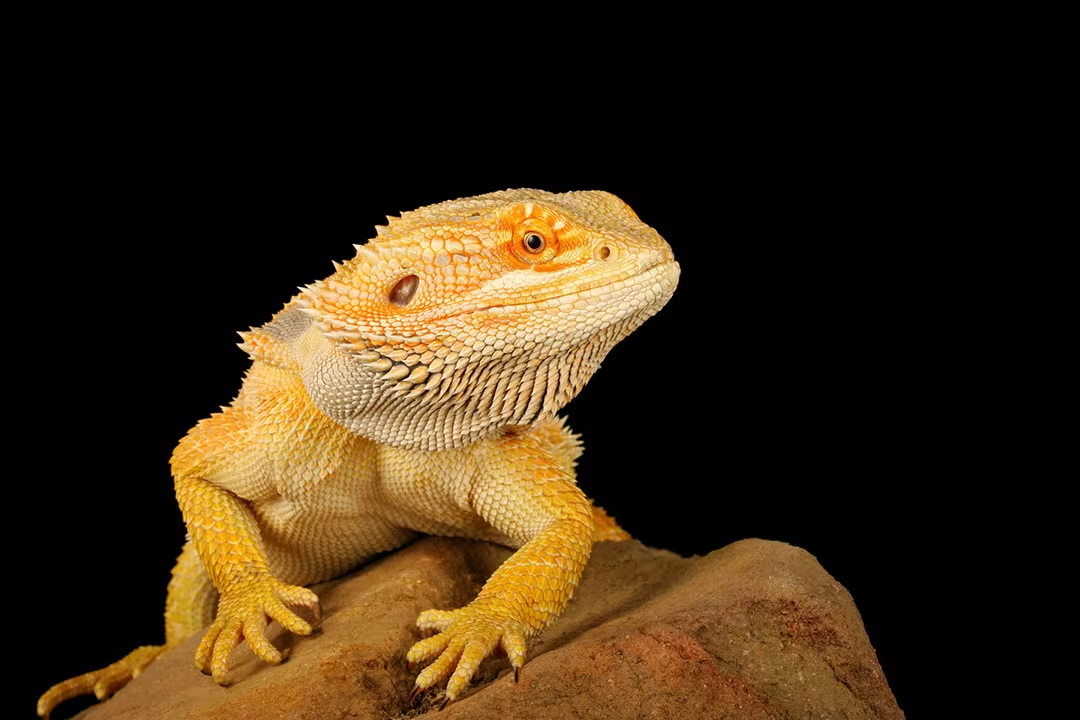
Explore our tips about what to keep in mind when choosing the right pet reptile for your family. Consider what they need to stay happy and healthy.
Updated on November 13th, 2025
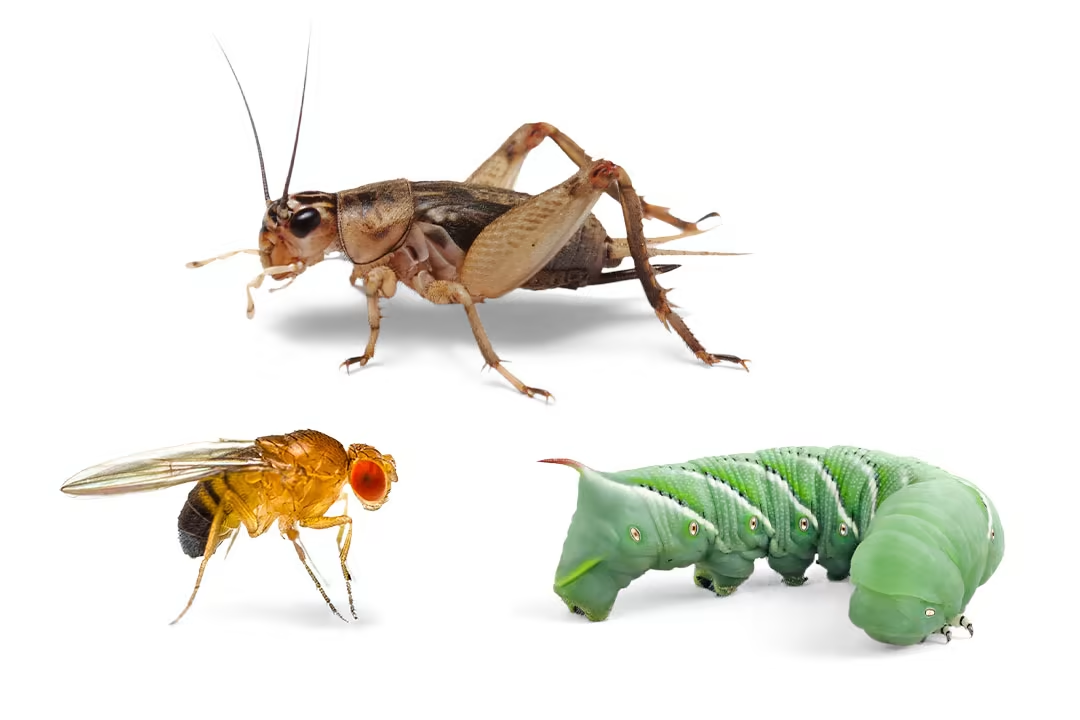
Learn about live insects for reptile feeding, recommended diet & habitat setup. Find the right food, supplies & equipment at your neighborhood Petco.
Updated on November 13th, 2025
Read more about our recommendations for preventing the transmission of infectious diseases in reptiles. Keep pets safe with these best practices.
Updated on November 13th, 2025
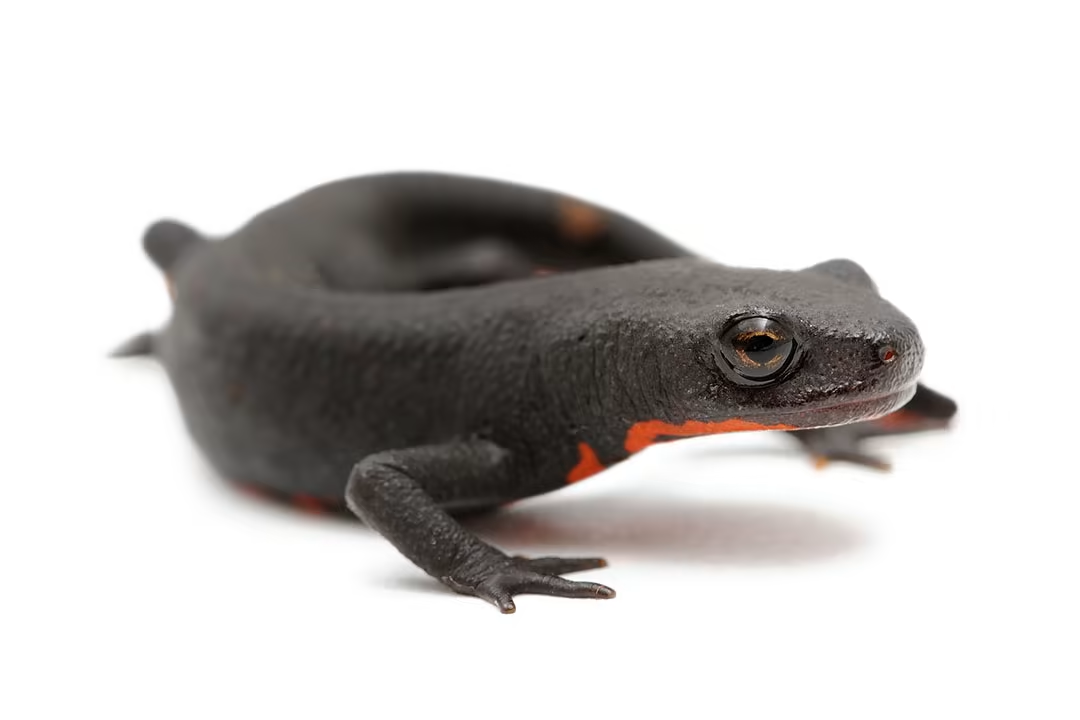
Learn How to Care for a Salamander & Newts, recommended diet and habitat setup. Find the right food, supplies and equipment at your neighborhood Petco.
Updated on November 13th, 2025
What you have appears to be an aquatic/semi-aquatic species of turtle. Basic requirements include a tank of at least 10 gallons initially, a water heater, a water filter, a basking area out of the water, a heat lamp and a UVB light source.
Updated on August 12th, 2025
Before you buy any fish, you will need to set up the tank. A basic set up includes: a tank, filter, hood/light, heater, gravel and some decor. The tank should run without fish for at least 4 to 6 weeks. This gives it time to cycle. The Nitrogen Cycle is critical to the health of the tank and any fish you will be keeping. During this time, beneficial bacterial will populate the filter and substrate (gravel). These bacteria will be responsible for breaking down fish wastes and other wastes (uneaten food, dead plants, etc.). You will need a home test kit to monitor water chemistry (ammonia, nitrites, nitrates, pH) or you will have to submit water samples for testing. Most pet stores will do this for free or for a small fee. At first, you will see high levels of ammonia and nitrites. Over time, as bacteria grow, these levels will drop. When ammonia and nitrites are at 0 ppm and nitrates are below 20 ppm, you can consider adding fish. Regular (every 1 or 2 weeks) partial water changes as we
Updated on August 12th, 2025
A proper diet for red-eared sliders includes a complete pellet, such as those made by ReptoMin, and dark leafy green vegetables. This can be fed once per day, and the amount should be based on how many pellets Cooper can eat in 5-7 minutes. This is just a guideline, and your veterinarian can help you to determine if this is appropriate based on Cooper's body condition score (i.e. whether she is overweight or not). For a heat lamp - photo 1 just looks like the dome, and there doesn't appear to be a bulb in it. The second lamp looks like it is a daytime only heat lamp - it is often beneficial to have a heat source that can be used during the day or at night, and if that is what you are looking for, I would recommend a ceramic heat bulb. If you are looking for only a daytime basking bulb, there are many brands that would be appropriate. The key words that you should look for are "daytime basking bulb." For watts - it depends on how far the bulb is away from your turtle - there are some b
Updated on August 12th, 2025
Hello, & thank you for using Boop by Petco. Juvenile RES should receive commercial aquatic turtle pellets, supplemented occasionally with live fish (guppies, goldfish), & earthworms. Make sure she gets at least 15 minutes of natural sunlight weekly. Adults need 30% of diet to be the pellets & some protein like mentioned above. The krill can be offered on occasion. 70% of the diet needs to be plants in the form of chopped leafy greens, kale, romaine, mustard greens, dandelion greens, watercress, parsley, shredded carrot, frozen (thawed) mixed veggies & squash, & occasional fruit. Take care.
Updated on August 12th, 2025
Plant matter should make up 50% of the diet with the other half divided between commercial pellets and animal protein/prey. Juveniles should be fed daily. These little guys are eating machines, so you can offer greens in the morning and pellets later or you can alternate days. Any basic lamp/reflector can be used. Start with a 100 watt bulb. If the temps are too high, use a lower wattage bulb or move the lamp farther away. This is where using thermometers can help you regulate heat.
Updated on August 12th, 2025