Two Easy Ways to Start Earning Rewards!
Become a member today! Members-only pricing and offers, personalized care notifications, Vital Care points back on every purchase and more!
 Become a credit card member today!
Earn 2X Pals Rewards points at Petco
when you use Petco Pay!APPLY NOWLearn More About Petco Pay Benefits
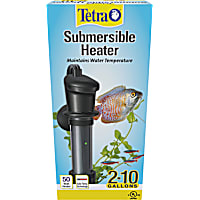
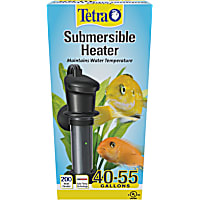
Tetra Aquarium Heaters


Related Articles & Questions
- Care Sheets
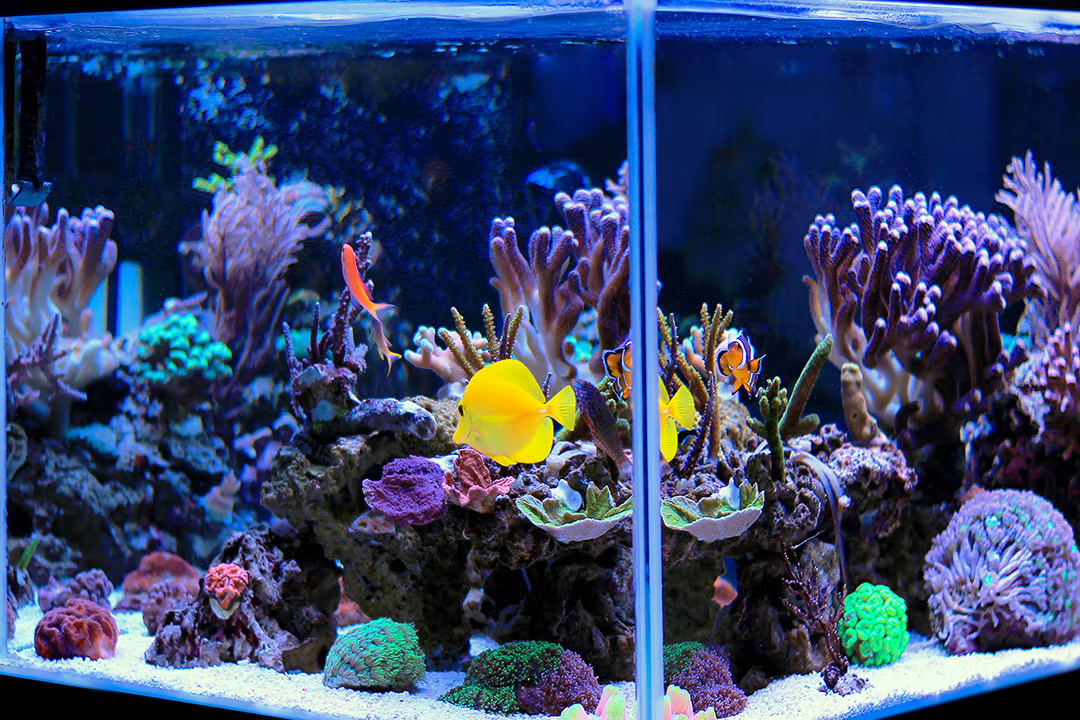
Build Your Thriving Saltwater Tank: Easy Setup for Marine Life
Learn how to set up a saltwater fish tank and key considerations regarding placement, supplies needed, and the overall set up process.
Updated on October 23rd, 2025
- Care Sheets
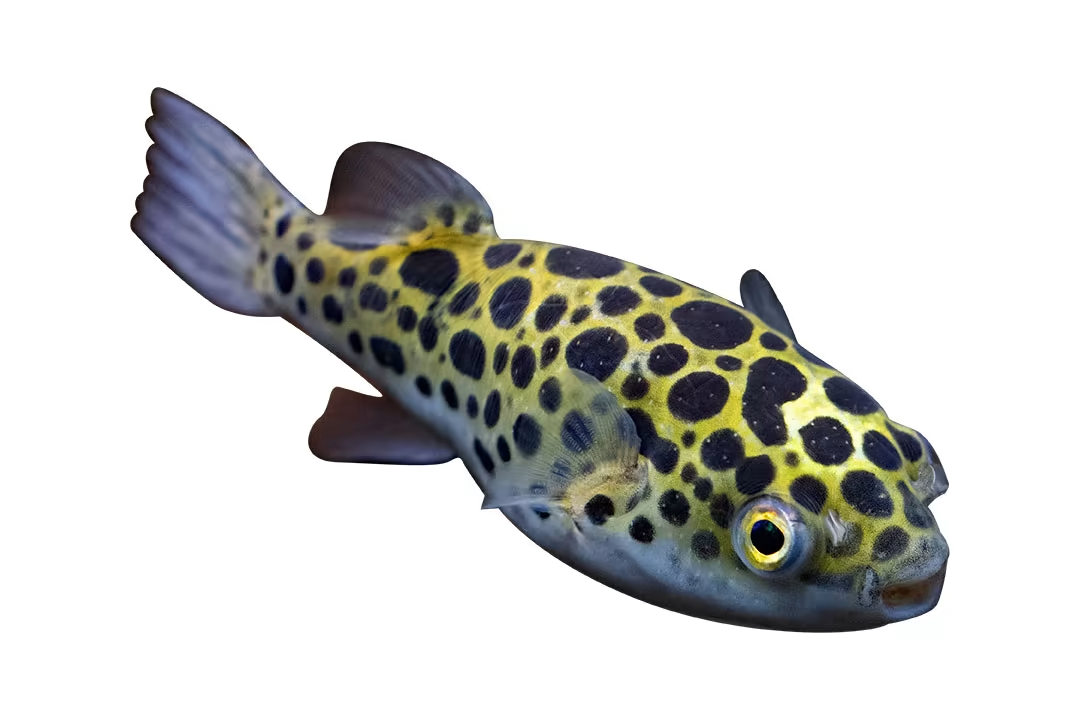
Brackish Water Fish Care: Your Complete Guide to Tank, Food & Species
Learn how to care for brackish water fish, recommended diet & aquarium setup. Find the right food, supplies & equipment at your neighborhood Petco.
Updated on April 9th, 2026
- Care Sheets
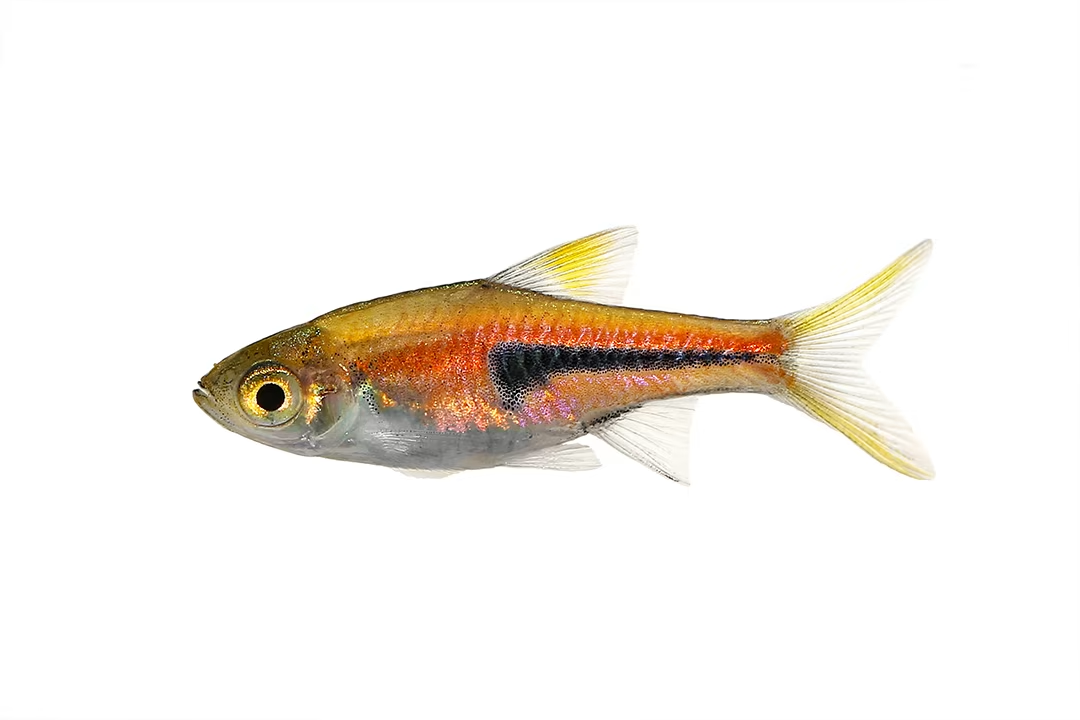
Master Rasbora Care: Tank Setup, Food & Compatibility for Beginners
Learn how to care for Rasbora's, recommended diet & aquarium setup. Find the right food, supplies & equipment at your neighborhood Petco.
Updated on April 9th, 2026
- Care Sheets
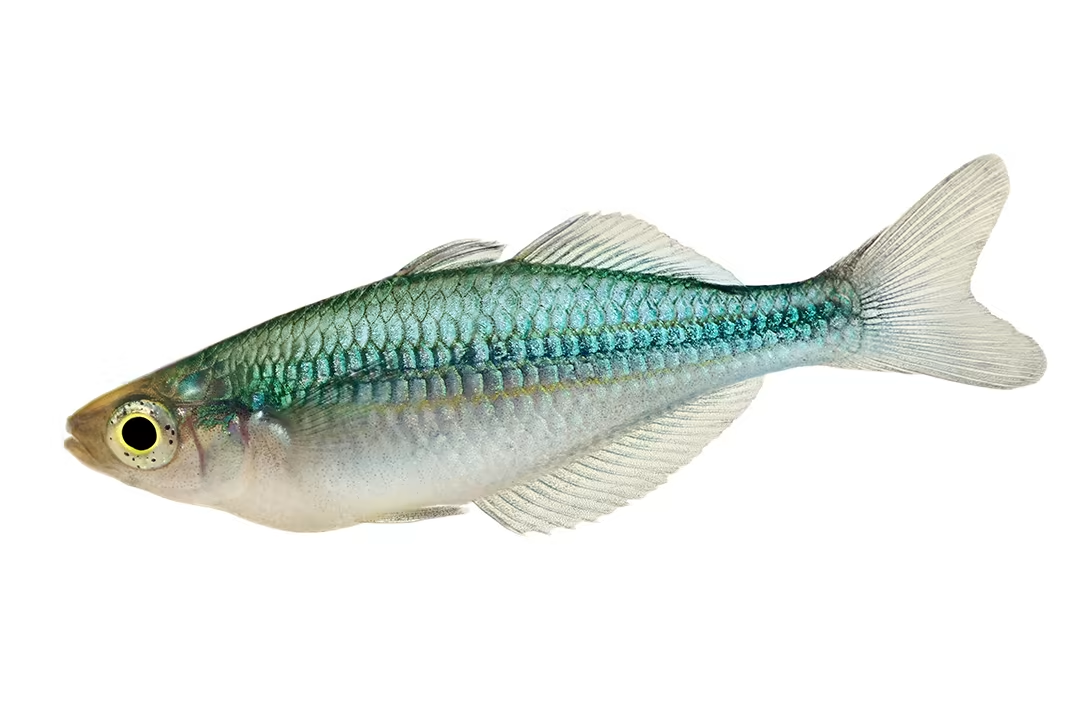
Rainbow Fish Care: Tank, Food, & Compatibility for Thriving Pets
Learn how to care for Rainbow fish, recommended diet and aquarium setup. Find the right food, supplies and equipment at your neighborhood Petco.
Updated on April 9th, 2026
- Care Sheets
African Cichlid Care: Complete Tank Setup, Food & Compatibility
Learn how to take care of African Cichlids, recommended diet and tank setup. Find the right food, supplies and equipment at your neighborhood Petco.
Updated on April 9th, 2026
- Vet Q & A
Why is my Neon Tetra not eating even with good water quality?
Check the water chemistry. This is done using a liquid home test kit or by submitting a sample for testing. Most pet or fish stores will do this for free or for a small fee. Ammonia and nitrites should be at 0 ppm and nitrates can be 40ppm or less. Partial water changes can be done to stabilize chemistry and maintain water quality. Use only aged or conditioned water that is temperature matched to prevent stress or shock. Try soaking food in garlic juice to stimulate the appetite. A 2-3 day fast followed by hand feeding bits of cooked and shelled green peas or spirulina may also promote regularity.
Updated on September 24th, 2025
- Vet Q & A
My neon tetras have white spots. Could it be ich or a fish disease?
The tiny spots could be a parasite infection. Ich presents as small dots similar to grains of salt. It will quickly overrun a tank and can kill fish if left untreated. You will need to treat the entire tank as opposed to just affected fish. A broad spectrum parasite medication that covers ich can be purchased at the local Petco. Follow label directions carefully and remove the carbon filter insert during treatment if indicated.
Updated on September 24th, 2025
- Training & Behavior
Why are my cichlids aggressive and fish gasping at the tank top?
Remove them or provide more cover (plants and hides) for the other fish to hide or escape. When fish hang near the top, it is usually due to low oxygen levels, low water temperature or improper water chemistry. It could be related to the different filter or the water change. Confirm proper water temp and use a test kit to check water chemistry. Ammonia and nitrites should be at 0 ppm (parts per million) and nitrates should be 40 ppm or less. Monitor chemistry closely until you know how the new filter operates. Make sure it is rated for the size tank you have to ensure adequate filtration. Correct imbalances using chemical treatment and additional partial water changes using aged/conditioned water.
Updated on September 24th, 2025
- Vet Q & A
What fish can I put in a 3-gallon tank, and how to change water?
The small size will limit the species of fish as well as the number. White Cloud Minnows or Guppies would do fine in a small tank. You could keep no more than 2 or 3 fish total. If you are looking for company for your Betta, the same species can be kept. Other options include Otocinclus (Otos), Corys, Platys or Harlequin Rasboras. Again, no more than one or two in addition to the Betta. Water changes for any tank are simple. Change no more than 30% total volume at a time. Use a water conditioner to remove harmful chemicals and make sure the water is temperature matched to prevent stress or shock. Rinse the filter in tank water, not tap water, to preserve beneficial bacteria. Vacuum the substrate every couple of weeks.
Updated on September 24th, 2025
- Vet Q & A
What fish tank sizes are included in Petco's $1 per Gallon Sale?
##### What are the dimensions of tanks in the $1 per Gallon Sale? [Here](https://www.petcoach.co/question/?id=411222) are the answers to some of our most frequently asked questions: - What are the dimensions of my new tank? - What kind of hood will fit my new tank? - What kinds of stands will work with my new tank? - What kind of lighting is recommended for my new tank? **Aqueon10G**, **Marineland10G** - Product Dimensions: 20 x10 x12 - Compatible HOODS: Aqueon 20" Deluxe Full Hood - Compatible STANDS: the Brooklyn 10G, Aquatic Fundamentals Silver Vein Scroll 21x11 - Compatible LIGHTING: Aqueon 20" Deluxe Full Hood **Aqueon20 High**, **Marineland20 High** - Product Dimensions: 24x12 x16 - Compatible HOODS: AGA 24"BK VERSATOP GLASS - Compatible STANDS: Newport 20G - Compatible LIGHTING: Aqueon 24" fluorescent strip light or 24" LED light fixture (online only), Fluval Ultra Bright LED Aquarium Strip Light (online only) **Aqueon20 Long**, **Marineland20 Long** - Product Dimentions: 30 x12 x12 - Compatible HOODS: AGA-30"BK VERSATOP - Compatible STANDS: Brooklyn 29G, Winston 29G - Compatible LIGHTING: Aqueon 30" fluorescent strip light or 30" LED light fixture (online only) **Aqueon29G**, **Marineland29G** - Product Dimensions: 30 x12 x18 - Compatible HOODS: 30" BK versatop glass, Aqueon 20" Deluxe Full Hood - Compatible STANDS: Brooklyn 29G, Winston 29G - Compatible LIGHTING: Aqueon 30" fluorescent strip light or 30" LED light fixture (online only) **Aqueon40B**, **Marineland40B** - Product Dimensions: 36 x18x16 - Compatible HOODS: 36X18X16 BLK VRSATOP - Compatible STANDS: Aquatic Fundamentals Upright 50G 37x19 - Compatible LIGHTING: Aqueon 36" fluorescent strip light or 36" LED light fixture (online only) **Aqueon55G**, **Marineland55G** - 48x13x20 - HOODS: 2 of the 24 inch - STANDS: Brooklyn 55G - LIGHTING: Aqueon 48" fluorescent strip light or 48" LED light fixture (online only) *in-store only (We do not ship paned glass)
Updated on September 24th, 2025