Two Easy Ways to Start Earning Rewards!
Become a member today! Members-only pricing and offers, personalized care notifications, Vital Care points back on every purchase and more!
 Become a credit card member today!
Earn 2X Pals Rewards points at Petco
when you use Petco Pay!APPLY NOWLearn More About Petco Pay Benefits
T-Rex Snake Habitat Decor & Accessories
Get It Today


Related Articles & Questions
- New Pet
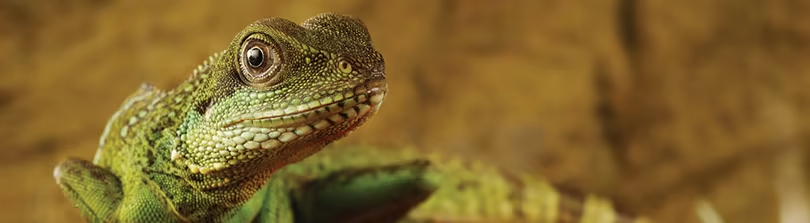
Is a Reptile Right for You? Essential Questions Before You Buy
Explore our tips about what to keep in mind when choosing the right pet reptile for your family. Consider what they need to stay happy and healthy.
Updated on November 13th, 2025
- New Pet
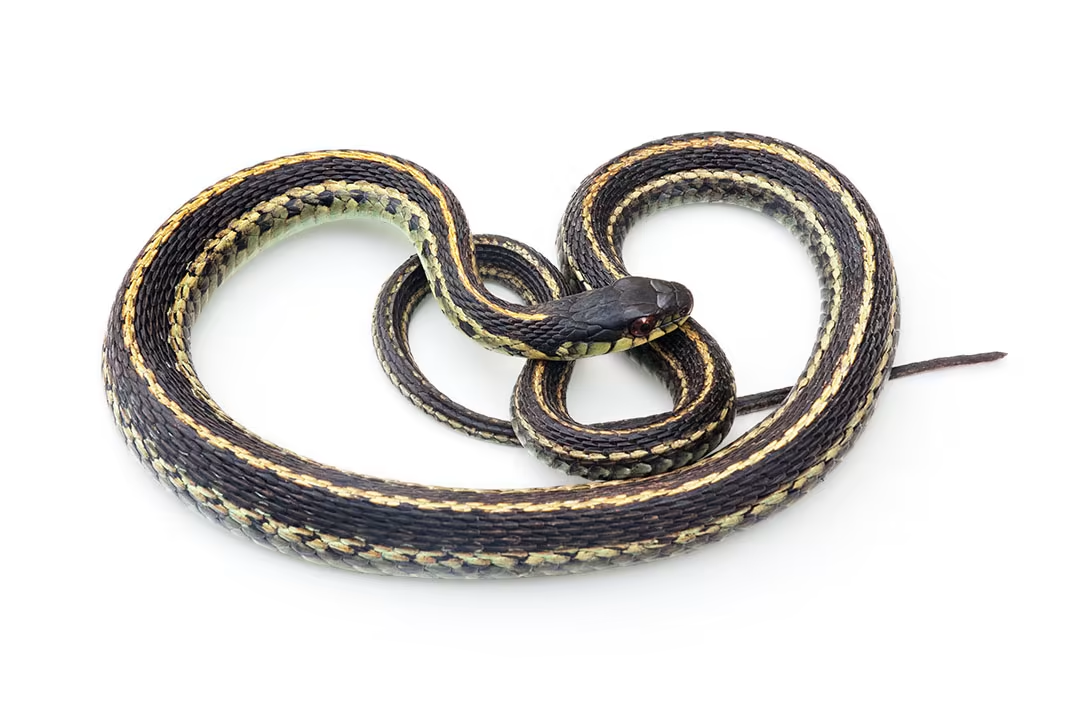
Garter & Water Snake Care: Help Your Pet Thrive! Habitat, Food, Health
Learn how to take care of Garter & Water Snakes, recommended diet and habitat setup. Find the right food, supplies and equipment at your neighborhood Petco.
Updated on November 13th, 2025
- New Pet
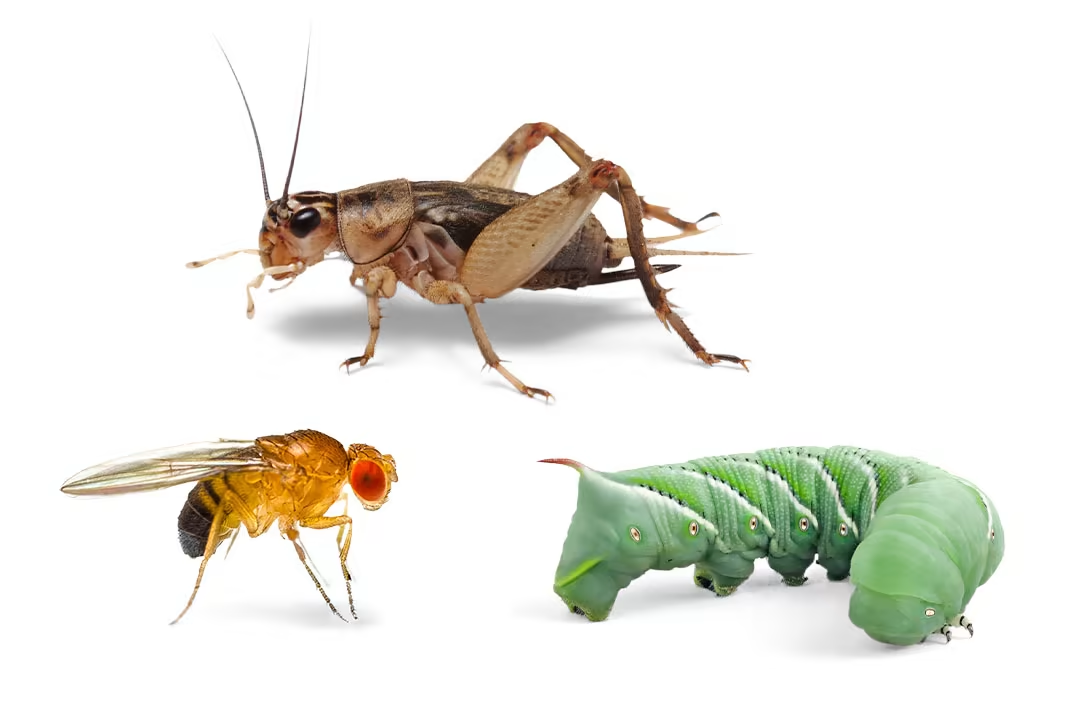
Reptile Feeding: Live Insect Selection & Care for Optimal Health
Learn about live insects for reptile feeding, recommended diet & habitat setup. Find the right food, supplies & equipment at your neighborhood Petco.
Updated on November 13th, 2025
- New Pet
How to Prevent Reptile Illness: Safe Handling & Habitat Cleaning
Read these guidelines about handling reptiles to provide a safe and fun environment for your pet, friends and family.
Updated on November 13th, 2025
- Home & Habitat
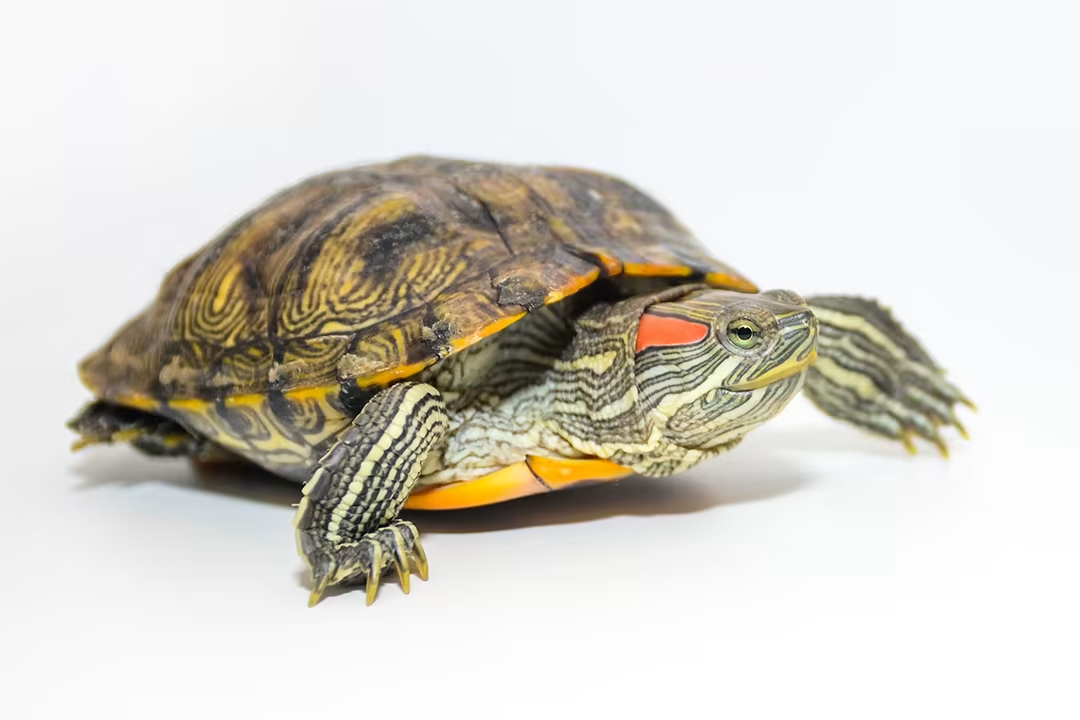
Red-Eared Slider Habitat: Easy Setup for a Healthy, Happy Turtle
Red-eared sliders are primarily aquatic but will fully emerge from the water. Setting up a habitat that mimics their natural environment will help ensure your turtle is set up for a happy, healthy life!
Updated on November 13th, 2025
- Health & Wellbeing
How should you care for your reptile during a power outage?
Here are some tips on how to care for pets who require continuous heat, such as reptiles and snakes: - Before a power outage, if possible, buy a generator. This will allow you to keep your reptiles warm during the outage. - Amphibians will do okay without heat for a period of time. Try to limit the number of times you open the habitat. - For a heat source, you can go to your local sporting goods store and purchase the heat packs used to warm feet and hands. These can be placed underneath the habitat (just like you would place an electric heating pad). This will allow your reptile to get heat. Do not put the pack into habitat with the reptile. - Another way to warm cold reptiles is to use a pillowcase. Place the reptile gently in the case and place the pillowcase next to your body under your shirt for warmth. - Pillow cases can also be used to transport reptiles if needed. - Do not feed your reptile as they need heat to digest their food. - You can save plastic milk
Updated on August 12th, 2025
- Health & Wellbeing
I need help to figure out where I should put my turtle
Thanks for using Boop by Petco! Here is a link of a good example of a good environment for an aquatic turtle though there is going to be some variation depending on the species. Have a good night! https://www.myturtlecam.com/habitat.php
Updated on August 12th, 2025
- Training & Behavior
hi, are snake has been acting rather odd reasently. we redid his tank (new substrate, cleaned the glass and bottom, disinfected the hides/ojects in it) we were putting the light back in but it blew so we could not get a light for atleast two weeks in
The changes to his enclosure may have caused stress. Low temps can affect digestion in reptiles. If temps were down, this could affect defecation. Try soaking him in a warm 50/50 solution of water and unflavored PediaLyte for 20-30 minutes. This will provide warmth and hydration. To stimulate defecation, gently massage the belly from front to back during the soak. If the behavior persists, consider an exam with your veterinarian or vet experienced in treating reptiles.
Updated on August 12th, 2025
- Health & Wellbeing
My bearded dragon tank lost its lightbulb and our car doesn't work. (Going to a store isn't an option.) What can I feed him besides crickets and do to keep him warm. Keep in mind we only ha e access to household items. He won't eat any vegetables I f
Hi, For heat you could do a number of things e.g. place any incandenscent bulb above him, place other types of heaters near the tank etc. Please make sure that the temperature is not too high. As for food, this is more of a problem. If he's used to eating crickets it would be difficult to switch him at once to something else. I assume meal worms or otjer insects are also unavailable? You could very temporarily try some soft cat food but it may not work.
Updated on August 12th, 2025
- Health & Wellbeing
Is there any way to Prevent , or stop Wall surfing or nose rubbing?, lightning sits at the back wall of his enclosure and runs on the wall back and fourth, or the Side of his enclosure on the cool side and runs into it with his nose, he does this alm
Use a tank background/surround to limit his view. Plain paper can also be taped to the outside of the tank. Provide a hide on each side of the enclosure. Allow for some "playtime" outside of the cage daily.
Updated on August 12th, 2025